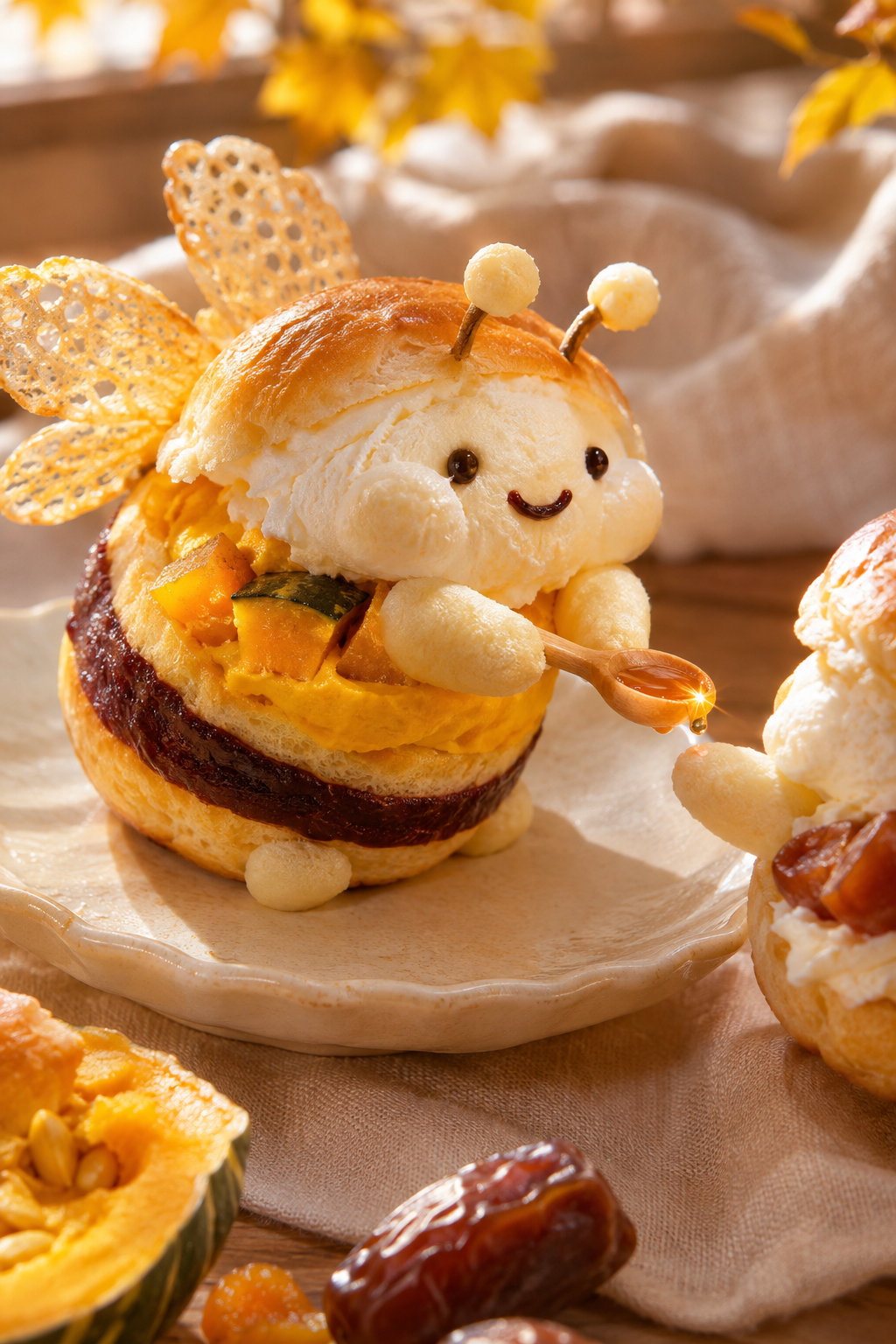
The Pumpkin Bee, Offering a Spoon of Liquid Gold
Critique
Introduction A bee-shaped confection offers honey from a wooden spoon toward a partly visible companion at the right. Its round body stands left of center beneath two ball-tipped antennae, with porous wings spreading behind. Pumpkin-orange filling and browned pastry connect the insect's recognizable features to an approachable scene of serving and exchange. Description A golden cap covers a white face with dark eyes and a curved smile. Pumpkin cubes sit above a soft orange layer and a broad dark-brown body band. Thin wings contain irregular lacework openings. Pale balls top the narrow antennae, and a clear drop hangs from the spoon above a white handlike form entering at the edge. Analysis Face, forepaws, and spoon establish a horizontal offering direction. The dark band recalls a bee's stripe while organizing the rounded body's weight. Wing perforations and cake pores compare thin and thick materials through different cavity sizes. A concentrated honey reflection marks the action's endpoint, supported by warm cloth and softly blurred foliage behind it. Interpretation and Evaluation The spoon extends the familiar image of a working insect into hospitality or sharing. Wings, stripes, and antennae remain materially consistent, while paired paws convincingly support the utensil. Rendering separates fragile wing edges, thick filling, and transparent honey. A cropped recipient leaves space beyond the frame, keeping the act open rather than enclosing it. Conclusion The bee's appealing shape dominates first, but spoon, droplet, and approaching hand gradually become central. Foreground pumpkin and chestnut connect the figure to its ingredients. Open wings lighten the body, allowing insect anatomy, contrasting textures, and a clear outward gesture to give a confectionery still life a quiet sense of offering.
Same Subcategory
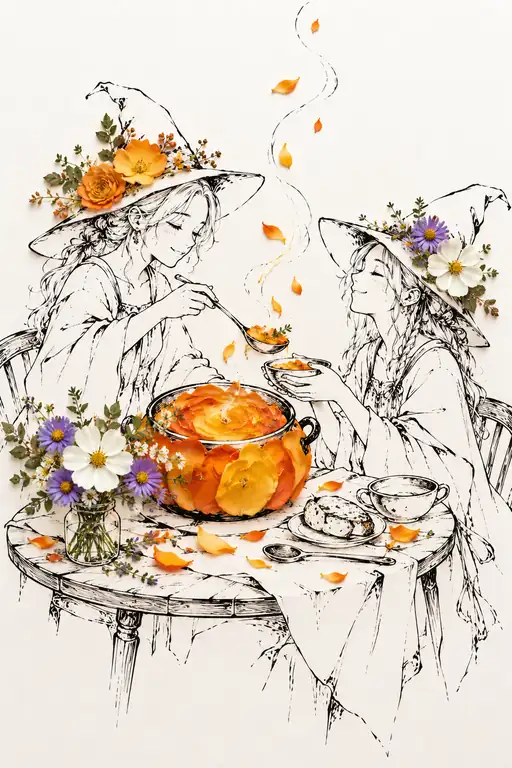 One More Ladleful, Just for You
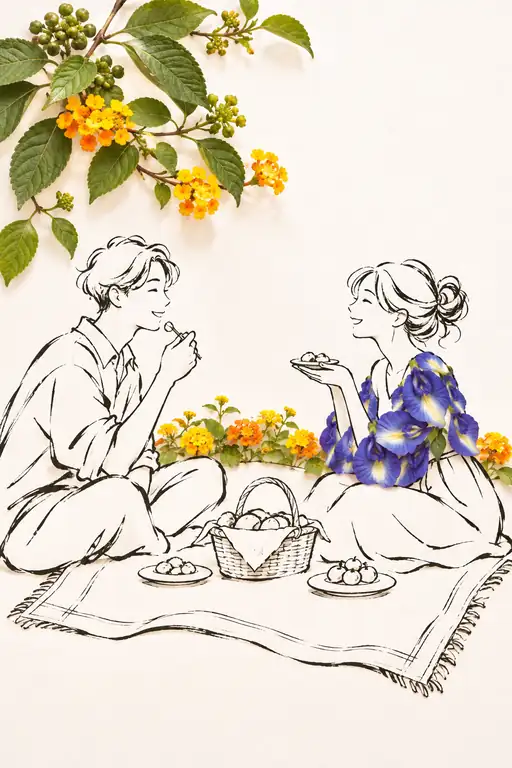 Picnic in the Sun, Breeze in the Lapis Gown
Similar Artworks
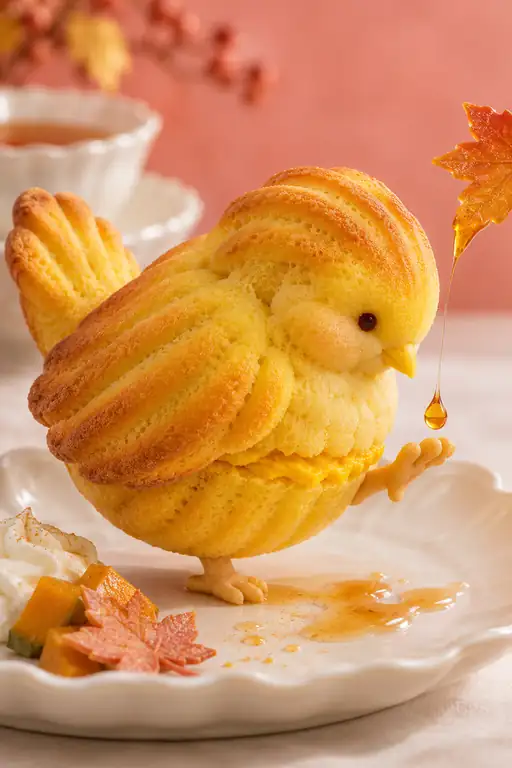 The Suspended Honey Drop, Poised on a Golden Foot
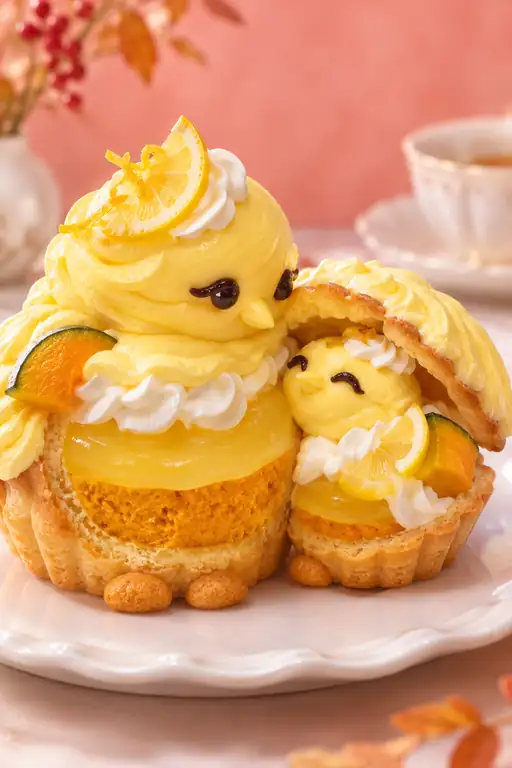 The Lemon-Pumpkin Tart, Warmth of the Chick's Nest
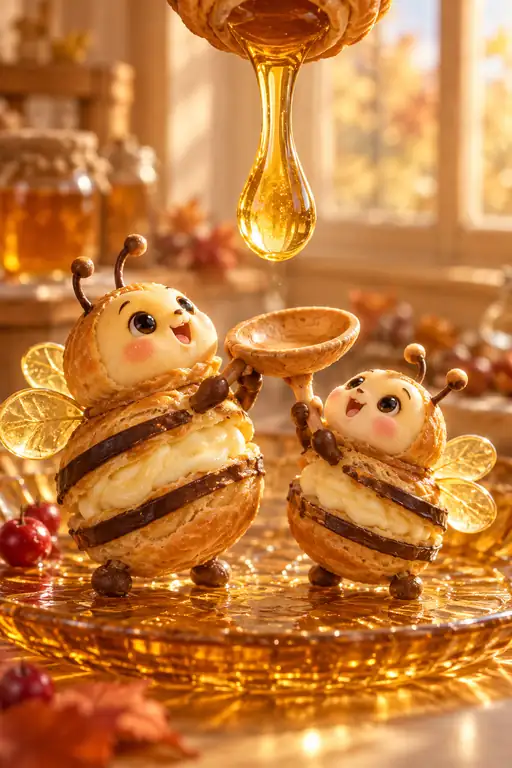 Together We Catch the Sun
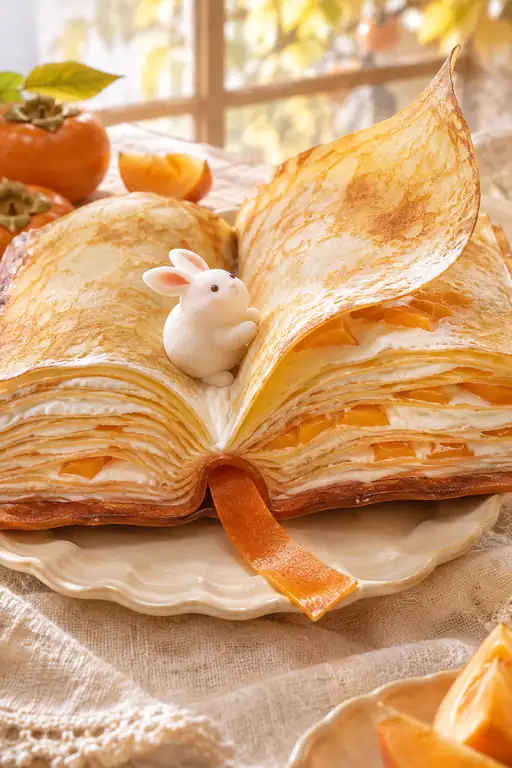 Turning the Sweet Crepe Page, The Rabbit's Autumn Tale
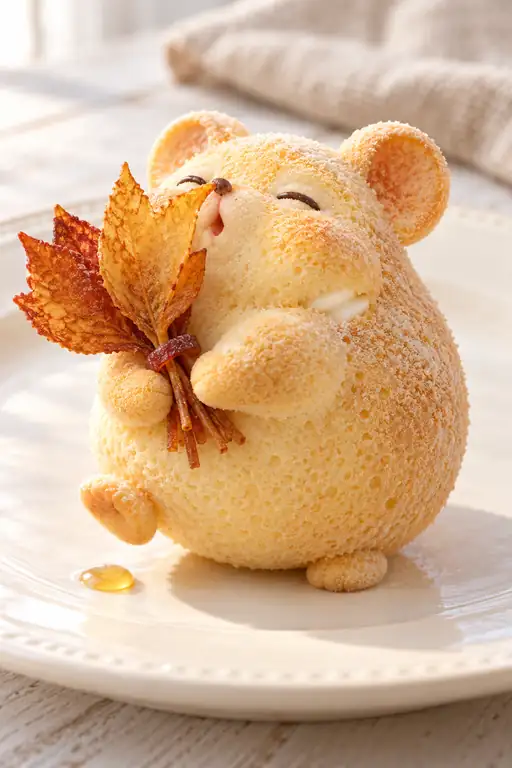 All the Autumn I Can Hold
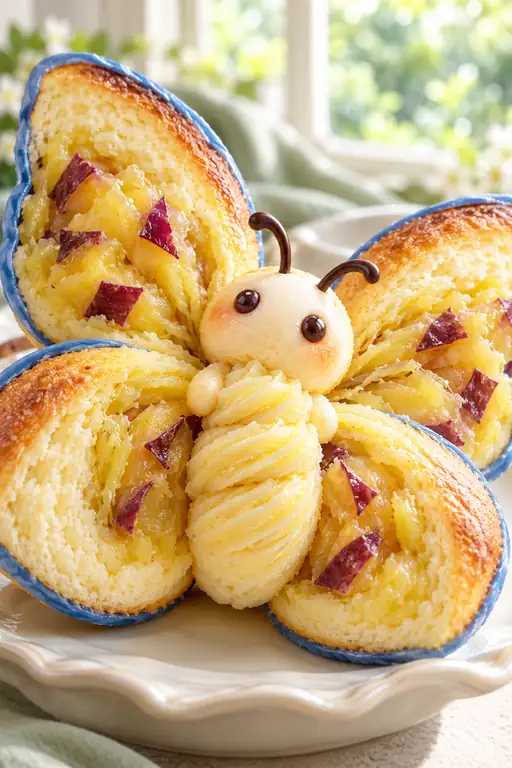 Wings of Autumn Gold and Indigo
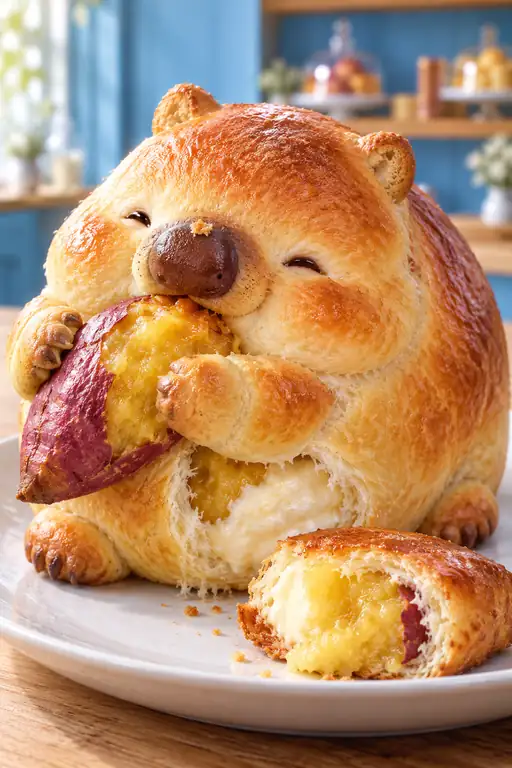 Joyful Bite of the Autumn Hearth
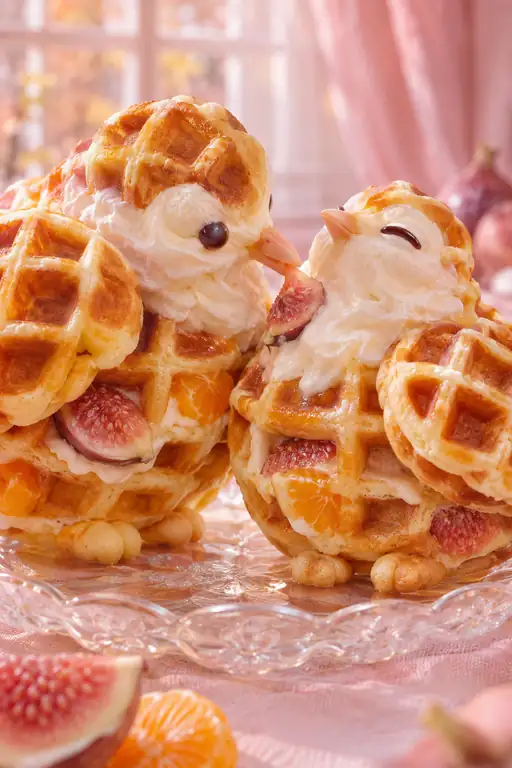 Golden Waffle Wings, Tender Kiss of Ripe Fig
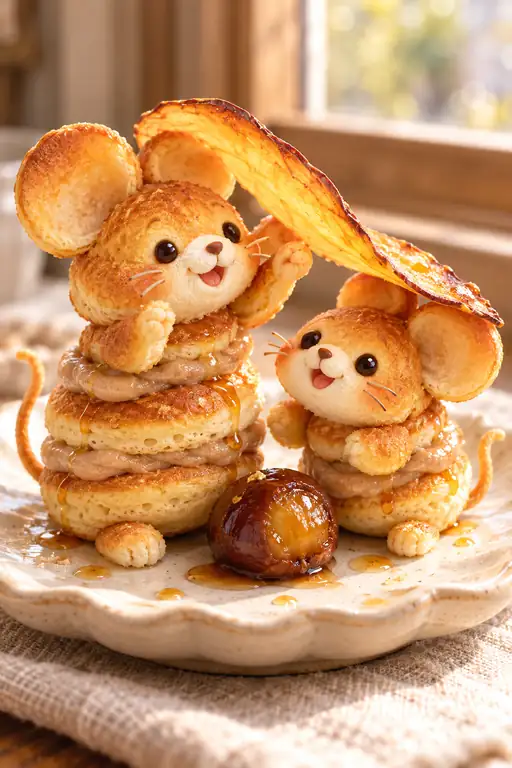 Beneath the Crisp Golden Canopy, Shelter for Two
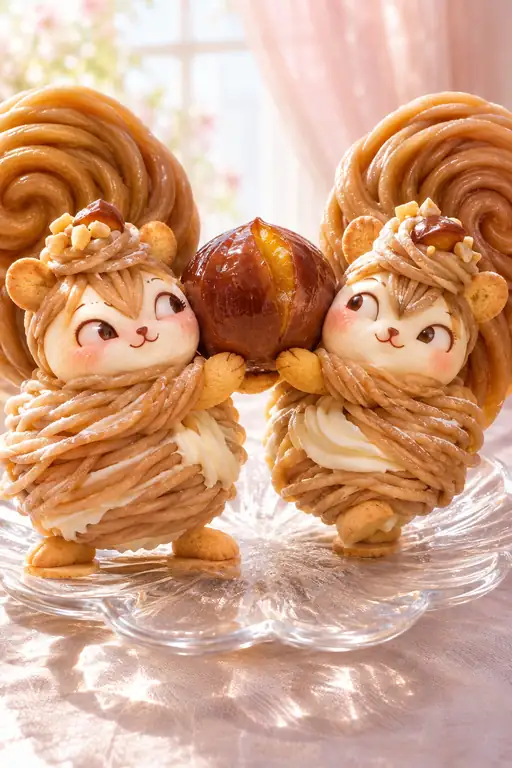 Spiral Tails Entwined, Sharing the Autumn Harvest