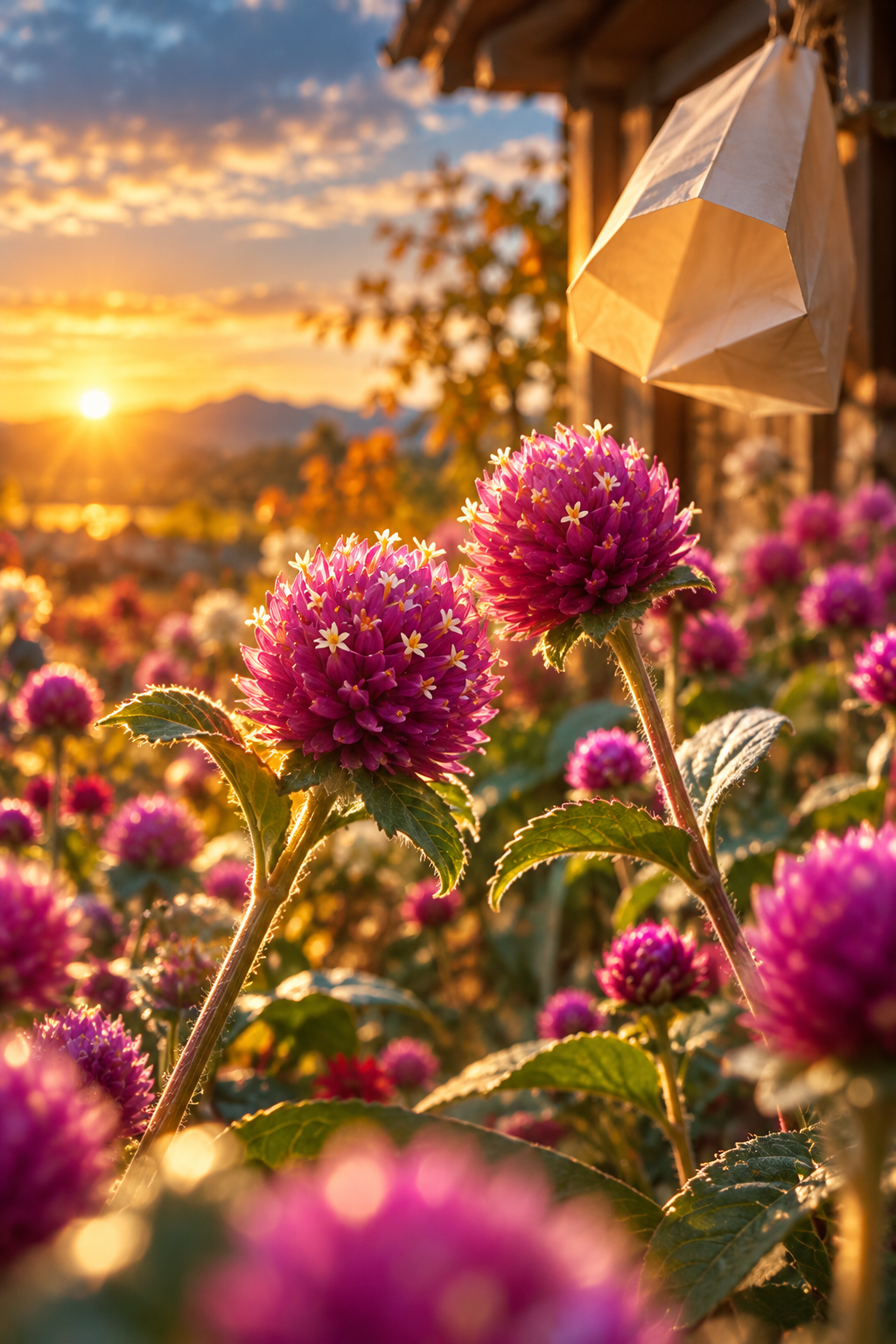
Sunset Envelope: Globe Amaranths and the Hanging Paper Pouch
Critique
Introduction Two rounded magenta flower heads stand beneath a folded paper bag hanging from the eaves at sunset. More flowers repeat through the garden, while the pale bag introduces a broad angular surface above. The arrangement connects a dense botanical pattern with a visibly made object at the edge of a building. Description Each prominent head contains overlapping pointed magenta structures scattered with tiny white, star-shaped flowers. Fine hairs on stems and toothed leaves glow along their edges. The suspended bag reveals its open underside and folded side planes, with different warm values inside; a low sun appears over distant hills beyond softly repeated flowers and houses. Analysis The two sharp flower heads form an ascending diagonal, reinforced by their upright stems. The bag interrupts repeated rounded shapes with corners and large unbroken planes. White floral points describe the heads' surfaces, while gold-orange backlight connects magenta, green, and paper; blurred foreground blooms create enclosure but confine the most detailed observation to a middle distance. Interpretation and Evaluation The hanging bag suggests household handling beside growing plants without defining a particular use. Originality lies in turning thin paper and densely layered flowers toward the same light. Small white flowers remain distinct from pointed magenta layers, demonstrating descriptive control, although abundant warm reflections occasionally emphasize sunset spectacle more than folds or individual botanical details. Conclusion Bright flower heads attract attention first, but examining the bag brings differences of thickness, orientation, and transmitted light into focus. The tiny white blooms also show that each large head contains smaller units worth observing. Despite emphatic backlighting, the work presents the garden as a place where cultivated growth and human materials quietly coexist.
Same Subcategory
Similar Artworks
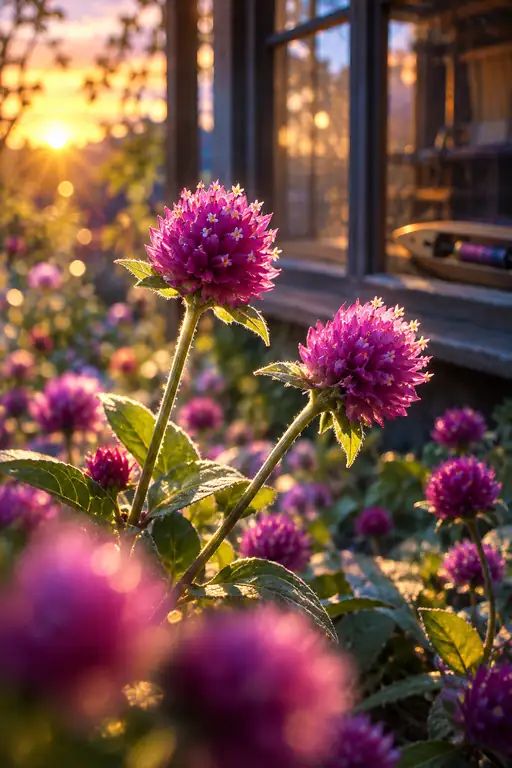 The Weaver's Shuttle and the Crimson Globe
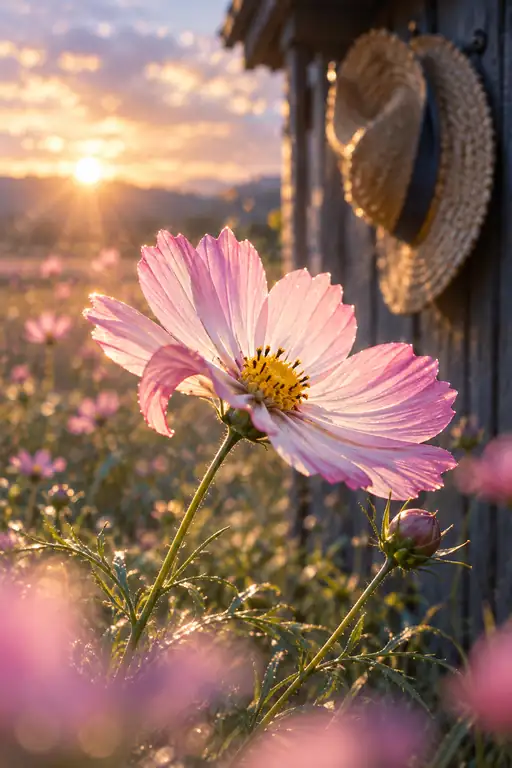 Where Morning Pierces Petals and Autumn Breathes
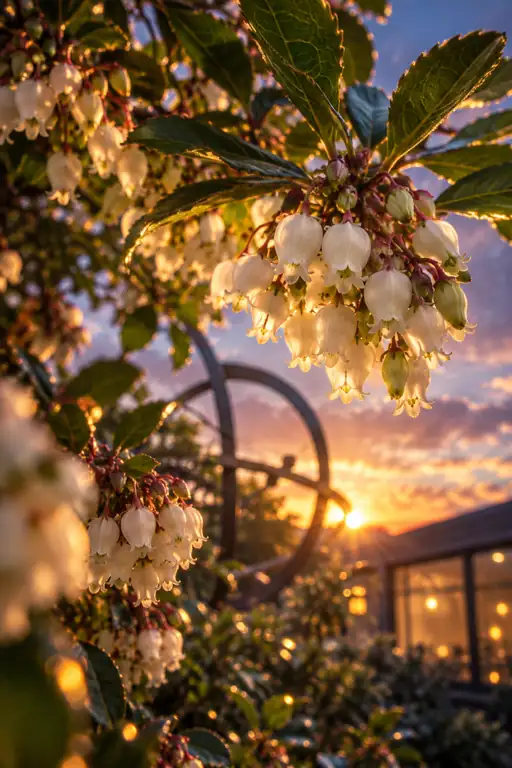 Spheres of Dawn, Clusters of Luminous White Bells
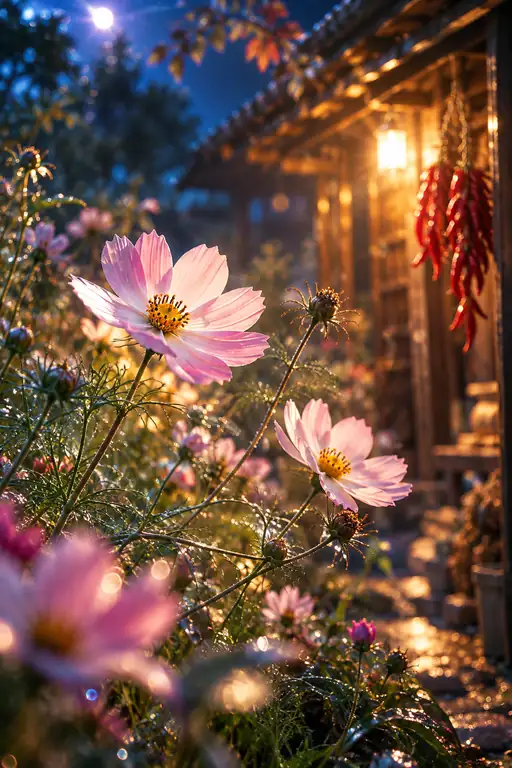 Moonlit Cosmos in the Yard Beside the Hanging Chili Peppers
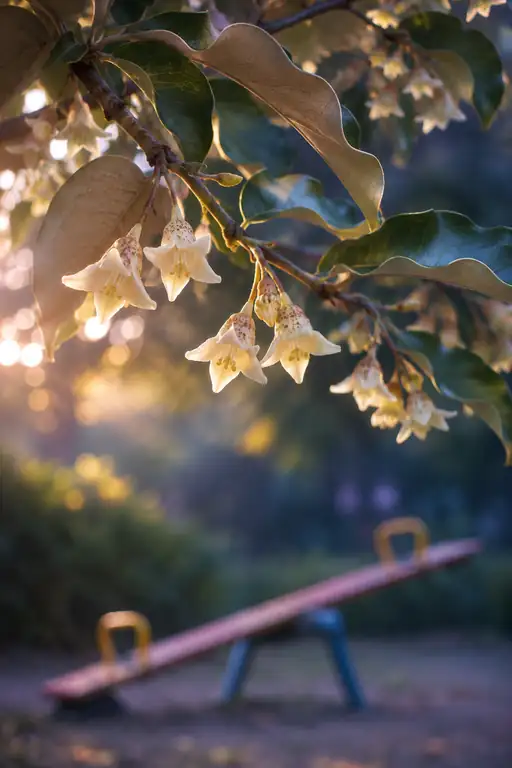 The Seesaw in Amber Light, Quiet Bells After the Children Leave
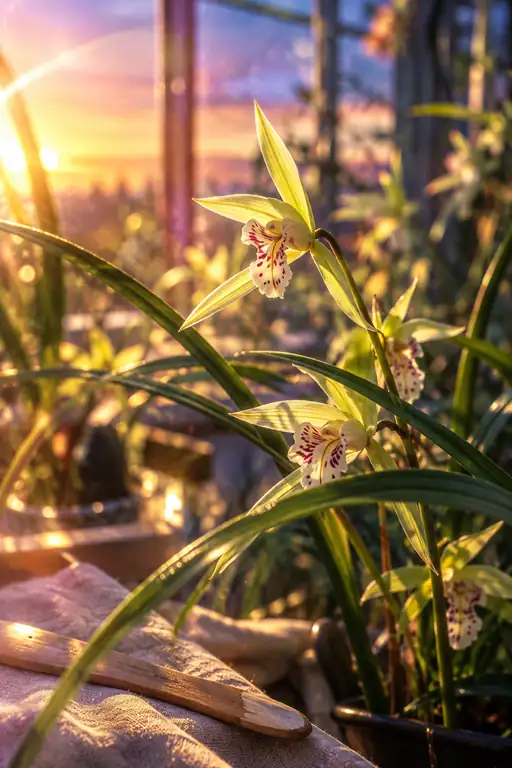 Morning Light in the Glasshouse, The Slender Orchid
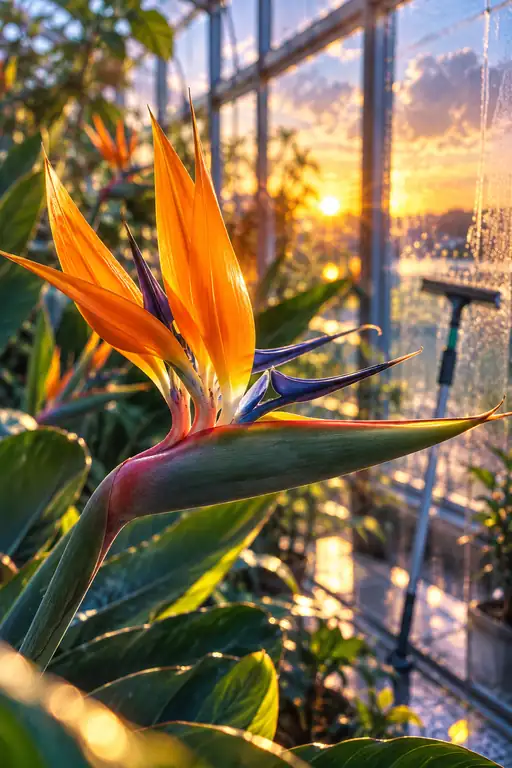 Morning in the Glasshouse, Wings Toward the Sun
 Pathway of Sweet Resins: Rosemary Garden and Millstone in Evening Glow
 Tree Dahlias Under the Eaves Facing the Twilight Antenna
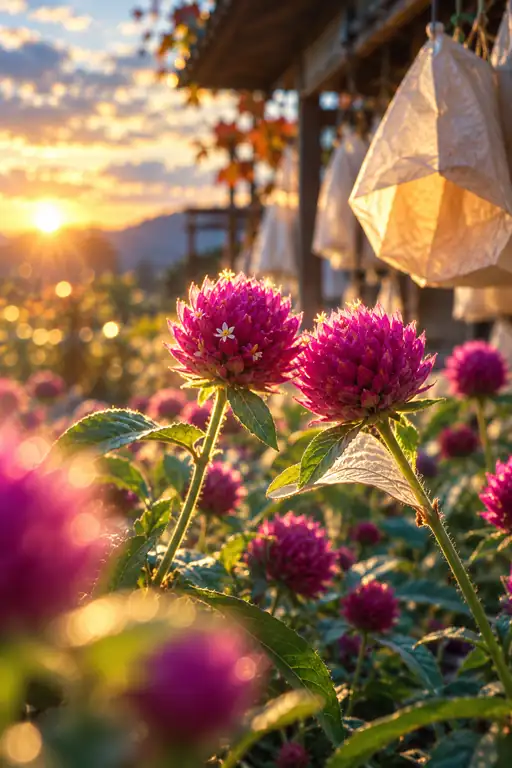 Globe Amaranths and Seed Bags in the Orchard Sunset