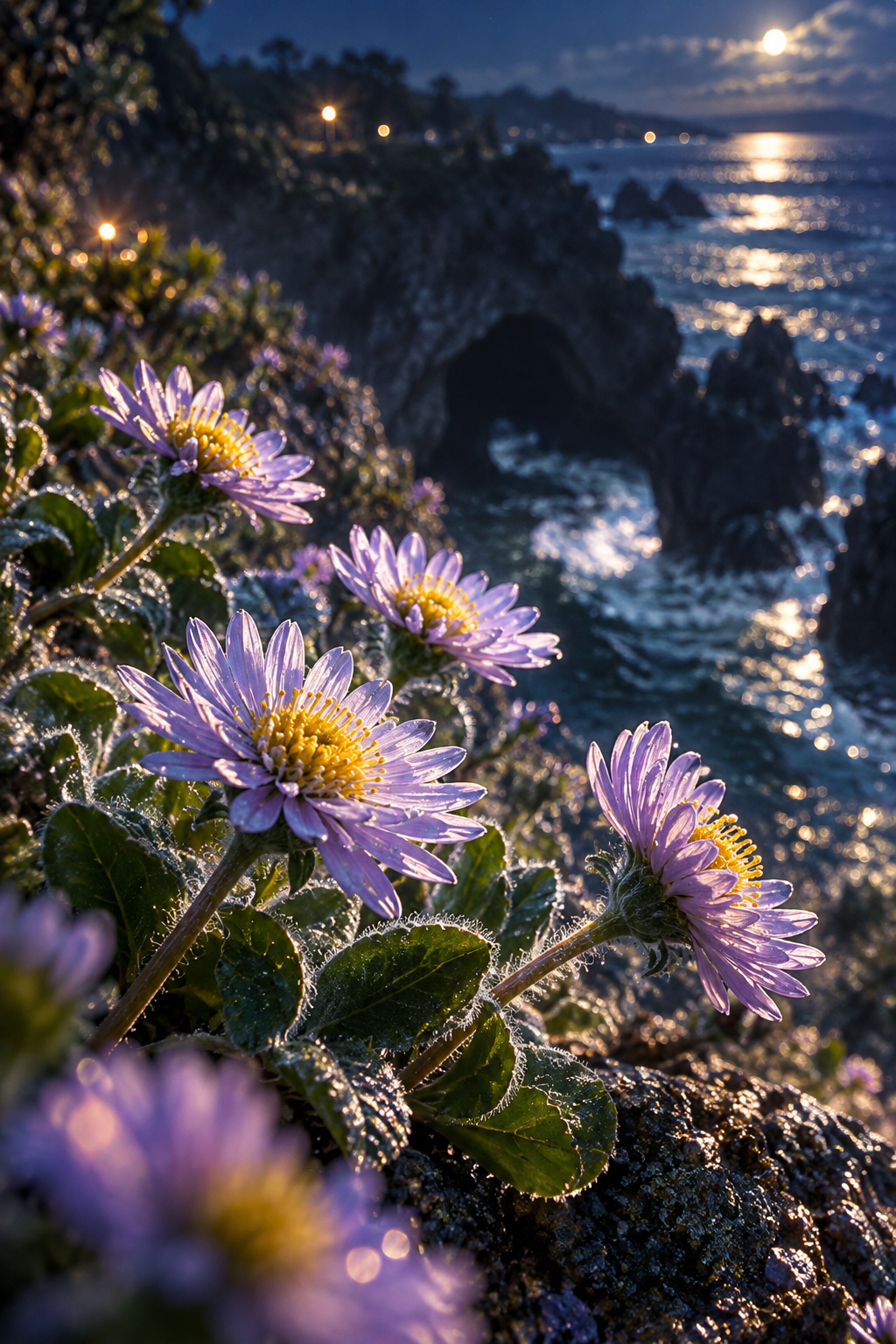
Grotto in Lunar Solitude: Nippon Daisy by the Sea Cave
Critique
Introduction Pale purple flowers rise from a rocky foreground above a moonlit coast. Their close detail contrasts with a large dark opening in the cliff beyond, while waves and reflected light continue along the right. The vertical composition connects small botanical forms with the much greater scale of coastal geology and water. Description Yellow flower centers are surrounded by overlapping narrow petals. Several blossoms turn differently: one faces sideways at upper left, another opens toward the viewer, and a lower-right bloom reveals part of its back. Fine hairs cover thick leaves and stems, while wet granular rock supports them; white surf enters the distant opening beneath the bright moon. Analysis The varied flower angles guide attention upward toward the dark hollow, which briefly arrests that movement. The moon's reflection establishes a separate vertical route through the water. Petal veins and leaf hairs act as small visual units against broad rock silhouettes, while purple and yellow distinguish the flowers within an otherwise blue and black environment. Interpretation and Evaluation Plants in crevices and cliffs receiving surf suggest different scales of contact with the same surroundings. The scene is distinctive because rough water and a dark cavity remain active behind the floral display. Texture distinctions demonstrate descriptive strength, although the emphatic moon and reflection sometimes make nocturnal spectacle more prominent than the plants' quieter spread. Conclusion Close botanical observation gradually expands into awareness of the opening's depth and the waves below. Foreground blur indicates proximity while narrowing the zone of detailed attention. Through these alternating distances, the work makes the flowers feel small without diminishing their presence, allowing tactile detail and the breadth of the coast to coexist.
Same Subcategory
Similar Artworks
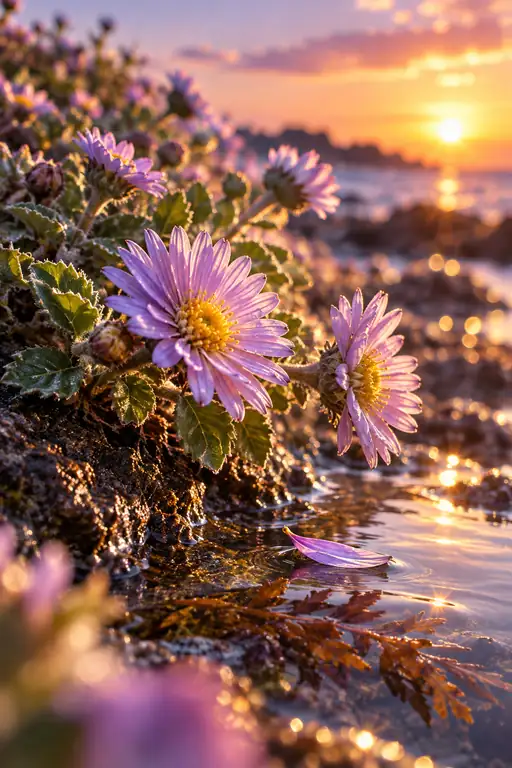 Drift upon the Tide Pool: Seaside Aster Petal at Sunset
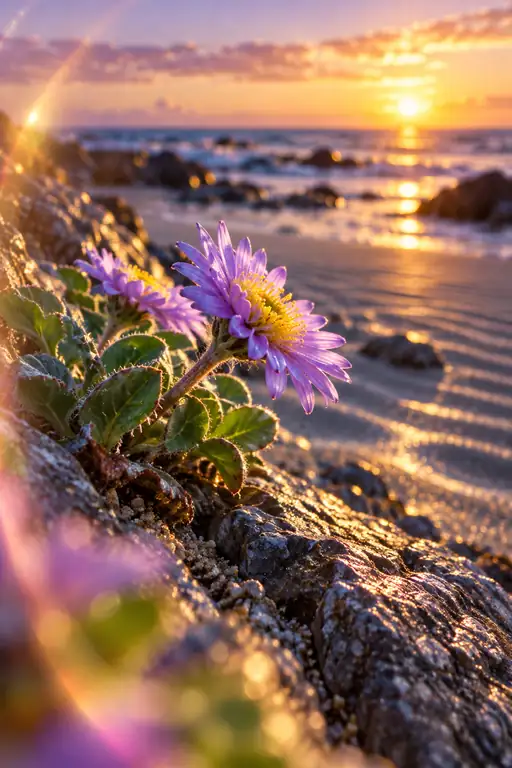 Wild Asters on the Crag, Facing the Sunset Tide
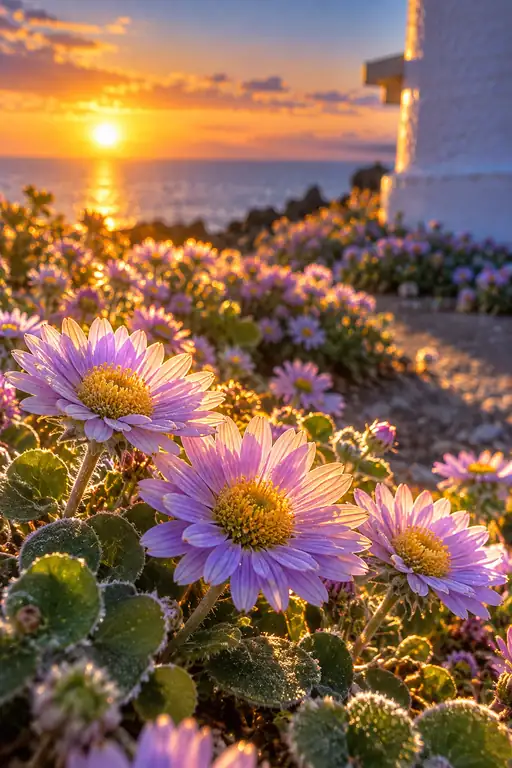 Coastal Purple Beneath the Lighthouse Beam
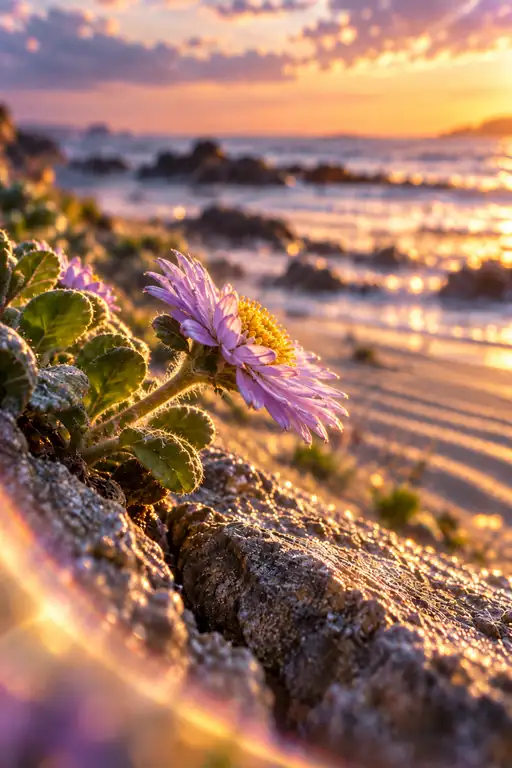 Respite on the Salt Cliff: Shore Aster at the Golden Tide
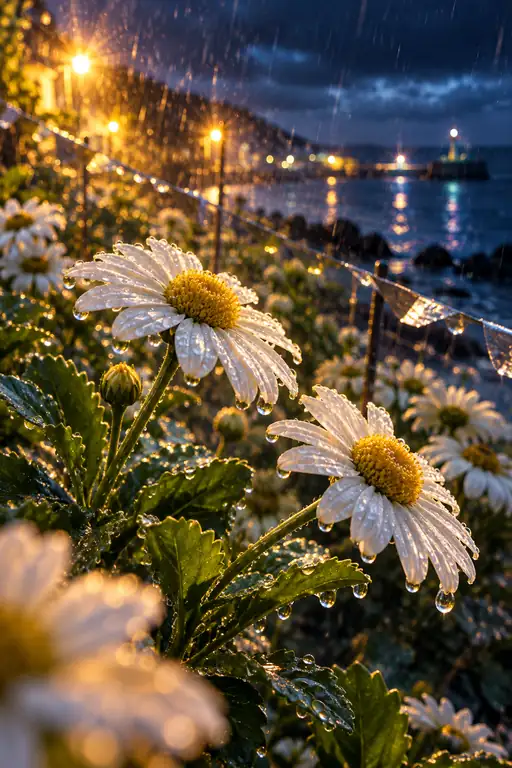 Sea Spray Daisies and the Harbor Rain in Twilight
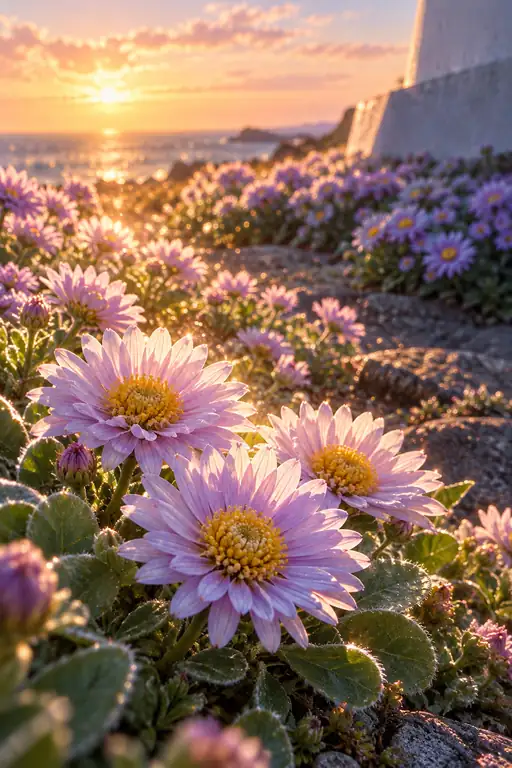 Shoreline Asters on Stone Steps Beside the White Lighthouse
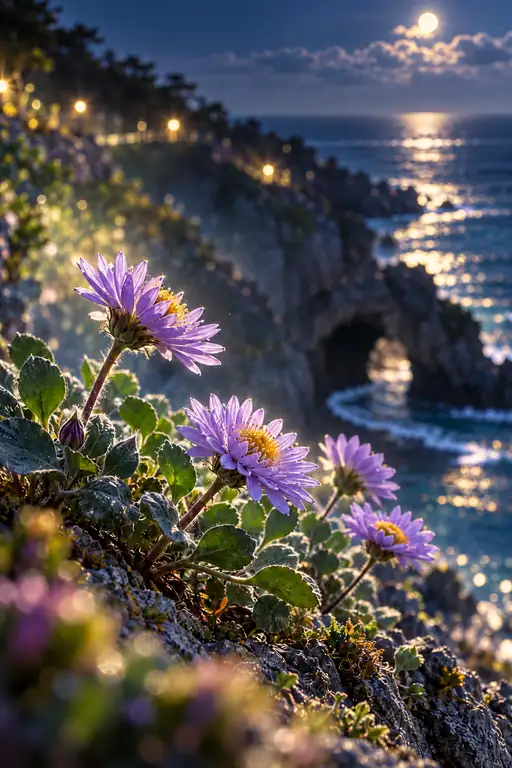 Coastal Asters Above the Moonlit Sea Arch
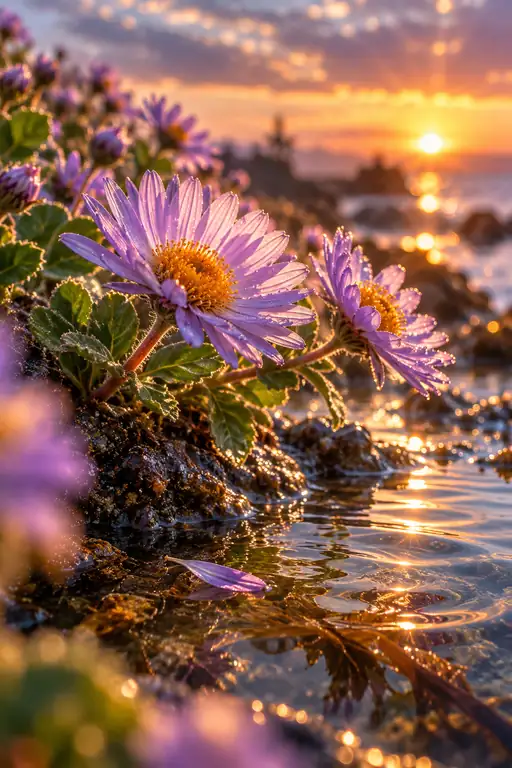 Shoreline Asters and the Floating Petal in Sunset Waters
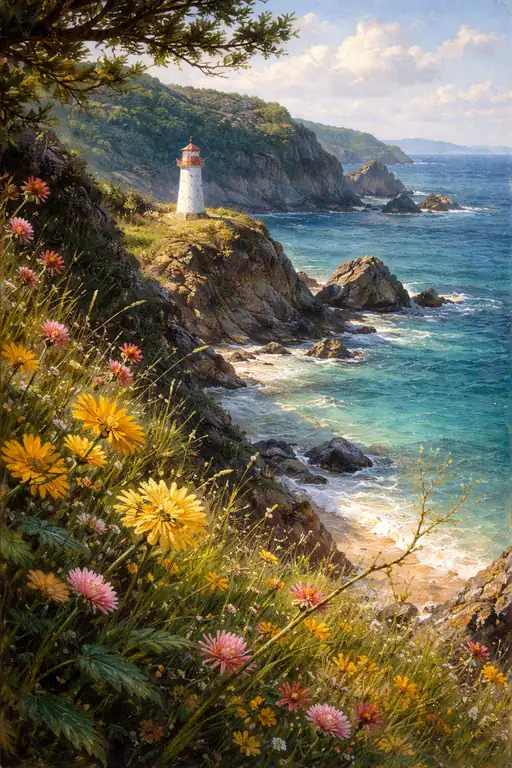 Sentinel Above the Blossoms
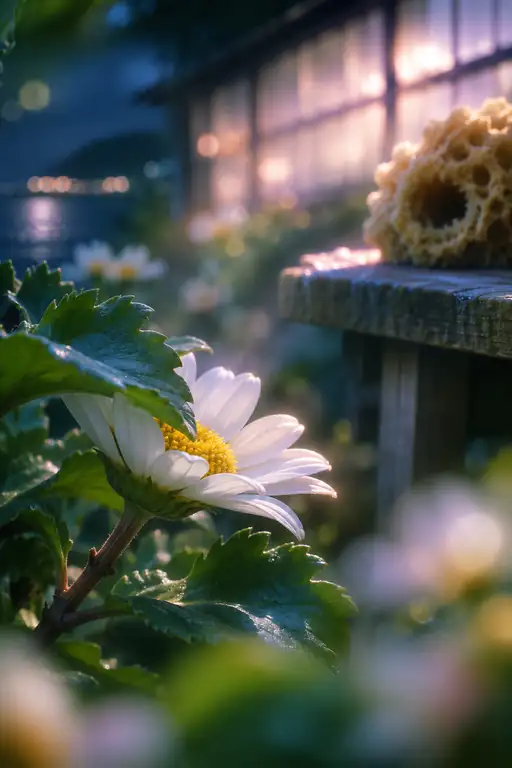 Morning Mist over the Water, Wild Daisy by the Sponge