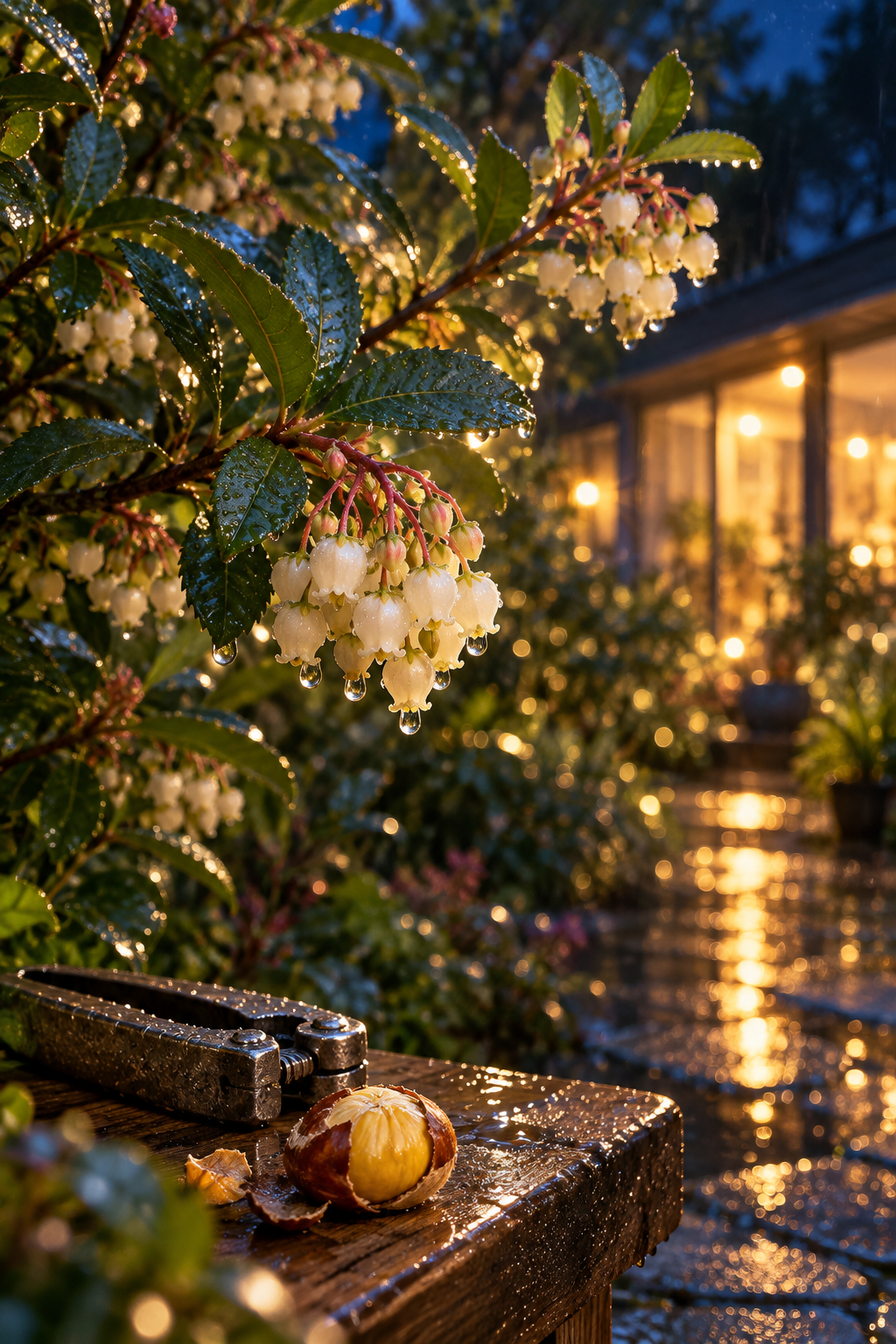
The Brewer's Autumn Solitude: Enkianthus, Chestnuts, and Iron Nutcracker
Critique
Introduction White bell-shaped flowers hang over a wet wooden surface holding a peeled chestnut and a metal tool. A warmly lit house and reflective path recede along the right. The composition places delicate growth beside signs of practical handling, allowing a garden at night to retain a tangible connection with everyday life. Description The central cluster hangs from reddish stems, with large drops suspended beneath rounded white flowers. Serrated dark leaves carry further beads of water, and another branch rises toward the upper right. Below, yellow chestnut flesh emerges from brown shell beside a dark nutcracker, while blurred windows and pots accompany the path into the distance. Analysis The flower cluster and chestnut establish separated points of brightness above and below intervening dark foliage. Branch diagonals and the bench's horizontal edge contrast with the receding line of reflected light. Droplets, a thin water film on timber, and metallic highlights retain different shapes, while the chestnut's larger roundness supplies weight beneath the small botanical forms. Interpretation and Evaluation Broken shell and tool imply handling without showing the person responsible, introducing work and food preparation into the garden view. The pairing is distinctive because shared wet surfaces connect flowers and equipment materially. Surface description is convincing, although numerous golden highlights behind the plants sometimes make illumination more conspicuous than the quiet detail of individual drops. Conclusion The initial attraction of white blossoms gradually expands into awareness of an inhabited place. Chestnut and nutcracker give human time a concrete presence beneath the branches. Despite the emphatic reflections, the arrangement joins close textures and receding space effectively, presenting the garden as somewhere used and revisited rather than merely admired.
Same Subcategory
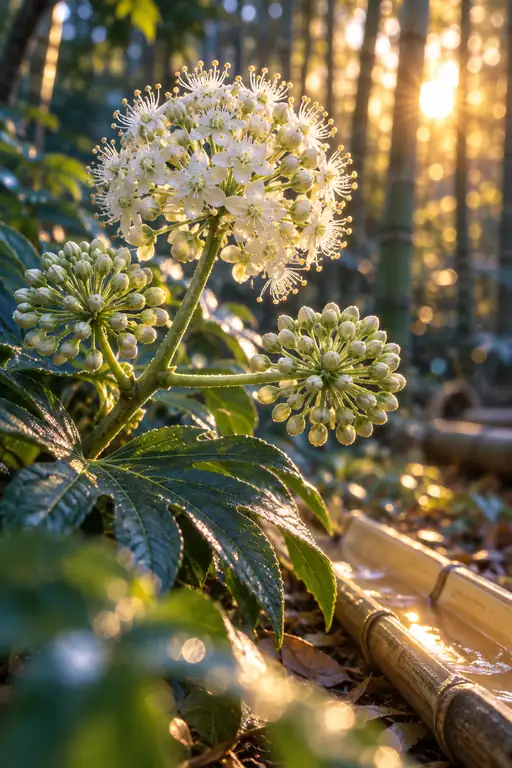 Where Bamboo Chills the Basin: Fatsia and the Split Bamboo Conduit
Similar Artworks
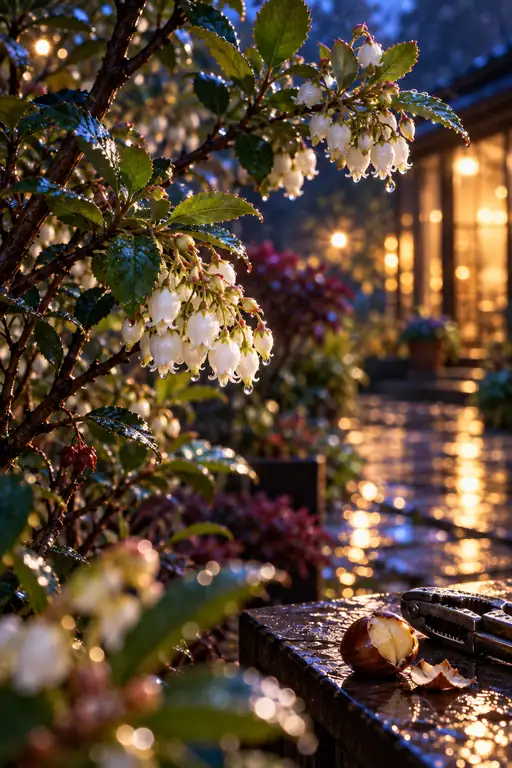 The Broken Chestnut on the Bench, White Bells in Rain
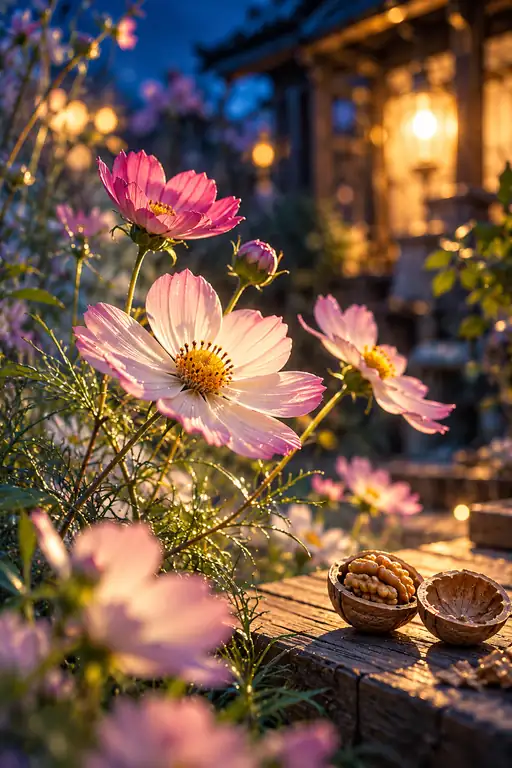 Twilight Harvest: Cosmos Blossoms and the Split Walnut Shell
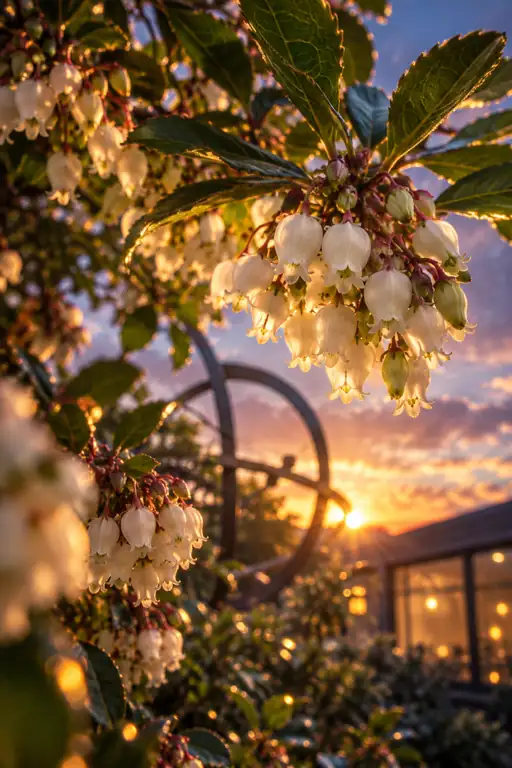 Spheres of Dawn, Clusters of Luminous White Bells
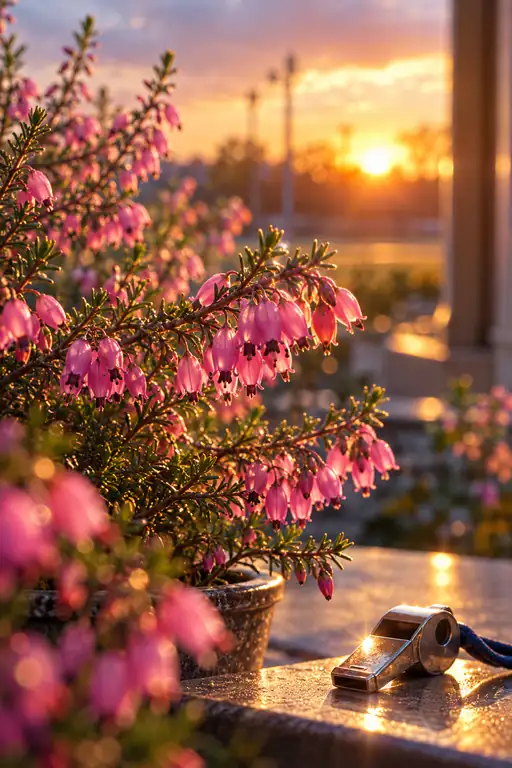 Clarion in the Heather: Erica Bells beside the Polished Whistle
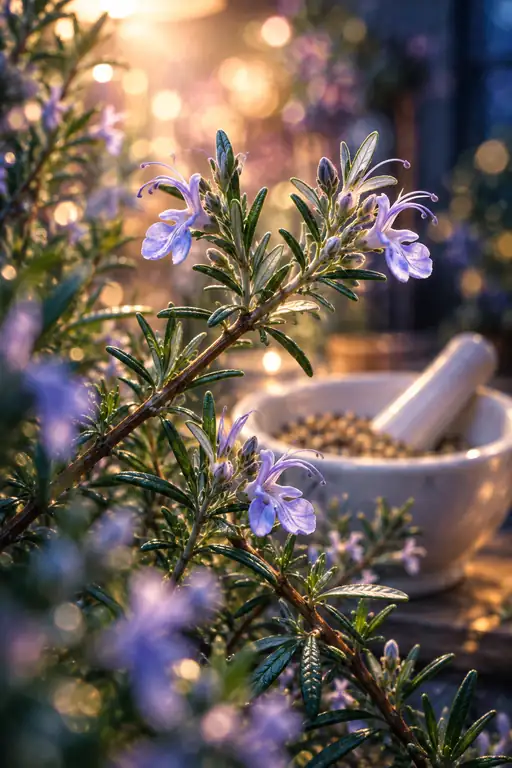 Aromas of the Hearth: Blooming Rosemary and the Marble Mortar
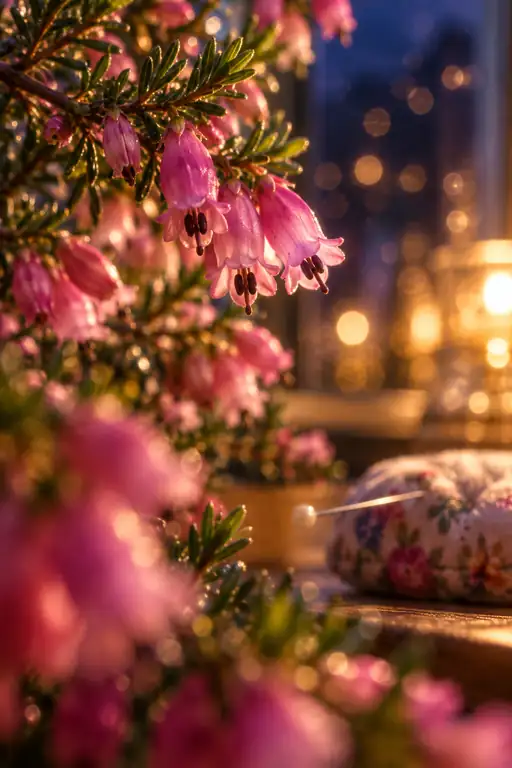 Stitches in Heather Bloom: Bell Heather beside the Floral Pincushion
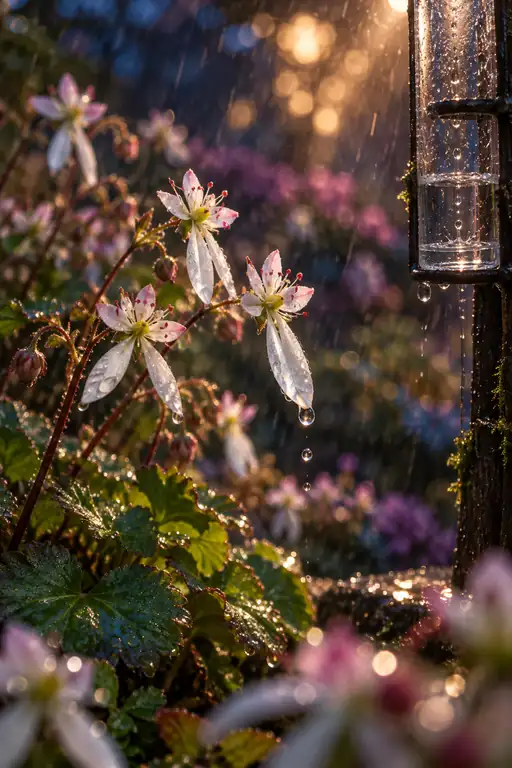 Gathering the Silent Downpour
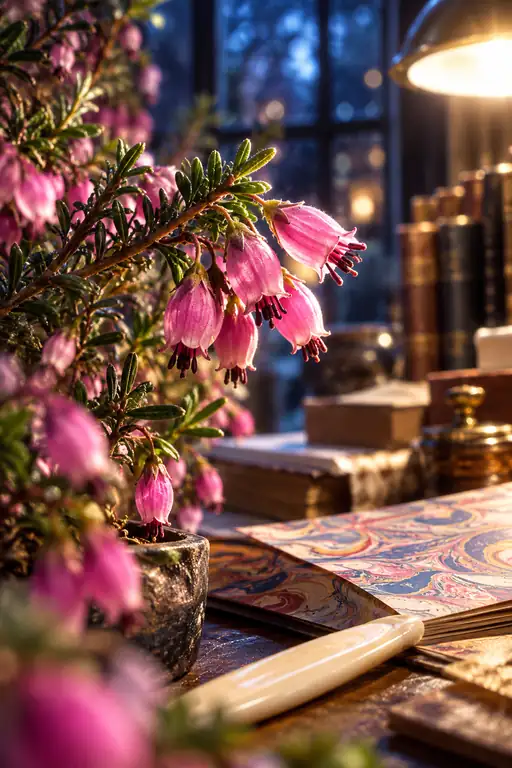 Letters Bound in Winter Bell: Erica Heather and Marbled Folio
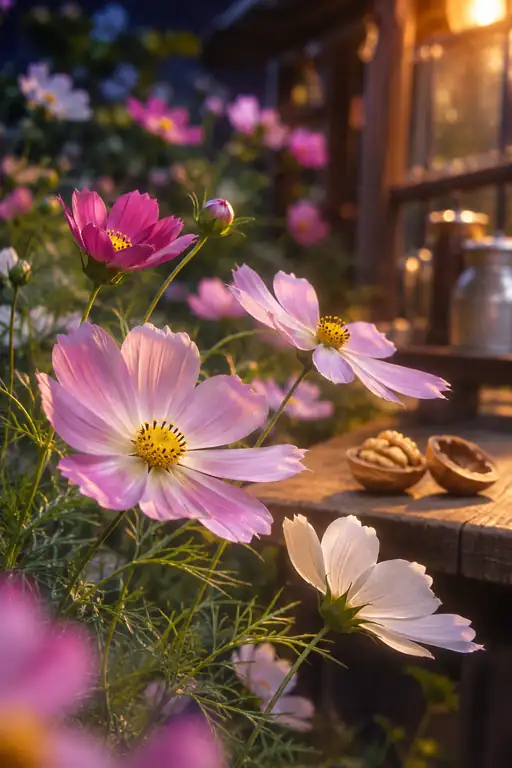 Cracked Walnuts on the Bench, Cosmos Swaying in Evening Breeze
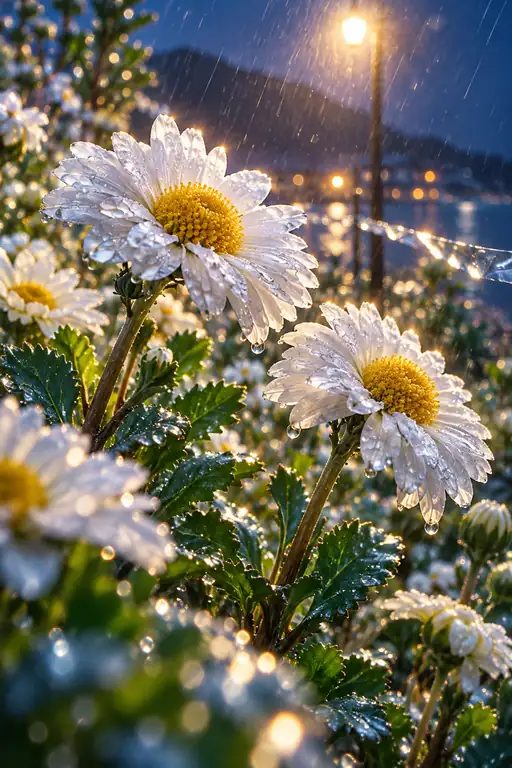 Rainlit Daisies Beneath the Streetlamp Glow