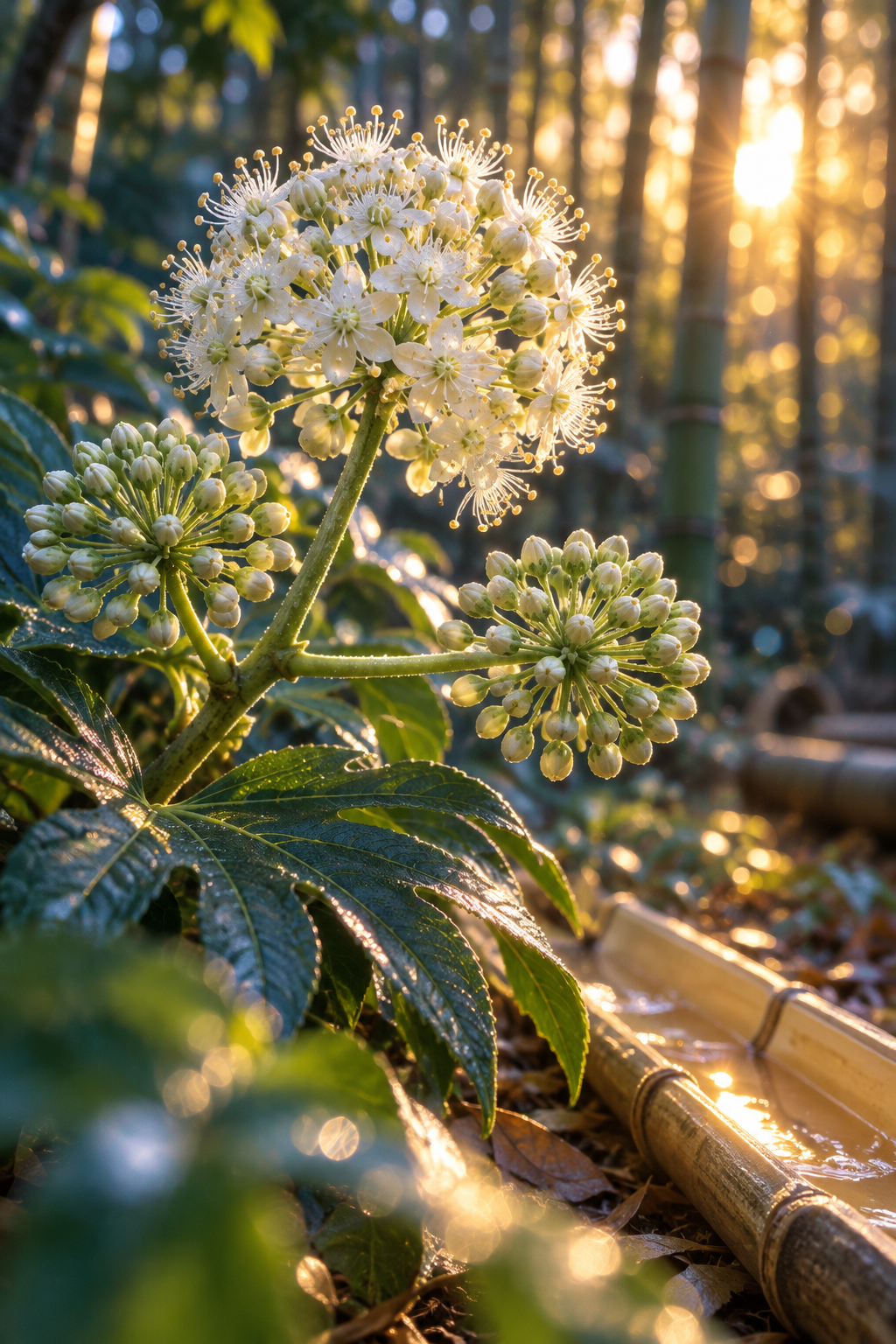
Where Bamboo Chills the Basin: Fatsia and the Split Bamboo Conduit
Critique
Introduction White spherical flower heads rise beside a split bamboo water channel in a grove. One large flowering cluster occupies the upper left, with two smaller bud clusters branching beneath it. Low sunlight from the right illuminates stamens, broad leaves, and the nearby water, connecting botanical structure with a use of surrounding material. Description Small white flowers spread long stamens around the main head, while pale green buds radiate outward from the lower clusters. Thick green branches support a deeply divided leaf marked by strong veins and droplets. The split bamboo trough carries shallow rippling water along the lower right, secured with narrow ties among fallen leaves and upright background stems. Analysis Three rounded clusters establish a triangular arrangement clarified by branch junctions. Radiating flower structures correspond with spreading leaf veins, presenting a repeated organizational principle at different scales. The trough's diagonal adds depth against the grove's vertical lines, while translucent petals, glossy foliage, smooth bamboo, and disturbed water receive the same warm light in materially different ways. Interpretation and Evaluation Open flowers and closed buds suggest different rates of development within one plant. Living bamboo behind a fashioned channel introduces a parallel relation between growing and used material. The viewpoint is distinctive, and fine stamens remain separate from binding cords, although the sun and abundant droplets sometimes merge white floral edges with bright areas behind them. Conclusion The initial sparkle of stamens gradually gives way to repeated radial structures in buds and leaf veins. The channel brings a human scale of handling into the grove's greater depth. Despite dense illumination, the composition carefully connects growth, water, and worked bamboo through visible form and surface rather than an imposed narrative.
Same Subcategory
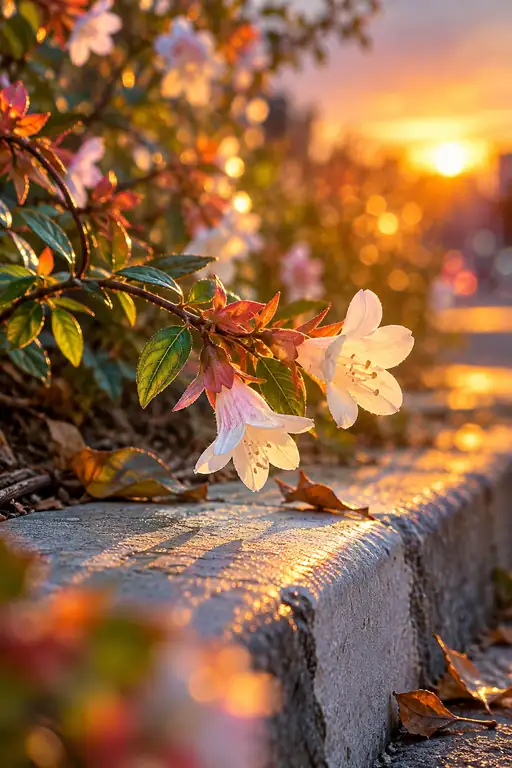 Abelia Blooms and Long Shadows on the Sunset Curb
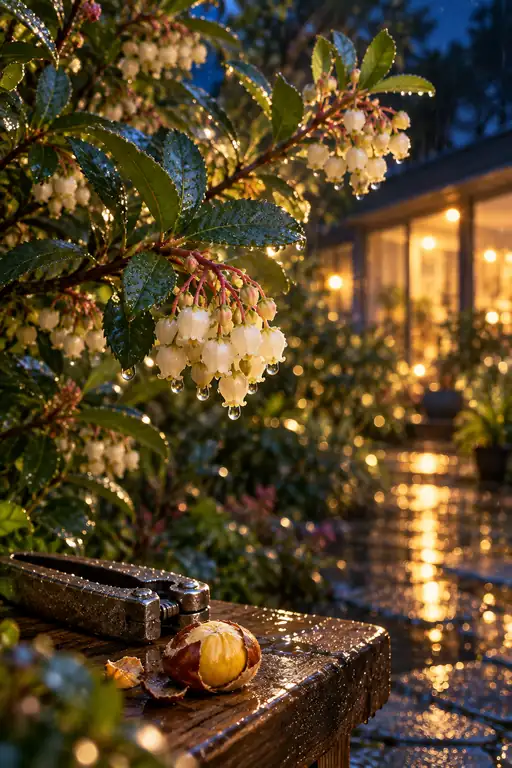 The Brewer's Autumn Solitude: Enkianthus, Chestnuts, and Iron Nutcracker
Similar Artworks
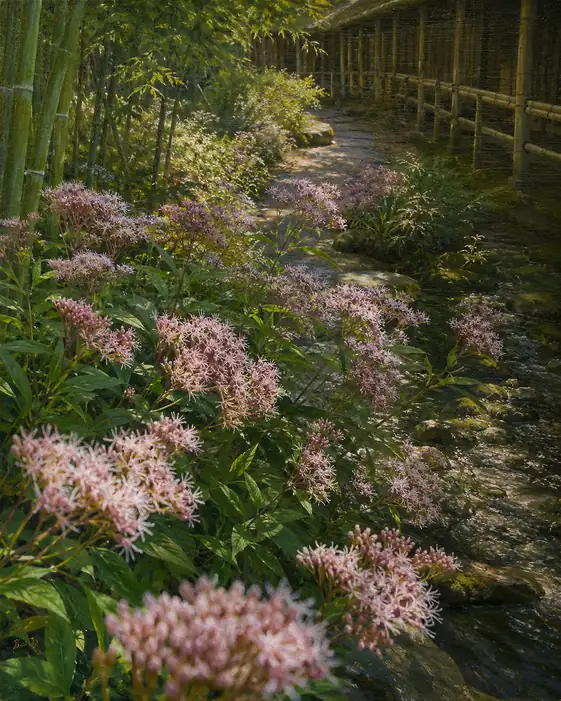 Autumn Scent by the Whispering Bamboo Stream
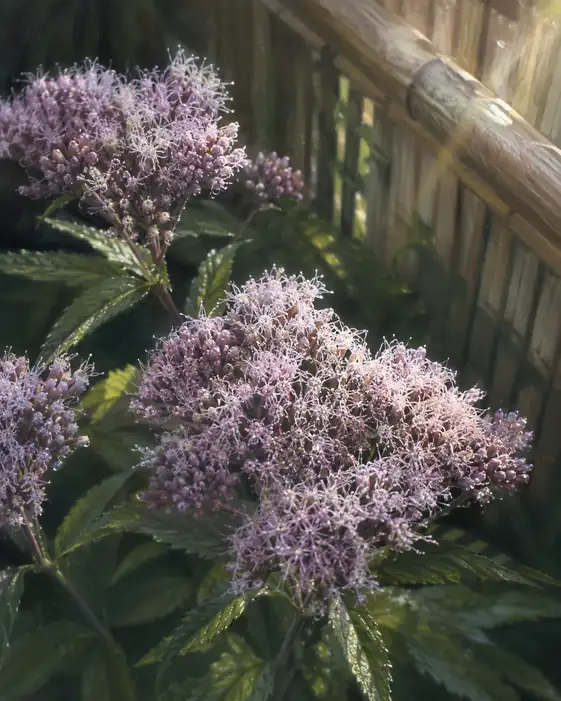 Komorebi by the Bamboo Fence and Thoroughwort in Bloom
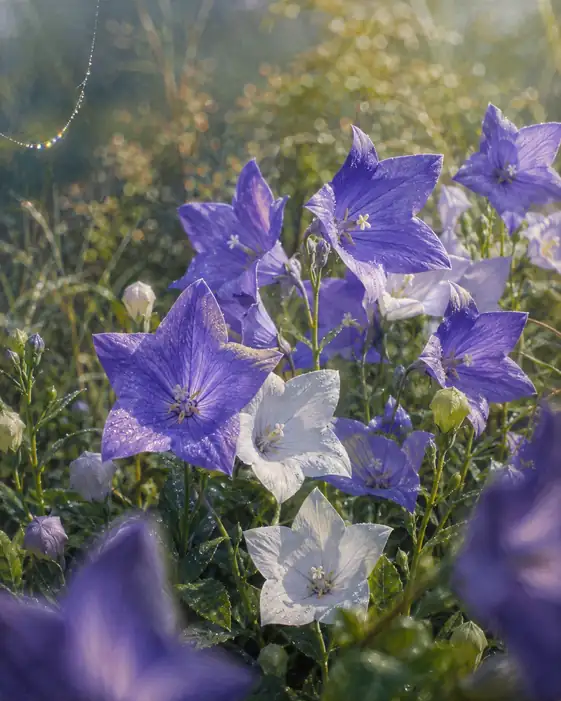 Dew-Laden Web and Purple-White Bellflowers in Morning Light
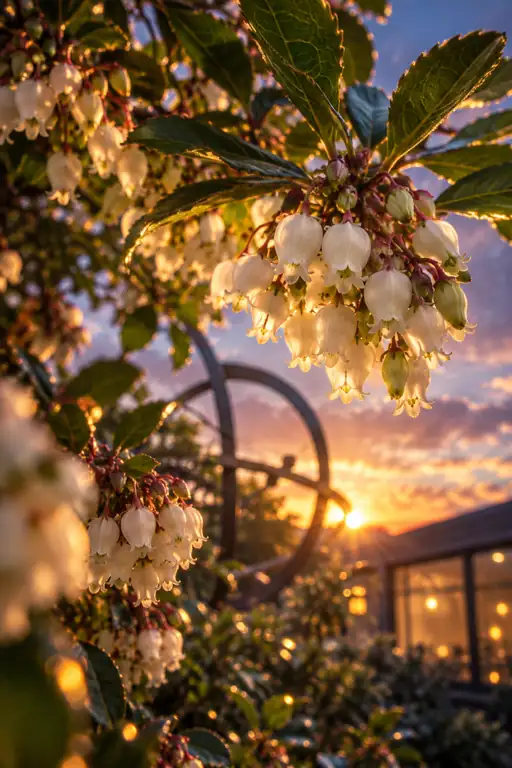 Spheres of Dawn, Clusters of Luminous White Bells
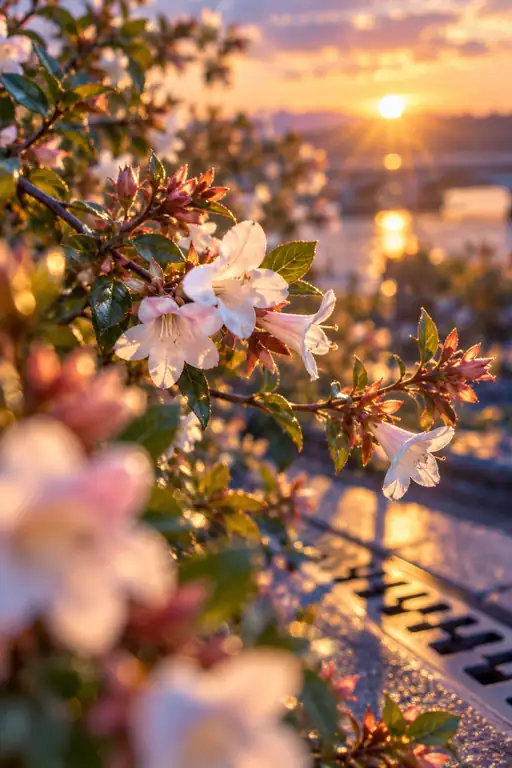 Dawn Over the River Span, Dewlit White Bells
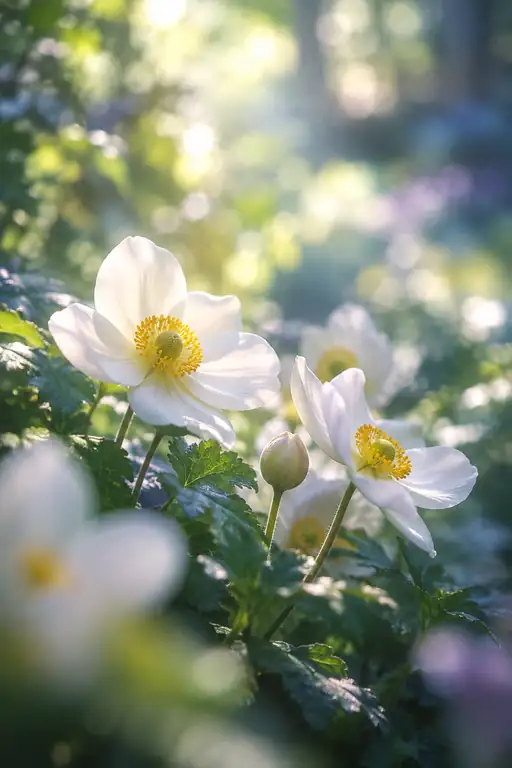 The Small Silence Between Petals
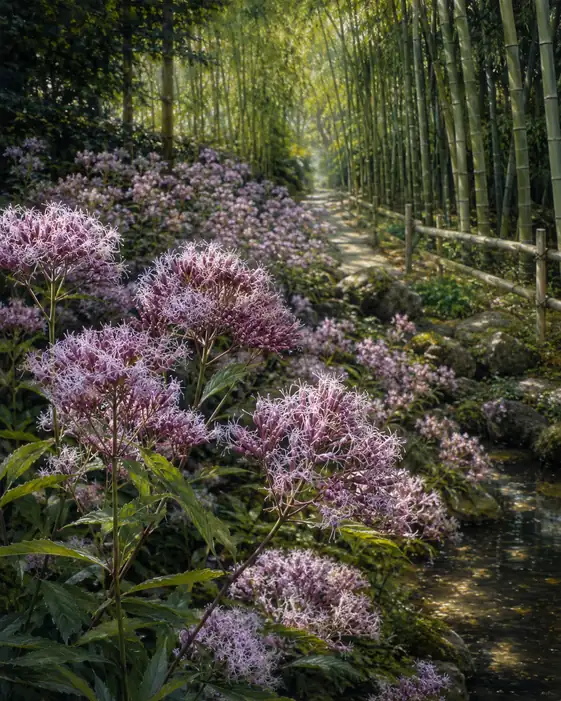 Murmur in Bamboo Grove and Thoroughwort in Komorebi
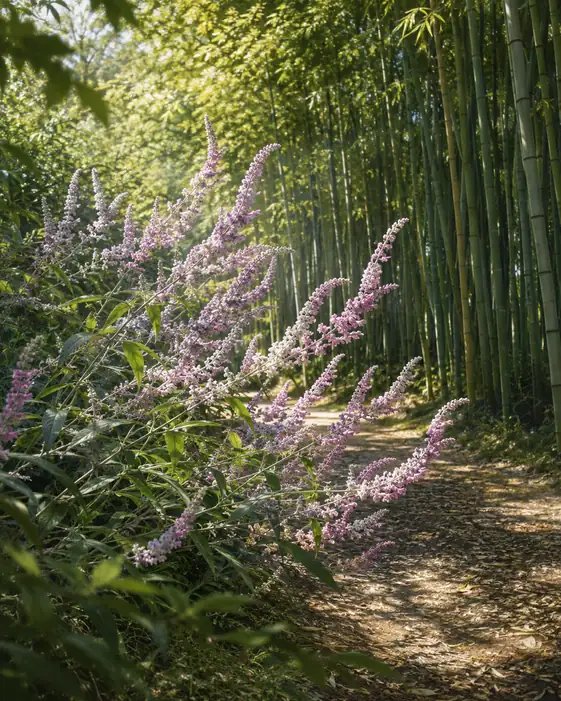 Komorebi in Bamboo Path and Pale Violet Amethyst Sage
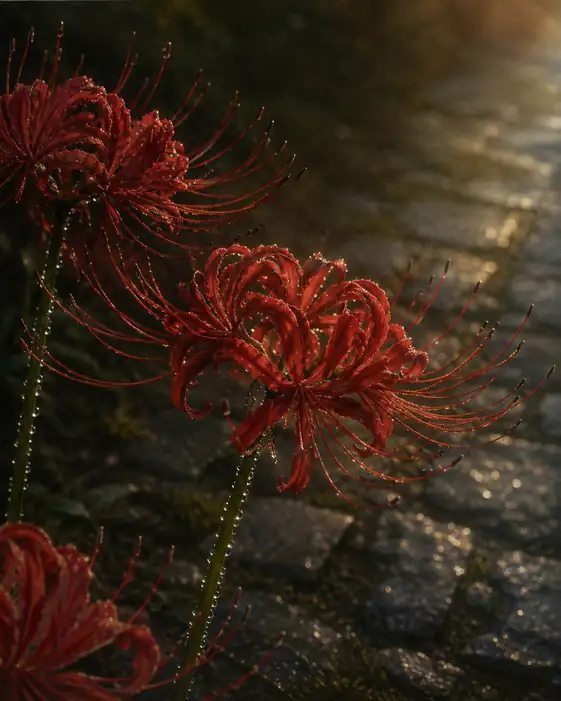 Dew Pearls on the Cobblestone Path and Scarlet Lycoris
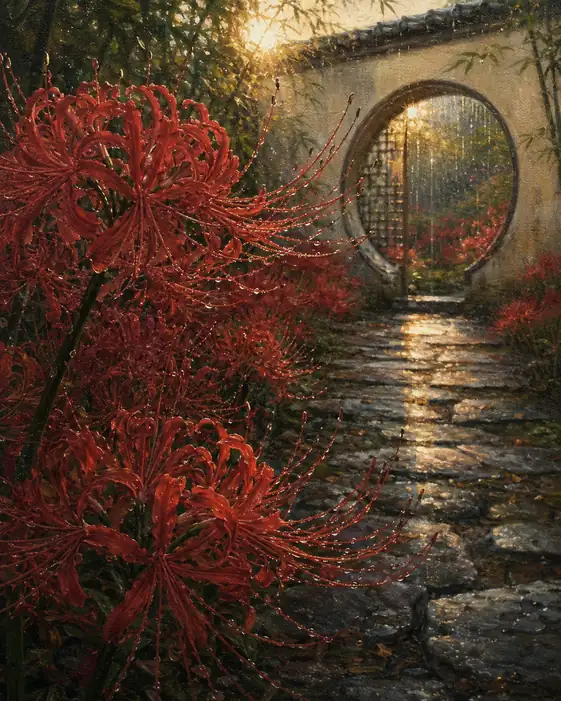 Path of Scarlet Dew Moistening the Moon Gate Garden