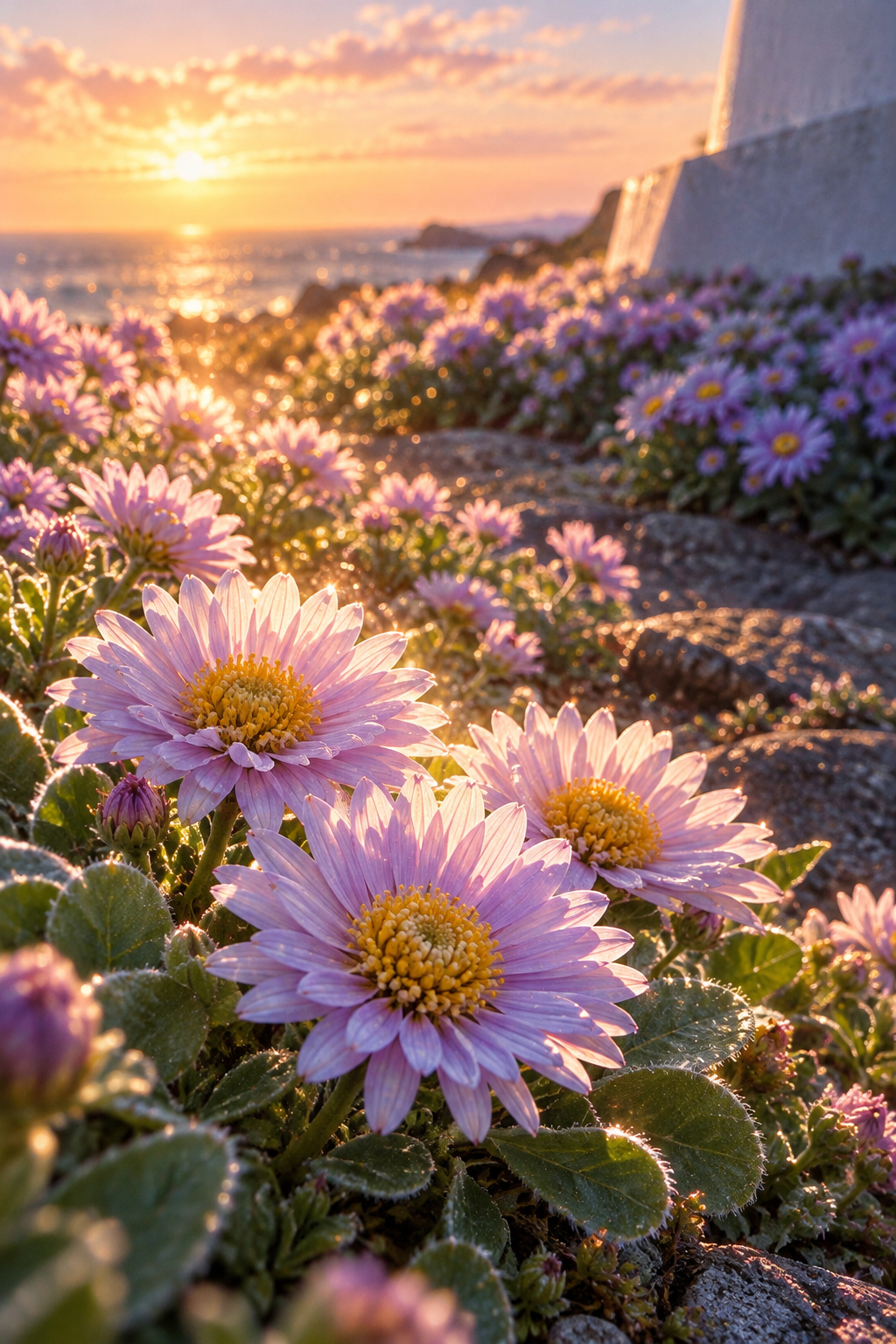
Shoreline Asters on Stone Steps Beside the White Lighthouse
Critique
Introduction Pale violet flowers surround stone steps beside the white base of a seaside building at sunset. Three foreground blooms lead toward smaller clusters, open water, and a low sun at upper left. Rough steps connect close botanical detail with the broader coastal view rather than leaving them as separate subjects. Description Long violet petals overlap around dense yellow centers, with each nearby flower facing a different direction. Thick rounded leaves carry bright hairs and droplets along their edges. Stone treads recede diagonally between flower masses, while the white wall occupies the upper right; beyond, gold reflections cross the sea beneath small pink clouds and dark distant rocks. Analysis The three main flowers form an unequal triangle extended by receding clusters and the stepped route. A large unbroken wall surface supplies rest against intricate vegetation. Violet petals and dark green foliage remain distinct under shared golden rim light, and the transition from resolved nearby textures to softer water establishes distance without overwhelming the plants' immediate scale. Interpretation and Evaluation Flowers bordering an open route suggest neighboring spaces of passage and growth. Originality lies in using only the building's base to establish its environmental role rather than making architecture the dominant symbol. Petal centers and leaf hairs receive differentiated attention, while varied flower orientations enrich the arrangement; the bright sea reflection nevertheless sometimes draws attention away from quieter details. Conclusion The three violet blooms provide the initial attraction, but the coarse steps gradually become essential to understanding the relation between planting and coast. The white wall stabilizes their abundance. Despite dramatic backlighting, the composition convincingly combines the tactile character of nearby ground with the much greater distance toward the horizon.
Same Subcategory
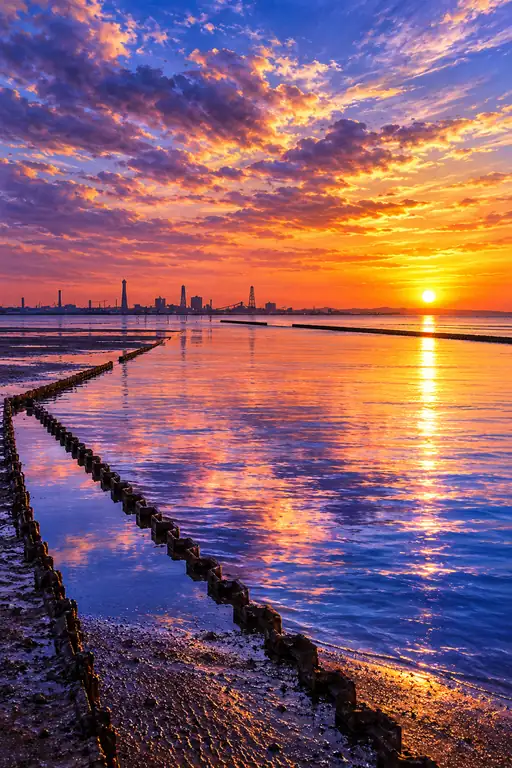 Serenade of Ripple Clouds and Still Waters
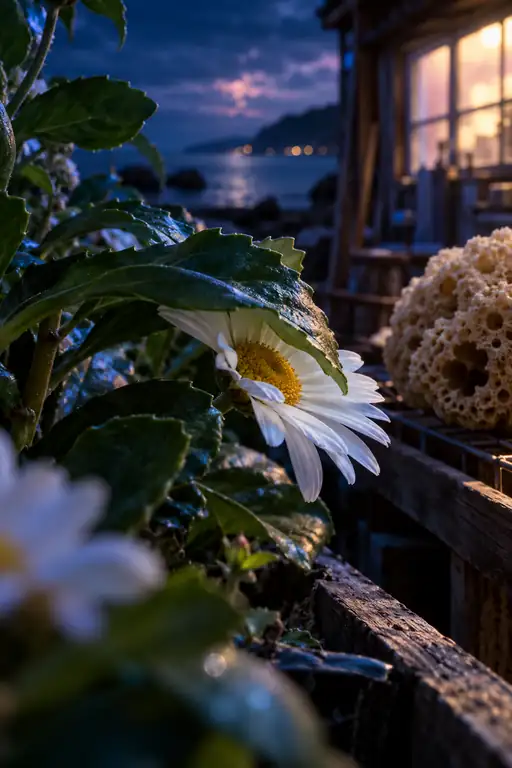 Twilight by the Tide: Coastal Daisy and Sea Sponge Outside the Fisherman's Shed
Similar Artworks
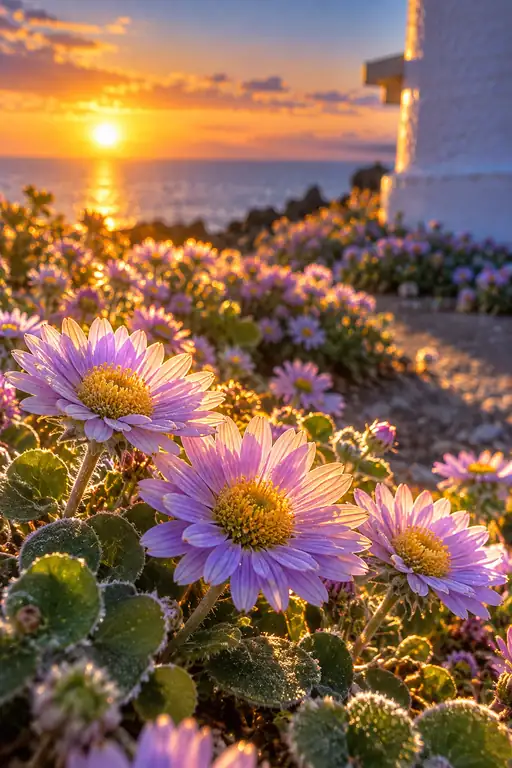 Coastal Purple Beneath the Lighthouse Beam
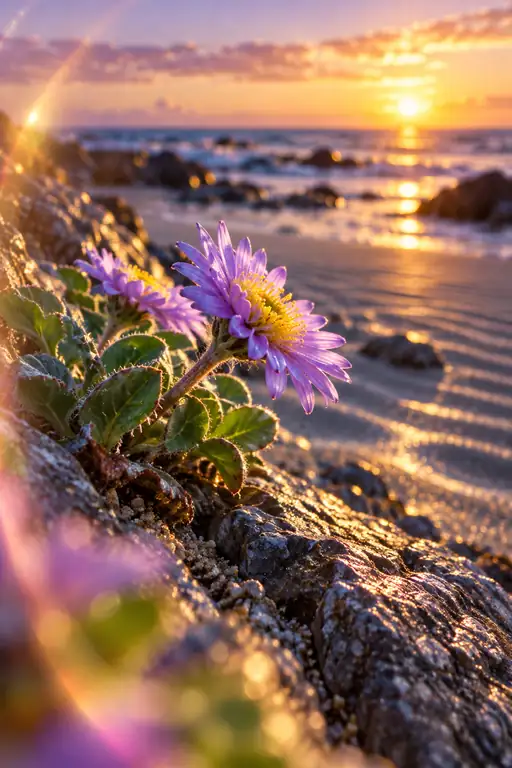 Wild Asters on the Crag, Facing the Sunset Tide
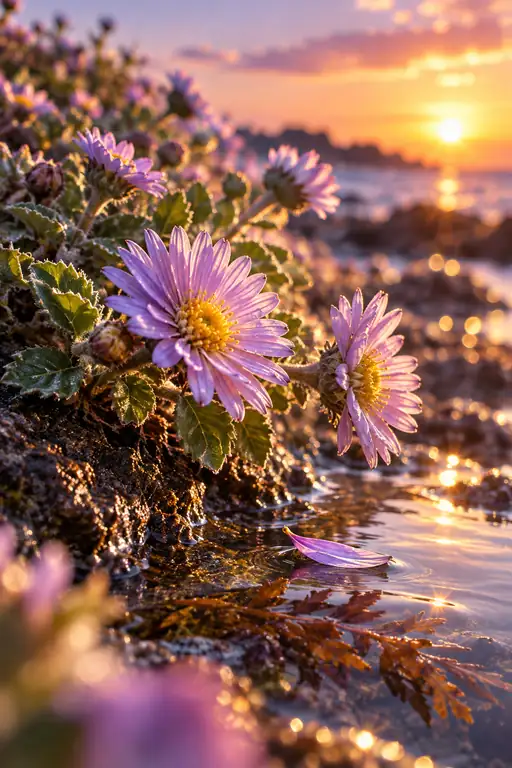 Drift upon the Tide Pool: Seaside Aster Petal at Sunset
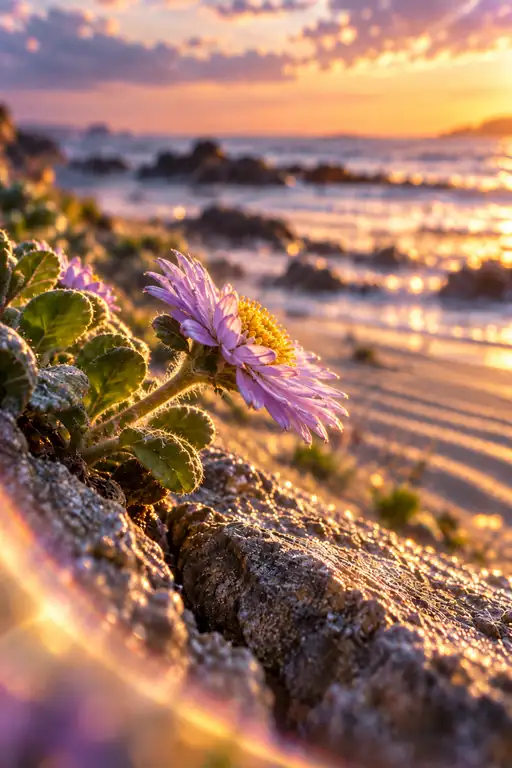 Respite on the Salt Cliff: Shore Aster at the Golden Tide
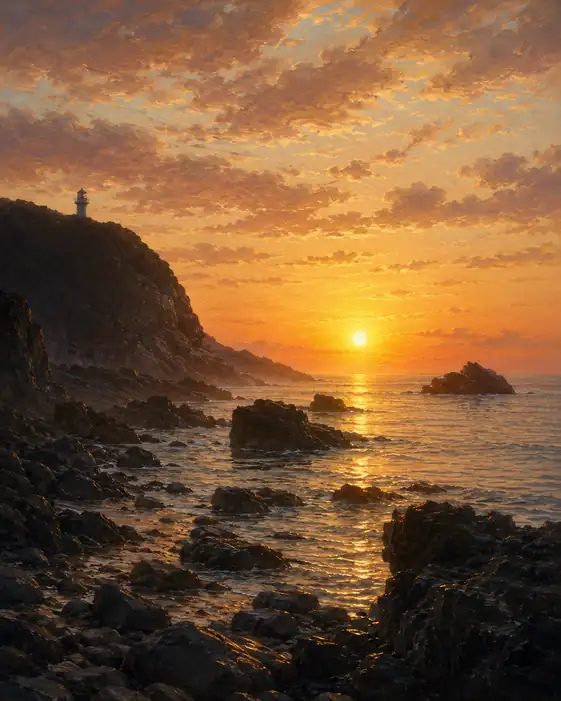 Cape Lighthouse Bathed in the Golden Horizon Sunset
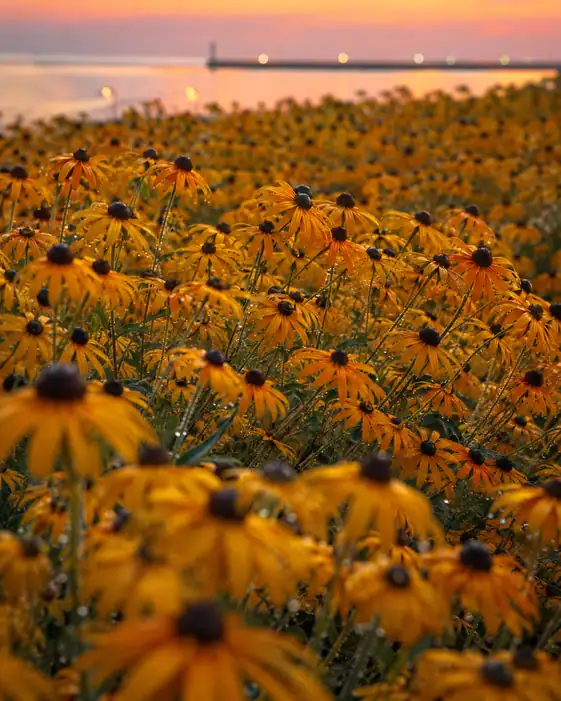 Golden Horizon by the Twilight Sea
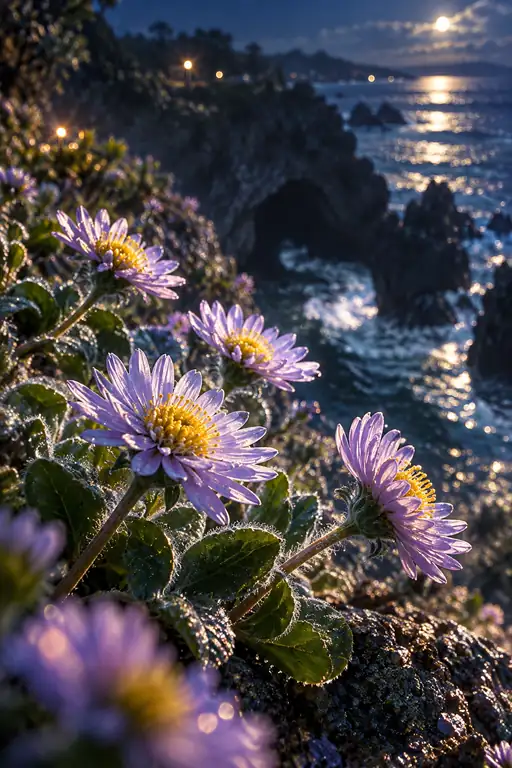 Grotto in Lunar Solitude: Nippon Daisy by the Sea Cave
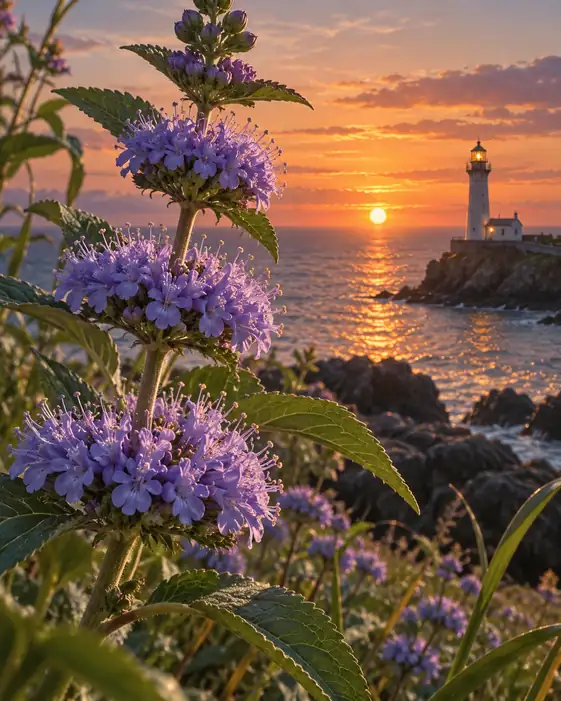 Cape Lighthouse and Sunset Caryopteris
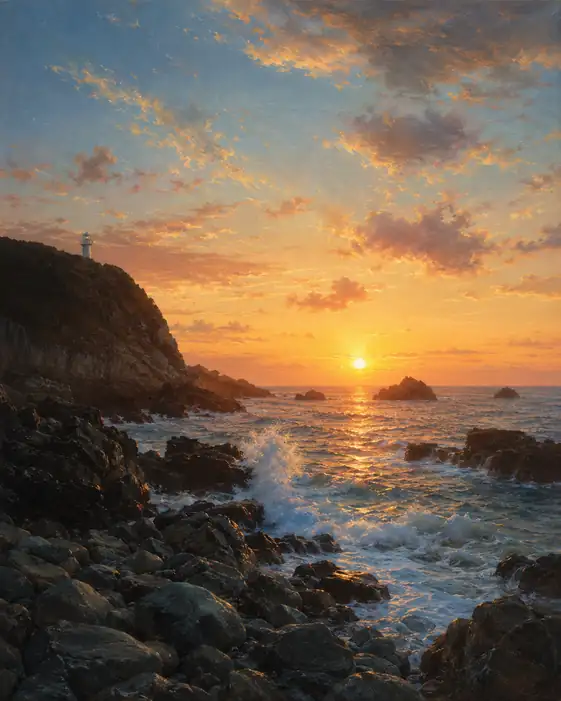 Twilight Glow Embracing the Rocky Coast and Distant Beacon
 Twilight Vigil on the Clifftop