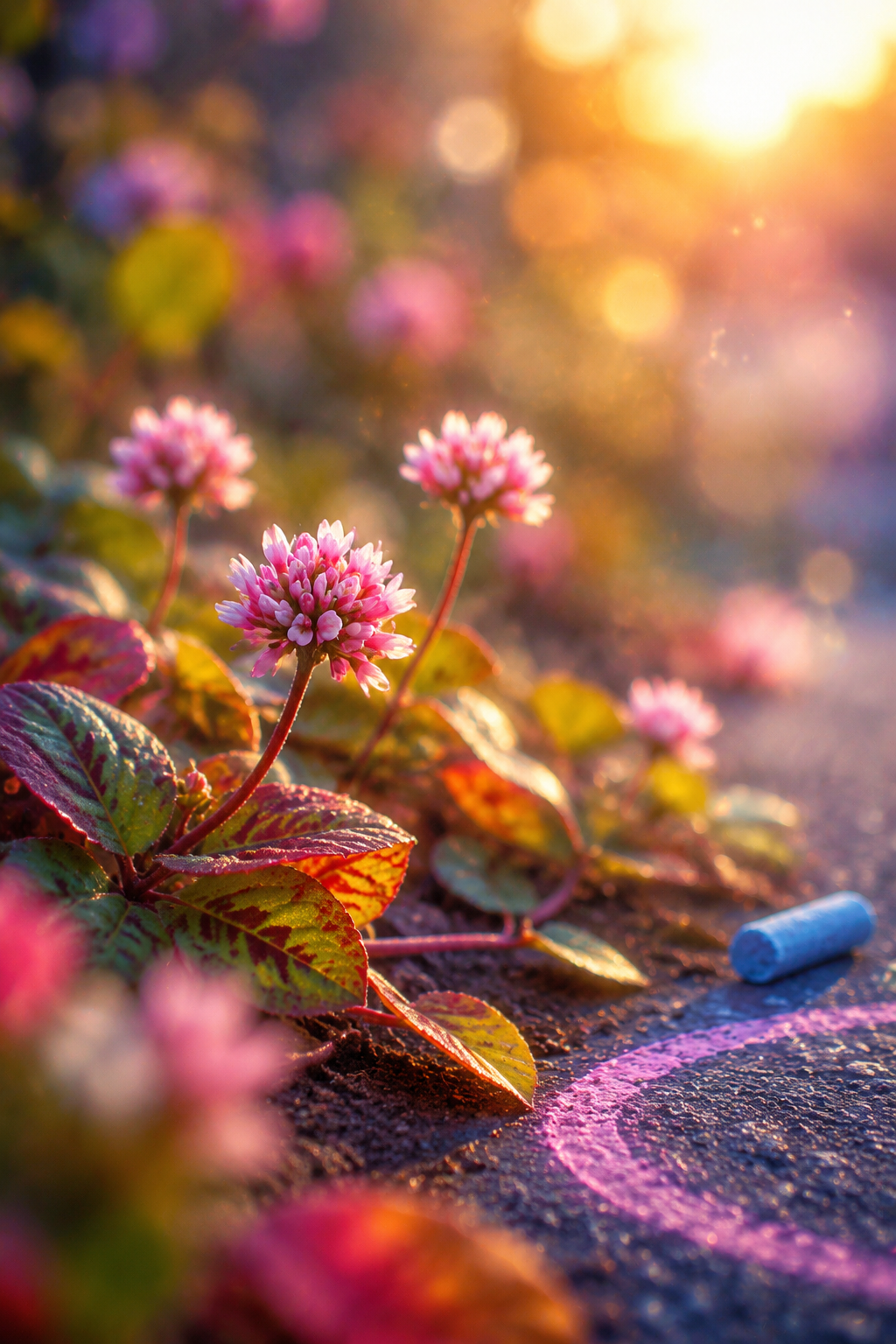
Circle of Chalk and the Golden Hour Polygonum
Critique
Introduction Low pink flowers and a blue piece of chalk share the edge of a paved surface. Strong evening light enters from the upper right, illuminating red stems and patterned leaves. Instead of describing a broad sunset, the work concentrates its color and attention close to the ground. Description The principal flower stands left of center, with two softer flower heads separated behind it. Green leaves carry reddish markings, visible veins, and finely toothed edges. A short blue cylinder lies at lower right beside a thick pink curve. Red runners traverse dark soil, and a yellow leaf projects toward the marked pavement. Analysis The three flowers form a loose triangle, concentrating visual weight on the left while the chalk occupies a quieter area opposite. The pink curve returns attention from the bottom toward the plant. Transmitted sunlight turns foliage yellow and orange, intensifying the cool cylinder. Progressively larger circles of background blur give the narrow strip of ground considerable apparent depth. Interpretation and Evaluation Because the drawn line echoes the flowers' color, applied pigment and living growth seem to acknowledge each other. Originality lies in retaining the discarded implement as a physical form rather than supplying an explanatory story. Petal clusters, leaf networks, and powdery chalk establish distinct textures. The extensive glow overhead, however, has greater visual force than the relatively modest main flower. Conclusion Finding a roadside bloom and noticing someone's remaining marks become connected acts of looking. The flowers attract the first glance, but the blue cylinder and pink arc acquire lasting importance. Natural stems and drawn curves combine into a persuasive composition, preserving a small coexistence beneath the abundance of evening light.
Same Subcategory
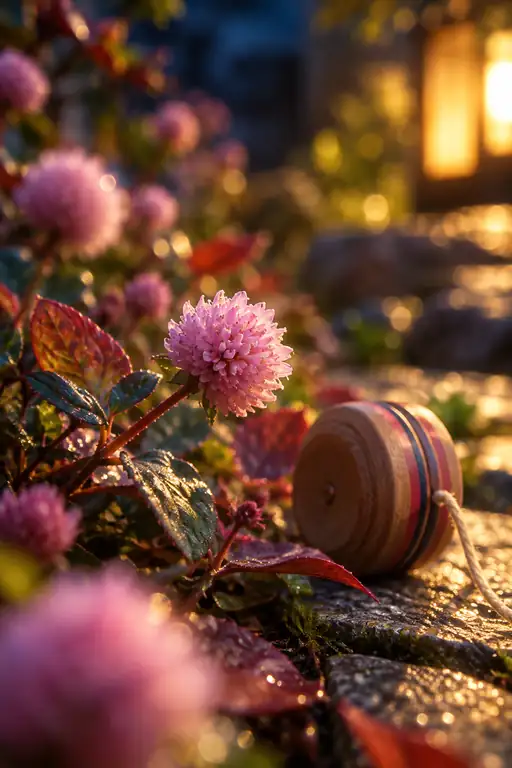 Smartweed upon Damp Flagstones Beside the Wooden Yo-Yo
Similar Artworks
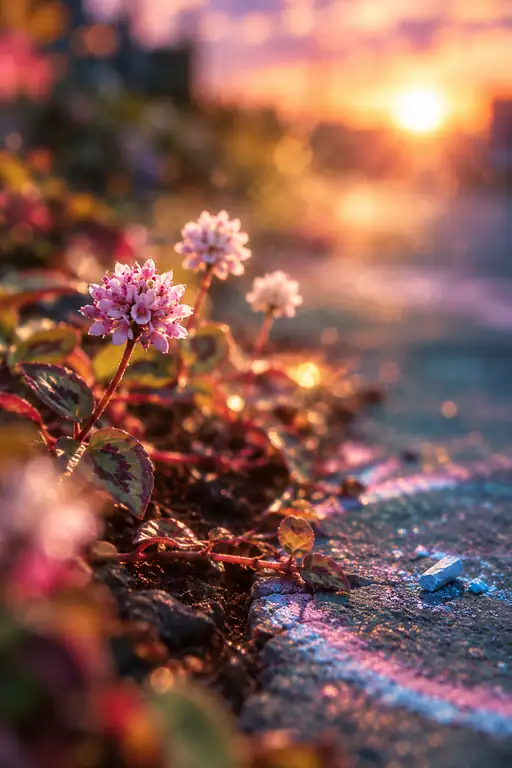 Evening Polygonum Beside the Chalked Pavement
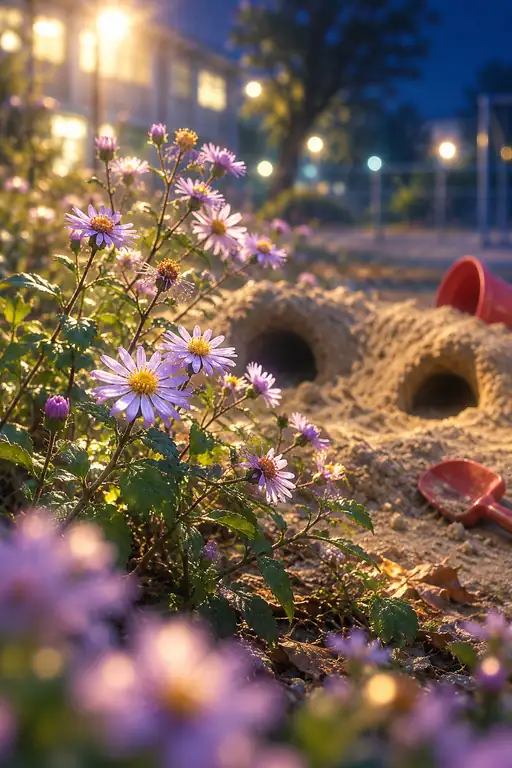 Twilight in the Sandbox
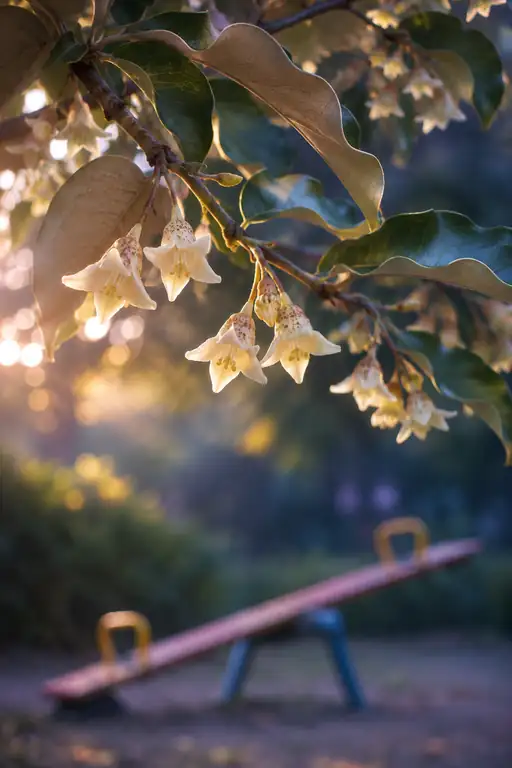 The Seesaw in Amber Light, Quiet Bells After the Children Leave
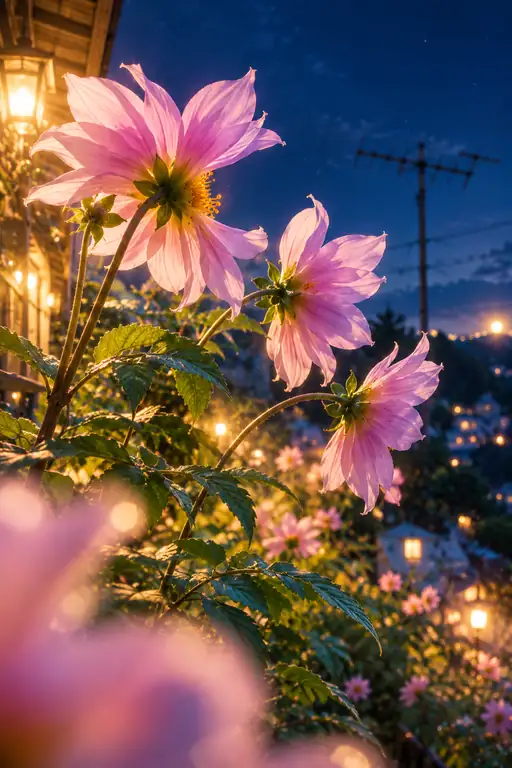 Silhouette of Dahlias and Rooftop Antenna in the Hillside Night
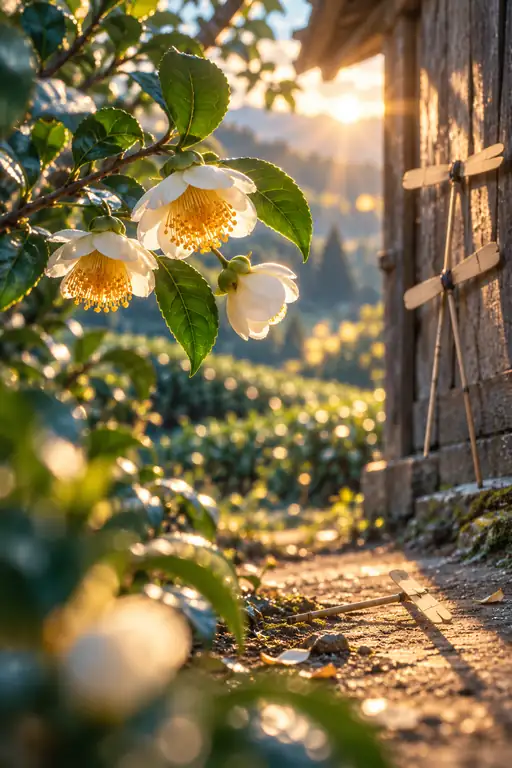 Memory of the Bamboo Dragonfly
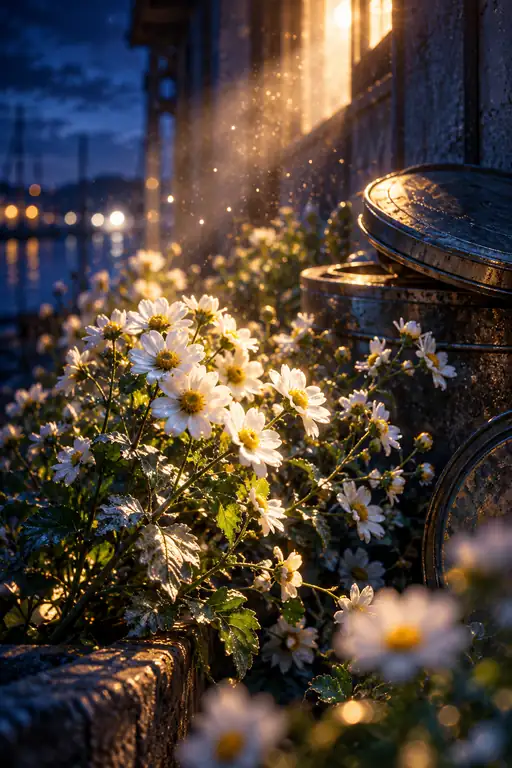 Light Spilling onto the Quay
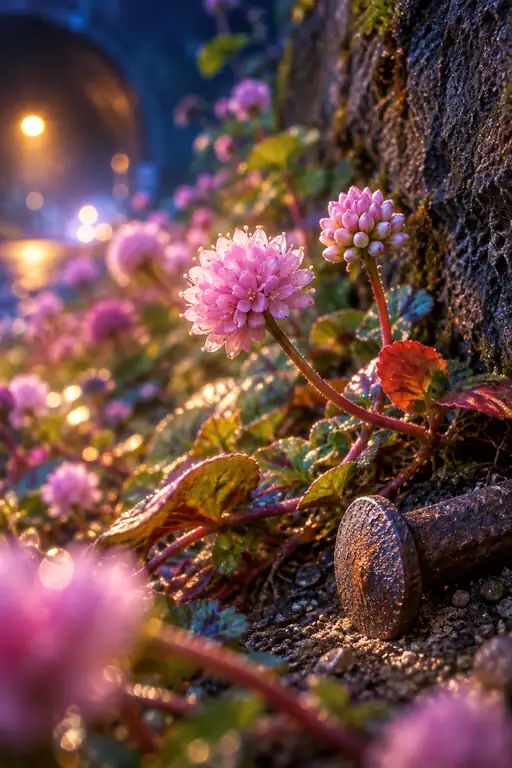 Polygonum by the Tunnel Stone and the Rusted Railway Bolt
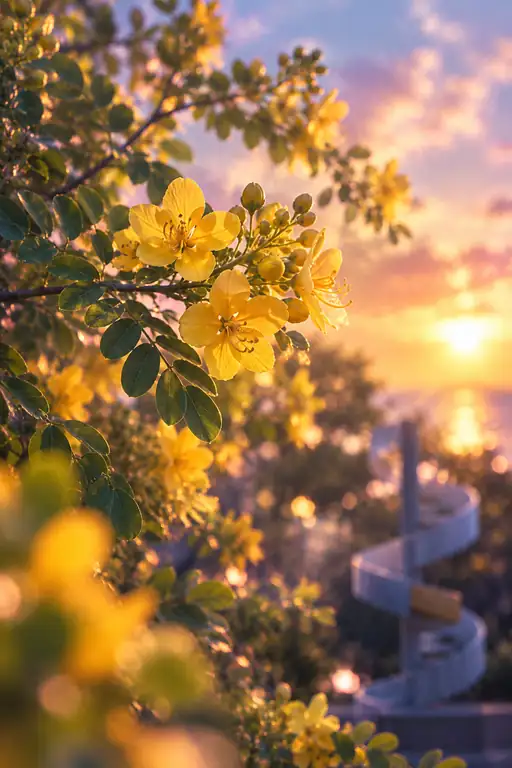 Golden Cassia Overlooking the Twilight Spiral Staircase
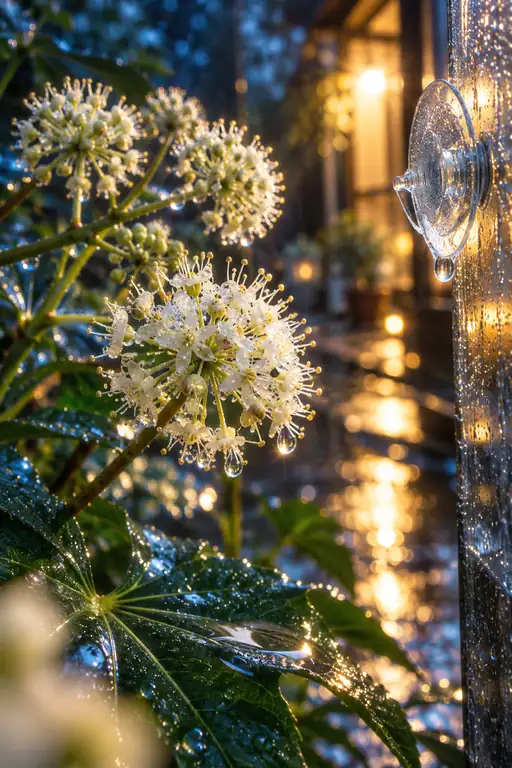 Droplets on Glass and the Fatsia in Rain
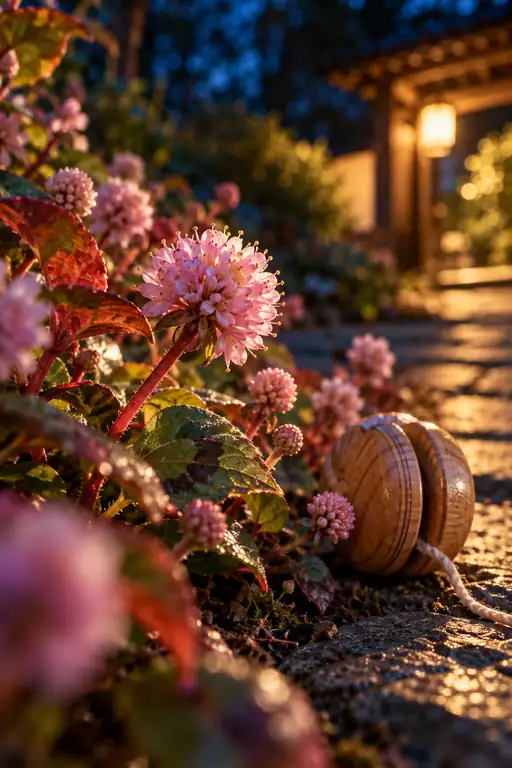 Smartweed in the Courtyard and the Wooden Yo-Yo