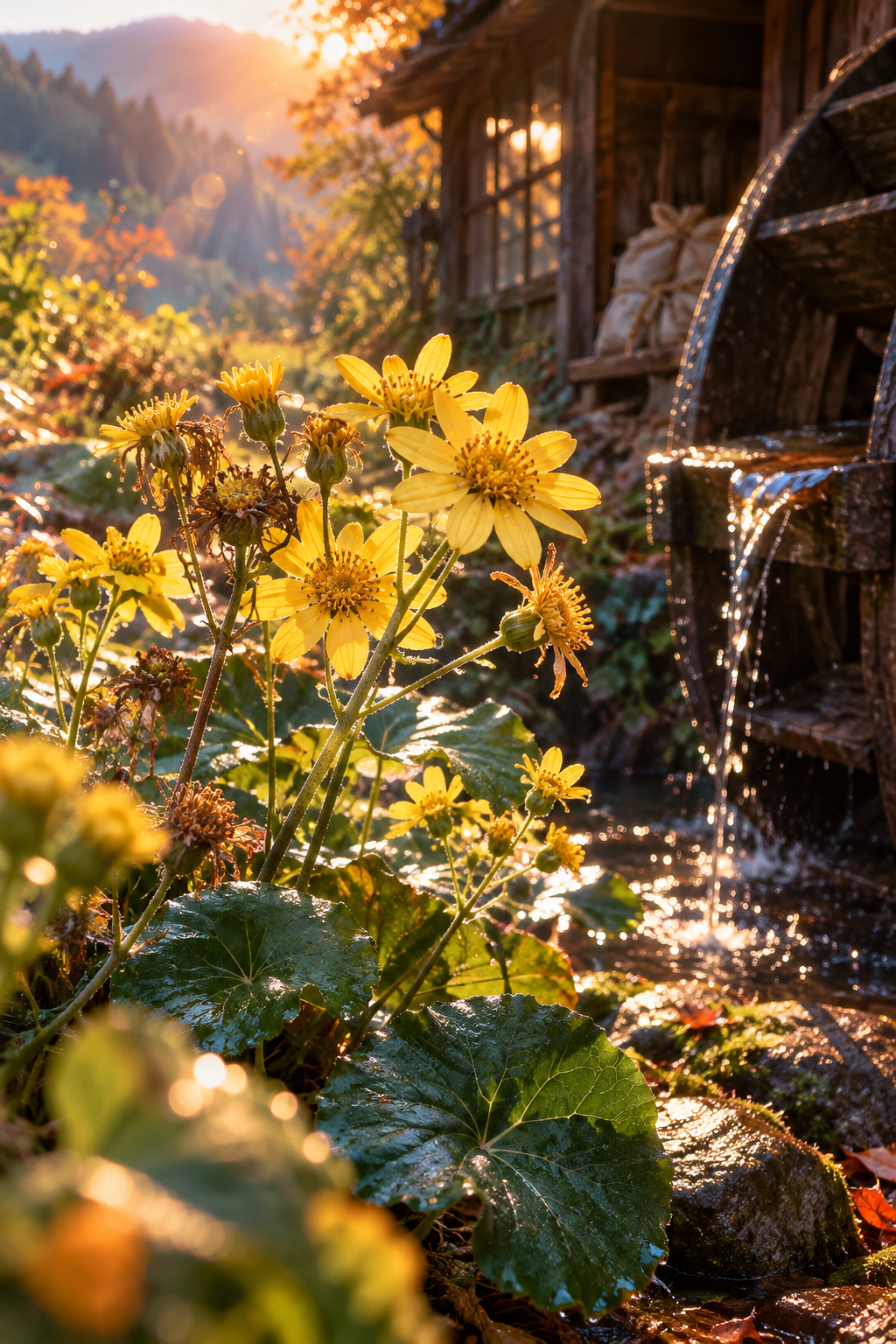
Songs of Water at the Mill
Critique
Introduction Yellow flowers and round leaves stand beside falling water from a wheel attached to a wooden building. This vertical composition places plants within a surrounding setting rather than treating them as isolated specimens. Its title, date, and precise location are not established by the image. Description The foreground preserves overlapping botanical forms and differences in leaf direction, while more distant forms have softer boundaries. Bright edges alternate with broader dark areas. These visible relationships provide a firmer starting point than assumptions about events outside the frame. Analysis Flowers on the left and wheel on the right meet through illuminated moving water. Contrast separates the principal forms while also connecting them to their surroundings. Differences between sharp detail and softened background guide attention, and the distribution of color contributes to the impression of depth. Interpretation and Evaluation Still flowers and cascading water suggest different tempos within the same setting. Descriptive strength lies in distinguishing surfaces as well as recording detail. Originality rests in the relationship between subject and setting. The arrangement supports interpretation, but does not establish the intentions or feelings of an unseen person. Conclusion Cropping prevents a complete account of the wheel mechanism. Composition and color nevertheless bring the separate elements into a coherent view. The initial attraction of the plants develops into attention to spatial relationships. The work is most persuasive when its surrounding details are read alongside, rather than independently of, the plants.
Same Subcategory
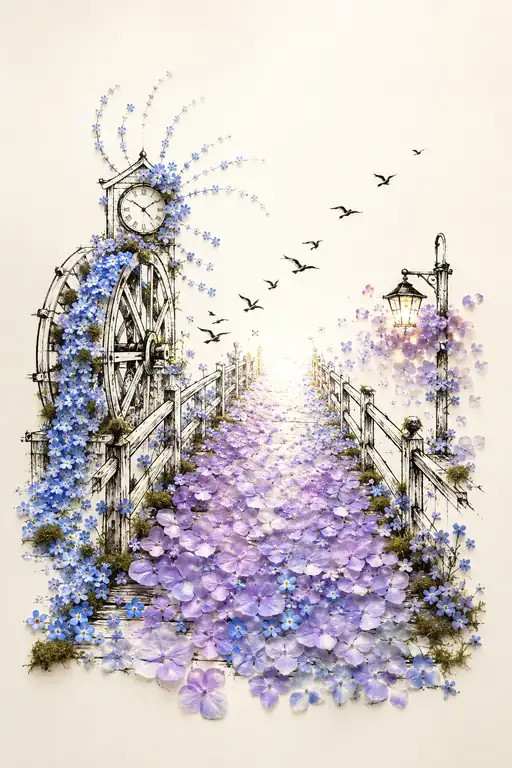 The Waterwheel Clock and the Path of Hydrangeas
Similar Artworks
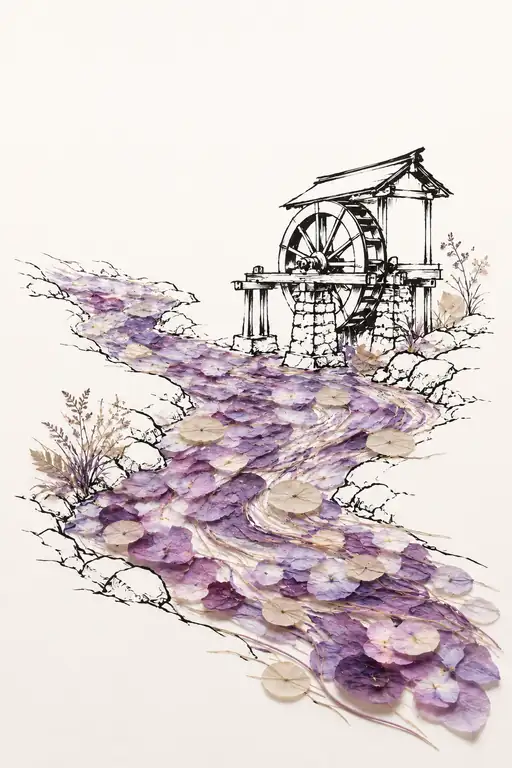 Wheel Turning by the Violet Stream
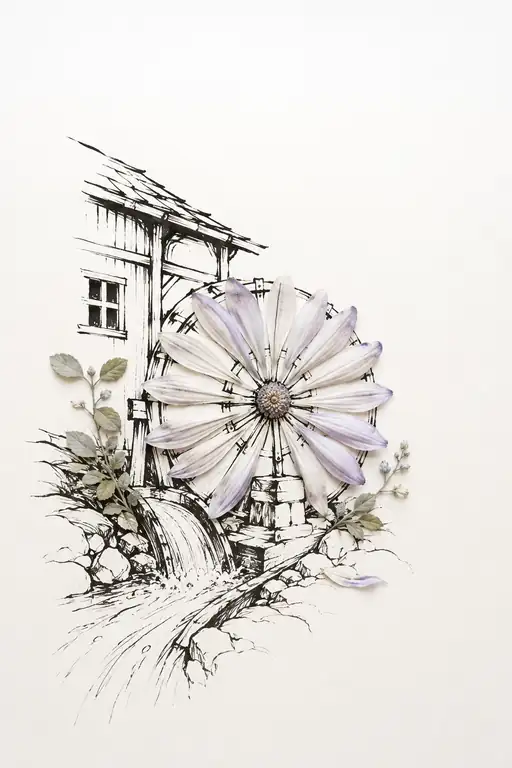 Wheel of Whispering Waters
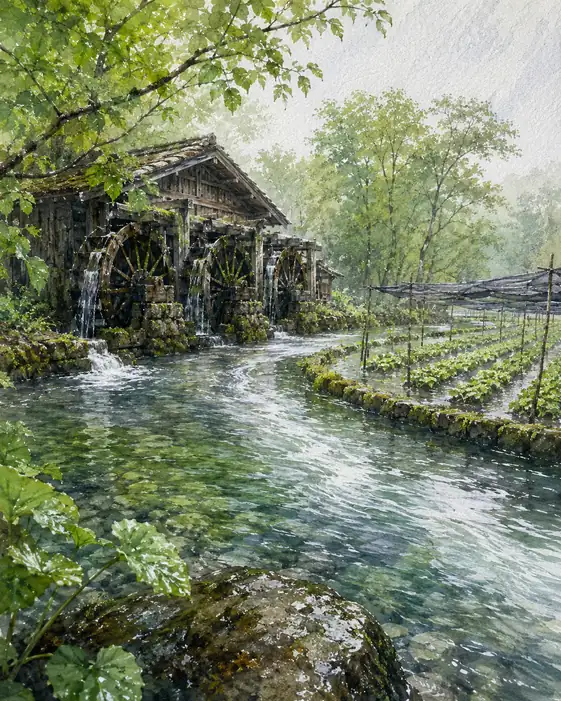 The Watermill Dreams in Green Rain
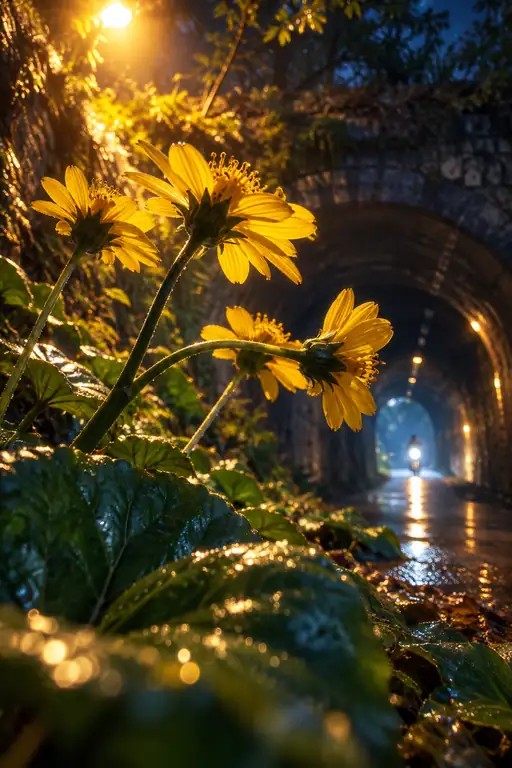 Light at the End of the Brick Arch
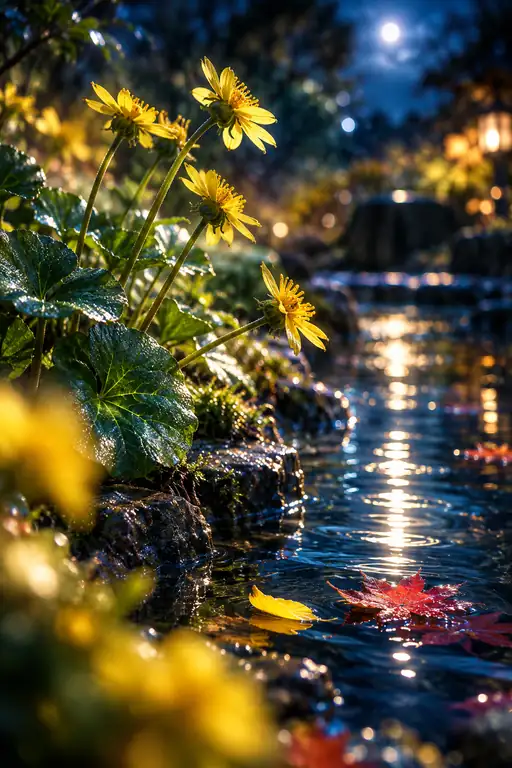 Night Stream Beneath the Moon
 The Quiet Between Two Shores
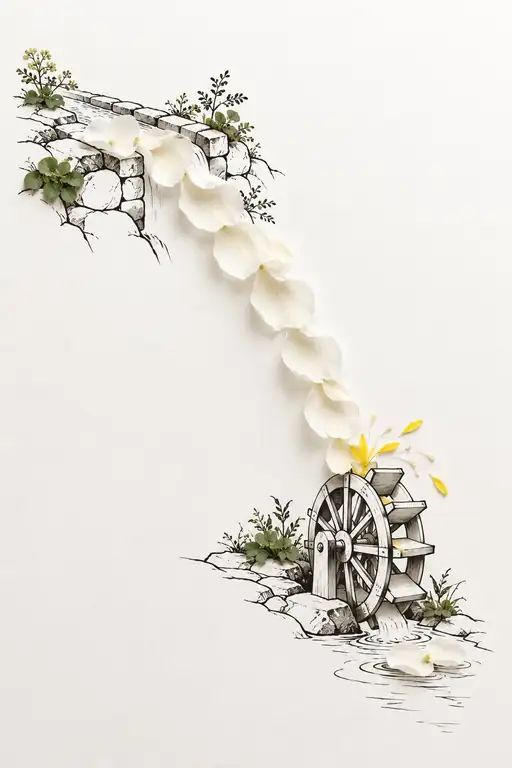 The Quiet Turning of Hours
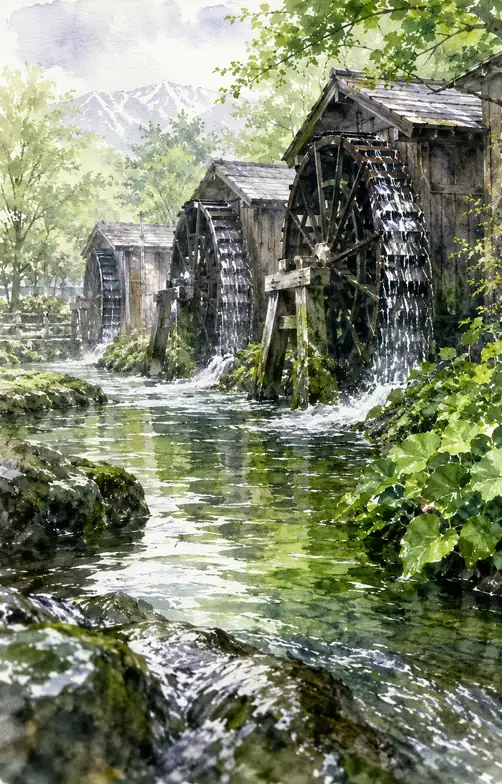 Waterwheels Turn the Green Memory
 The Waterwheel’s Eternal Song
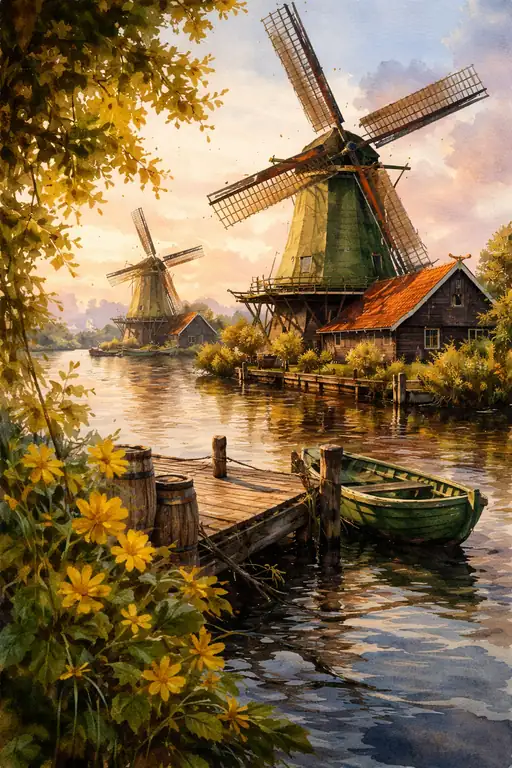 Golden Hour Retreat