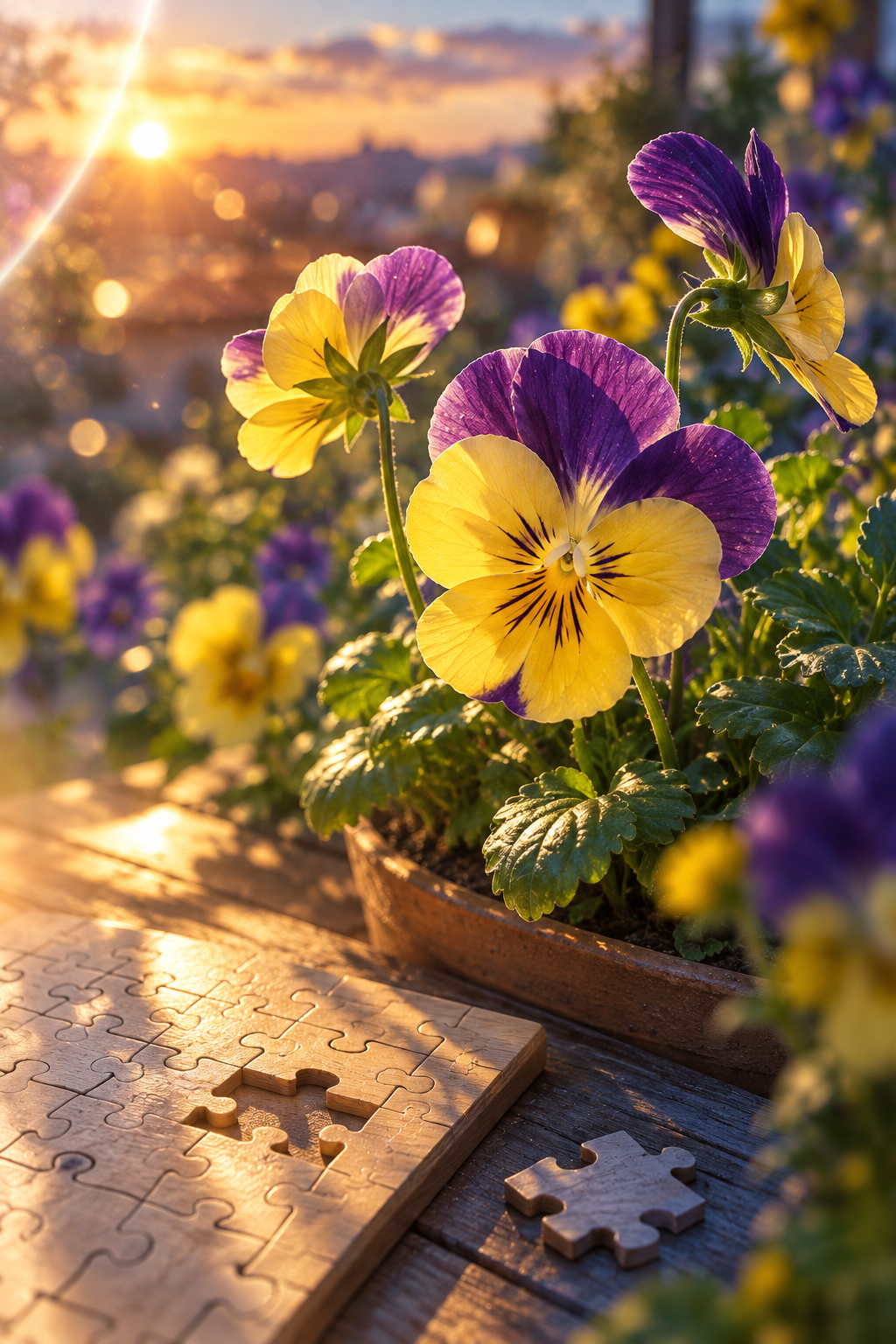
The Last Piece Before Twilight
Critique
Introduction Yellow and purple pansies glow in evening backlight above a wooden jigsaw puzzle. The largest flower faces outward on the right, while an empty space in the puzzle and a separate piece occupy the foreground. Botanical pattern and assembled human pattern share one warmly illuminated table. Description Dark lines radiate from the central flower across yellow petals beneath broad purple upper lobes. A second bloom exposes its green back on the left, and a third turns sideways above the pot. Below them, rounded interlocking seams cover the wooden board, interrupted by an opening beside the loose piece. Analysis The three flower orientations establish depth rather than repeating a single decorative face. Petal veins and puzzle seams both divide surfaces, but their different structures distinguish organic growth from deliberate construction. Golden wood connects chromatically with yellow petals, while the pot rim and board edges guide attention diagonally toward the distant sun. Interpretation and Evaluation The nearly completed puzzle introduces the trace of an interrupted activity beside flowers that appear already complete. This relationship supplies originality without making the pansies explicitly human. Fine petal wrinkles and cut wooden edges are convincingly differentiated, although the sweeping flare and numerous bright circles sometimes compete with the quieter unfinished space. Conclusion The flowers provide the immediate attraction, but noticing the detached piece changes the scene into a pause awaiting another action. Evening color holds the separate materials together while purple preserves a strong focal boundary. Despite conspicuous optical effects, the arrangement gives an ordinary tabletop an engaging relationship between established form and patient assembly.
Same Subcategory
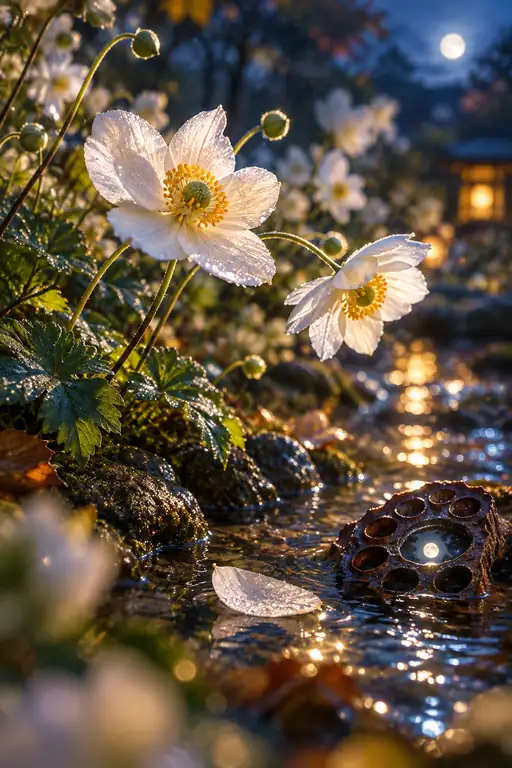 Moon Resting in the Lotus Seed
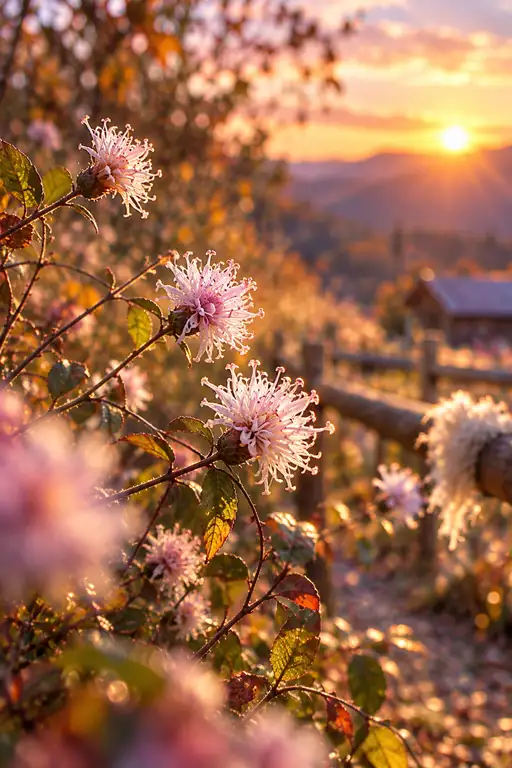 Wind Across the Wooden Fence
Similar Artworks
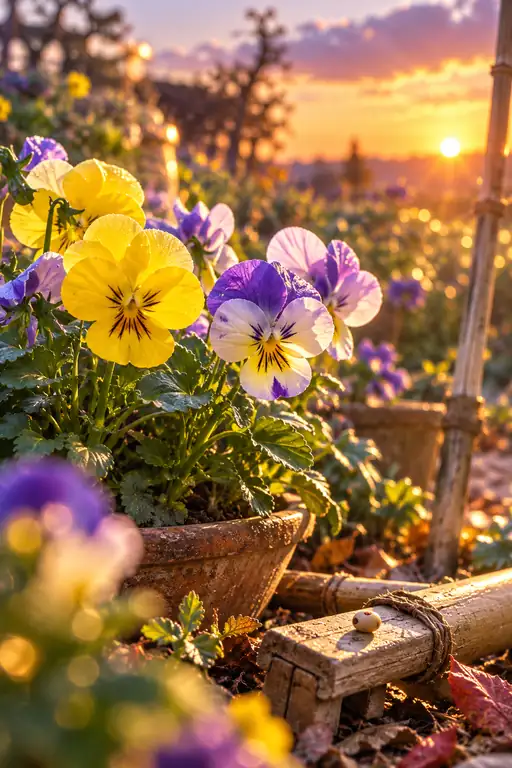 Colorful Faces Toward the Setting Sun
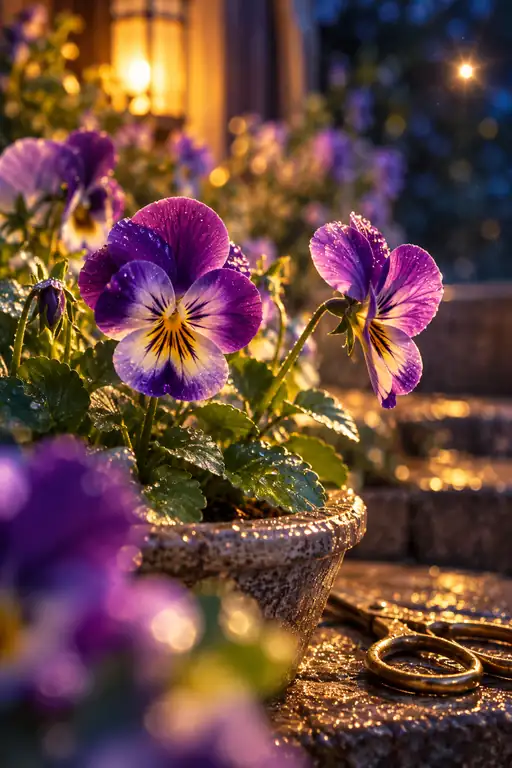 The Gardener's Shears at Nightfall
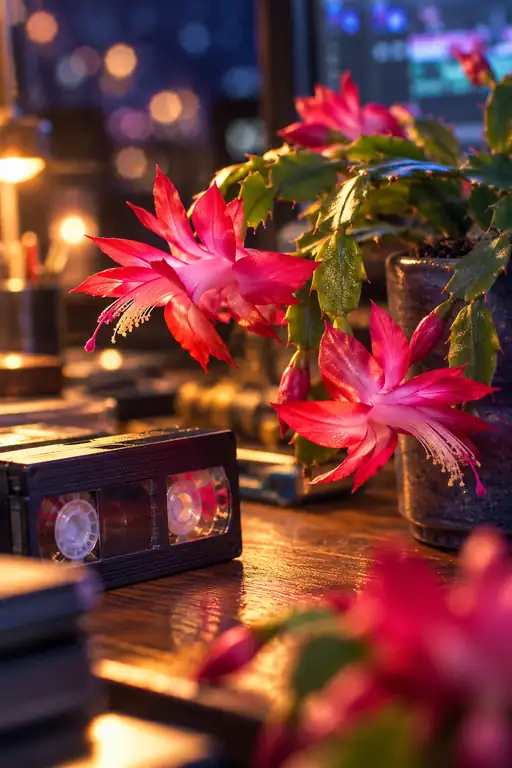 Recorded Moments in Winter Bloom
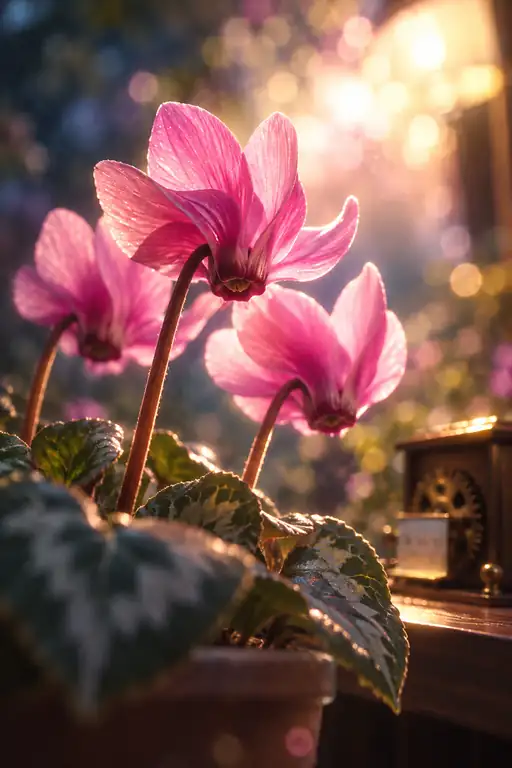 Backlit Cyclamen and the Clockwork Hearth
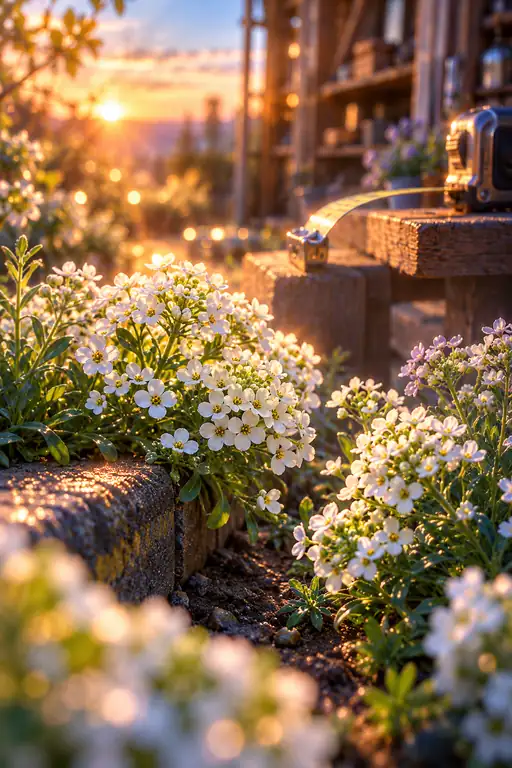 Alyssum in the Golden Hour and the Measure of Growth
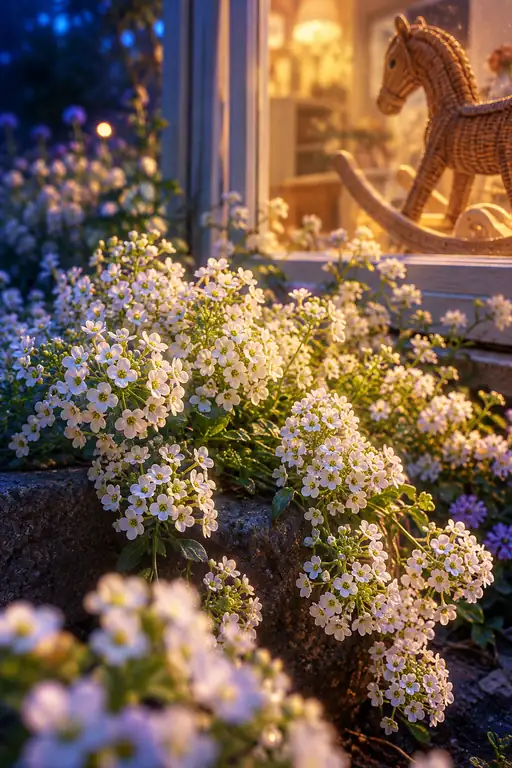 Cascading White Alyssum by the Wicker Rocking Horse
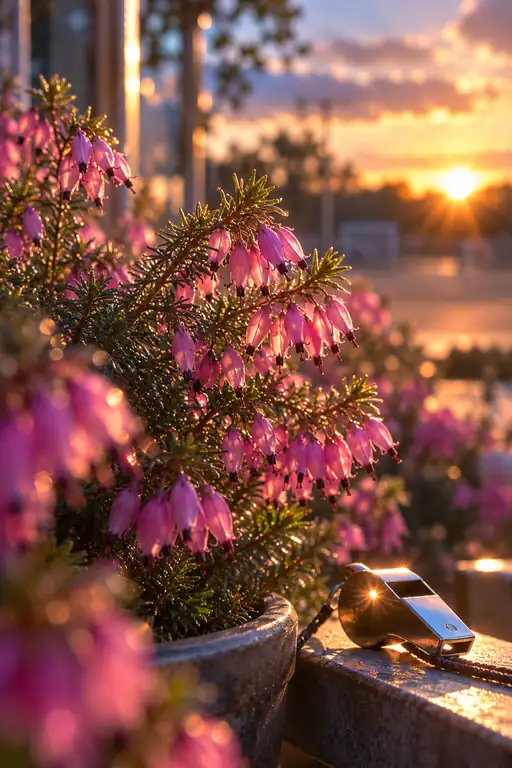 Sunset Erica Beside the Silvery Whistle
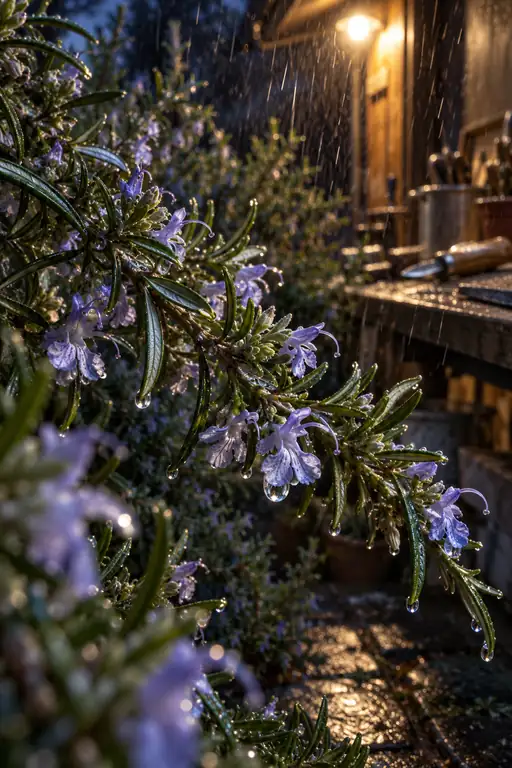 Rain-Laden Rosemary Outside the Lantern-Lit Workshop
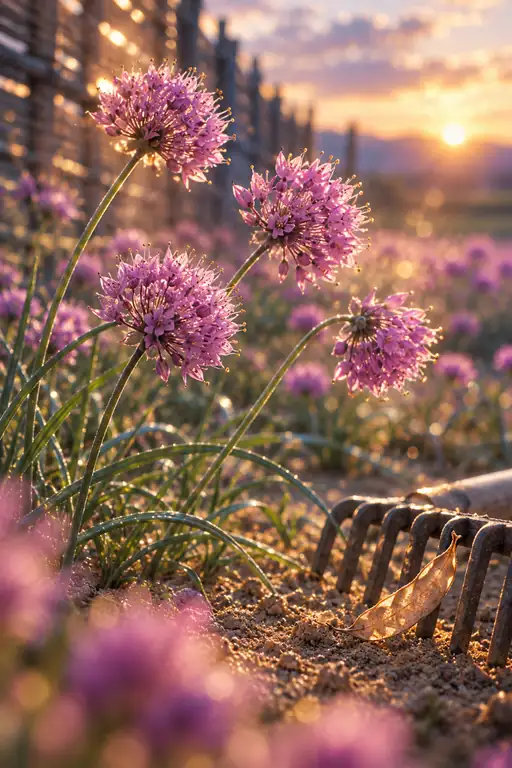 Sunset Allium Beside the Rake and Withered Leaf
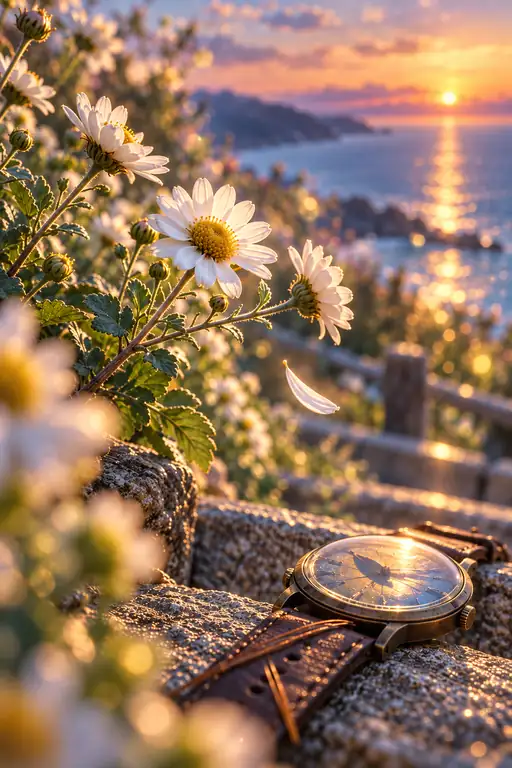 White Daisies and the Tide of Measured Hours