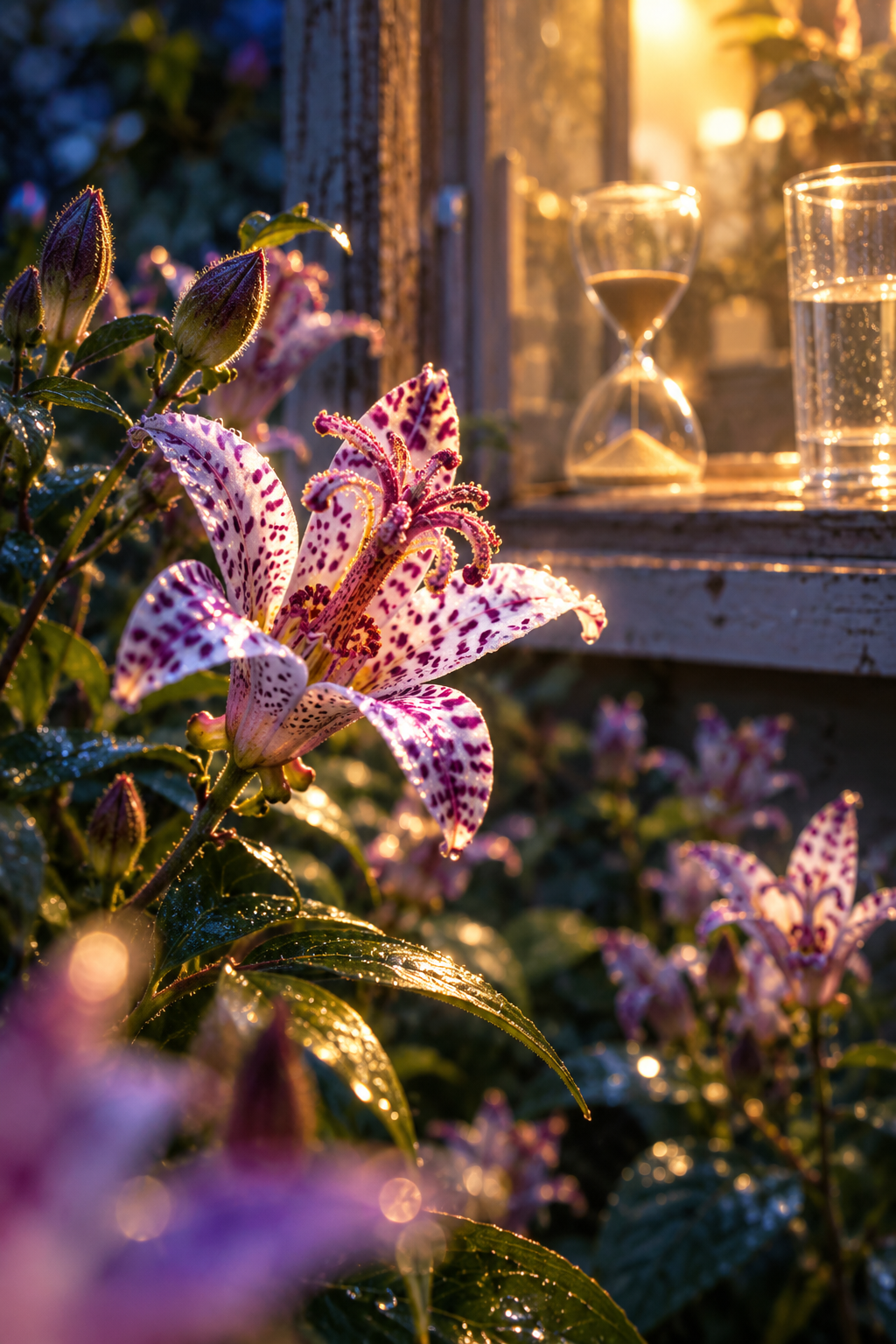
An Hourglass by the Toad Lily
Critique
Introduction A pale flower marked with purple spots opens beside a warmly illuminated window containing an hourglass and a glass of water. Blue exterior darkness meets golden interior light around the plant. The composition places an irregular botanical structure near clearly organized glass objects, inviting comparison between living form, transparency, and measured duration. Description The principal flower occupies the left center, its recurved segments surrounding branching purple structures. Two pointed buds above show fine surface hairs, and droplets collect on the long leaves below. At upper right, the hourglass narrows between two rounded chambers; the adjacent cylindrical glass reveals a waterline and small bright bubbles. Analysis The flower's spreading shape contrasts diagonally with the hourglass's upright symmetry. The window frame supplies firm horizontal and vertical boundaries behind the intricate plant. Purple and gold establish a lively color relationship, while warm edges link exterior foliage to the interior; spots, bud hairs, glass reflections, and worn paint remain distinct kinds of detail. Interpretation and Evaluation Growth and falling sand suggest different scales of progression without requiring a single symbolic message. Water adds another transparent surface, broadening attention from time to the passage of light. Descriptive skill differentiates botanical irregularity from manufactured contours, although intense reflections at the hourglass waist and glass rim sometimes privilege sparkle over easy structural reading. Conclusion The spotted flower first attracts attention through its unusual shape, but the orderly hourglass gradually becomes an equally meaningful counterpart. Cool and warm colors preserve a close relationship between garden and inhabited interior. Despite the assertive highlights, the arrangement encourages sustained comparison, making the viewer's own period of looking part of its quiet interest.
Same Subcategory
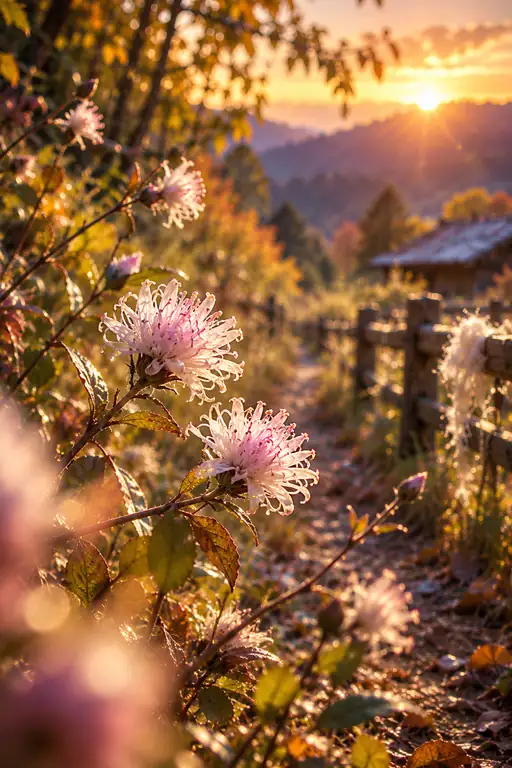 Footpath to the Mountain Ridge
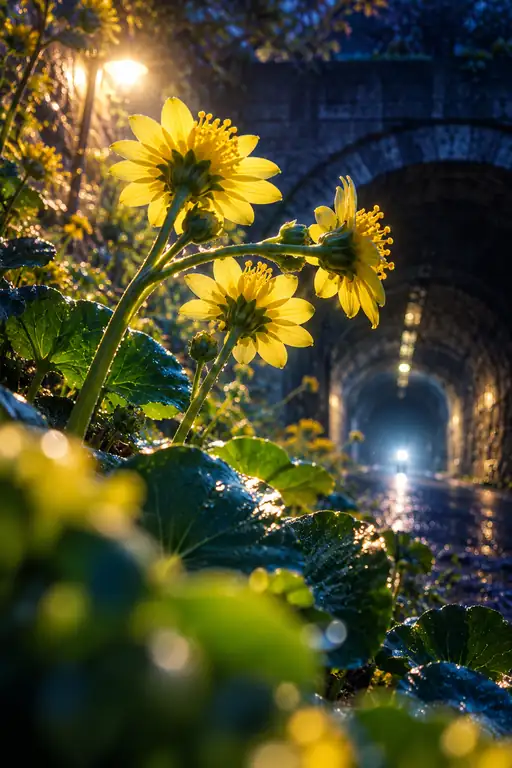 Beacon at the Archway
Similar Artworks
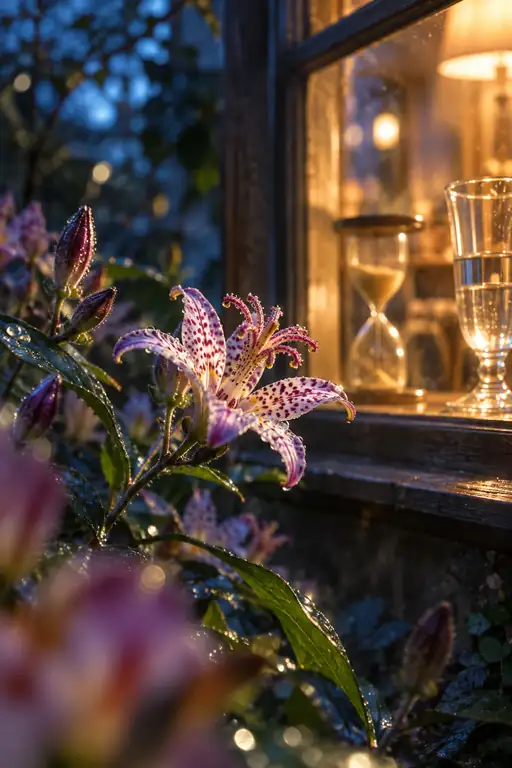 Passing Hours in the Rainlit Window
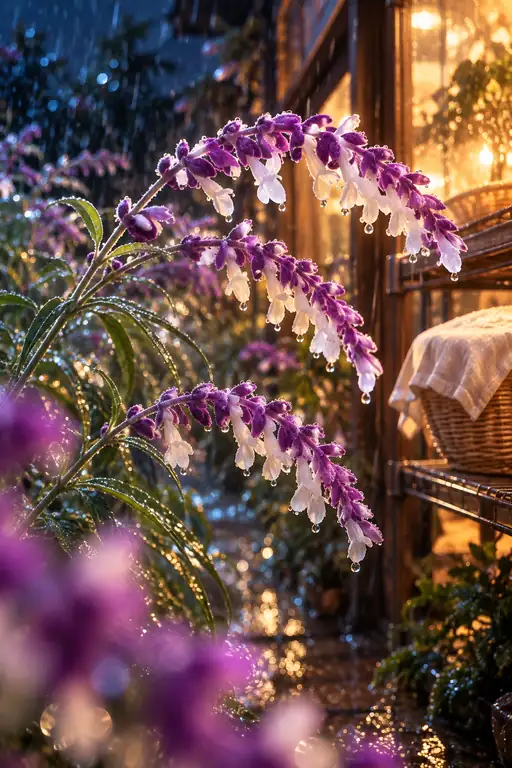 Velvet Petals in the Evening Shower
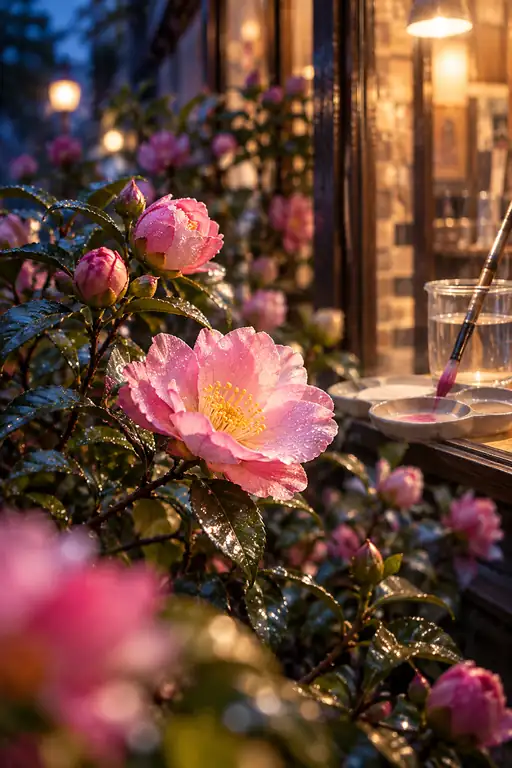 Camellia in the Rain and the Painter's Nocturne
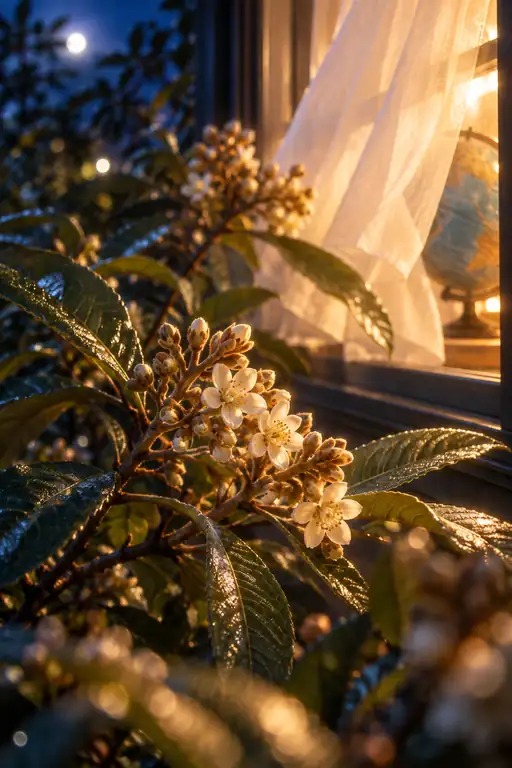 Quiet Horizon Beyond the Windowpane
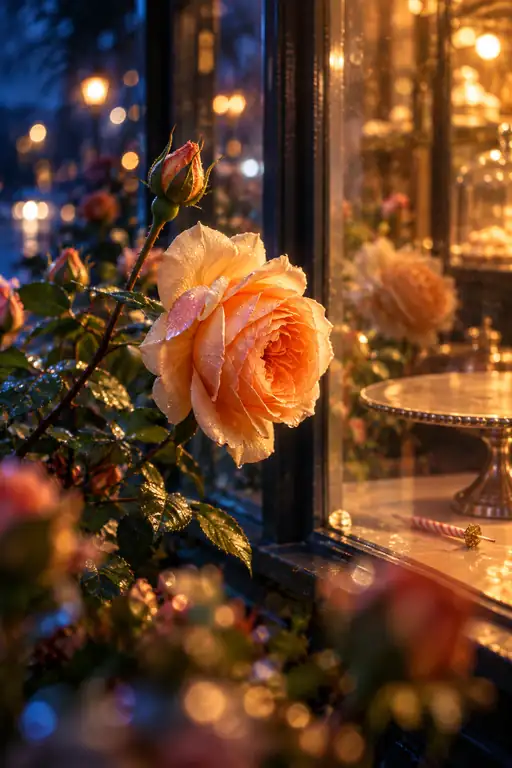 Warmth at the Window Pane
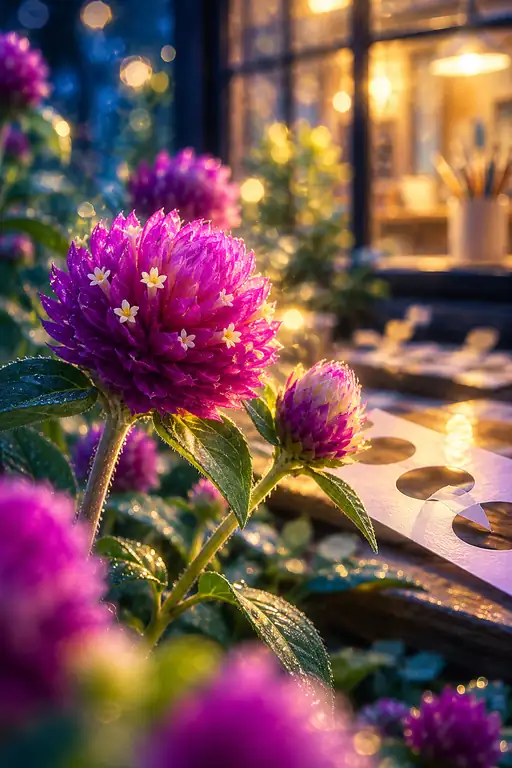 Globe Amaranth and the Perforated Stencil Sheet
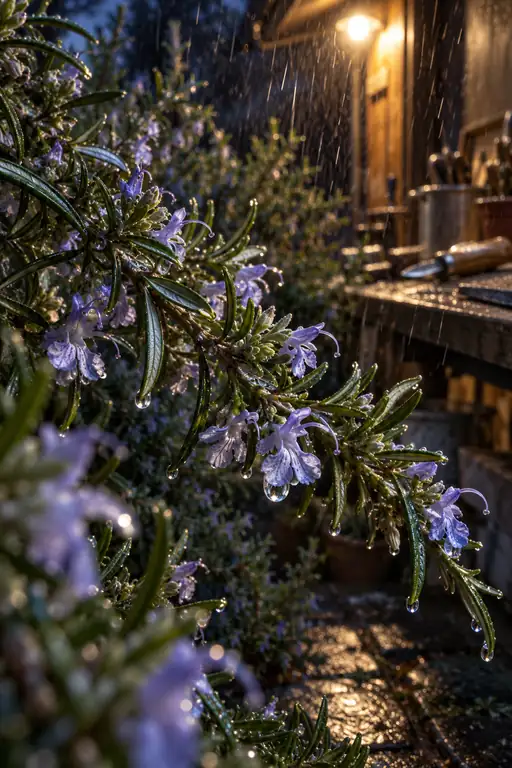 Rain-Laden Rosemary Outside the Lantern-Lit Workshop
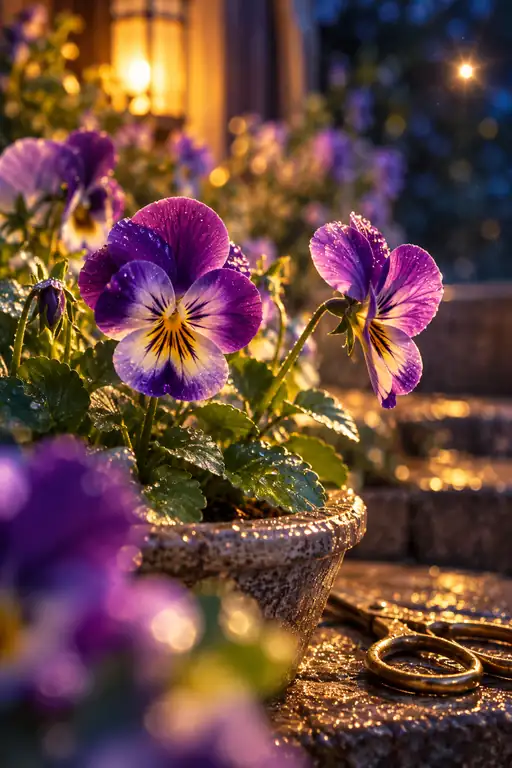 The Gardener's Shears at Nightfall
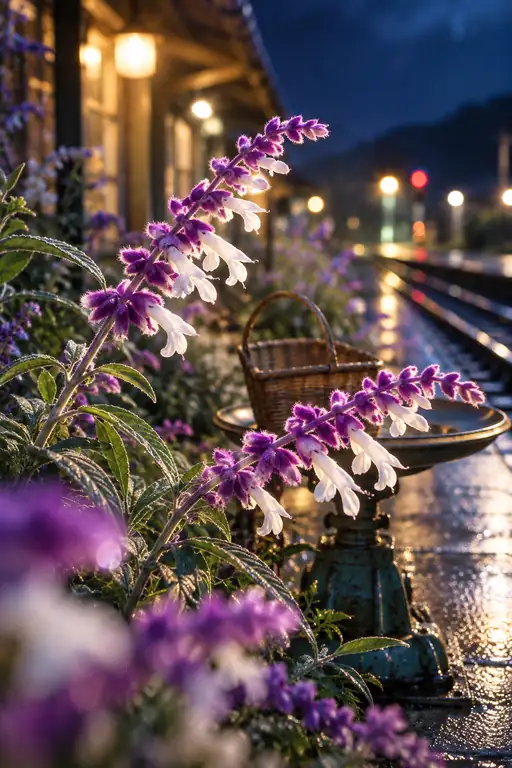 Twilight Station Awaiting the Train
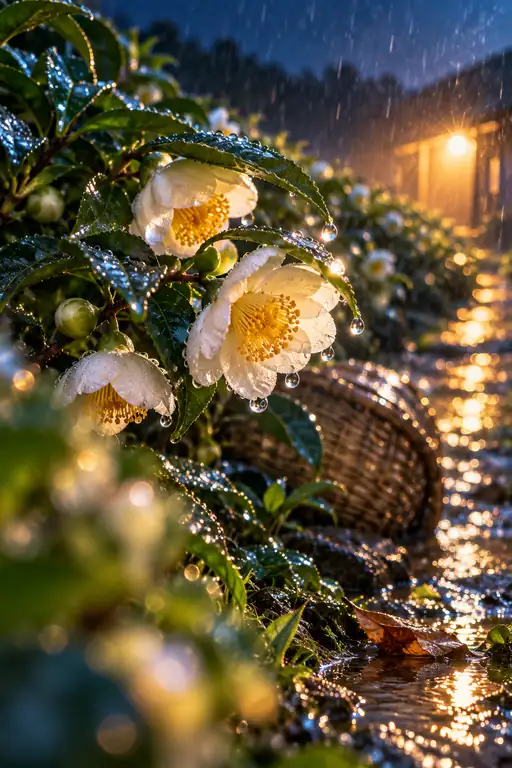 Rain on the Tea Picker's Basket