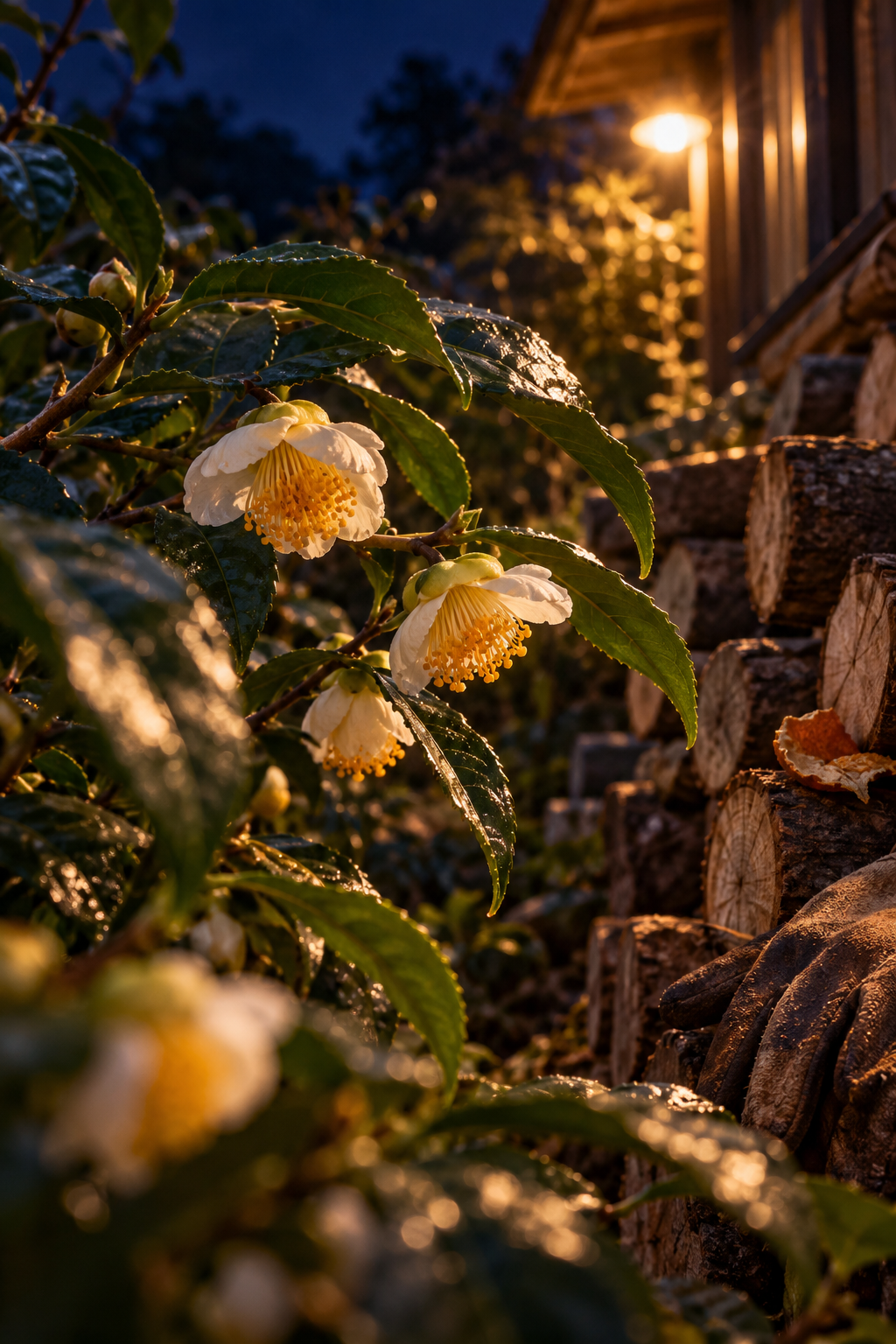
The Light After Hands Come to Rest
Critique
Introduction White flowers hang beside a stack of firewood beneath the warm light of a wooden house. Their yellow stamens emerge against dark, wet foliage, while deep blue sky remains visible overhead. The vertical composition joins botanical detail to the materials and tools of an inhabited outdoor space. Description One prominent blossom sits left of center, followed diagonally downward by another open flower and a smaller hanging bloom. Serrated leaves curve around them, carrying sharp droplets and golden reflections along their edges. Cut logs occupy the right side, where a glove and a curled orange peel introduce softer, irregular shapes beside the coarse wood. Analysis The descending flowers counterbalance the upright stack of logs, giving the narrow frame two distinct structural rhythms. Reflections on successive leaves connect the central blossoms to the high lamp without requiring an uninterrupted branch. Broad foreground blur establishes proximity, whereas the resolved stamens, leaf veins, and timber ends concentrate attention in the middle distance. Interpretation and Evaluation The glove makes absent manual activity tangible, allowing the flowers to appear beside continuing domestic work. Descriptive skill is evident in the differences between delicate filaments, glossy foliage, rough bark, and folded fabric. Originality lies in these relationships, although the intensely bright lamp repeatedly attracts attention away from the quieter flowers. Conclusion Initially, the blossoms seem to supply the entire subject; prolonged looking brings the work materials into an equally meaningful relationship with them. Cool sky and amber illumination reinforce that transition from night garden to lived space. Despite the competitive highlight overhead, the composition sustains a persuasive connection between fragile growth and practical human surroundings.
Same Subcategory
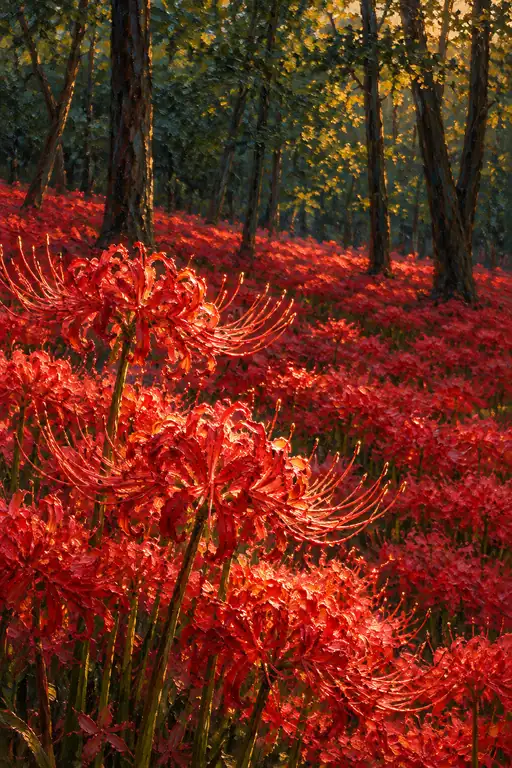 Crimson at the Heart of Stillness
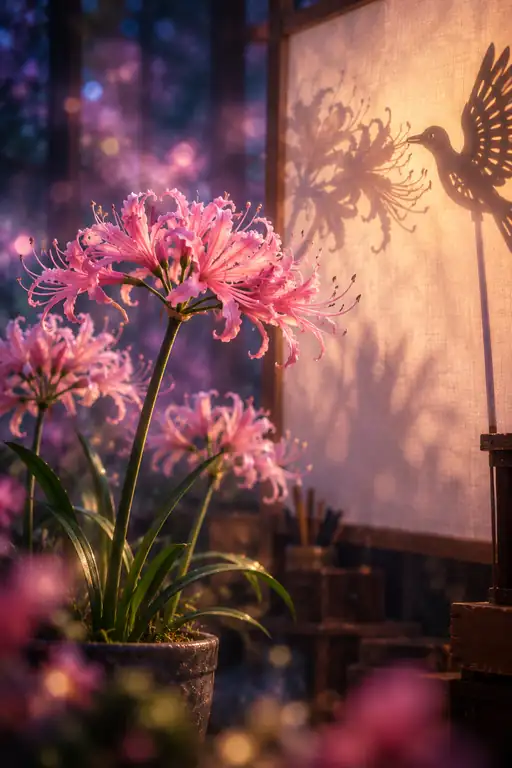 My Shadow Can Reach You
Similar Artworks
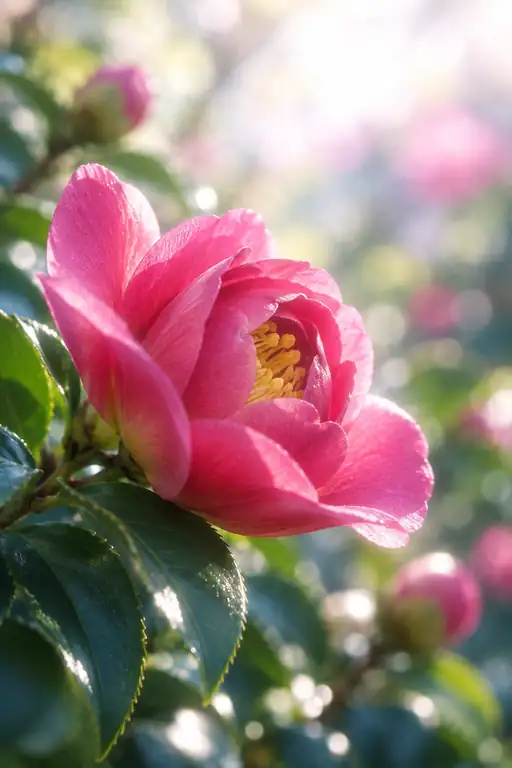 Just Before the Heart Opens
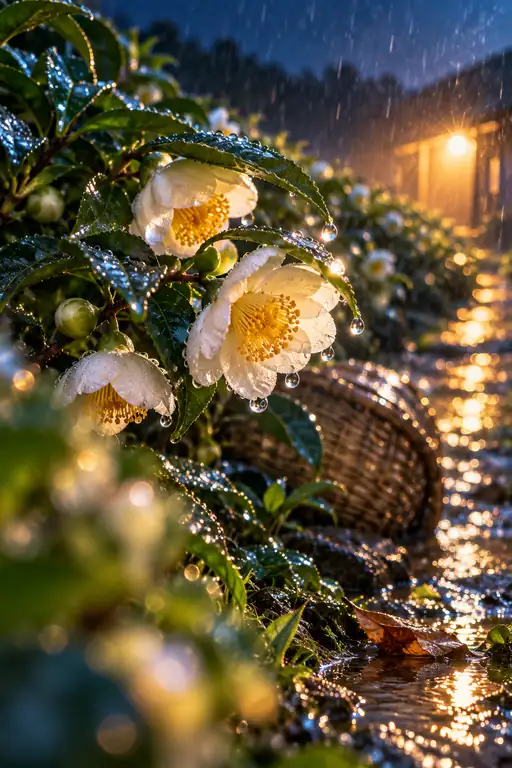 Rain on the Tea Picker's Basket
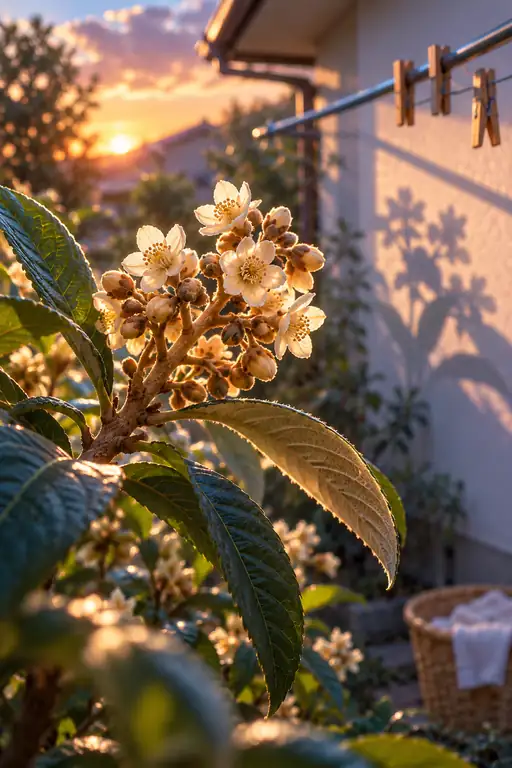 The Familiar Wall Remembers a Flower
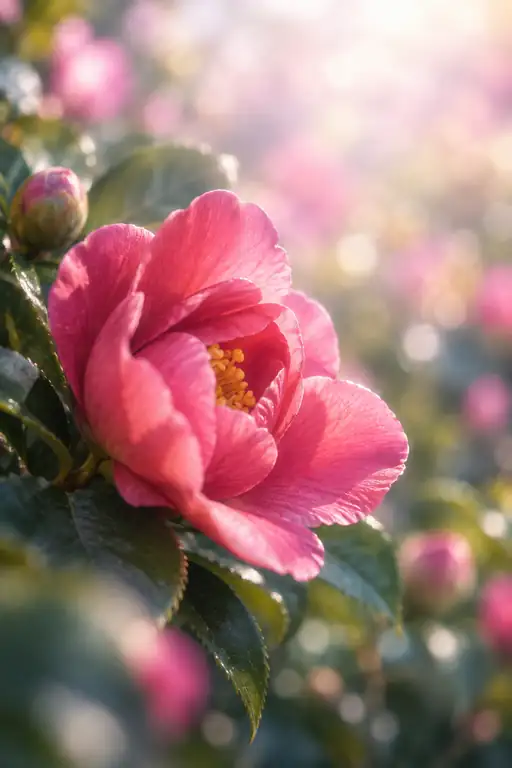 Winter Softens at My Edges
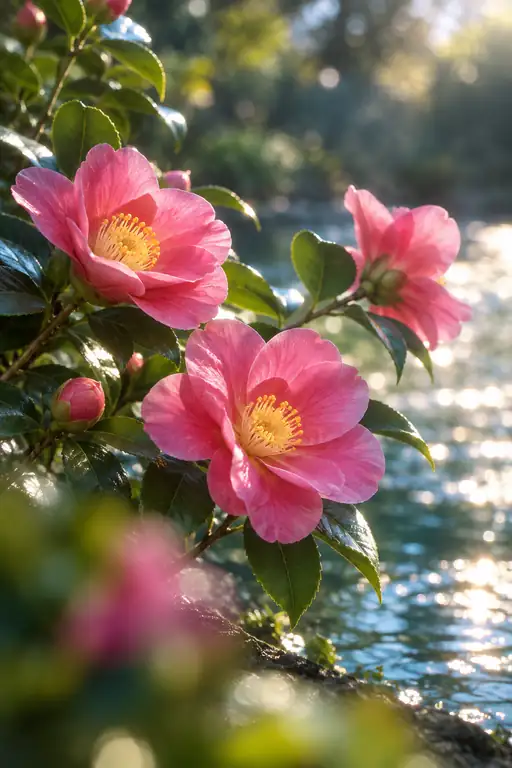 Where Pink Light Meets the Water
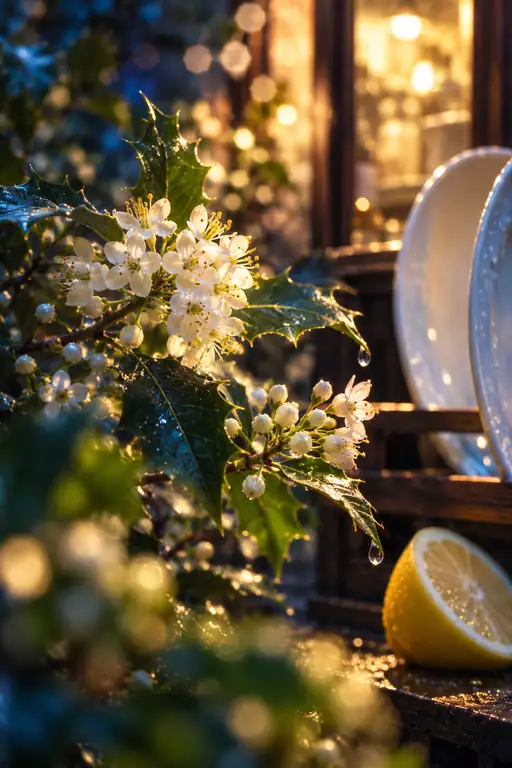 A Gentle Night for Pointed Leaves
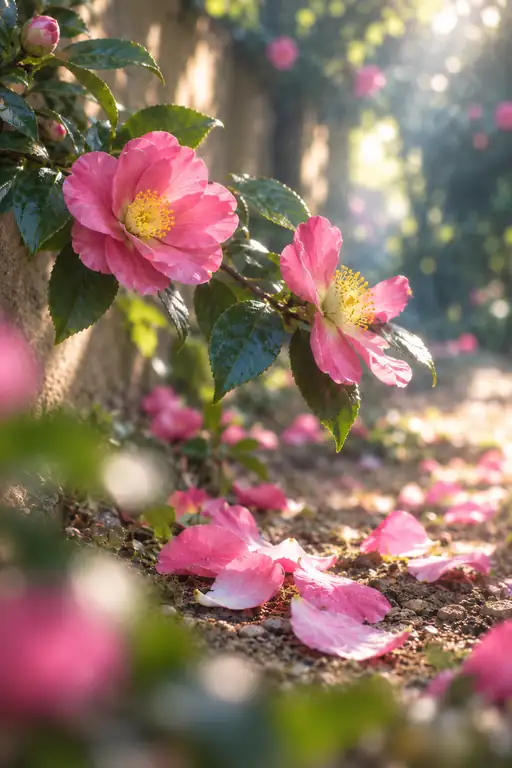 Still Blooming, Already Remembered
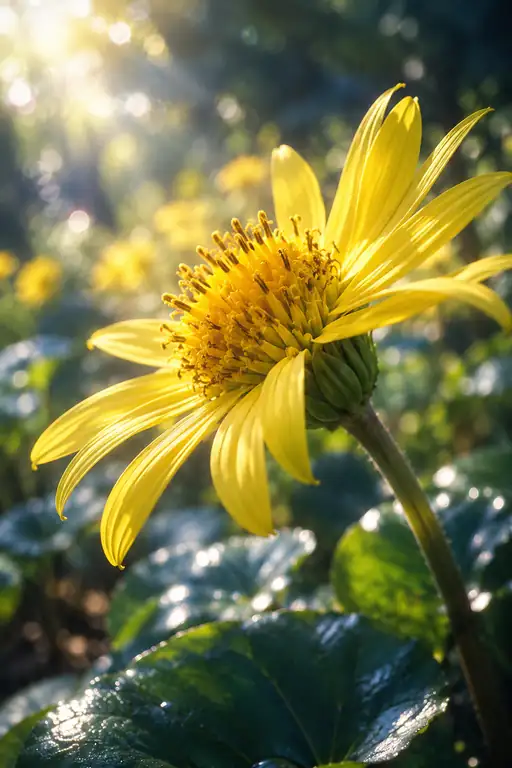 Turning My Face Toward the Sun
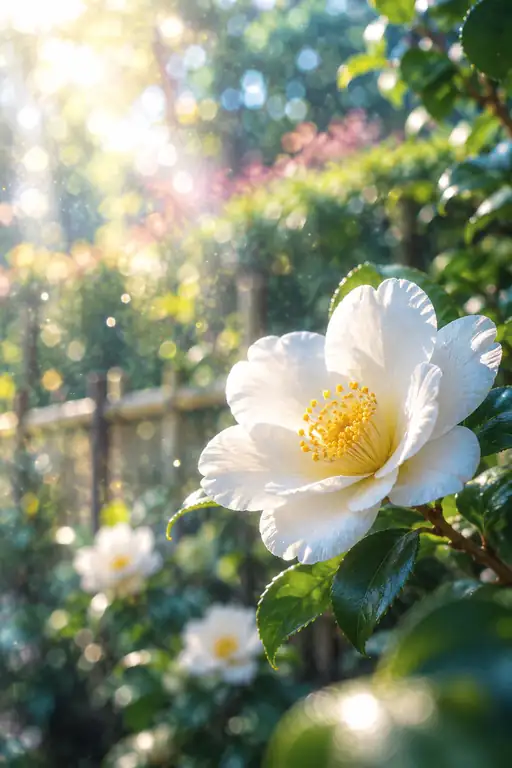 Whispers of Winter Sun
 Glow Above the River Lights