Where a Missing Bite Makes Room for Two
Critique
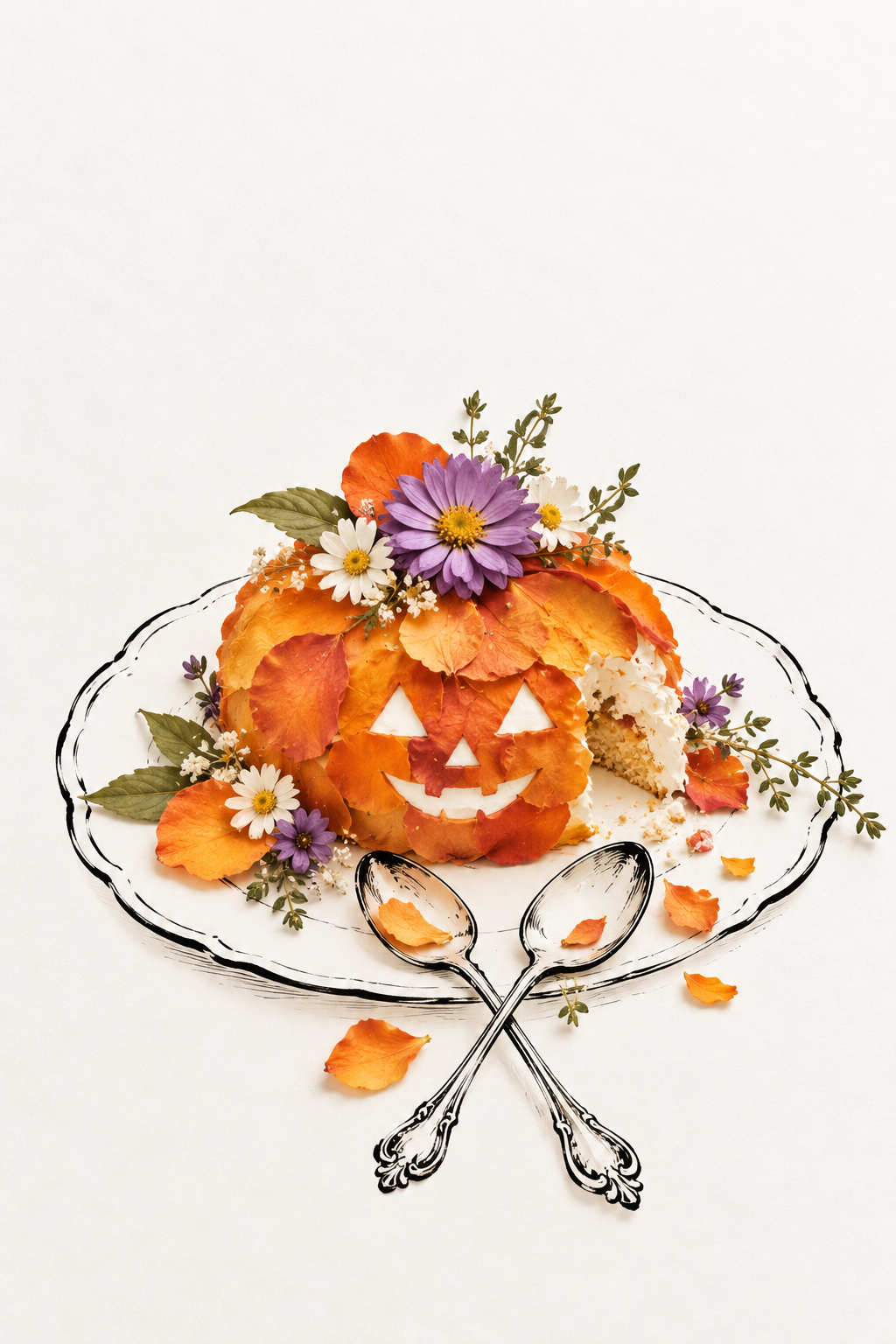
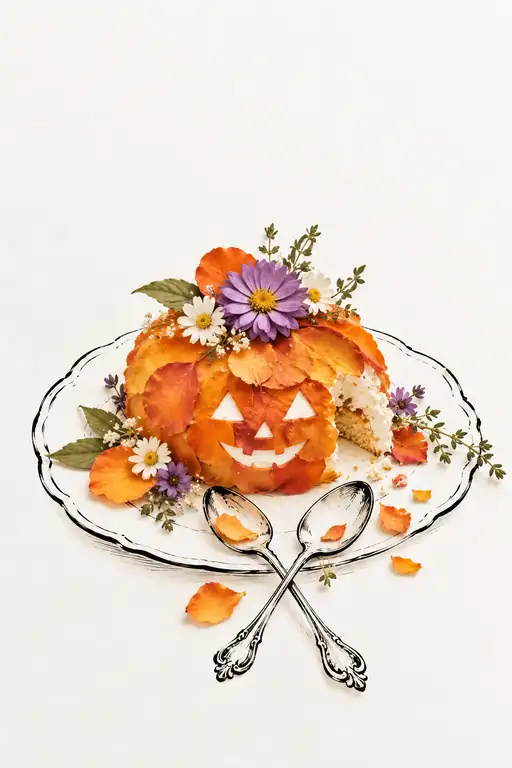
Introduction An orange floral cake presents a pumpkin smile on a pale scalloped plate, with a portion removed from its right side. Two spoons cross below it, their bowls holding fallen petals. The still life combines an intact festive face with visible evidence of eating, giving its carefully arranged surface a small history of use. Description A large purple blossom sits on top among white flowers, green leaves, and fine buds. Broad orange petals cover the rounded cake. At right, a pale cut wall exposes golden crumb beneath cream. Loose crumbs and floral fragments gather on the plate, while the spoon handles extend downward beyond its dark outline. Analysis The plate's wide ellipse supports the compact central cake and the two long diagonal utensils. The open cut introduces an asymmetric light plane beside the face. Purple above and black spoon contours below create separate anchors. Small scattered petals carry orange outward from the cake, while the porous interior contrasts with the smoother, layered botanical surface. Interpretation and Evaluation The removed portion prevents the object from remaining a sealed decorative emblem. The spoons make tasting a plausible next or continuing action. The composition is effective because the facial openings, cut section, and utensils each remain legible, so the cake can read at once as character, food, and something prepared for more than one person. Conclusion The first glance favors the smiling face, but closer looking moves toward the exposed crumb and the two spoon bowls. These details change admiration into an imagined tactile experience. The work preserves decorative richness while allowing imperfection and use to matter, making the invitation to share arise from the arrangement itself.
 The Smile We Share by Spoonfuls
 The Sweetness of Almost Falling
 The Slice That Makes Us Smile
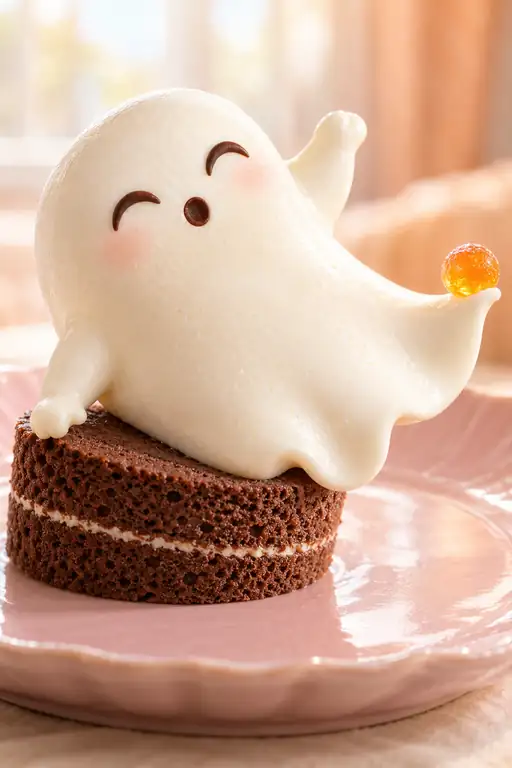 Reaching Out with a Sweet Spark
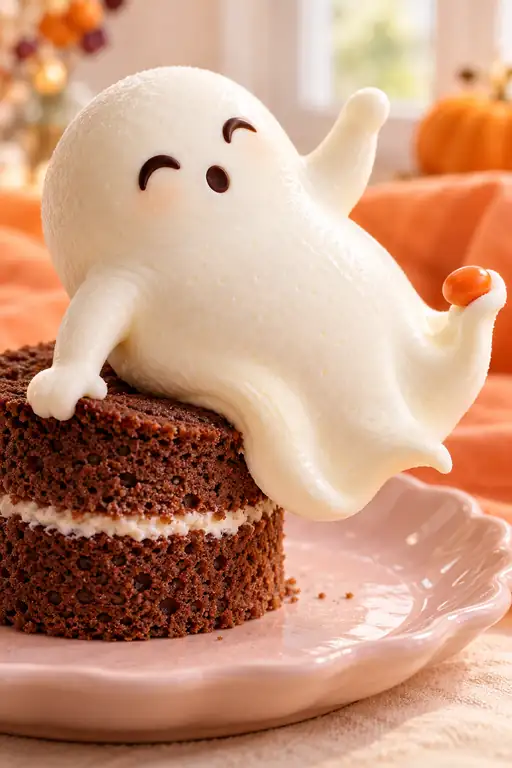 Balancing a Drop of Sunlight
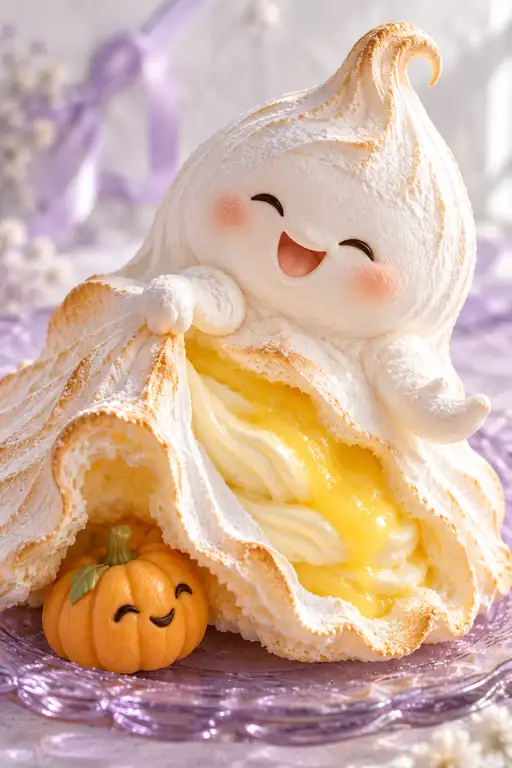 Under My Sweetest Secret
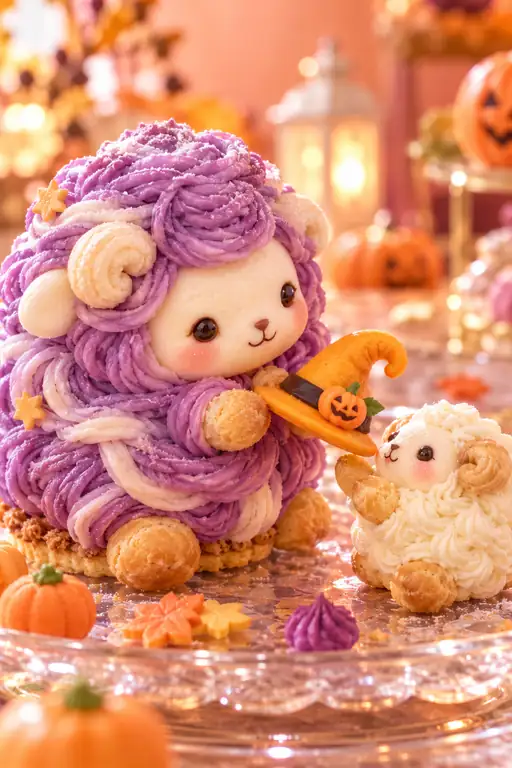 Your First Little Magic Hat
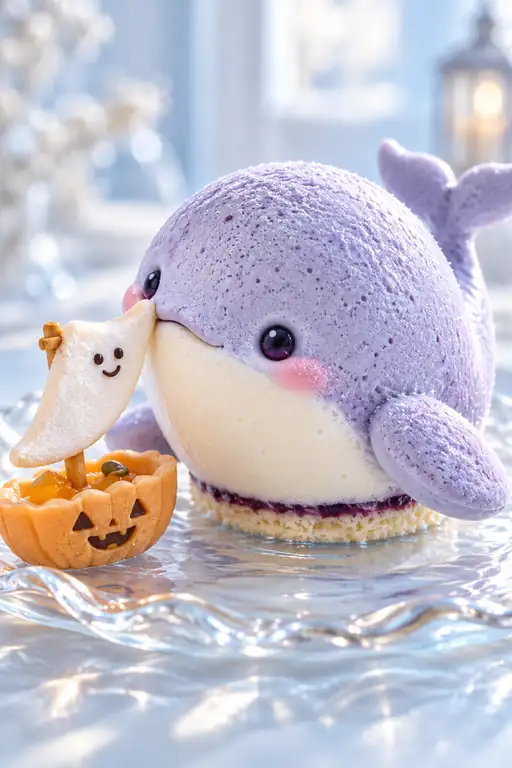 Little Sail, I'll Keep You Company
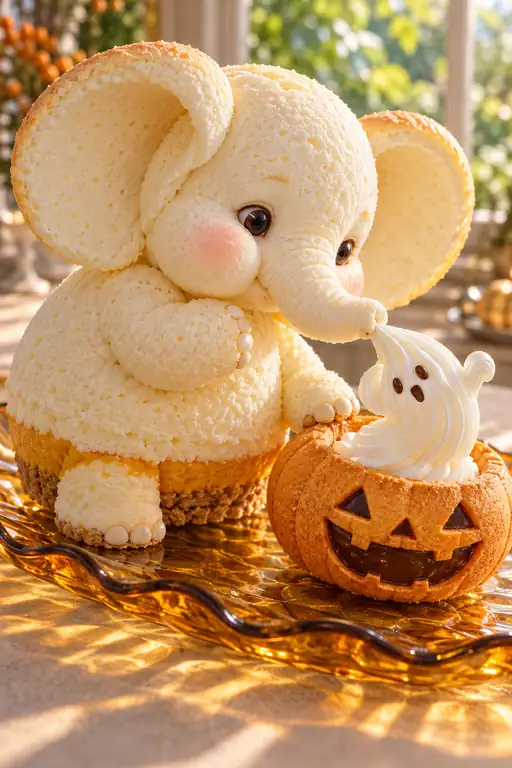 All My Size, This Gentle Touch
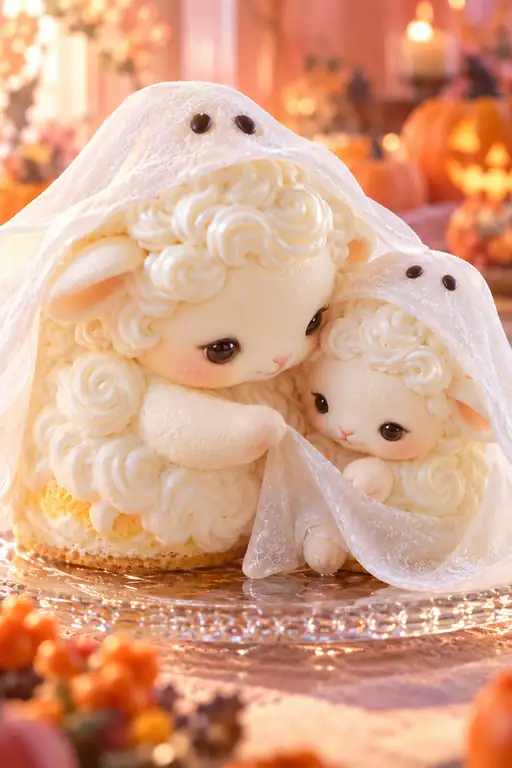 Even Ghosts Need Tucking In
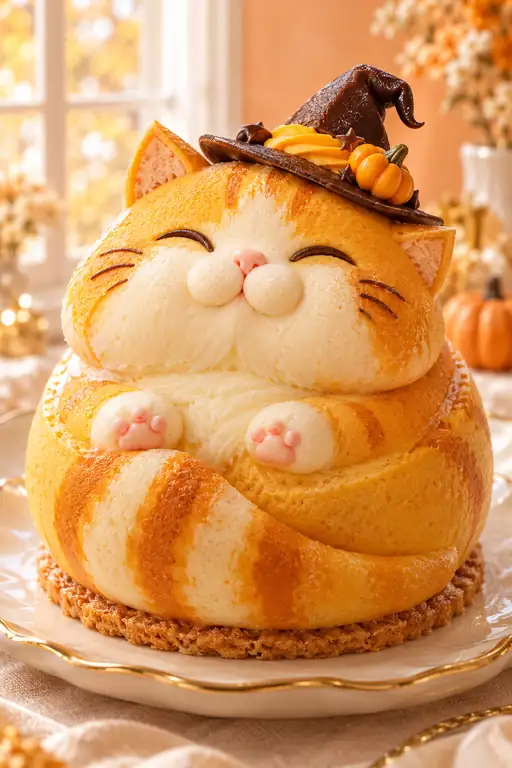 Sun-Drenched Whiskers at Dusk