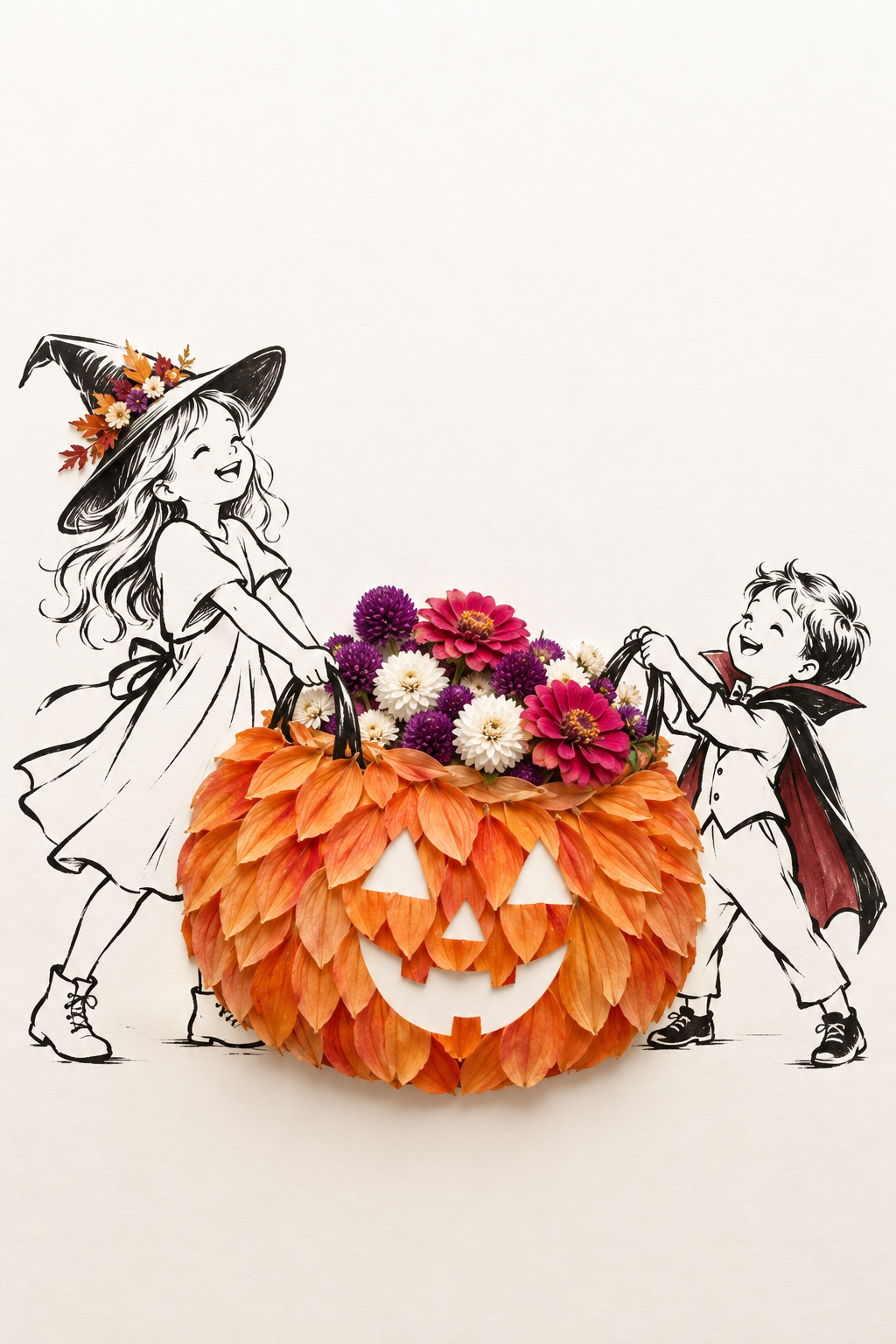
More Joy Than We Can Carry
Critique
Introduction Two smiling children in seasonal costumes carry an enormous orange pumpkin basket between them. Pink, purple, and white flowers fill its opening. The image exaggerates the shared load while keeping the children's hands and feet clearly drawn, making cooperation the practical basis of an otherwise improbable festive scene. Description The child at left wears a pointed hat and a simple flared dress. The smaller child at right has a dark cape with red lining and a high collar. Each grips one black handle. Orange petals overlap downward across the rounded basket, surrounding pale triangular eyes and a grin, while clustered flowers rise between the two faces. Analysis The broad basket anchors the lower center and separates the two bodies without breaking their connection. Curved handles provide clear links from hands to load. The left skirt opens outward, balanced by the right cape. Dark shoes establish contact with the ground, while the floral top introduces cool purple and light cream above the large warm orange field. Interpretation and Evaluation Their smiles make the effort feel like a shared success rather than a burden. The uneven heights give each participant a distinct role without suggesting conflict. The composition is effective because supporting details remain precise: fingers wrap around handles, arms extend toward the same object, and feet brace on opposite sides, explaining the act beneath its exaggerated scale. Conclusion The pumpkin face initially dominates, but the two sets of hands gradually become equally significant. They turn a giant ornament into something jointly carried. The work's warmth arises from this visible interdependence, allowing floral abundance and costume to reinforce a small, recognizable experience of doing something together.
Same Subcategory
 Twilight in the Sandbox
Similar Artworks
 Our Faces Laugh Better Unmasked
 The Surprise We Unwrapped
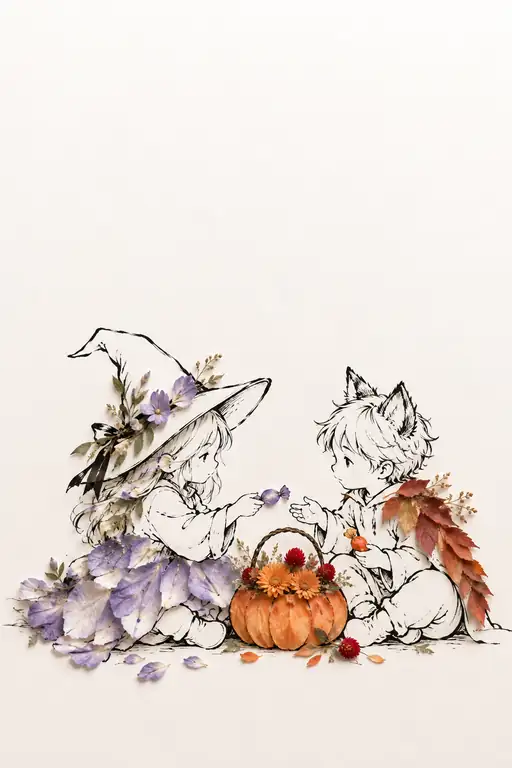 A Gentle Promise Offered from the Hand
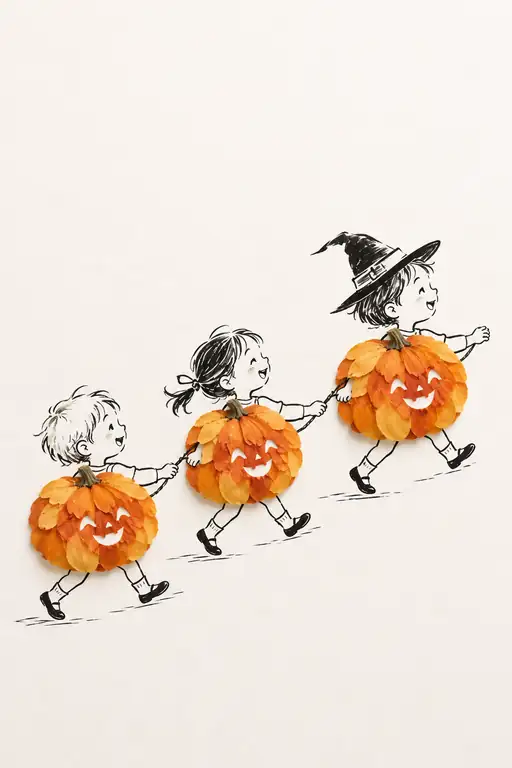 Together to the Next Adventure
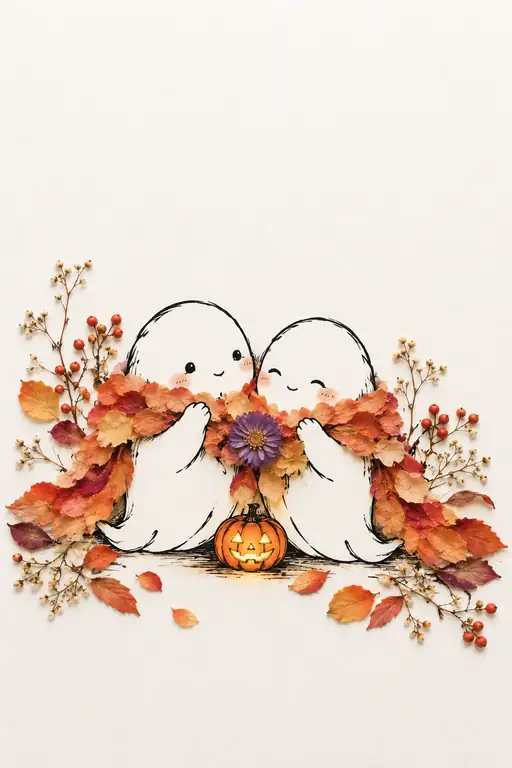 Together, Even the Night Is Warm
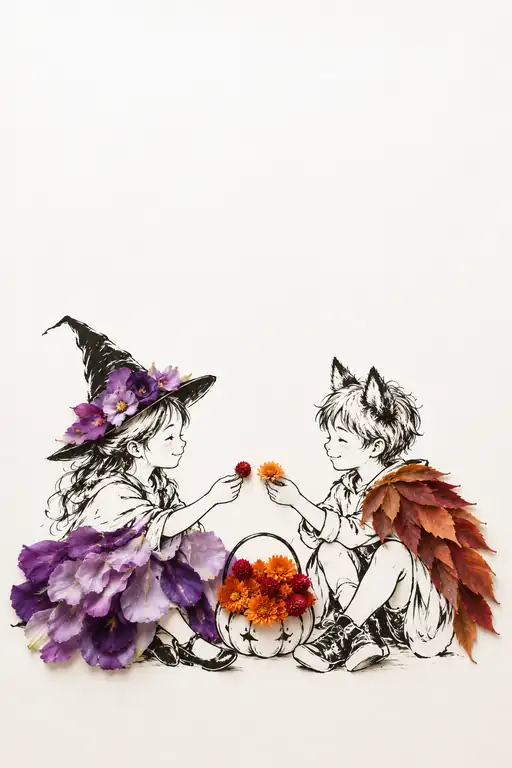 A Quiet Gift Between Fingertips
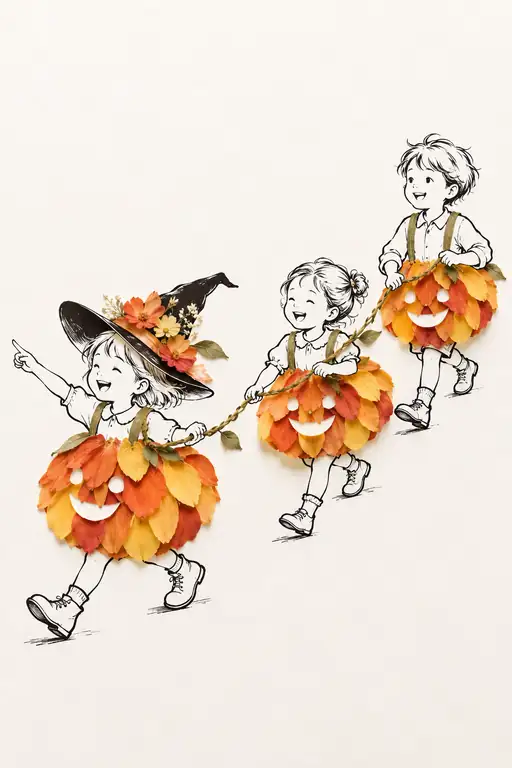 Follow Me, Follow the Laughing
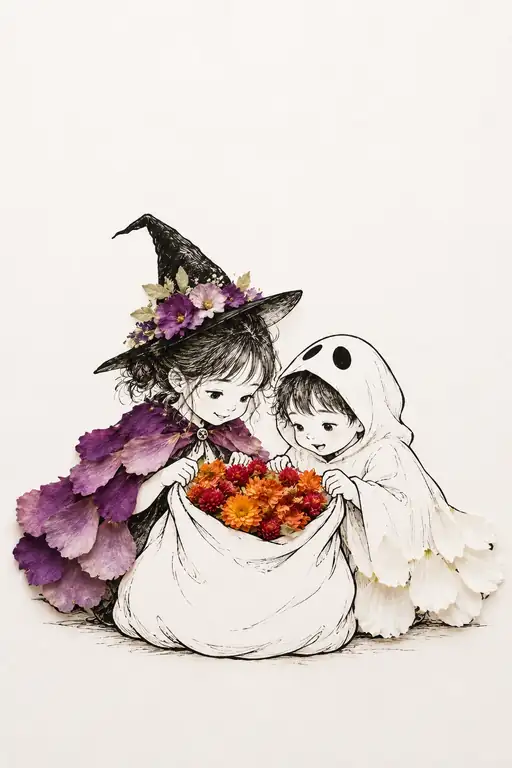 Our Secret Harvest
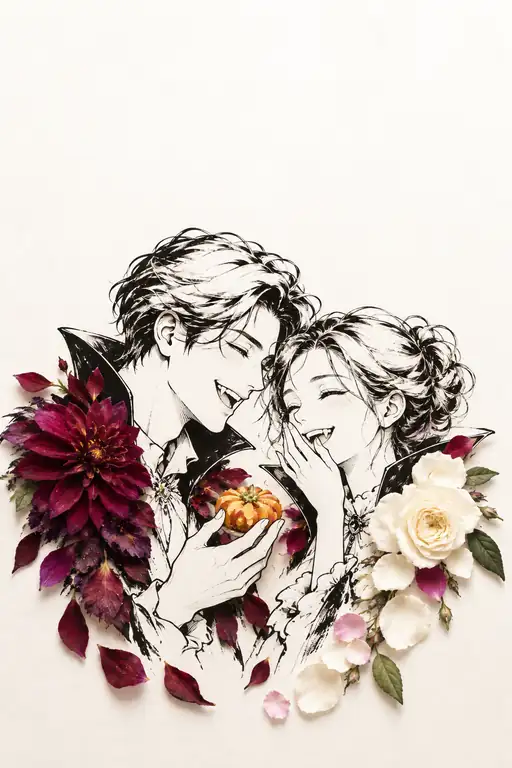 Tonight Even Our Fangs Are Laughing
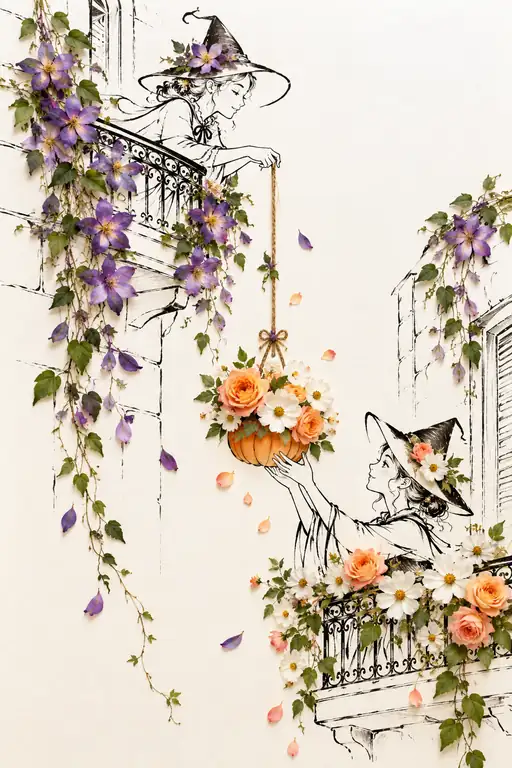 We Both Hold It Until It Reaches You