Crimson at the Heart of Stillness
Critique
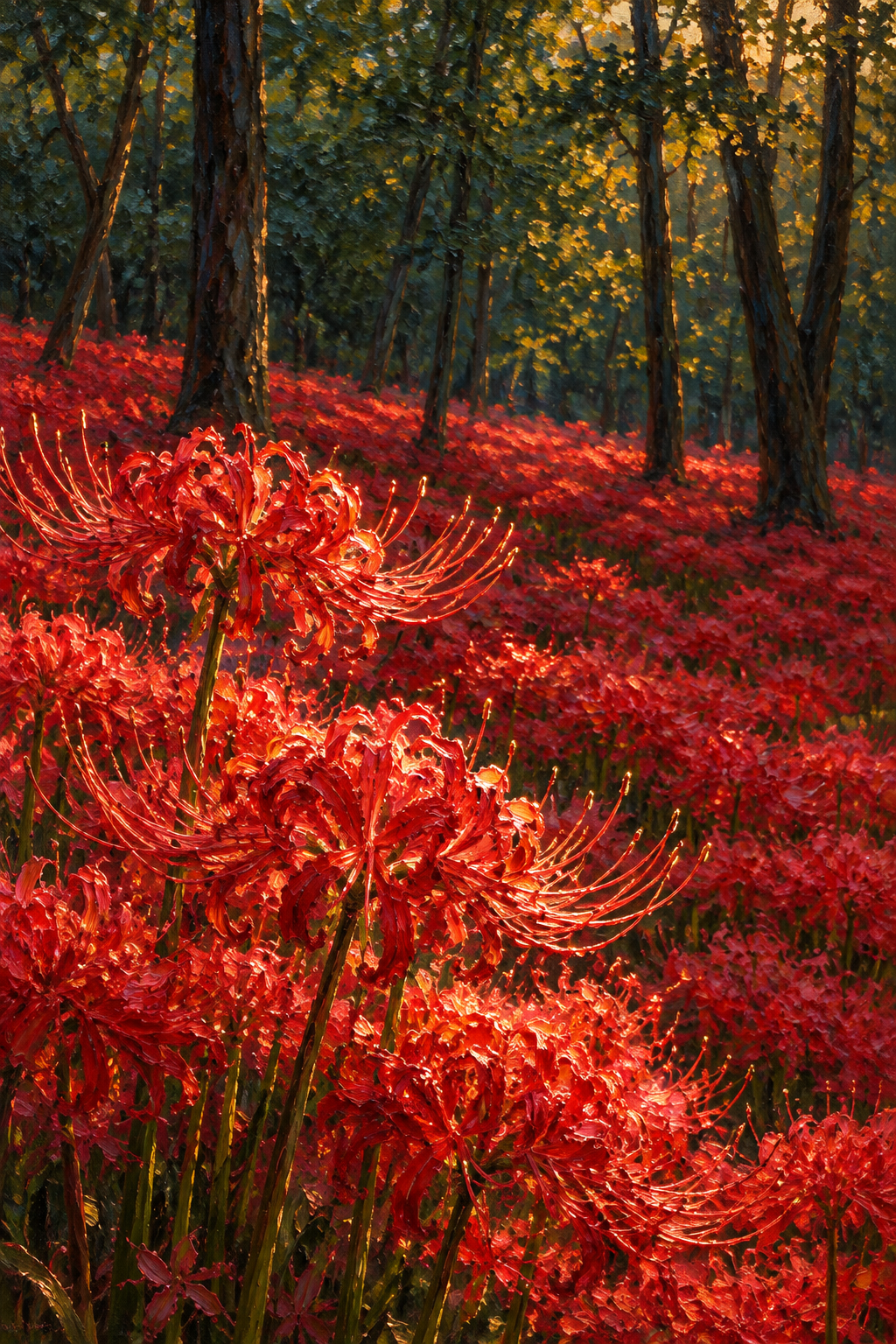
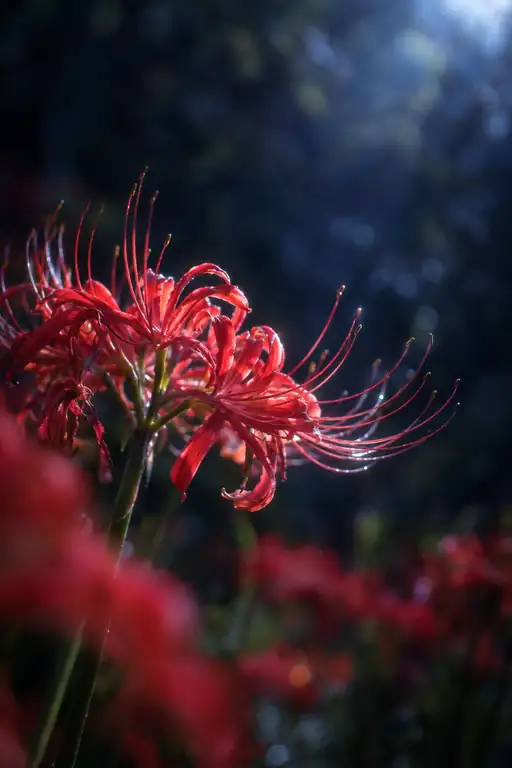
Introduction A cluster of red spider lilies glows against a dark woodland, their long filaments catching warm light. Behind them, red flowers cover a sloping floor beneath shadowed trunks. The painting narrows attention to a few illuminated heads while retaining depth, making brilliance feel concentrated rather than evenly distributed. Description Two prominent flowers rise at left and center on slender green stems. Curled petals gather around their centers, while stamens extend in long outward arcs. Dark trunks stand at unequal angles in the middle distance. A warm opening shines through leaves at the upper right, and low strips of red light alternate with broad shaded areas below. Analysis The nearest stamens form sweeping horizontal fans that counter the vertical stems and trunks. Bright edges stand out against deep green and brown, giving each filament unusual precision. The strongest flower heads occupy the lower left and middle, balanced by the distant upper-right glow. Shaded red recedes into a mass, keeping the foreground lights distinct. Interpretation and Evaluation The scene reads less as an evenly lit botanical display than as a brief meeting between sun and a particular group of flowers. Their highlighted edges suggest a moment that could change quickly. The work is effective because darkness remains substantial; it supports the red without requiring the whole forest to compete for equal attention. Conclusion The luminous filaments initially appear almost self-lit, but the warm canopy opening gradually explains their source. Looking between the two restores the relationship between close flower and woodland atmosphere. The image uses selective illumination to make a familiar floral form newly intense, preserving both its delicate construction and the surrounding depth that gives that intensity meaning.
Same Subcategory
 The Quiet Before Unfolding
 The Light After Hands Come to Rest
Similar Artworks
 Light Goes Where There Is No Path
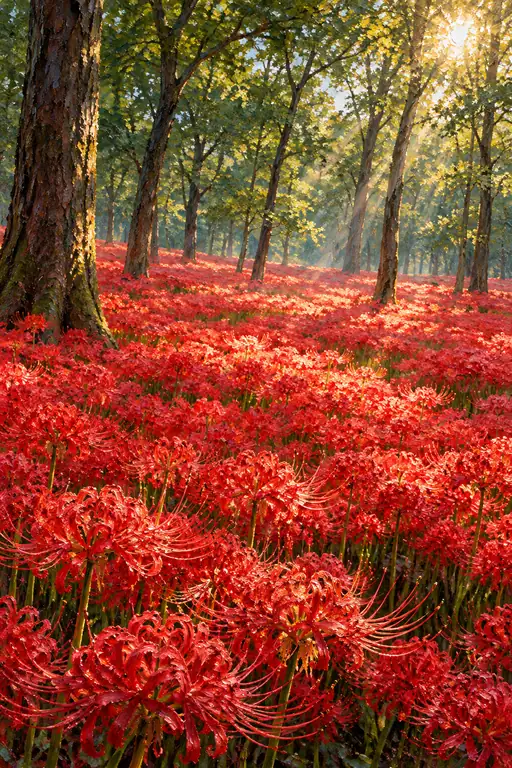 Even the Sunbeams Turn Crimson
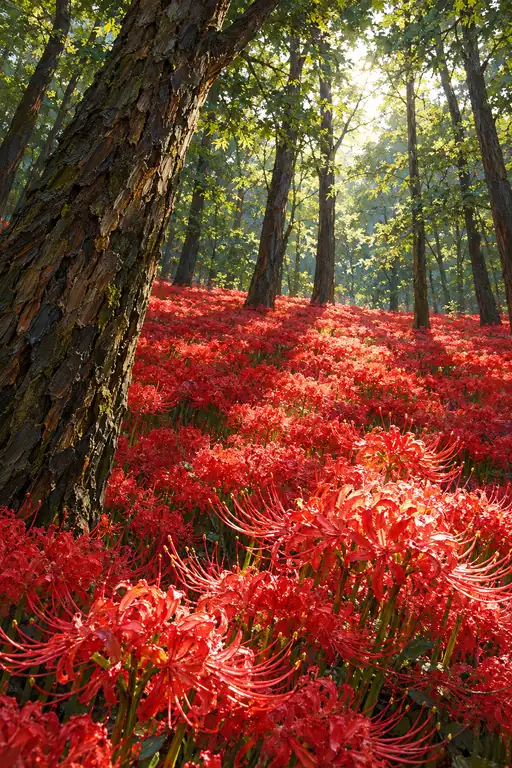 Waiting Just Beyond This Trunk
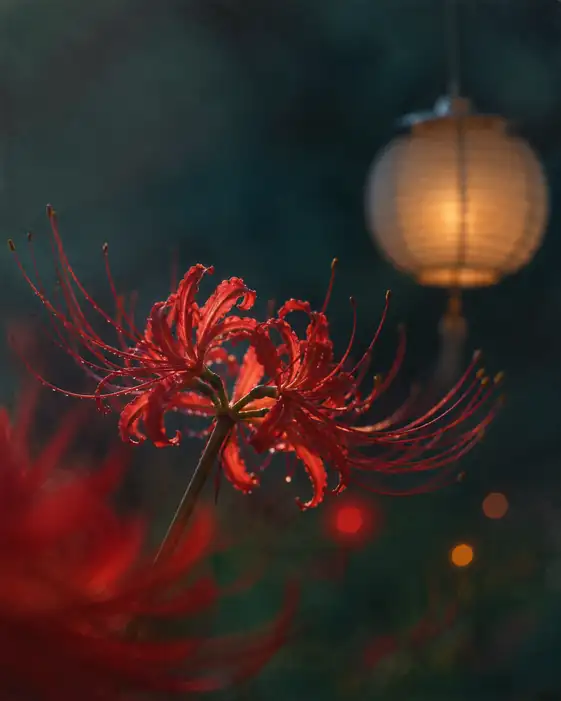 Spider Lily by Lantern Light
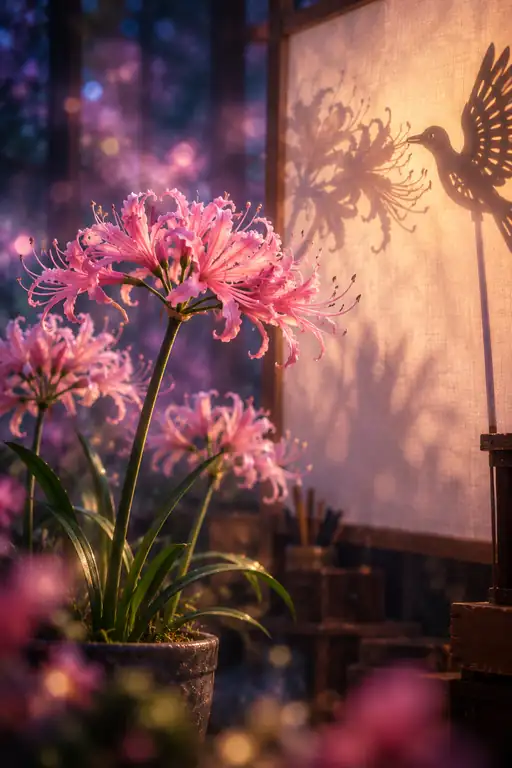 My Shadow Can Reach You
 Even Here, I Bloom
 The Fragrance Between Branch and Earth
 Madder Outdoor Stage and Twilight Lycoris
 Scarlet Blooms Gazing Up at the Misty Sanctuary
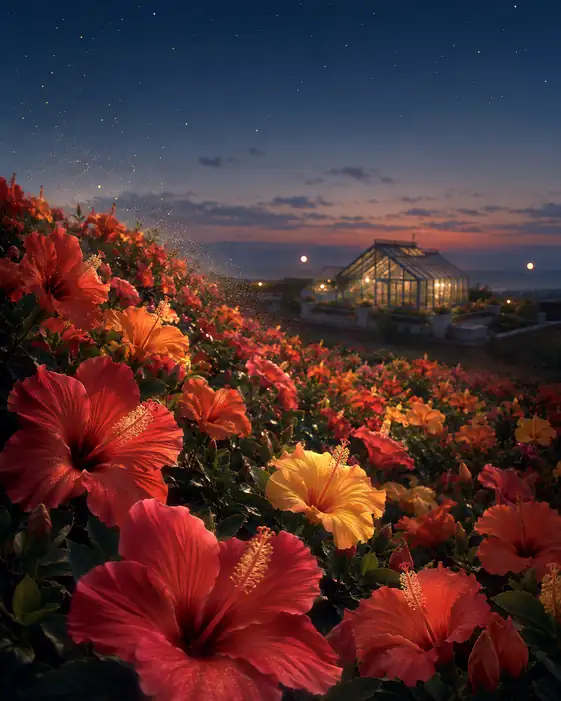 Hibiscus Hill beneath the Twilight Stars