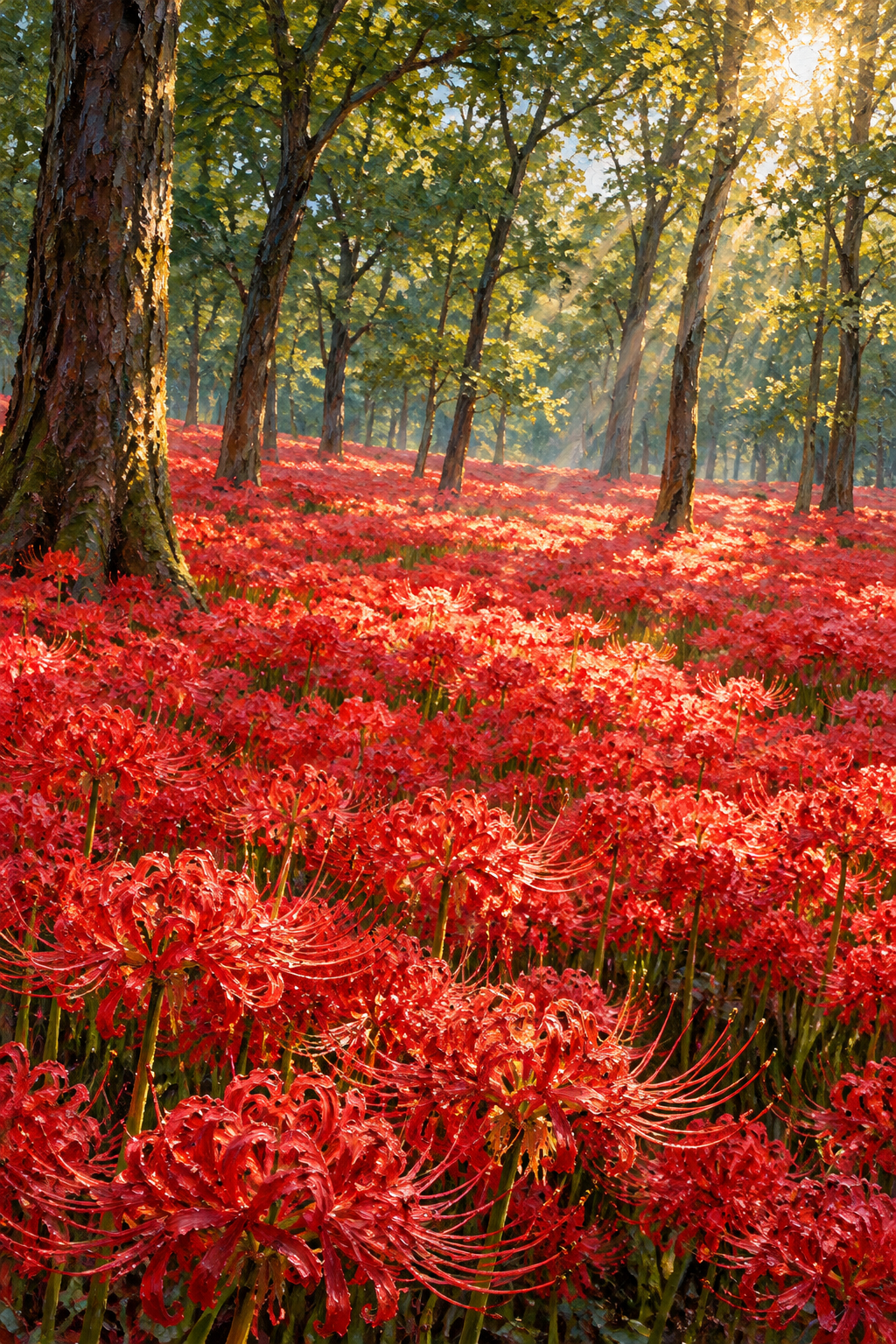
Even the Sunbeams Turn Crimson
Critique
Introduction A dense carpet of red spider lilies spreads beneath a green woodland canopy. A large trunk stands at the left edge, while sunlight enters from the upper right and falls in diagonal shafts. The painting joins close floral intricacy to a deeper sequence of trees, making light the main connection between ground and canopy. Description Curled red petals and long stamens fill the lower half, supported by narrow green stems. The nearest trunk has dark rough bark and moss around its base. Smaller trunks recede across the ground. Bright yellow-green leaves surround the high light source, and pale beams cross the shaded air toward illuminated patches among the flowers. Analysis The left trunk establishes a firm near plane against the finer upright trees behind. Red flower heads become smaller and less distinct as they approach the middle ground. Green above supplies a complementary field without matching the red's intensity. Diagonal light cuts across the vertical rhythm, preventing the repeated trunks from producing a rigid space. Interpretation and Evaluation The scene suggests immersion in a flowering woodland rather than a view of an isolated specimen. Sunlit filaments give the dense red surface small internal differences. The composition is effective because it keeps the flowers' structure visible in front while simplifying their distant mass, allowing botanical description and atmospheric distance to reinforce each other. Conclusion The uninterrupted red initially commands attention, but the light shafts gradually lead the eye upward and inward. The rough near trunk supplies a contrasting surface that makes the delicate stamens more apparent. The work transforms abundance into a field through changes of texture, scale, and illumination, preserving spaciousness within a scene with little exposed ground.
Same Subcategory
 White, and a Little Closer to the Sky
Similar Artworks
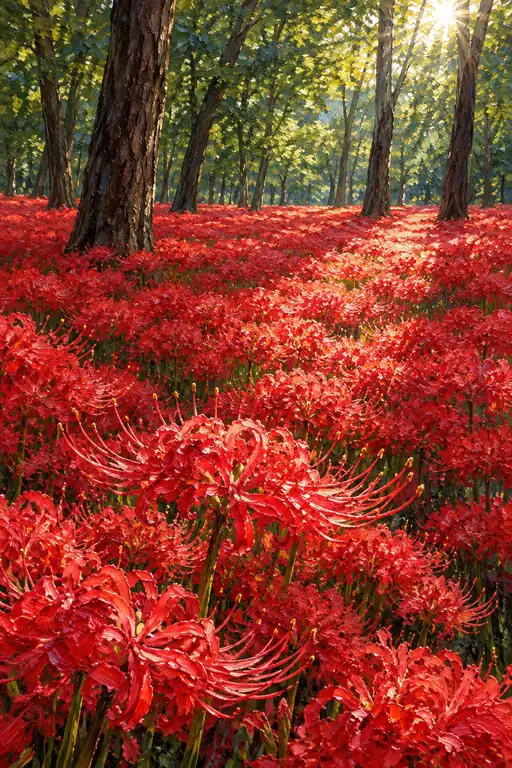 Light Goes Where There Is No Path
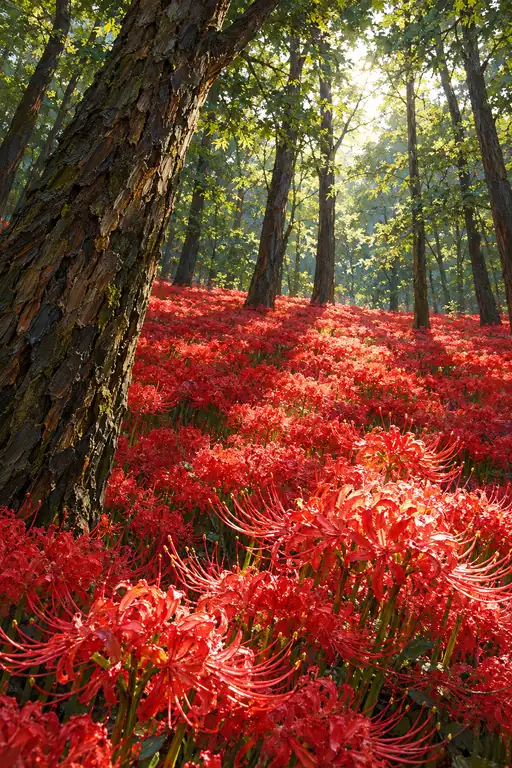 Waiting Just Beyond This Trunk
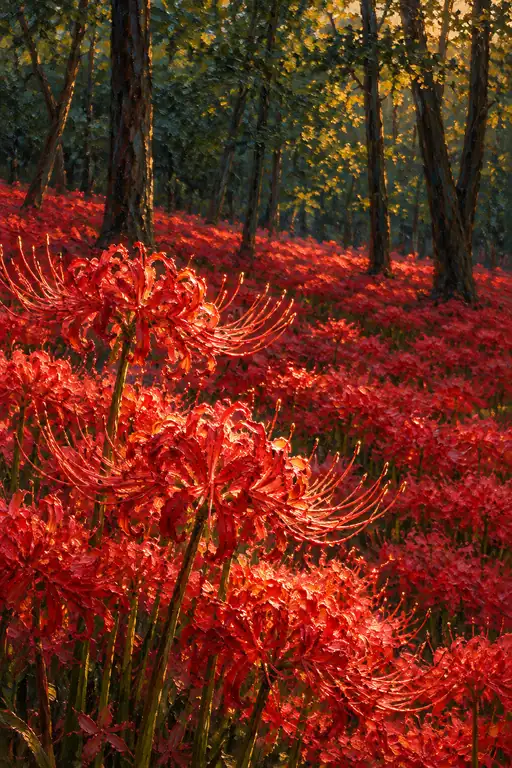 Crimson at the Heart of Stillness
 Abyss of Memory: A Crimson Flickering Dream
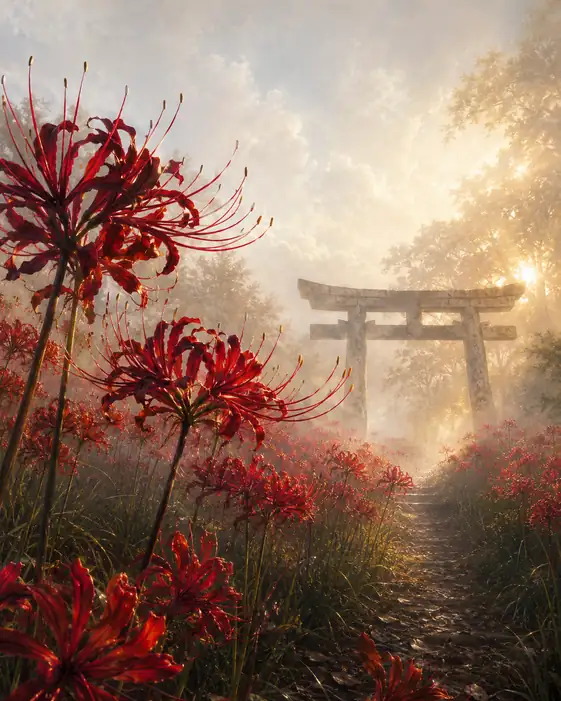 Morning Sunbeam Torii and Burning Lycoris Approach
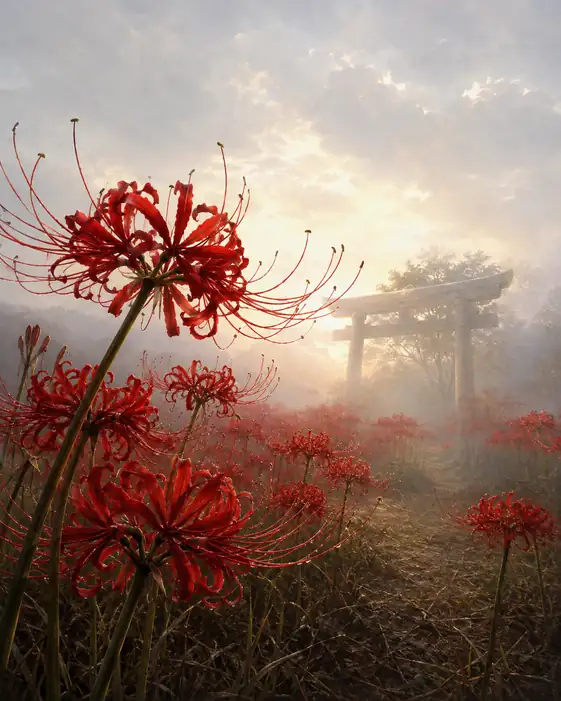 Stone Torii in Misty Sanctuary and Crimson Lycoris
 The Crimson Tapestry of the Deep Woods
 Even the Long Way Is in Bloom
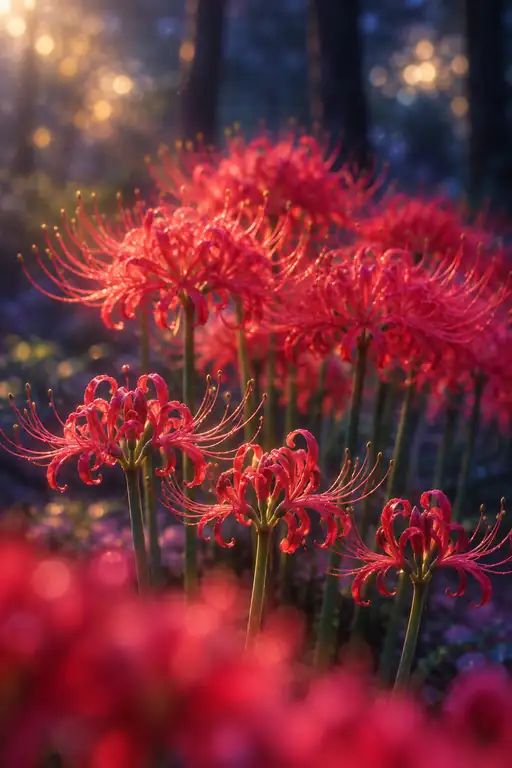 Our Secret Place in the Woods
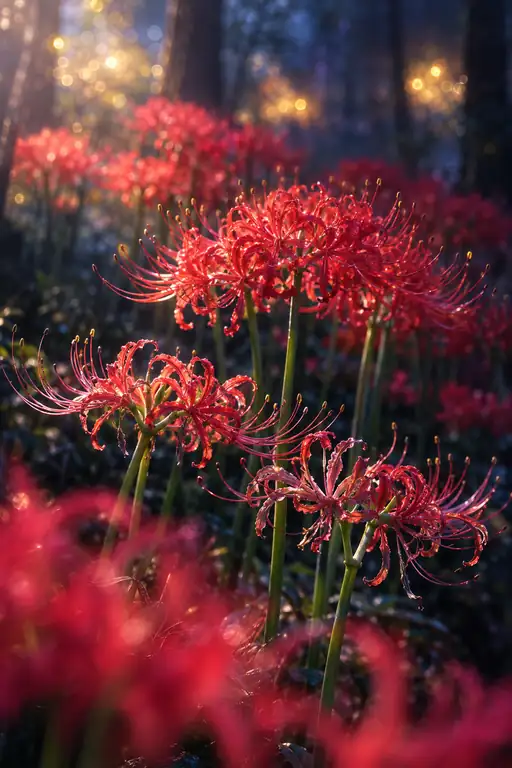 The Forest Opens a Window