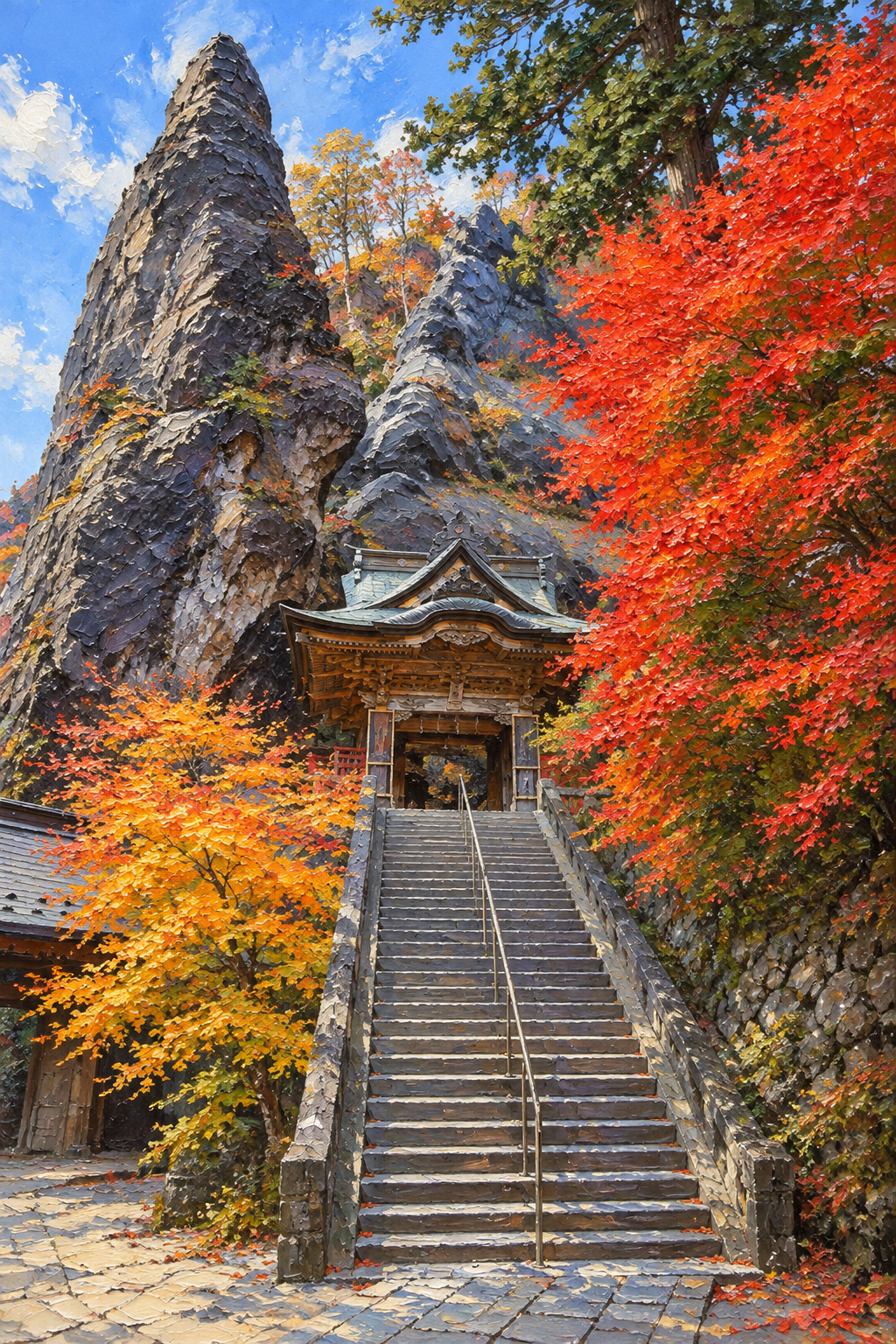
Smaller with Every Step
Critique
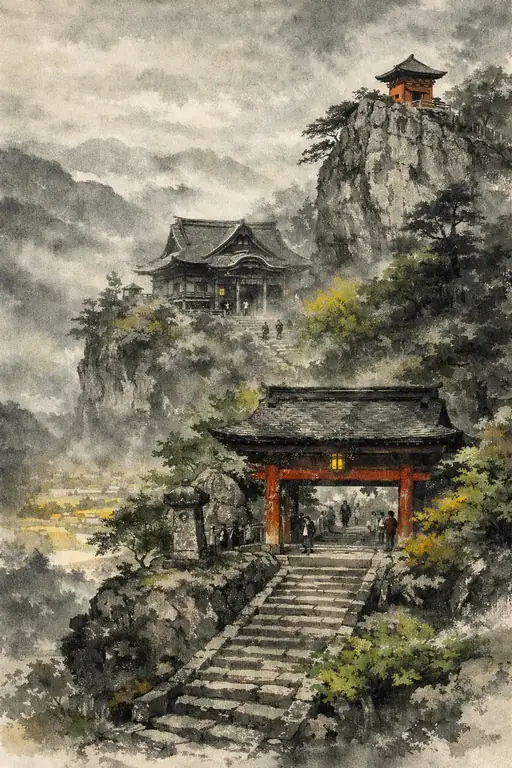
Introduction A central stairway rises directly toward a wooden gate beneath two immense rock pinnacles. Yellow foliage fills the left foreground and red leaves spread down the right. The painting uses a frontal approach to align architecture and terrain, making the viewer's imagined ascent the organizing force of the landscape. Description A narrow handrail divides the stone steps almost along their center. Above, the gate's carved beam and curved roof form a broad dark threshold. The tallest rock stands left of the gate, with a smaller pointed formation behind it. Evergreen branches cross the upper right, while fallen red leaves punctuate the paving and stair edges below. Analysis The stairway's converging sides direct attention toward the gate before the rocks carry it farther upward. The red canopy occupies a large right-hand plane, balanced by exposed gray stone on the left. Yellow foliage softens the lower transition. Thick angled marks on the cliffs differ from the gate's fine carved details, distinguishing geological mass from constructed ornament. Interpretation and Evaluation The straight approach promises access, but the pinnacles exceed the scale of that accessible route. The image sustains a productive distinction between reaching a threshold and comprehending the entire terrain. Its composition is effective because the central handrail remains clear amid rich color, providing a continuous human measure against the irregular shapes of the mountain. Conclusion The red leaves first establish brilliance, yet the stairway gradually imposes a slower sequence of attention. Each step leads toward an opening dwarfed by rock. The work holds decorative foliage, architectural intricacy, and imposing stone in a clear hierarchy, allowing an inviting path to coexist with the landscape's greater physical authority.
Same Subcategory
Similar Artworks
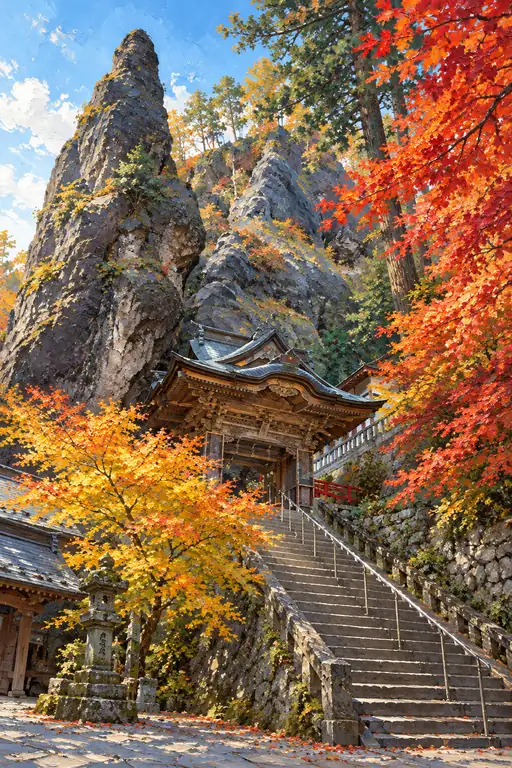 Beyond the Gate, the Sky Still Rises
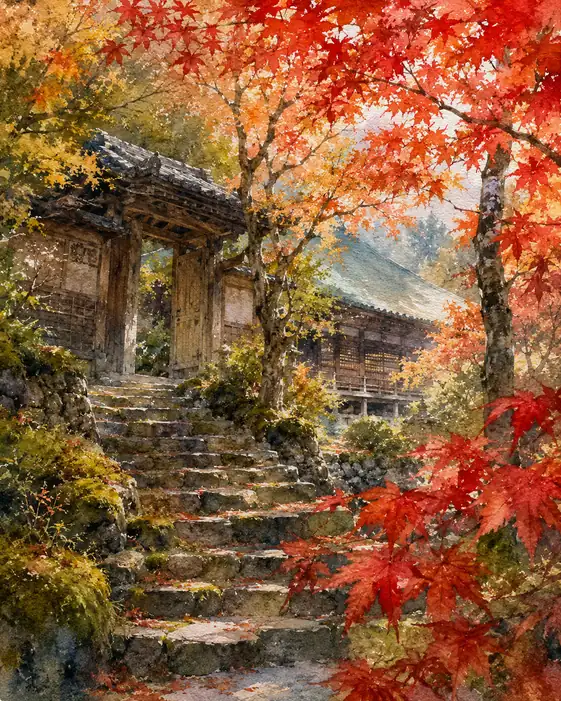 The Crimson Threshold of Silence
 Every Step a Quiet Prayer
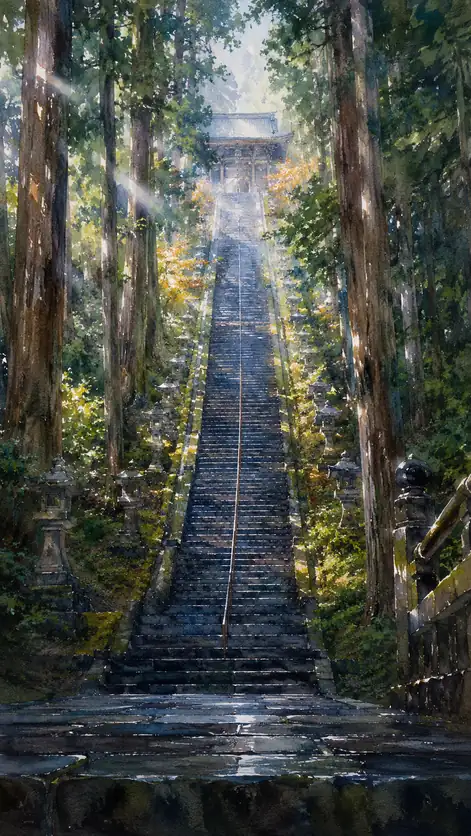 The Stairway between Two Silences
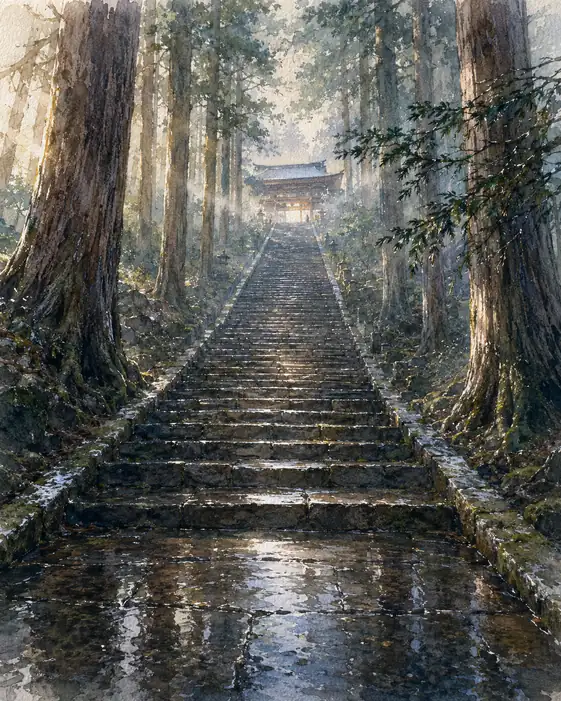 Steps Rising through Cedar Silence
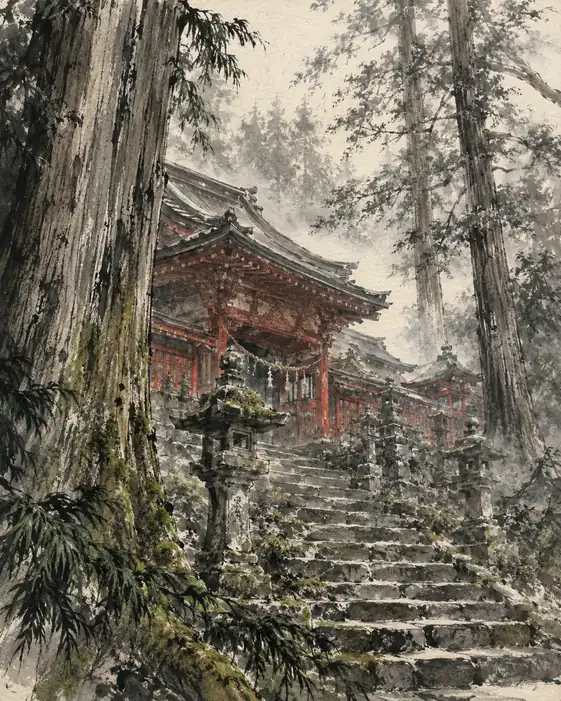 Threshold of the Ancient Silence
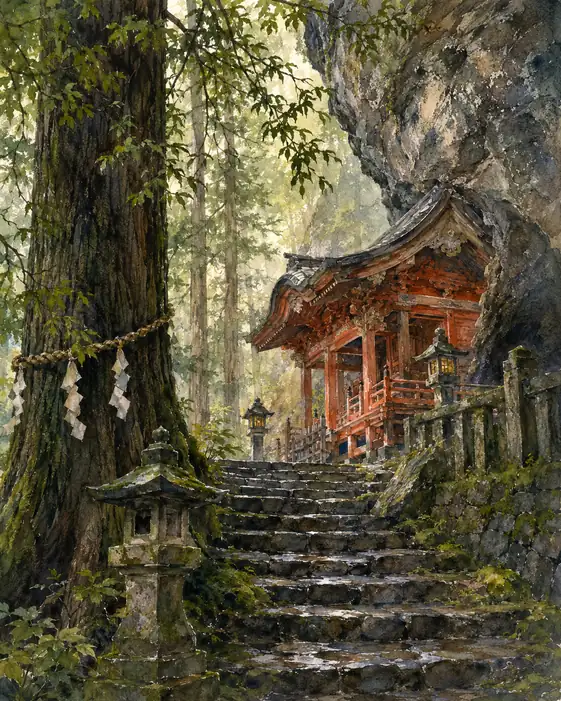 The Ancient Spirit’s Sanctuary
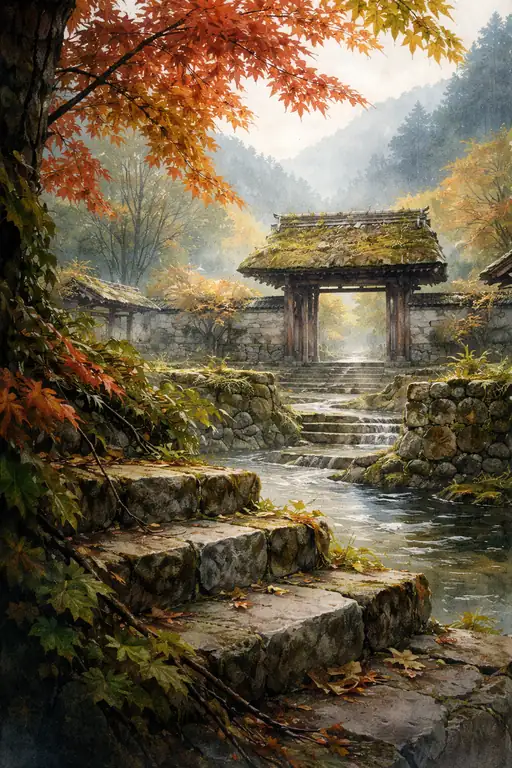 Whispers of Autumn: The Mossy Gate in the Mist
 Guiding Light in the Mystic Mist
 Where Earth Touches the Heavens