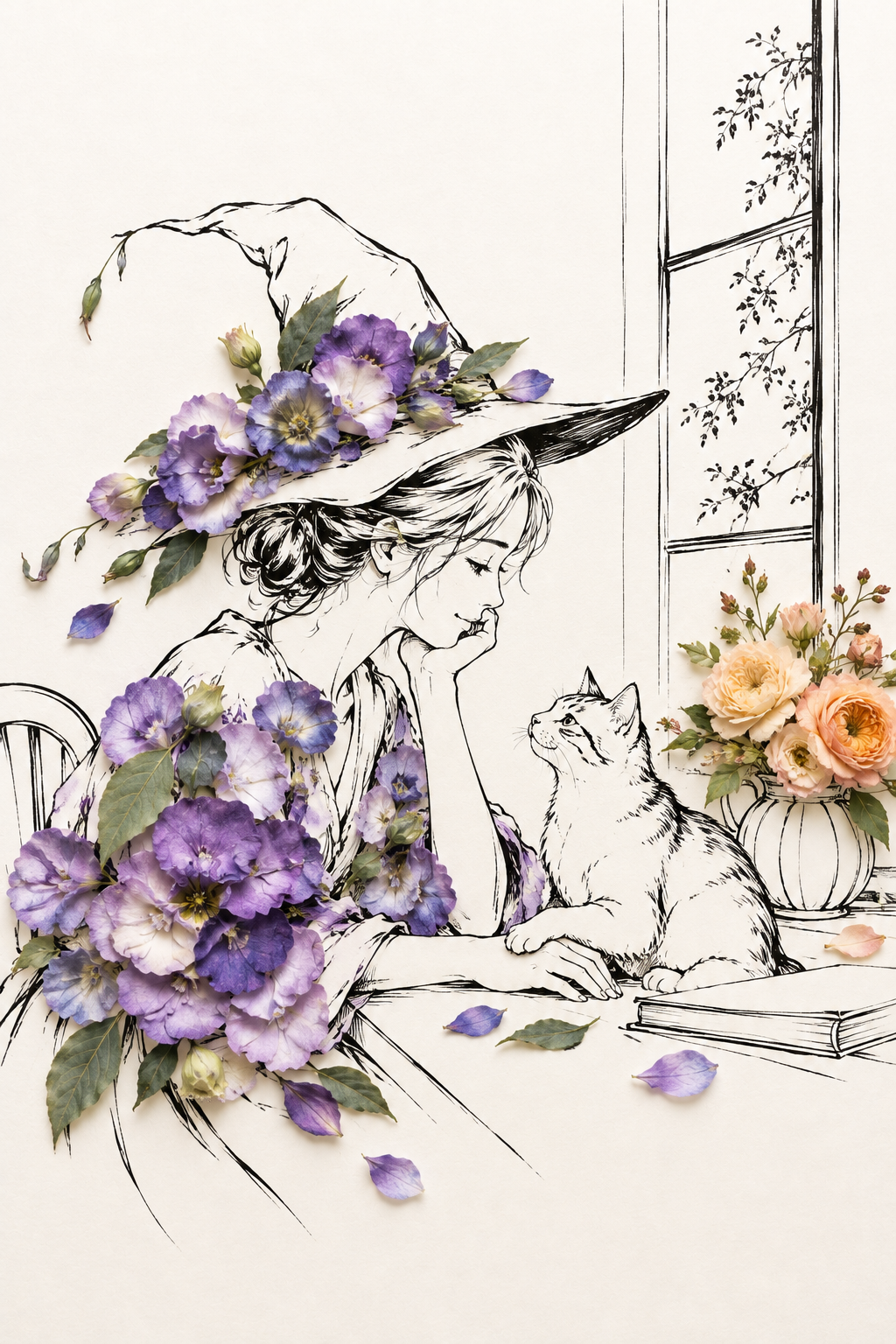
When the Book Closes, It Is Your Turn
Critique
Introduction A woman in a flowered pointed hat sits at a table, resting her cheek on one hand as a cat looks up at her. Purple blossoms cover the sleeve and hat, while peach roses stand beside a tall window. Opposing gazes and contact organize the encounter. Description The woman's other hand lies on the tabletop beneath the cat's forepaw. Her lowered profile approaches the animal's raised muzzle. A closed book rests at the lower right, beside scattered petals and leaves. The window's straight frame reveals fine leafy branches, and a round ribbed vase holds pale orange roses behind the seated cat. Analysis The bent arm creates a stable triangle supporting the face, while the cat's lifted head completes a smaller upward movement. Dense purple flowers at left balance the compact rose bouquet at right. The window supplies a vertical boundary behind them. Table edges and the closed book establish shallow depth without interrupting the central exchange between the two faces. Interpretation and Evaluation The cat's paw on the hand makes the relationship tactile rather than merely visual. The woman's posture suggests a pause from whatever activity the closed book might imply. The composition is effective because the floral material remains peripheral to the exchange: sleeve and hat enrich the figure, while exposed hands, face, and animal contours carry the scene's emotional specificity. Conclusion The flowers first offer a gentle color contrast, but the small interval between faces becomes the main point of attention. The resting hand and cat's paw quietly bridge that gap. The work finds narrative depth in a domestic pause, using material richness to frame an encounter whose significance depends on restraint rather than on an event.
Same Subcategory
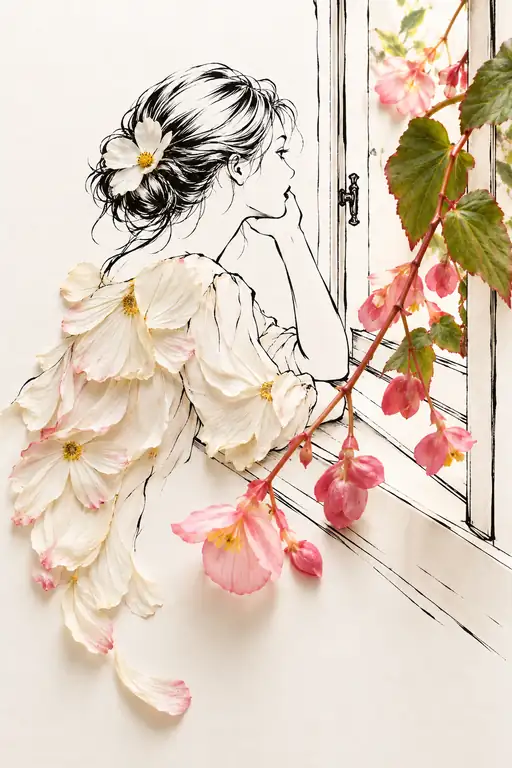 My Thoughts Go Out Before Me
Similar Artworks
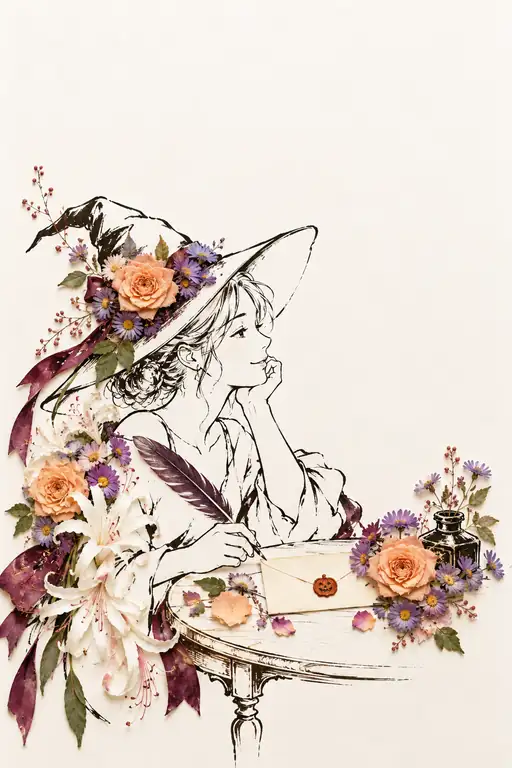 Someone Waiting Beyond the Seal
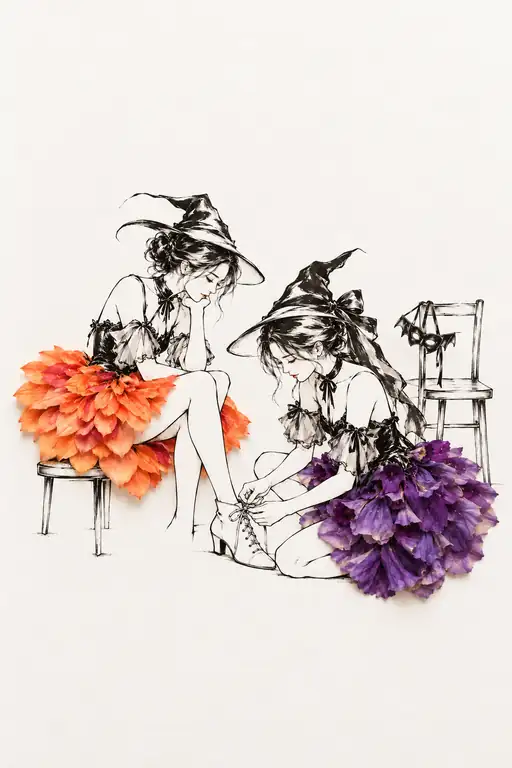 No Hurry to Tie It Well
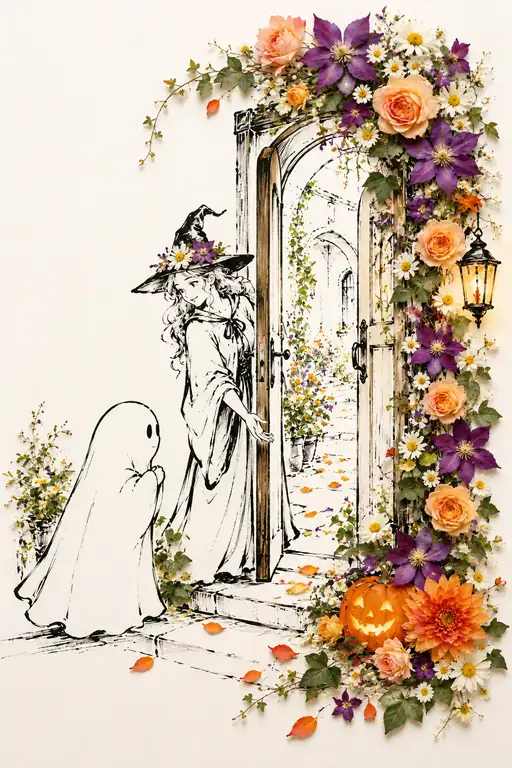 Come In, Just as You Are
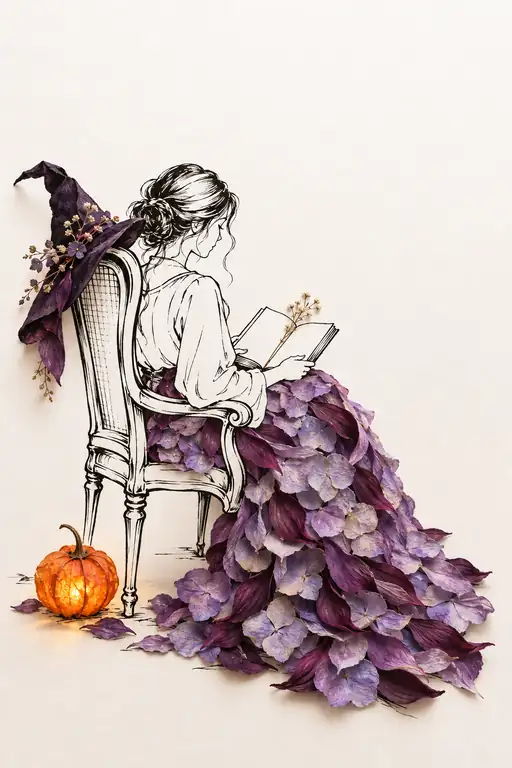 Just One More Page by Lanternlight
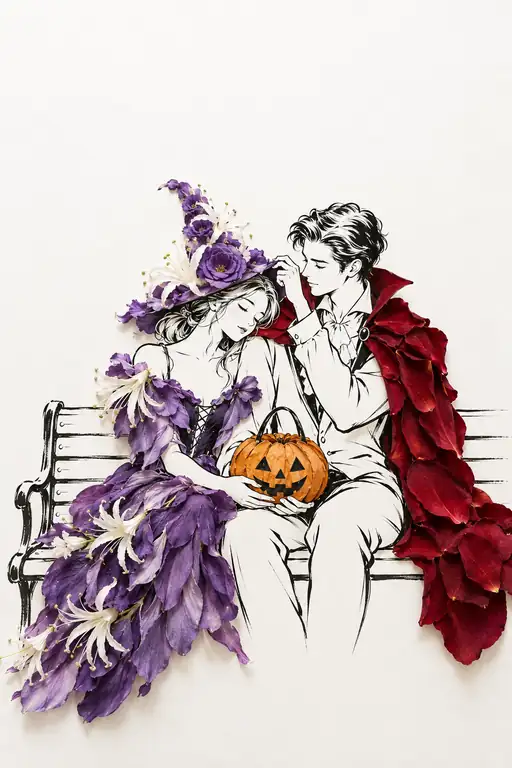 Near Enough to Let You Sleep
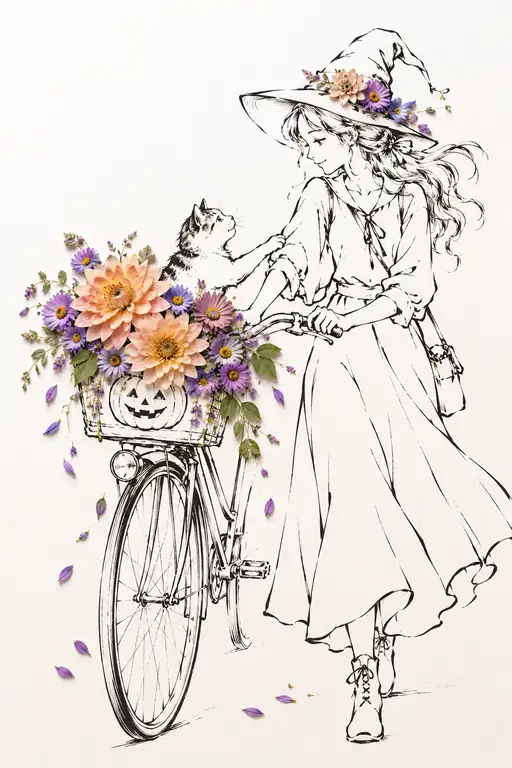 Your Paw Comes Before the Road
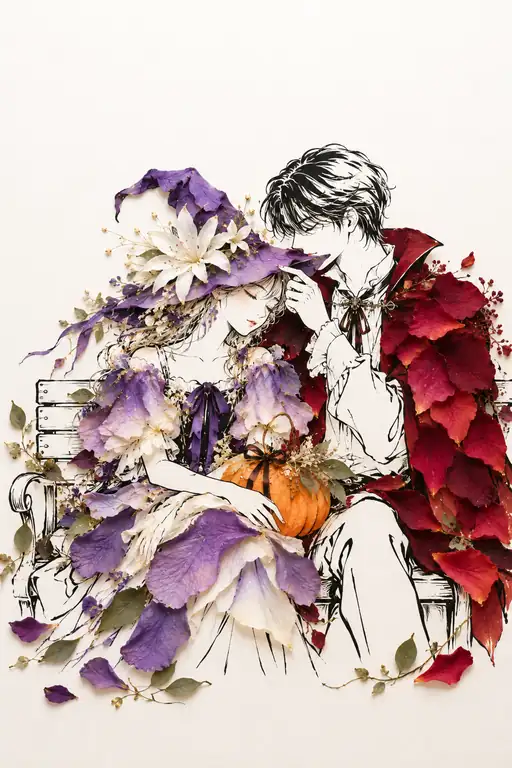 A Height That Leaves Dreams Undisturbed
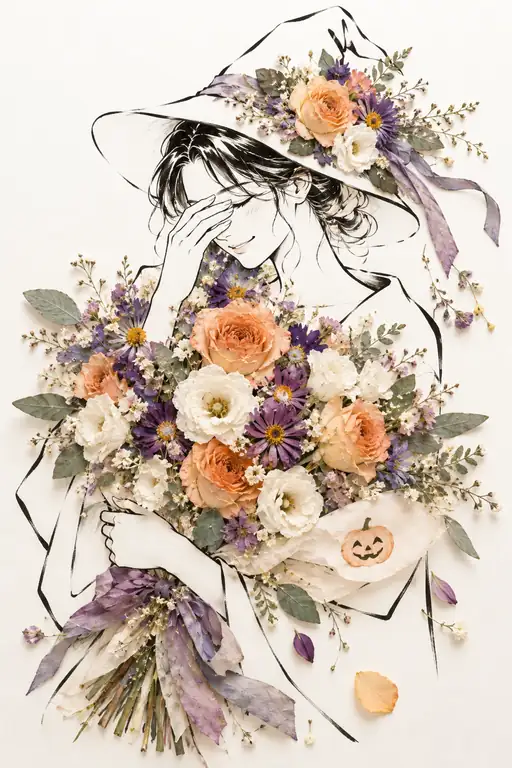 Half Hiding My Happiness
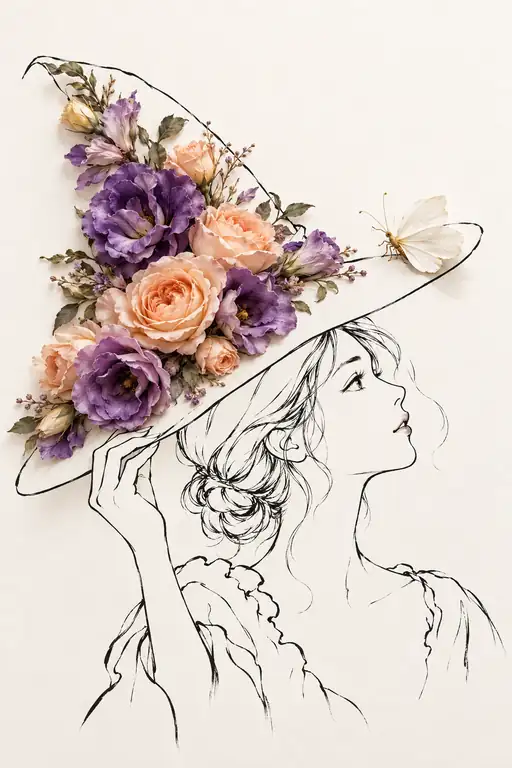 A Welcome Quieter Than a Blink
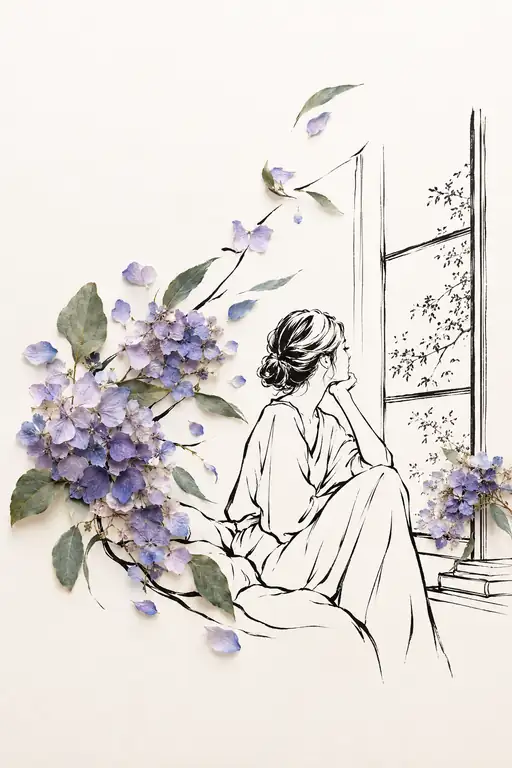 Hydrangeas and Quiet Thoughts by the Window