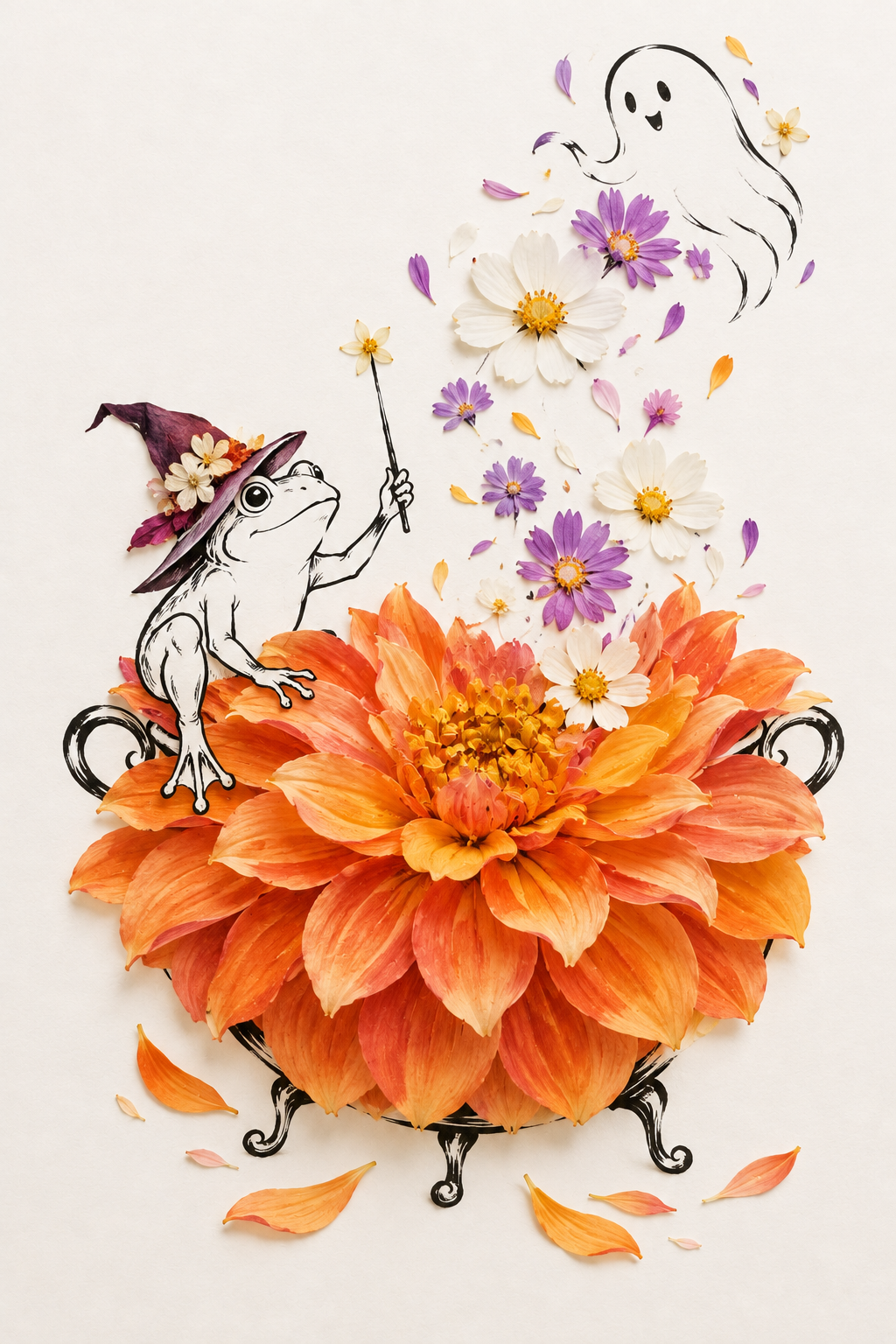
What a Little Wand Can Do
Critique
Introduction A small frog in a pointed floral hat sits on the edge of an orange flower. It raises a thin wand toward a smiling outlined ghost amid ascending white and purple blossoms. The image builds a fanciful act of conjuring from an exchange between frog and ghost. Description The frog occupies the left side, one hand braced on the orange petals and one foot hanging over the edge. A pale flower tips the wand. The large bloom rests within a partly visible black vessel with curled handles and decorative feet. Above, detached petals and smaller flowers lead toward the ghost, whose tapering lower contours curl rightward. Analysis The orange flower establishes a base, contrasted with the open white space around the ghost. The wand supplies a line through the dispersed blossoms. The frog's round eye and uplifted muzzle reinforce that same gaze. Black vessel curls repeat the ghost's contours at a lower level, linking otherwise parts graphically. Interpretation and Evaluation The rising flowers make the action seem playful rather than forceful. The frog remains physically convincing because its planted hand and bent legs explain how it sits on the uneven surface. The work's compositional strength is the spacing between the blossoms: gaps keep the implied movement readable and allow the ghost to remain light despite its larger outline. Conclusion The orange bloom first dominates through scale and texture, but the thin wand gradually organizes the whole scene. Following it reveals a sequence from bodily balance to floating petals and finally to the smiling figure. The work gives a minor gesture expansive consequences while retaining the distinct material character of the flower that serves as its stage.
Same Subcategory
Similar Artworks
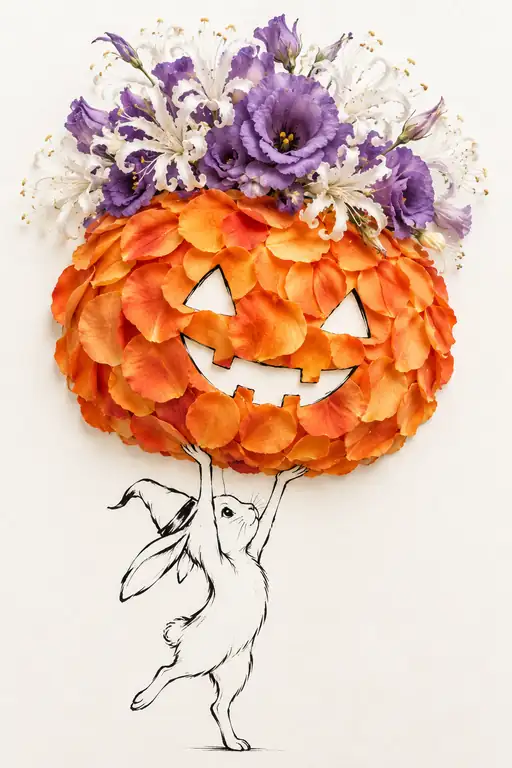 Lifting the Full-Moon Pumpkin High
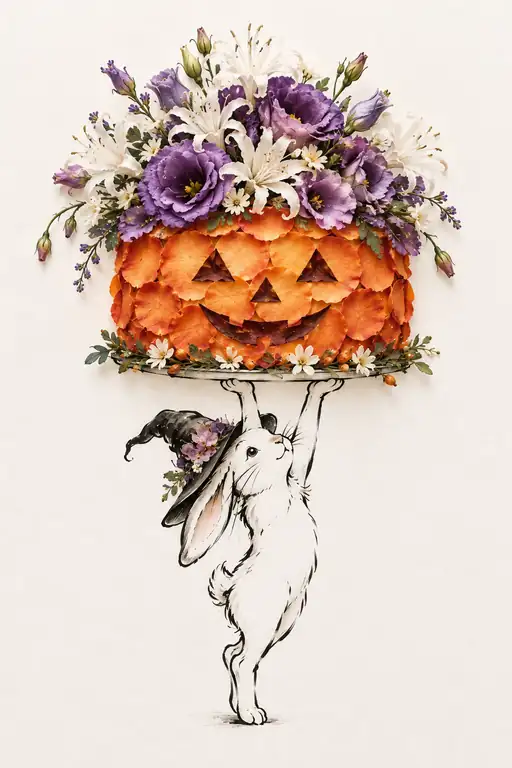 A Grand Occasion for Small Paws
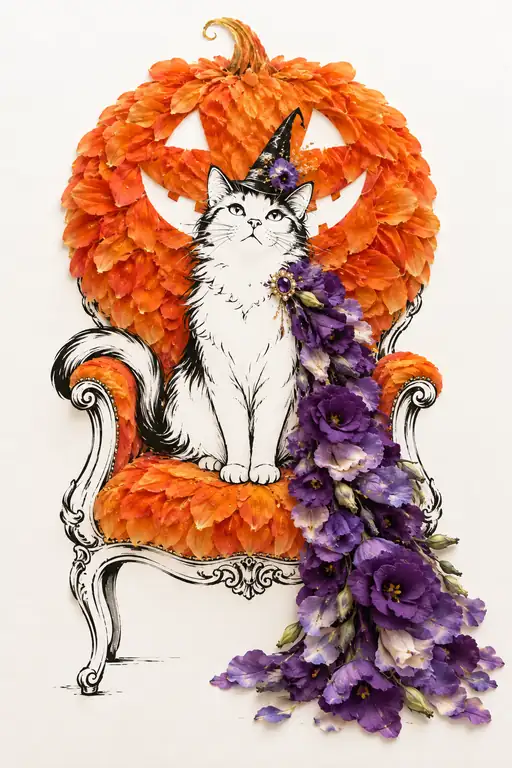 Sovereign Grace upon the Pumpkin Throne
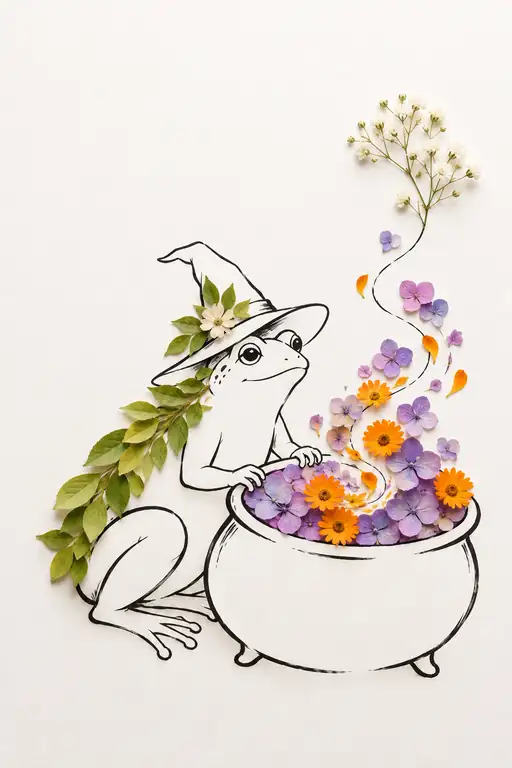 My Recipe for a Little Wonder
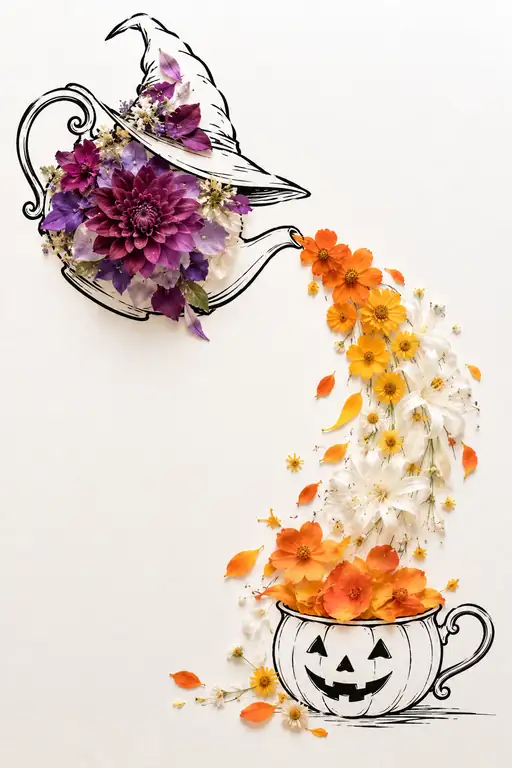 Enough Warmth for You Too
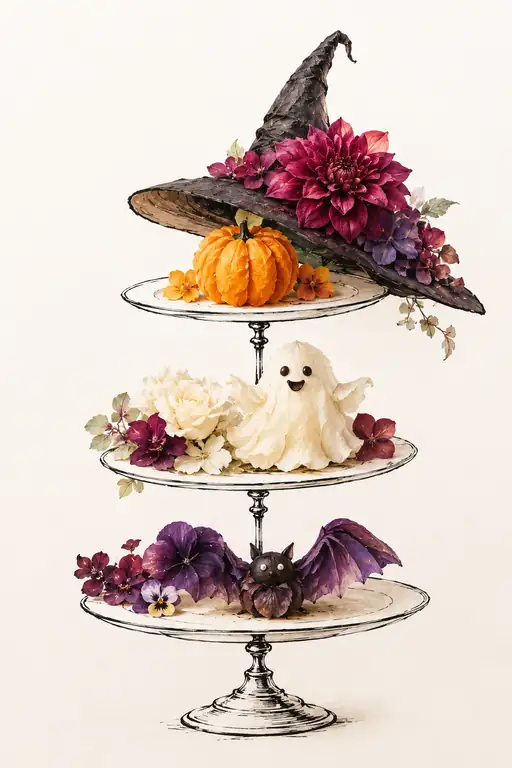 Choose Your Frights, One by One
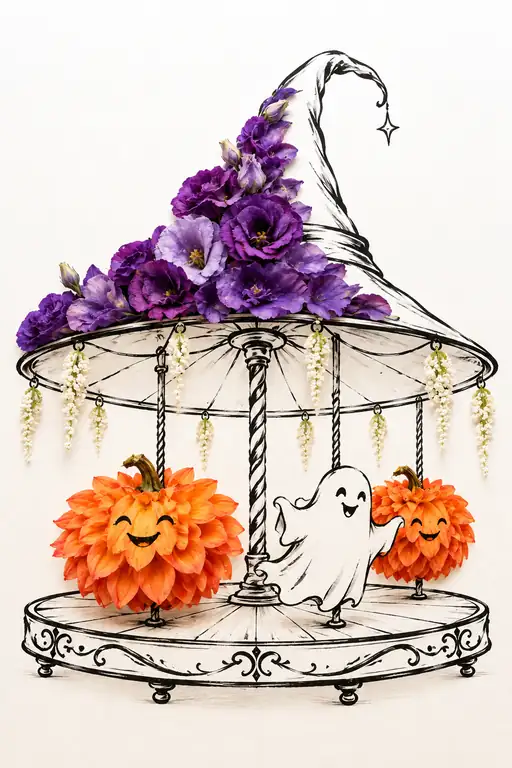 Merry Carousel of the Twilight Spell
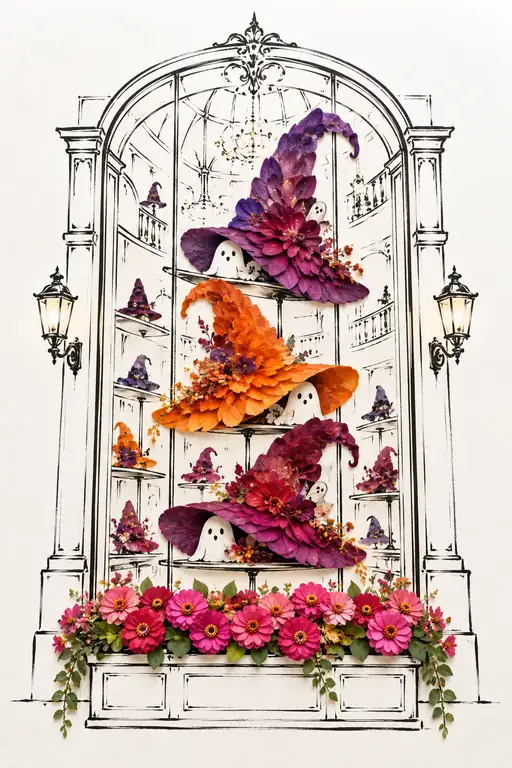 Waiting for You Beneath the Brims
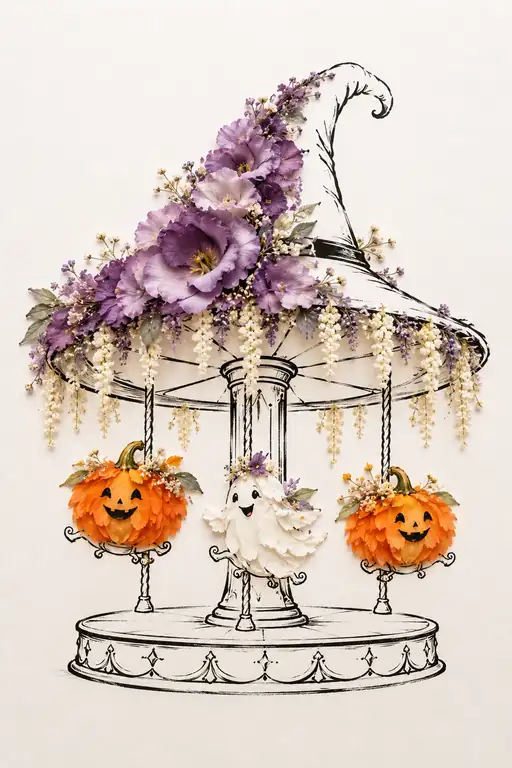 Next, It Is Your Turn to Smile
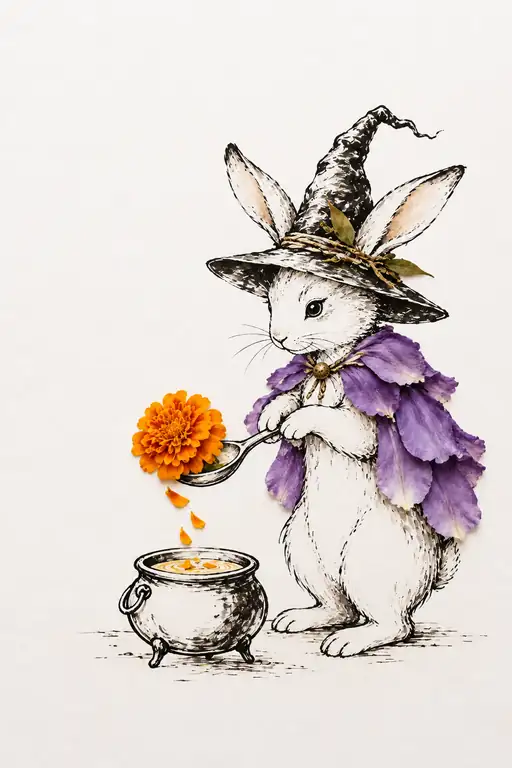 Just One More Petal of Magic