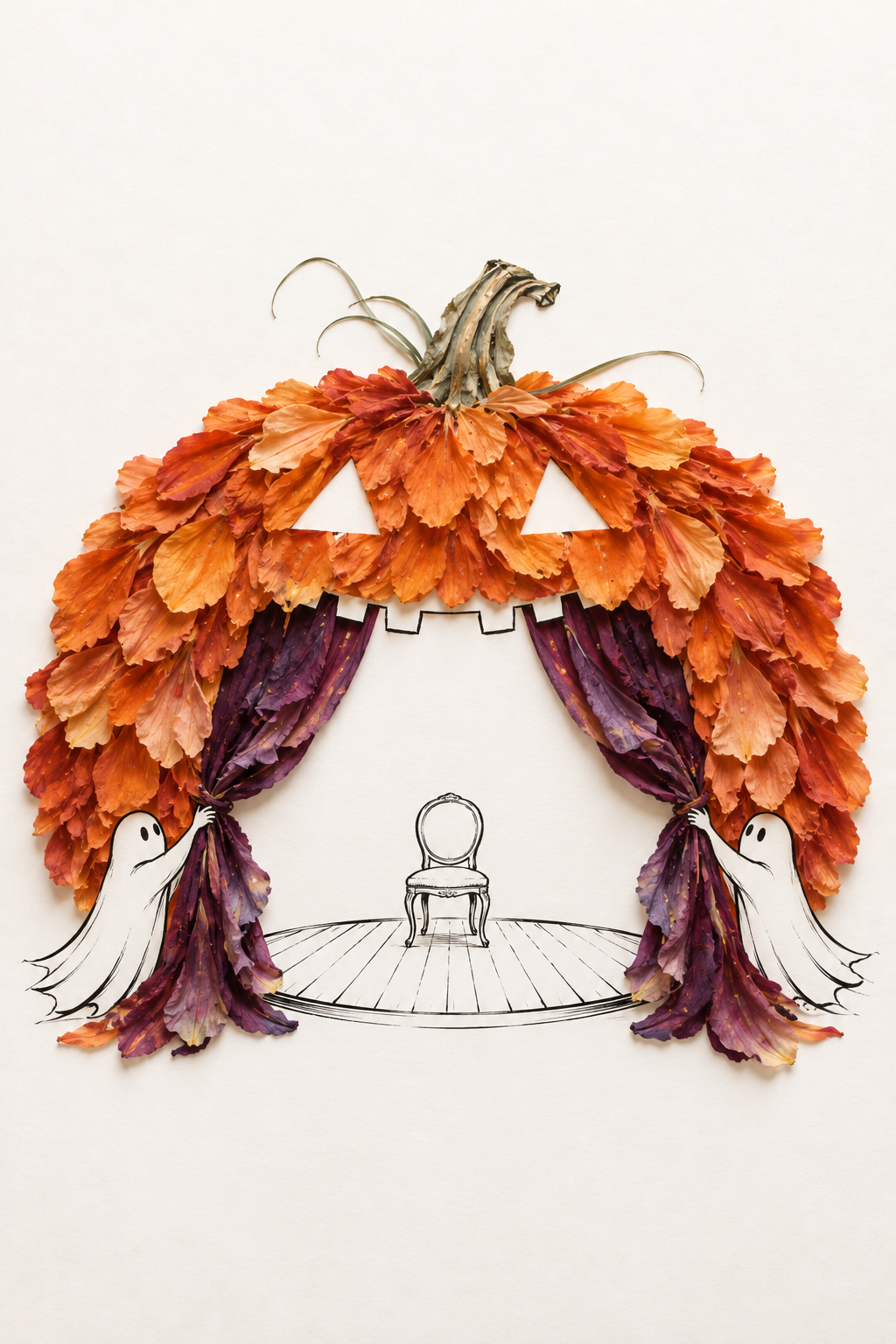
The Play Begins When You Sit Down
Critique
Introduction A giant orange pumpkin face becomes the proscenium of a small stage. Two outlined ghosts draw back purple petal curtains to reveal a single empty chair. The work combines a dense botanical arch with an interior, making the contrast between festive framing and unoccupied performance space its central visual tension. Description Orange petals overlap around triangular eye openings and a broad mouth edged with small drawn teeth. A rough stem and curling strands rise above the arch. Purple curtains gather at both sides beneath the ghosts' raised hands. Inside, a chair stands on a platform whose floorboards converge toward the rear. Analysis The pumpkin's large outer curve encloses a second opening formed by the curtains. Their dark purple folds concentrate weight at the sides, leaving the chair surrounded by white space. Perspective lines on the stage establish depth with very little ink. The ghosts bridge drawing and material, their hands apparently gathering petals into folds while their own bodies remain unfilled. Interpretation and Evaluation The open curtains imply that something is about to begin, yet the vacant chair postpones the event. This restraint gives the elaborate arch a purpose beyond decoration. The composition is effective because the tiny chair remains easy to locate: its central position, fine dark contour, and isolated placement counterbalance the much larger and more saturated plant forms around it. Conclusion The pumpkin face supplies an playful frame, but the empty chair gradually becomes the most consequential object. It invites an imagined performer or guest without determining who should appear. The work uses floral abundance to prepare a space for absence, allowing a small drawn furnishing to command attention within a richly textured stage.
Same Subcategory
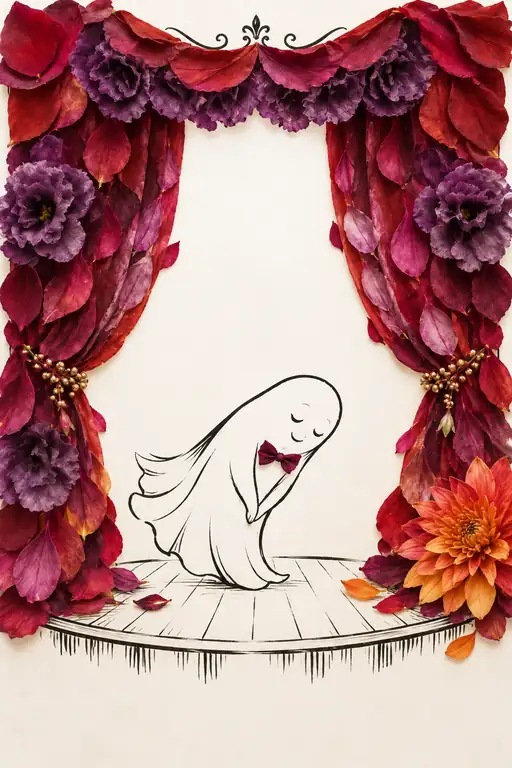 One Bow Before the Curtain Falls
Similar Artworks
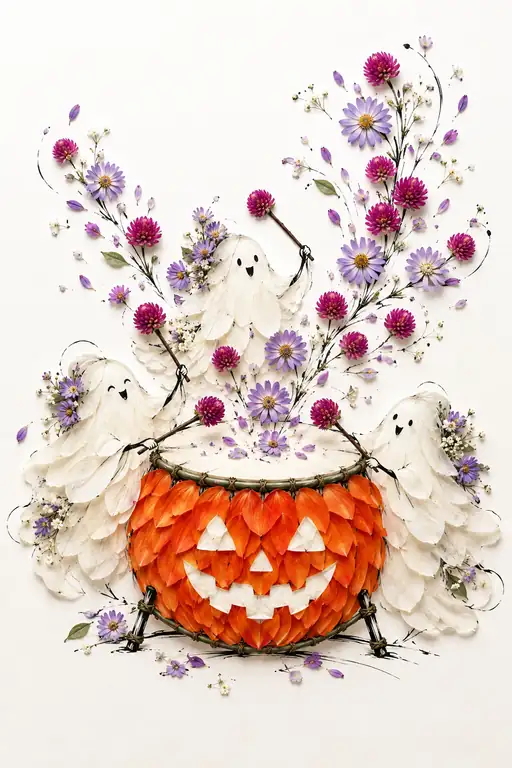 With Three of Us, the Night Has Rhythm
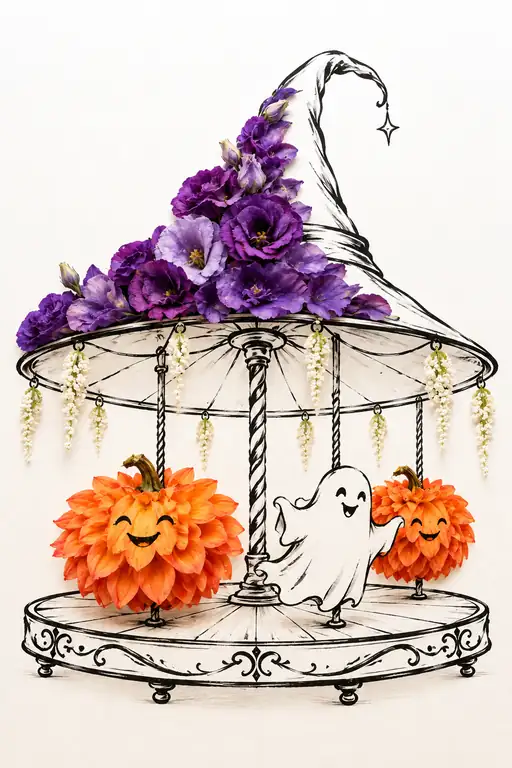 Merry Carousel of the Twilight Spell
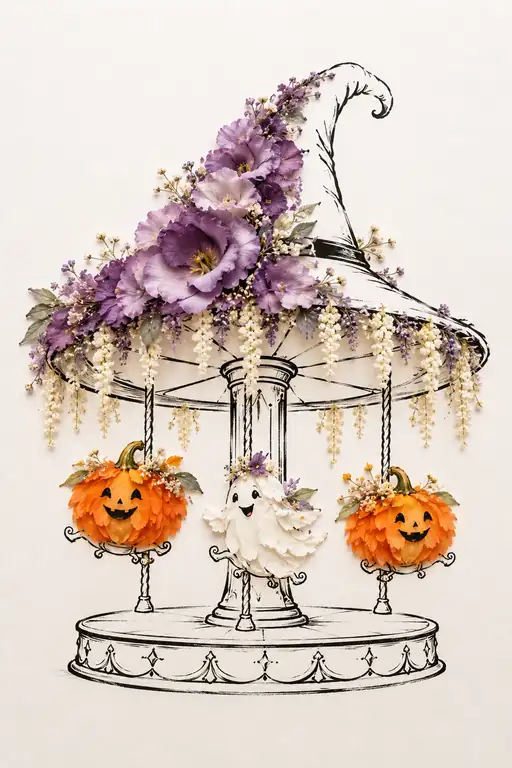 Next, It Is Your Turn to Smile
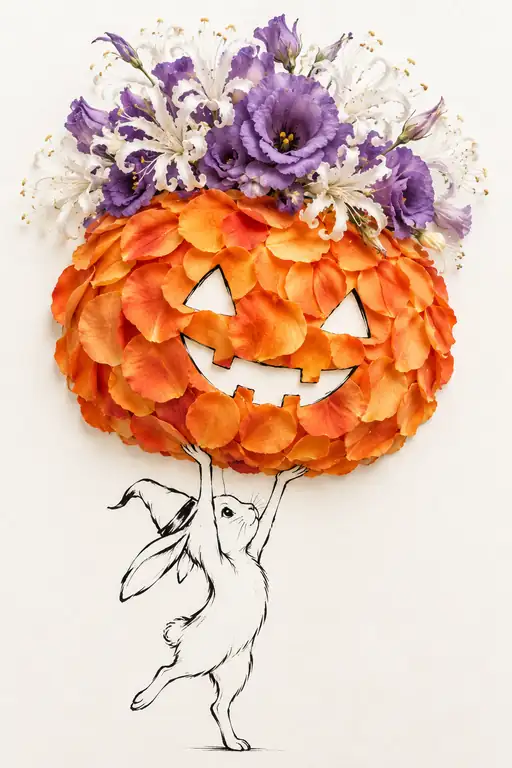 Lifting the Full-Moon Pumpkin High
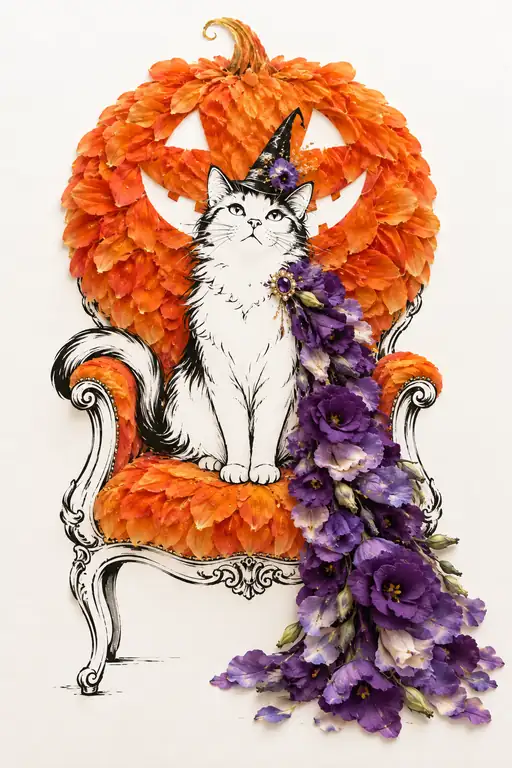 Sovereign Grace upon the Pumpkin Throne
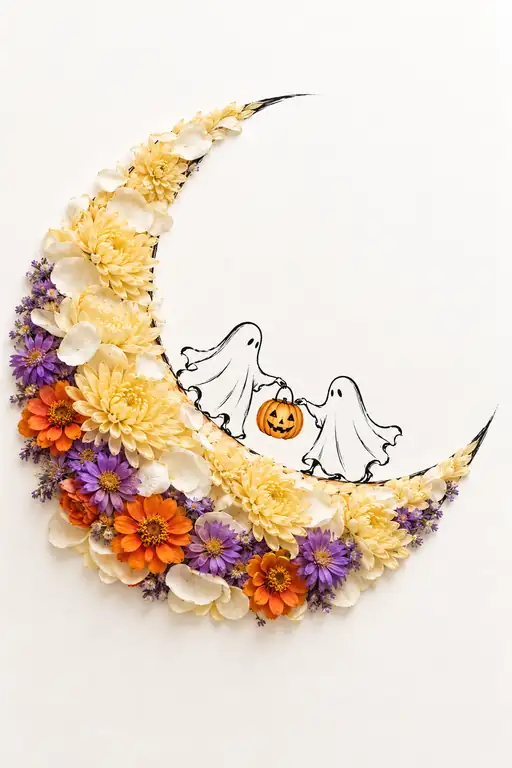 Sharing the Harvest on the Crescent Slope
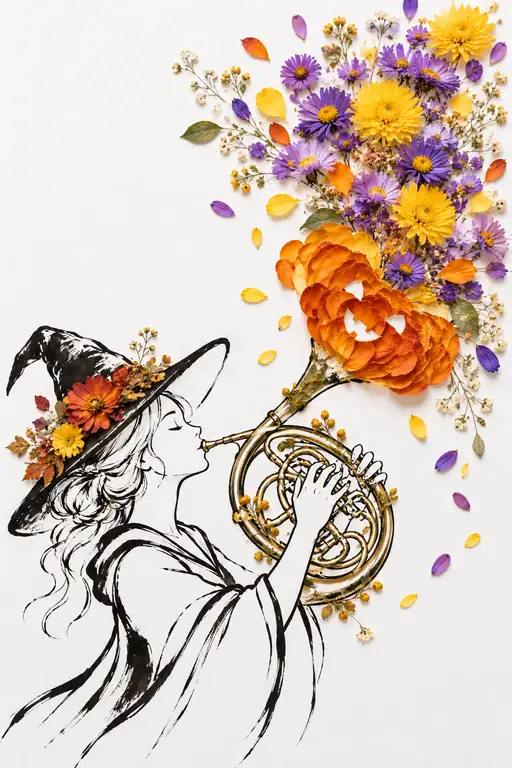 My Colors Beyond My Breath
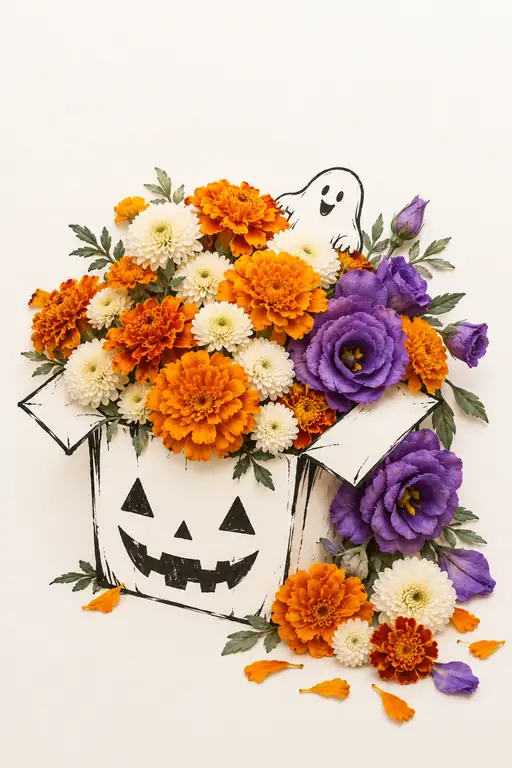 Open It and You Belong
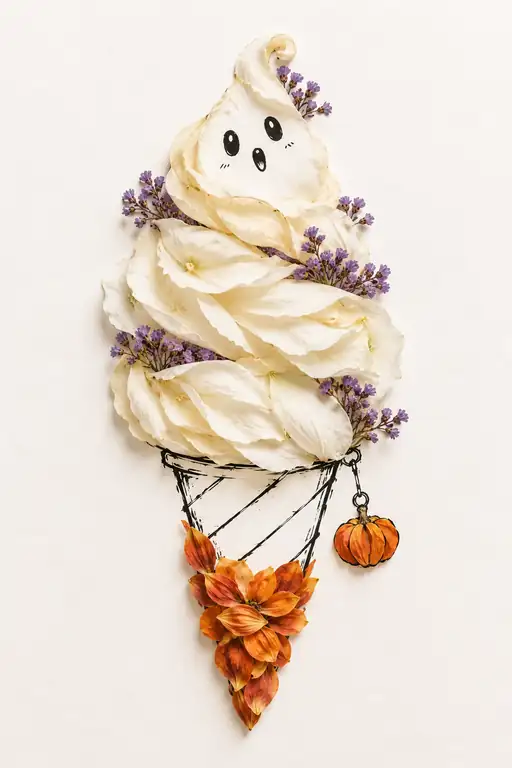 Let Me Surprise You Before I Melt
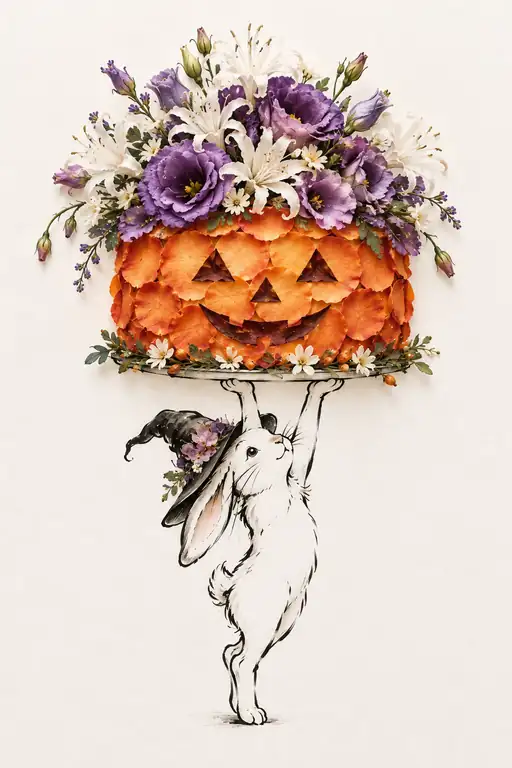 A Grand Occasion for Small Paws