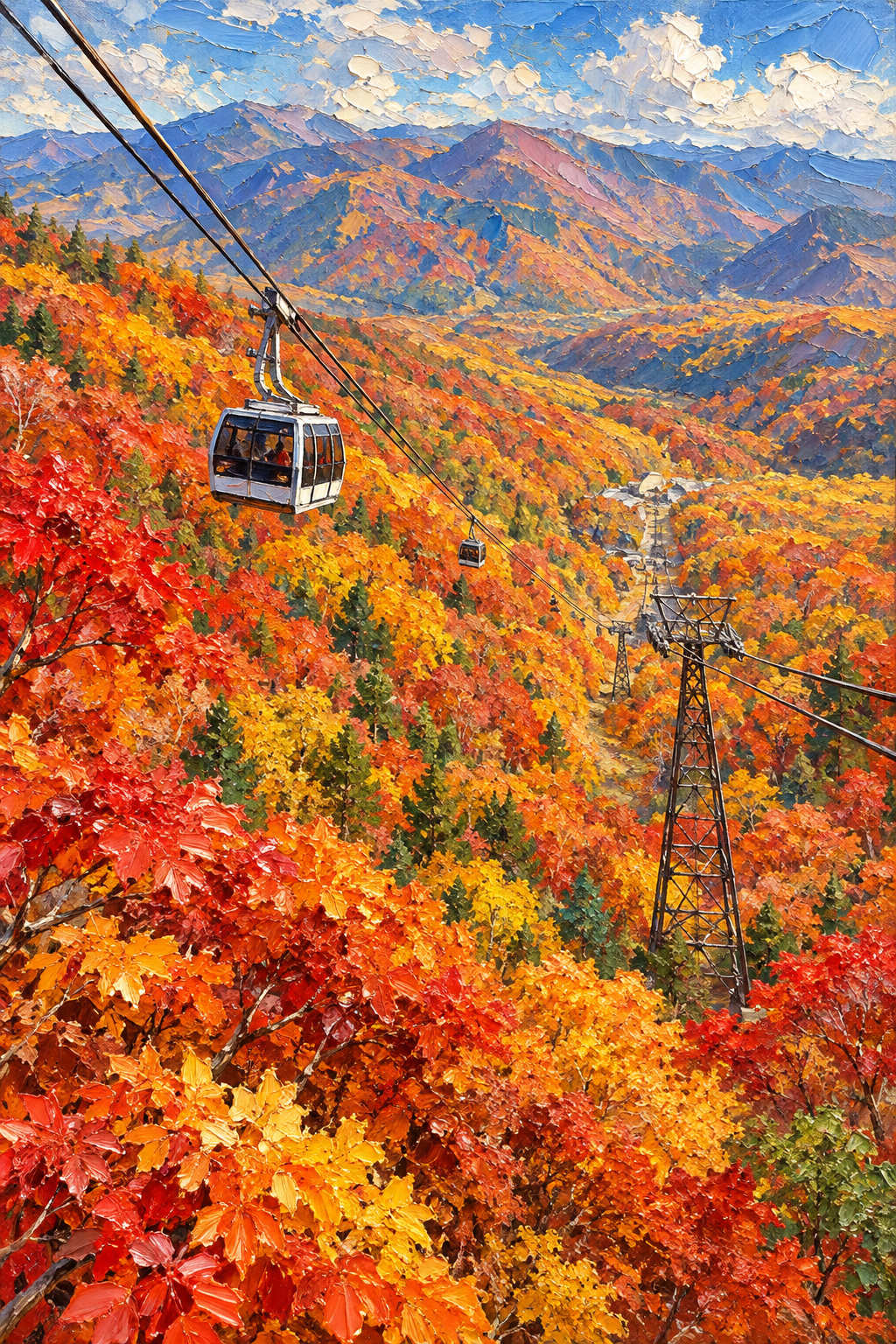
Across the Breath of the Mountain
Critique
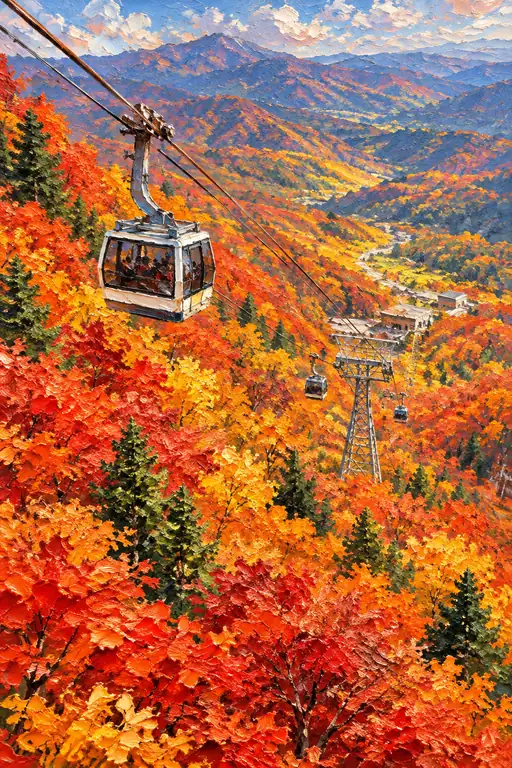
Introduction This mountain view places a cable car against a broad sweep of autumn forest. A left cabin and right tower span a valley of textured color. Description The left cabin hangs over a slope of crimson and yellow trees, with passengers dimly visible through dark windows. Another small cabin appears near the middle. A tall black lattice tower rises from the lower right, and cables continue toward buildings along the distant valley. Blue, violet, and ocher mountain ridges occupy the upper half under a bright sky with thick white clouds. The nearest leaves are rendered in raised, broken strokes. Analysis The diagonal cables enter from upper left and run toward the right hand tower, cutting a clear route through the crowded foliage. Unlike a centered view, the strong tower and the cabin occupy opposite sides, creating a wide visual span. Near leaves are large and tactile; distant forest resolves into smaller patches, then into cooler mountain planes. Dark conifers interrupt the warm canopy with pointed shapes. The white cloud masses echo the raised paint of the leaves but open a cooler, lighter area above. Interpretation and Evaluation The cabin appears to traverse a sea of color rather than follow a visible road. Distant buildings suggest a destination across several scales. The painting handles recession convincingly through changes in mark size and temperature. Its intense foreground reds can momentarily overwhelm the quieter mountains, but the slanting cables reconnect both zones. Conclusion The image balances tactile immediacy with expansive distance. A cabin, a tower, and a remote settlement mark the path, while the autumn forest remains the dominant experience of the ride.
Same Subcategory
Similar Artworks
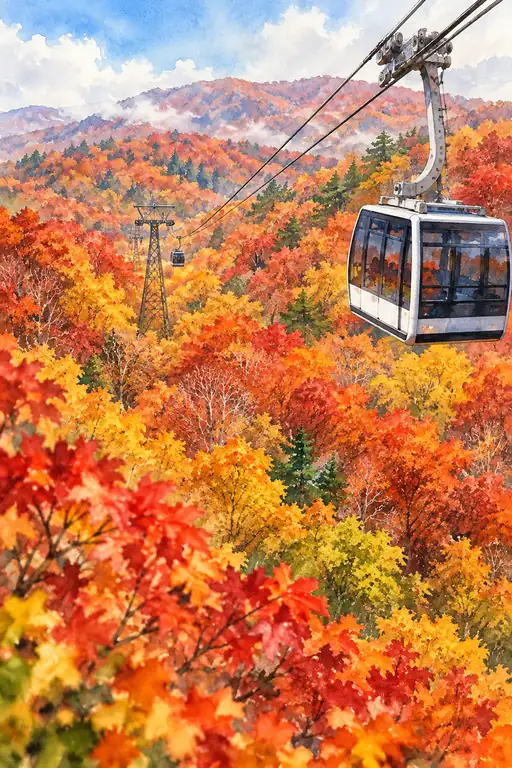 The Mountain Enters Our Window
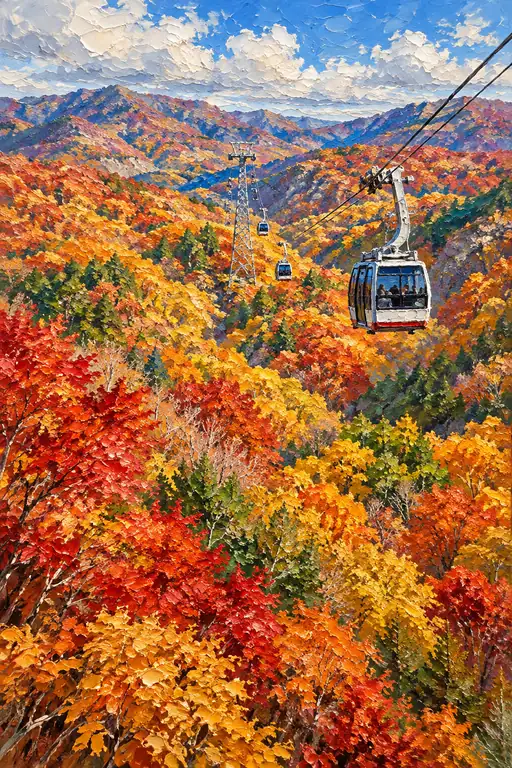 A Journey Measured in Small Rooms
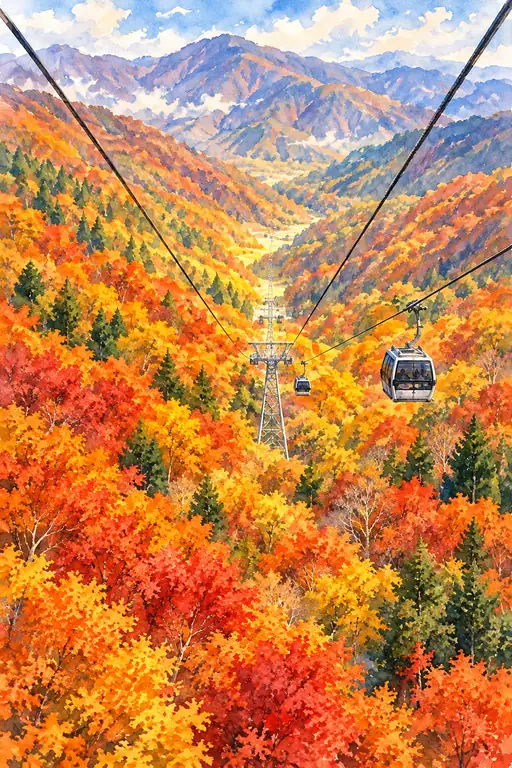 Suspended in a Valley of Autumn
 Where Blue Opens Above the Blaze
 A Small Room Above the Burning Woods
 Suspended Over the Golden Sea
 Suspended Over the Autumn Horizon
 Star of Spring Blooming Above the Blue Waters
 Arching Over the Golden Abyss
 A Rainbow Journey to the Horizon