A Small Room Above the Burning Woods
Critique
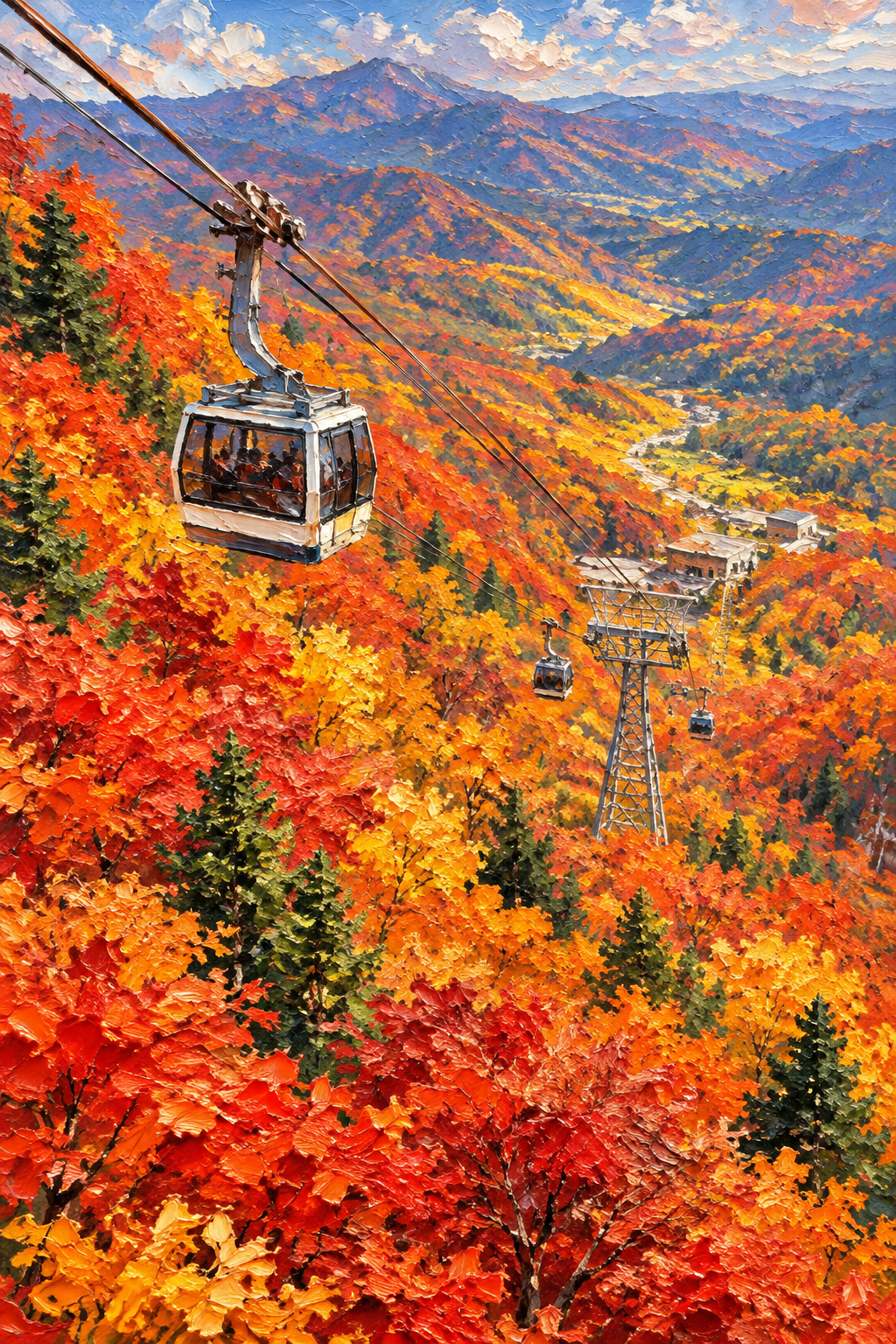
Introduction A cable car carries passengers above a fiery autumn slope toward a distant settlement. Thick, visible paint gives the foliage an almost physical presence, while the suspended cabin offers human measure of the mountain. Description The near cabin hangs at upper left, large enough to reveal dark figures through its windows. Cables angle down toward a metal support tower and two smaller cabins. Red and orange trees fill the foreground, broken by pointed dark conifers. Beyond them, a pale cluster of buildings sits along the valley floor, and blue purple ridges rise toward a sky of broken clouds. The paint surface is especially raised and broken across the nearest leaves. Analysis The near cabin's dark frame interrupts the saturated slope and becomes the first focus. The cables pull attention diagonally past it to the tower, then to the buildings and distant mountain folds. Impasto marks make the foreground foliage dense and tactile, whereas the far ridges are smoother and cooler. Green conifers provide vertical accents amid the warm color field. The settlement introduces small rectangles that echo the cabin's geometry, tying human structures together across distance. Interpretation and Evaluation The passengers appear enclosed yet exposed above a vast forest. Their small silhouettes make the ride feel real without competing with the land. The painting's strongest quality is its layered passage from touchable red leaves to airy blue distance. The foreground color is intense, but the converging cable lines and pale valley opening give the eye a route through it. Conclusion This is a landscape experienced in motion. Its thick paint celebrates the immediate forest, while cabins, tower, and settlement trace a journey from near human presence into mountain scale.
Same Subcategory
Similar Artworks
 A Journey Measured in Small Rooms
 Across the Breath of the Mountain
 Suspended in a Valley of Autumn
 The Mountain Enters Our Window
 Where Blue Opens Above the Blaze
 Suspended Over the Golden Sea
 A Journey Through the Crimson Canopy
 Soaring Above the Autumn Tapestry
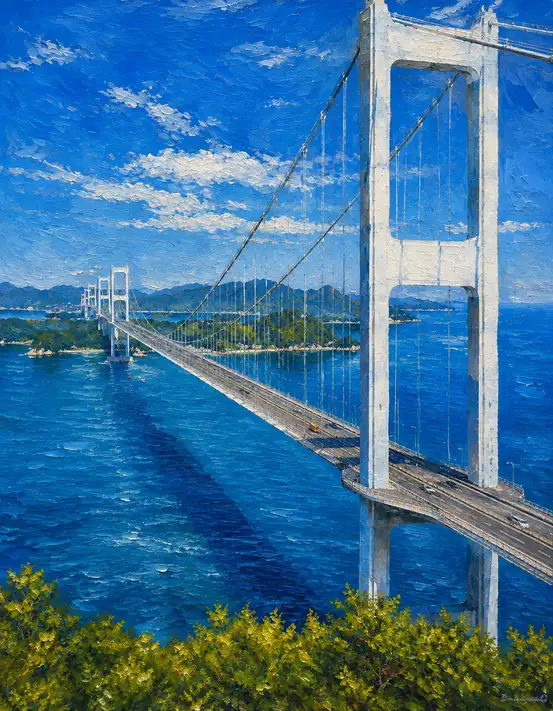 Beyond Kurushima's Tides, Toward the Islands
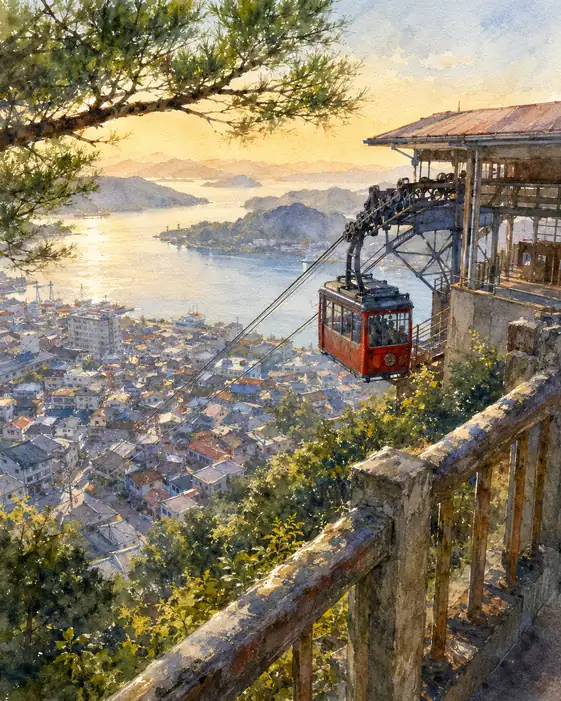 Where the Red Bird Flies Over a Sea of Light