Happiness Has Room to Overflow
Critique
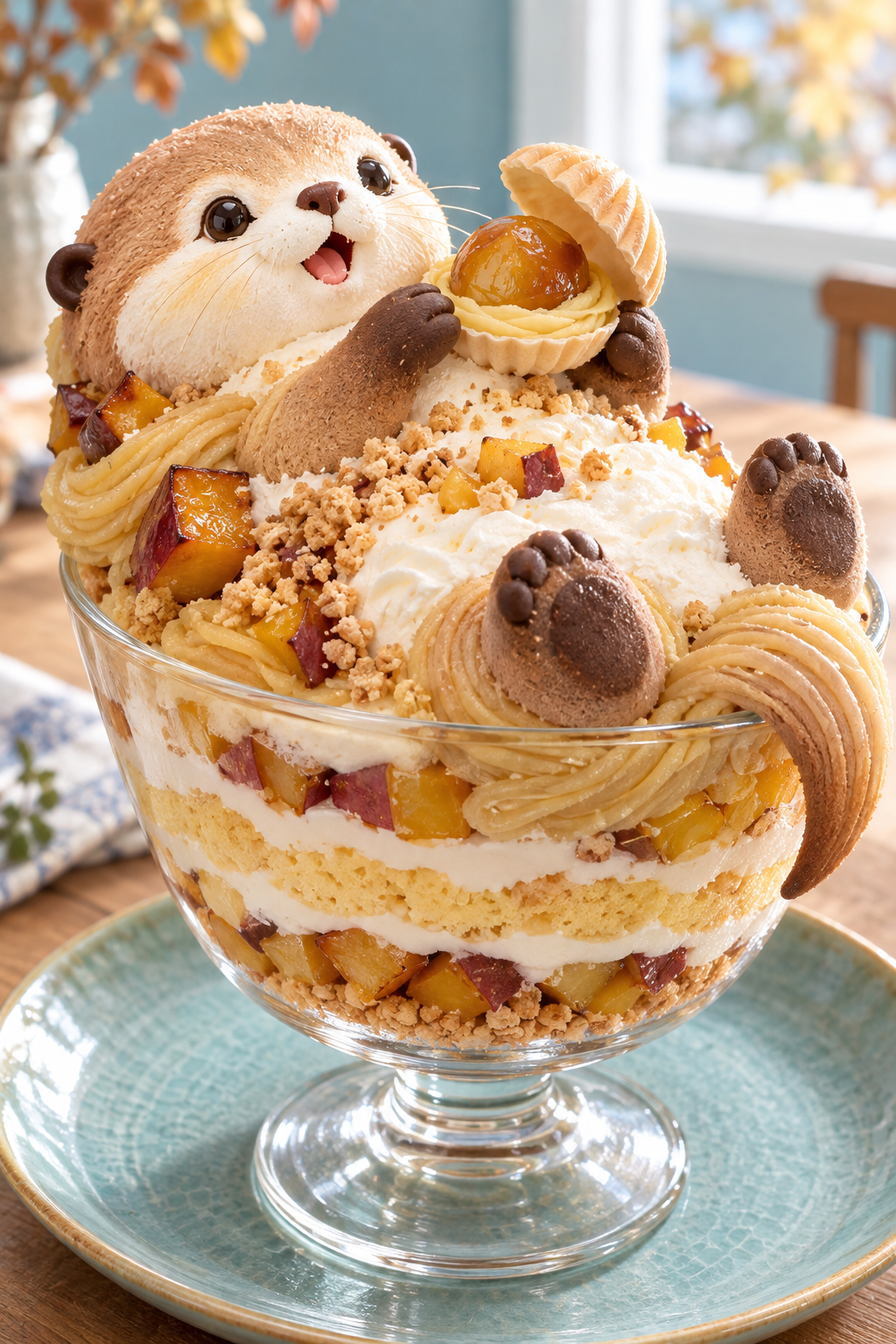
Introduction An otter lounges atop an overflowing parfait, holding a glazed chestnut in a pastry shell. The dessert becomes both the creature's body and habitat. Description The otter's brown head and cream colored muzzle emerge from whipped topping near the upper left of a glass bowl. Dark paws and a curved tail protrude around the rim. Mont Blanc cream, diced sweet potato, crumble, and pale sponge form visible layers through the transparent vessel. A shell cradling one glossy chestnut rises beside the otter's open mouth. The bowl rests on a blue plate before a softly lit window. Analysis The large glass bowl gives the composition a stable, symmetrical base, but the head's leftward placement and raised shell break that symmetry. The open mouth points toward the chestnut above the crowded topping. Repeated tan strands of cream flow around the body and over the rim, suggesting both fur and movement. Transparent glass reveals horizontal strata below, in contrast to the irregular, piled forms above. Cool blue beneath the bowl offsets the predominance of browns and golds. Interpretation and Evaluation The chestnut looks like a discovery the otter is about to taste. Its upturned paws and relaxed posture make the heap of cream feel like a playful bath. The visual joke works because the layered parfait remains clearly readable as a dessert, particularly through the glass. The garnish is abundant enough to blur the animal's lower body, but that excess strengthens the sense of immersion. Conclusion The picture gives appetite a visible character. Its strongest device is the contrast between carefully stacked layers below the rim and a lively, unruly surface above, where the otter seems to have just surfaced.
 A Small Step into a Golden Afternoon
 The King Takes the Afternoon Off
 No Hurry Beneath My Little Roof
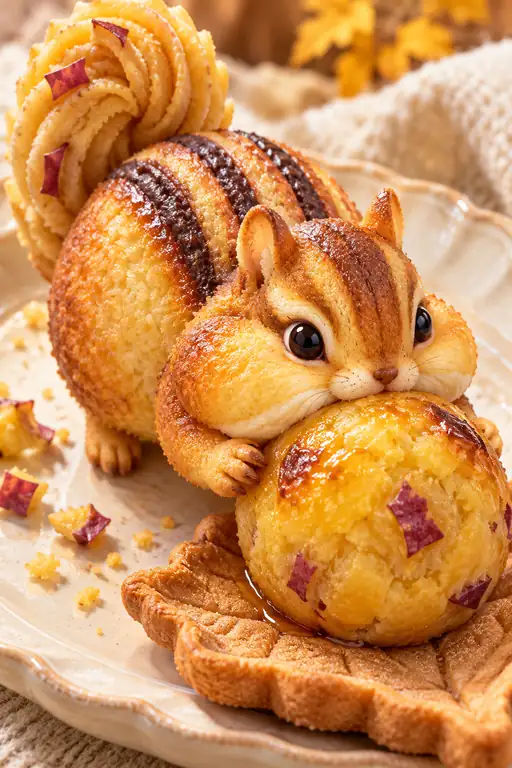 A Treasure Too Big to Hide
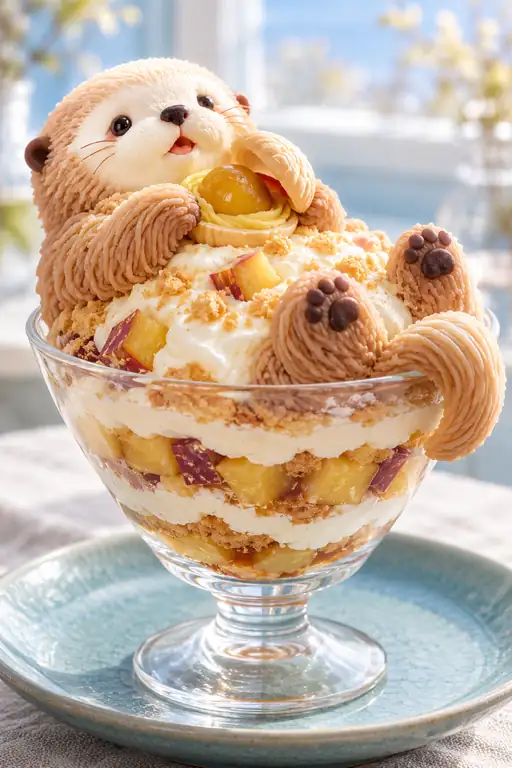 My Treasure in a Shell
 My Little Roof of Plenty
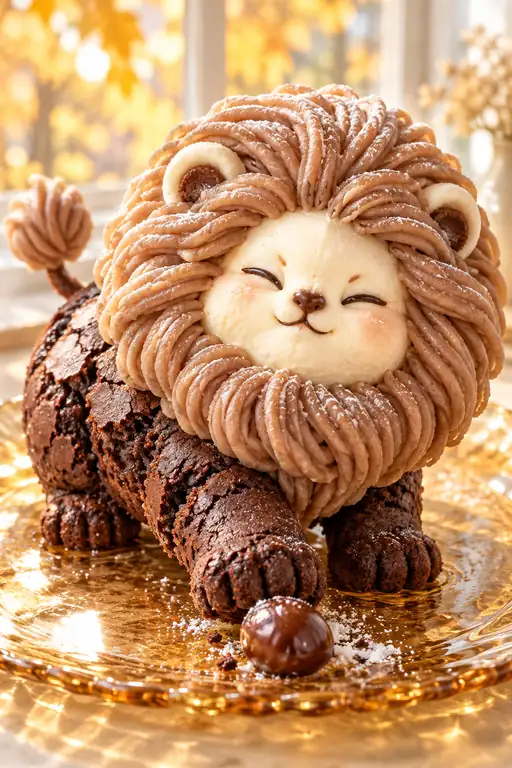 A Gentle Paw Before the Feast
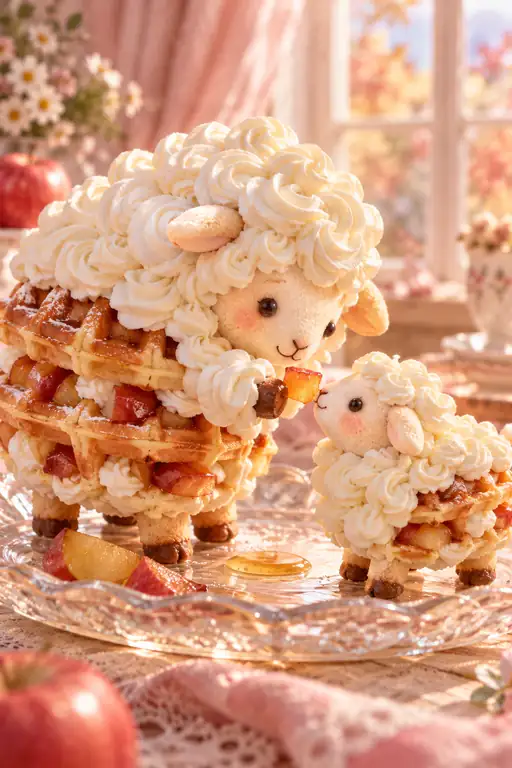 The Sweetness I Saved for You
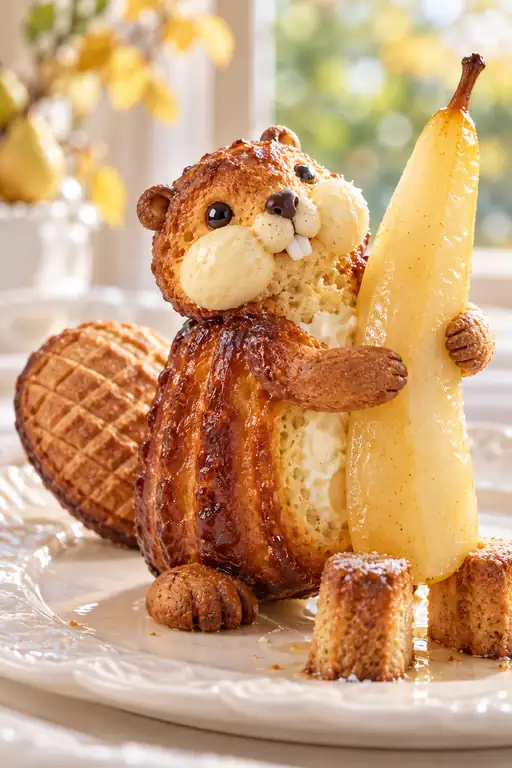 More Autumn Than I Can Carry
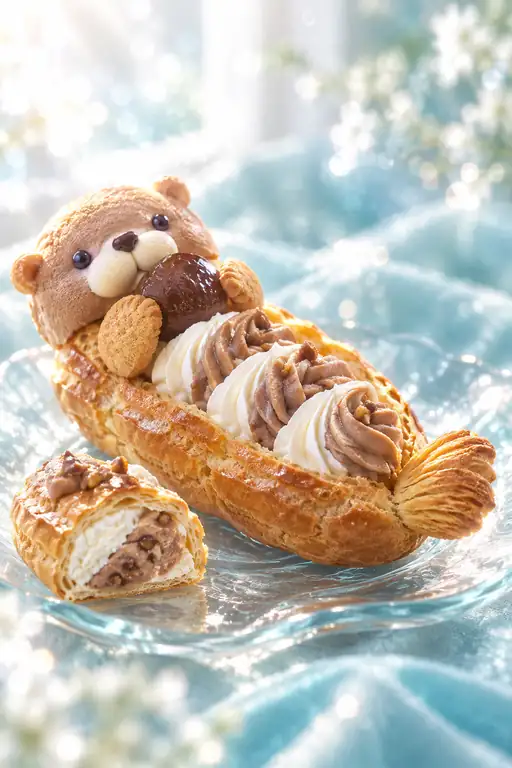 Adrift with My Autumn Treasure