More Autumn Than I Can Carry
Critique
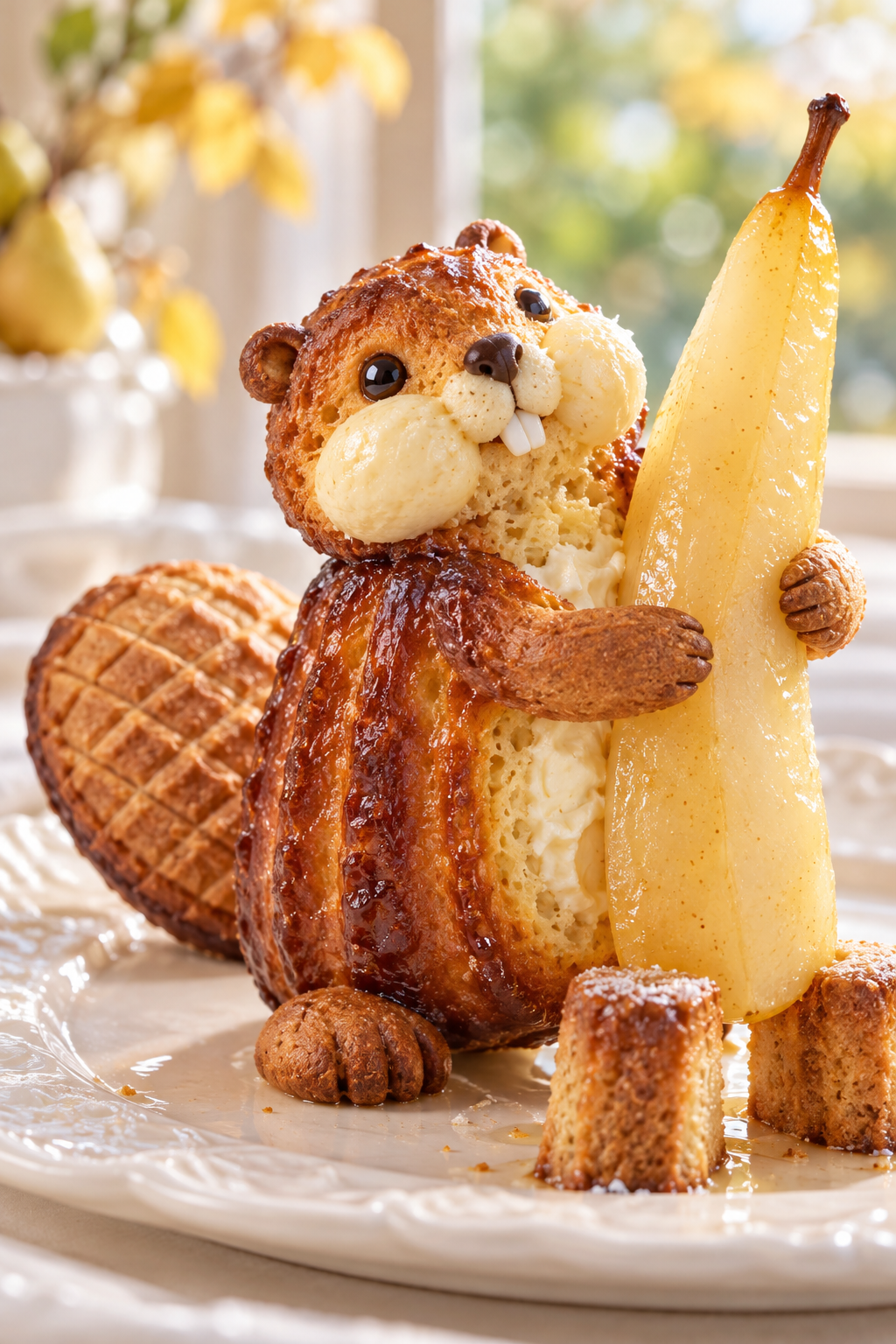
Introduction A beaver pastry embraces a pear almost its own height. Front teeth and patterned tail establish the animal; its opened body reveals cream. Fruit and figure form a comic scale comparison. Description Rounded ears, dark eyes, nose, cheeks, and two white teeth define the face. Glossy ridges border an opening of sponge and cream. Brown paws grip a translucent yellow pear whose stem rises above the head. A flat waffle tail extends leftward. Cake pieces rest on the white plate. Analysis The pear forms a strong vertical column beside the round animal, making their close contact visually unmistakable. Horizontal paws cross it at two heights and hold the composition together. The tail's grid of lines opposes the pear's smooth skin and the body's curved glaze. Warm window light reveals pores in the exposed sponge and a brighter shine on the fruit. The scattered cake pieces below emphasize the height of both figure and pear. Interpretation and Evaluation The firm embrace suggests delight in a prize too large to carry easily. Buck teeth and patterned tail give the playful creature a recognizable identity without elaborate scenery. The composition balances tall fruit with compact body and flat tail, using contrasting directions clearly. Brown crust and cream frame the pale yellow pear, which becomes the color focus. The precise differences among glaze, crumb, fruit, and waffle surface sustain the confectionery illusion. Conclusion The animal cake resolves into an act of holding. Pear, paws, tail, and exposed filling clarify its scale and appetite.
 Joy Held Close
 No Hurry Beneath My Little Roof
 The King Takes the Afternoon Off
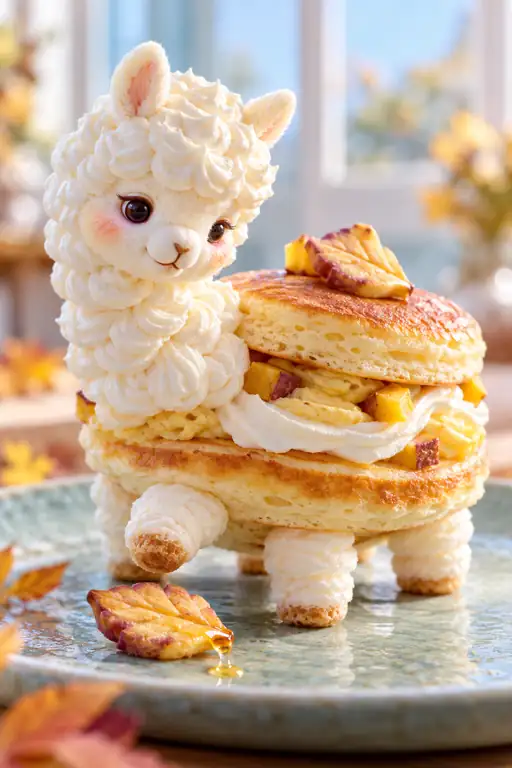 A Small Step into a Golden Afternoon
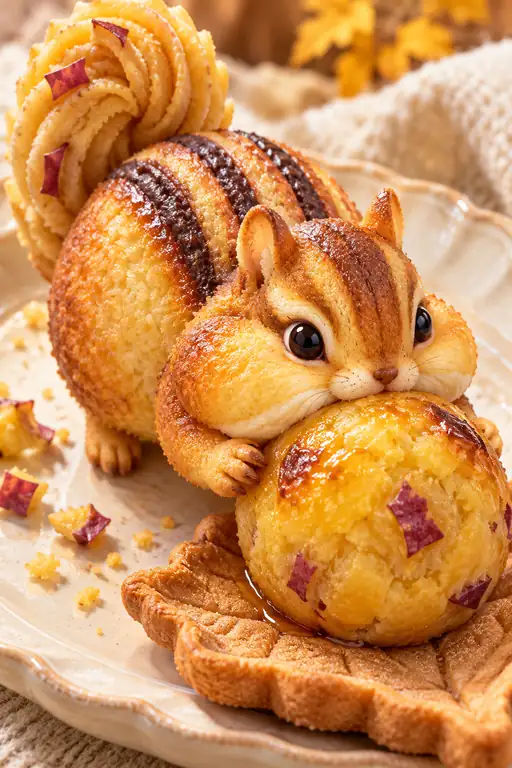 A Treasure Too Big to Hide
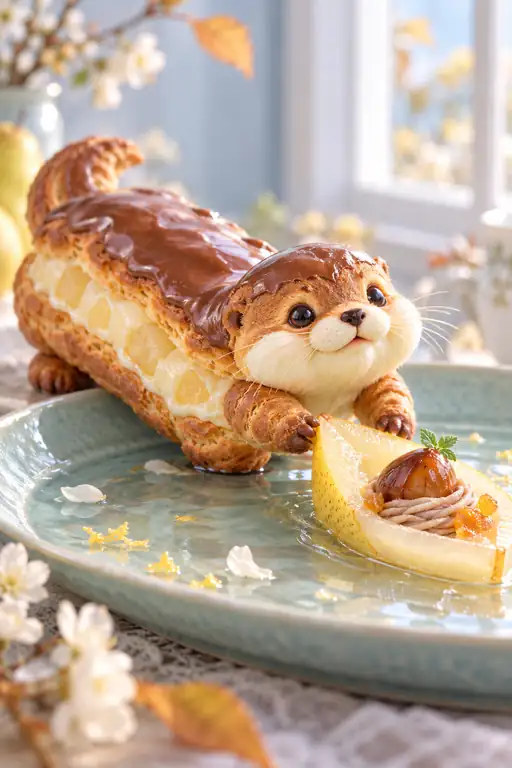 Almost Within My Paws
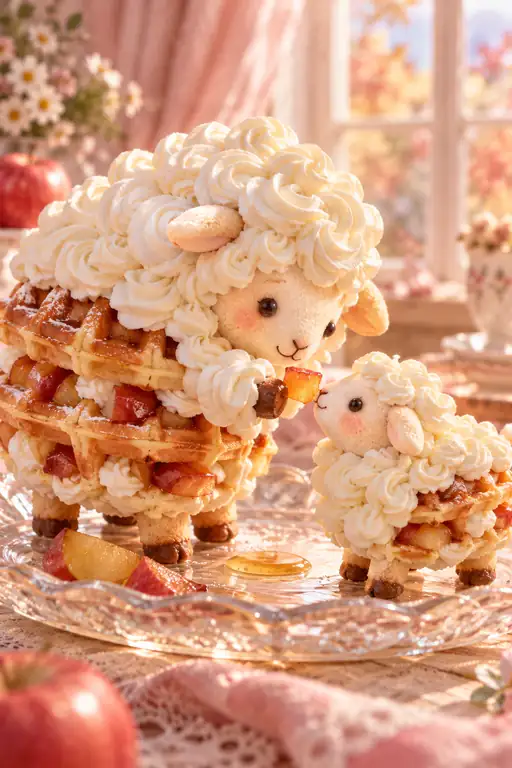 The Sweetness I Saved for You
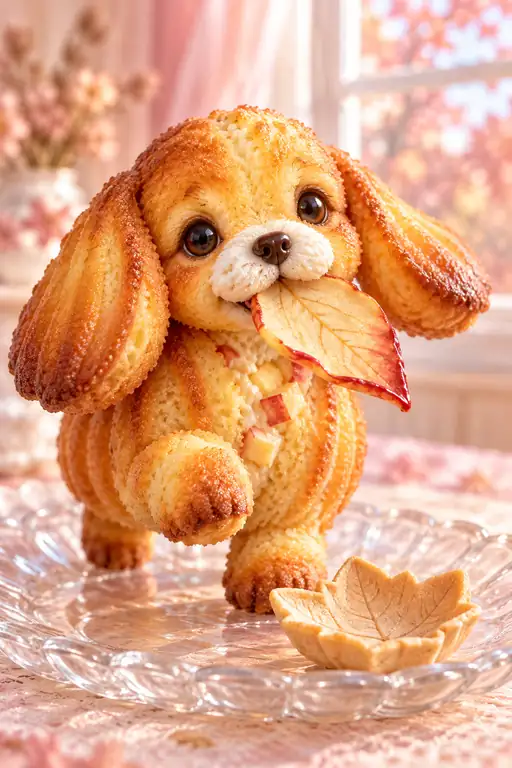 Look What Autumn Gave Me
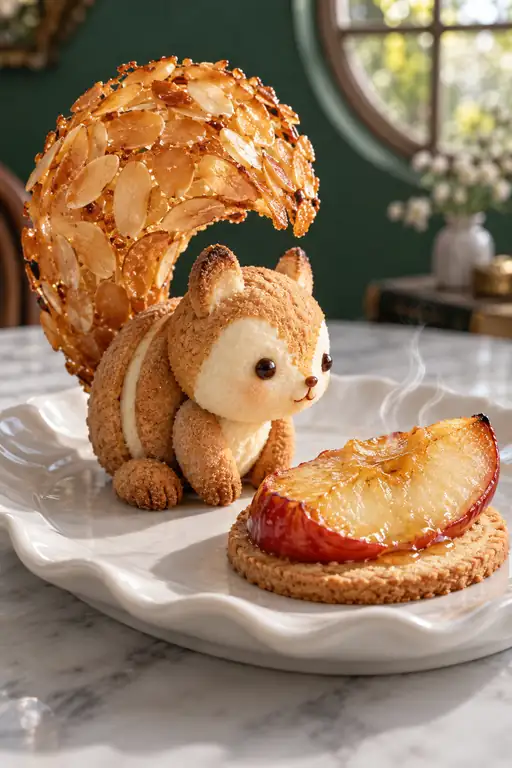 Waiting Beside the Warm Apple
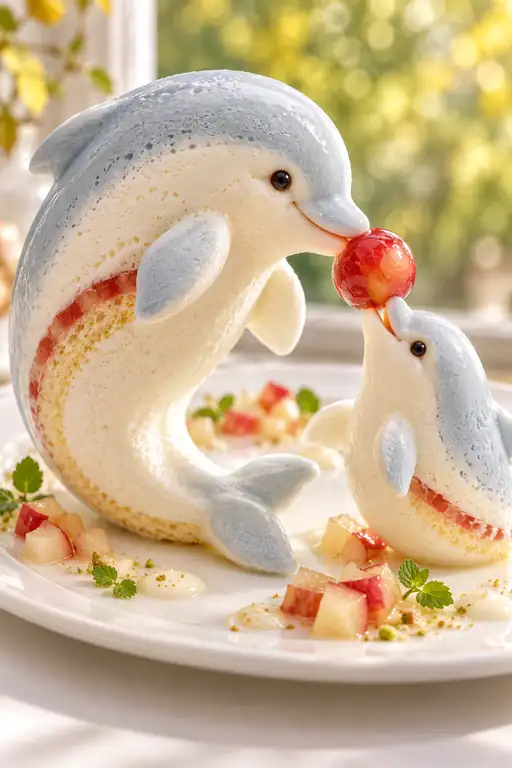 Where Our Smiles Meet