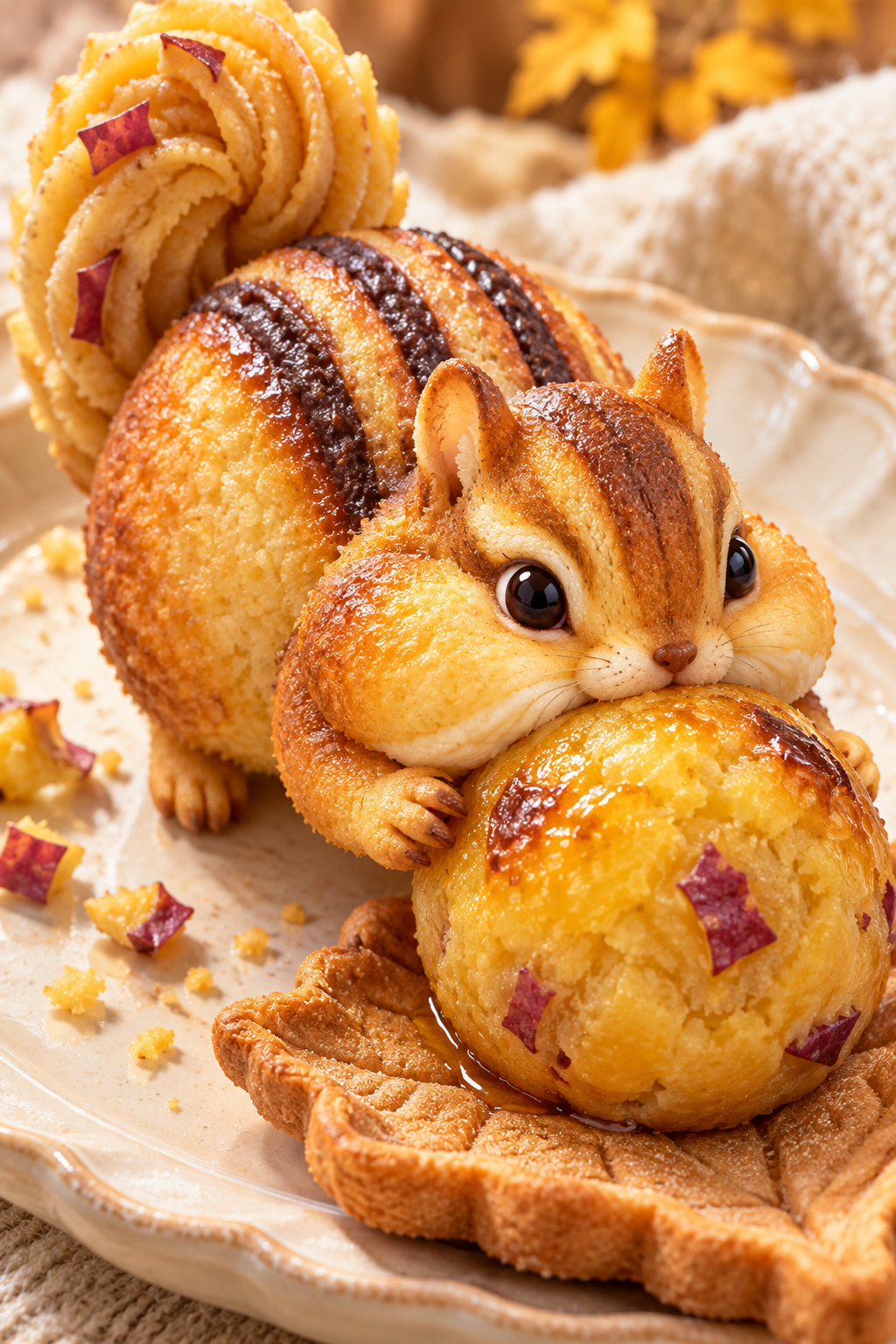
A Treasure Too Big to Hide
Critique
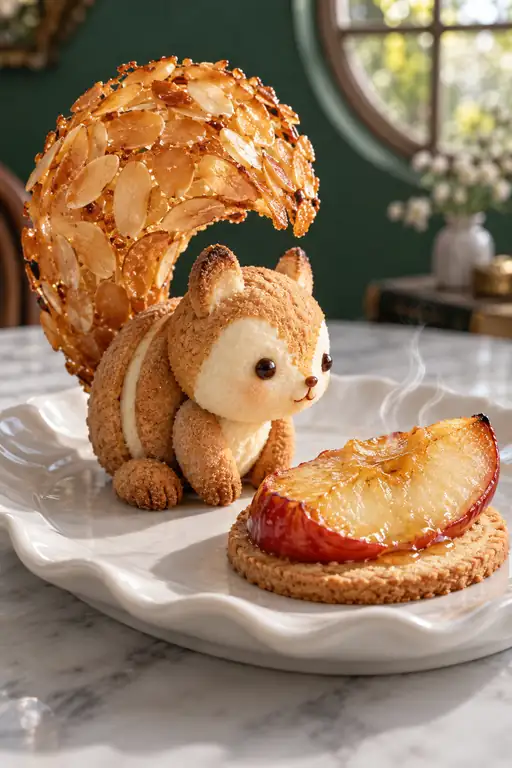
Introduction A striped squirrel cake clasps a golden pastry ball. Wide eyes and small paws focus on what it holds. Close framing turns baked textures into a portrait of possession. Description The figure has pointed ears, puffed cheeks, a small brown nose, and fine whiskers. Dark brown stripes cross its glossy golden back. A large curled tail made from ridged yellow pastry rises behind it at left. The front paws wrap around a round yellow cake with fragments of red peel embedded in its surface. A crisp leaf-shaped biscuit lies beneath the ball, and small crumbs scatter across the pale plate. Analysis The striped body slopes from upper left toward the face and the held ball at lower right. Tail and ears add upward accents that counter this descending movement. The round face and pastry ball nearly touch, emphasizing the embrace. Smooth glaze and dark stripes contrast with the rough cake opening, ridged tail, and crisp leaf biscuit. Scattered crumbs around the central group show its scale and make the plate feel used rather than merely decorative. Interpretation and Evaluation The close grip suggests eagerness to keep a prized find. The fruit-studded ball is almost as large as the figure's head, making that effort gently comic. The composition gives the pastry a strong focal object and balances the tail against the forward ball. Amber and brown dominate, while red peel offers small interruptions. Precisely placed eyes, whiskers, and paws turn the edible construction into a distinctive character. Conclusion Pastry detail gradually reveals the relationship between animal and ball. Stripes, tail, grip, and biscuit make the scene tactile and readable.
Same Subcategory
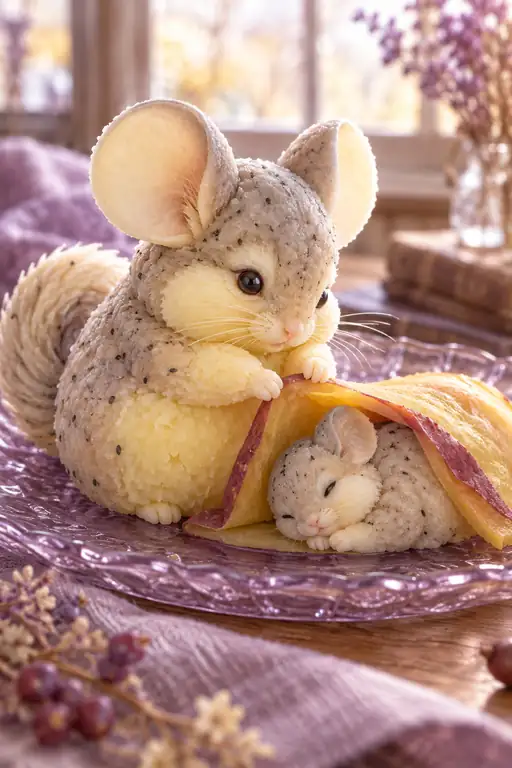 Keeping Your Dreams Warm
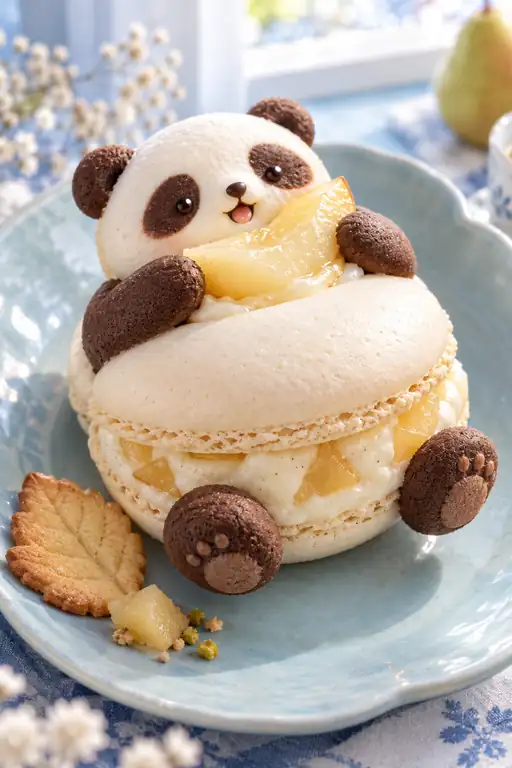 Joy Held Close
Similar Artworks
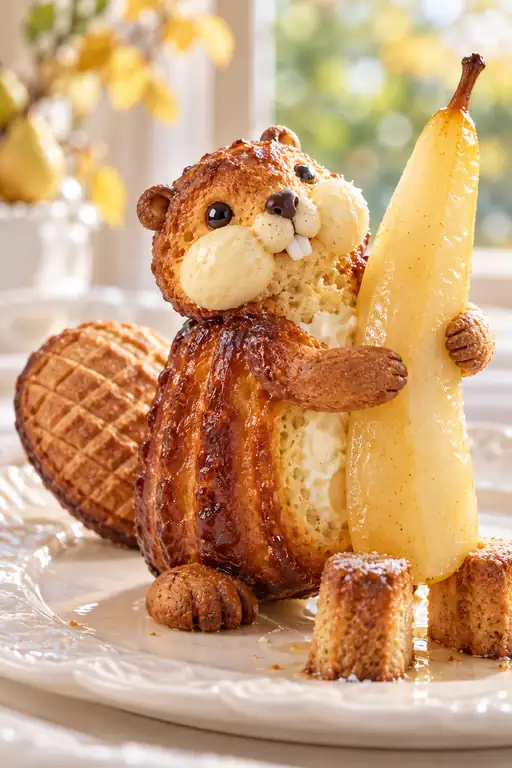 More Autumn Than I Can Carry
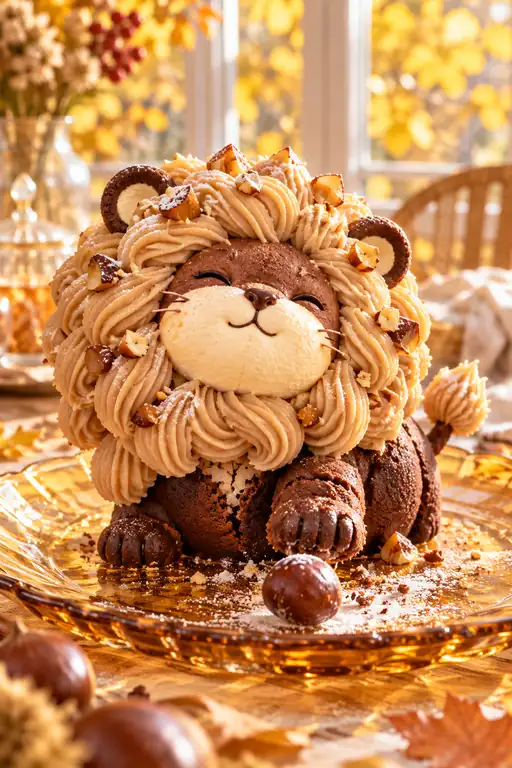 The King Takes the Afternoon Off
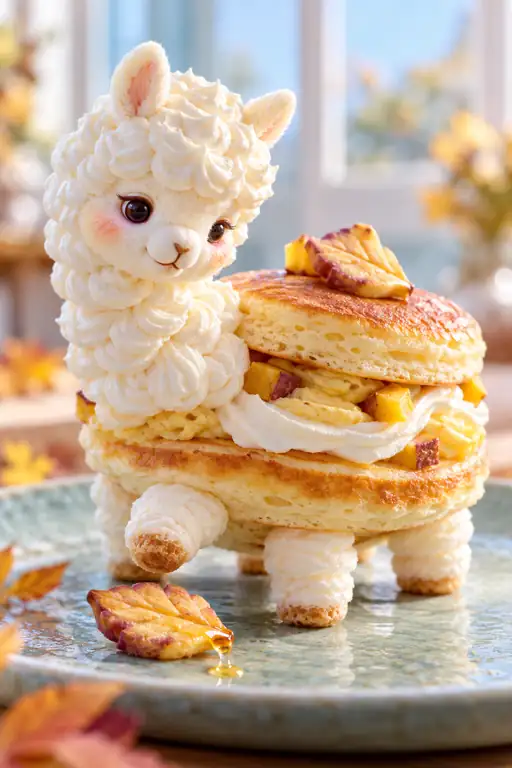 A Small Step into a Golden Afternoon
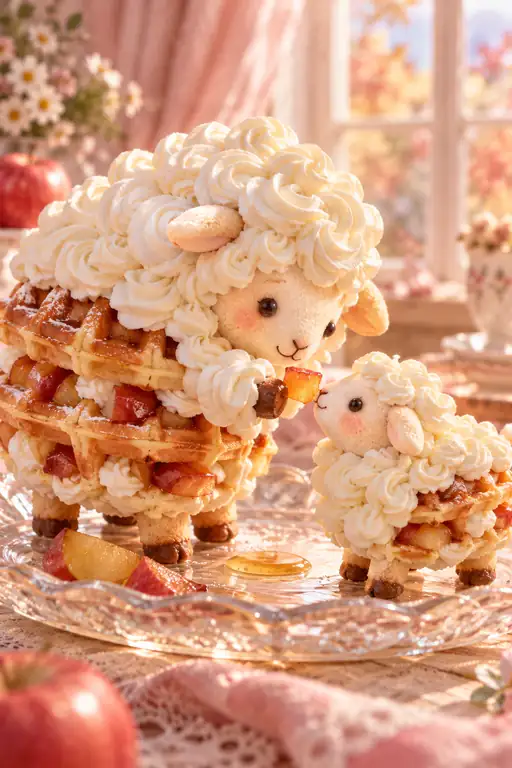 The Sweetness I Saved for You
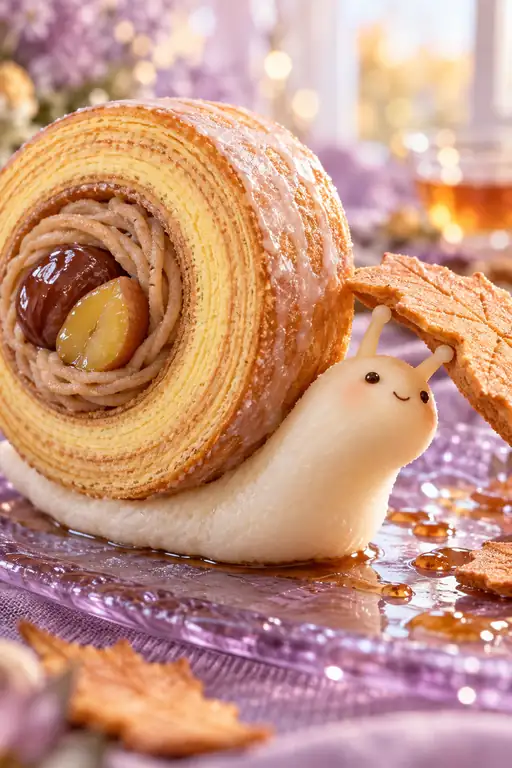 No Hurry Beneath My Little Roof
 An Appetite for Autumn Leaves
 The Delicious Moment Before
 Happiness Has Room to Overflow
 Look What Autumn Gave Me
 Waiting Beside the Warm Apple