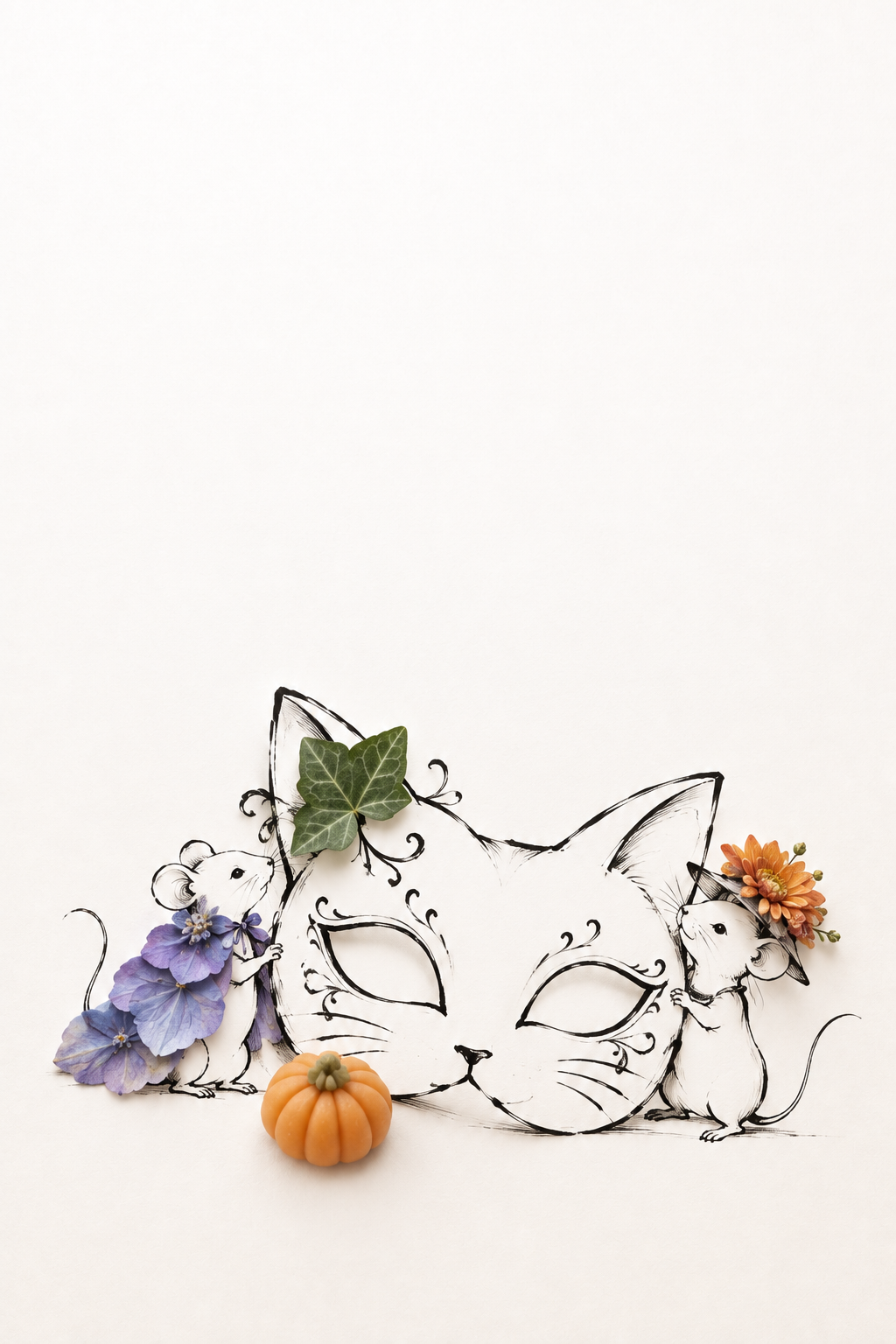
The Cat Who Could Not Catch Us
Critique
1. Introduction A cat mask lies between two mice, with a pumpkin before its nose. Purple and orange flowers dress them. The usual rivalry becomes an amusing encounter. 2. Description The white cat face fills the center, its ears, closed eyes, whiskers, and curling marks drawn in black. Ivy covers part of one ear. At left, a mouse wears blue purple flowers like a skirt. At right, another touches the mask and wears an orange flower. Their tails curve outward. A ribbed pumpkin rests between them. The upper field is white. 3. Analysis The mask's broad horizontal shape makes a stable stage for the much smaller mice. Their positions at either cheek balance the composition, while differing flower colors keep them distinct. The pointed ears rise above the round pumpkin, linking angular and curved forms. Black ornamental lines on the mask are crisp; petals and ivy supply color and texture. The mice's tails extend beyond the central cluster, opening it toward the white edges. Their paws direct attention back to the cat face. 4. Interpretation and Evaluation Because the cat is a mask, the mice can approach. One inspects it, while the other seems to support it. The pumpkin adds a warm seasonal point. Scale is effective: the mask remains imposing, but tiny gestures make the mice active. Closed cat eyes soften tension. 5. Conclusion An inert cat face, two curious mice, and a small pumpkin make a gentle visual joke. Purple and orange flowers give each mouse a clear role in the autumn scene.
Same Subcategory
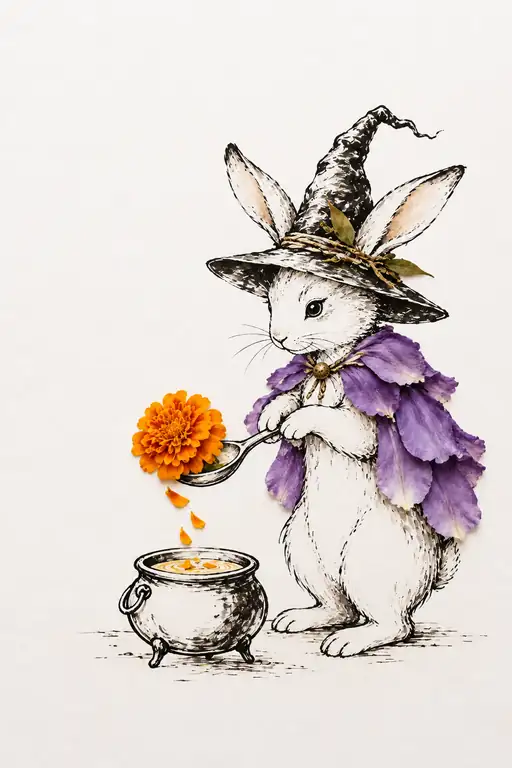 Just One More Petal of Magic
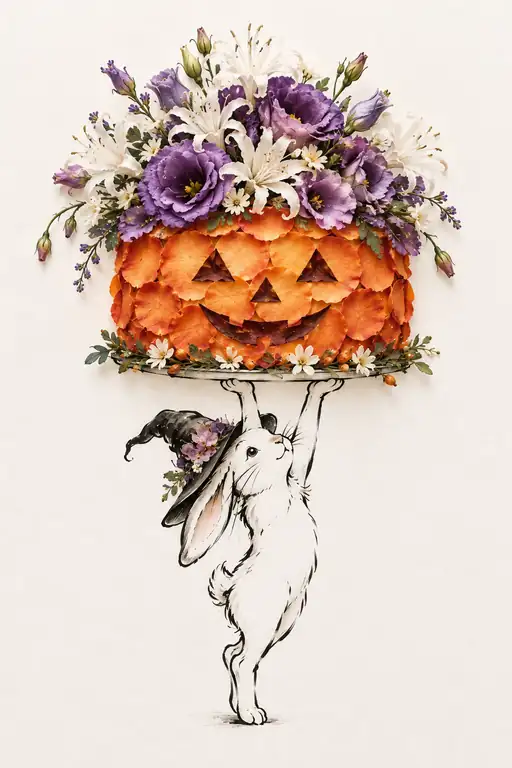 A Grand Occasion for Small Paws
Similar Artworks
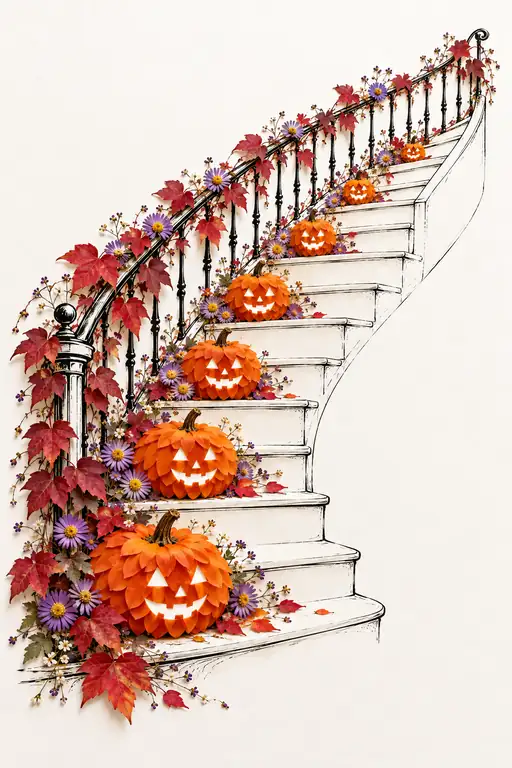 Ascending Rhythms of Joy
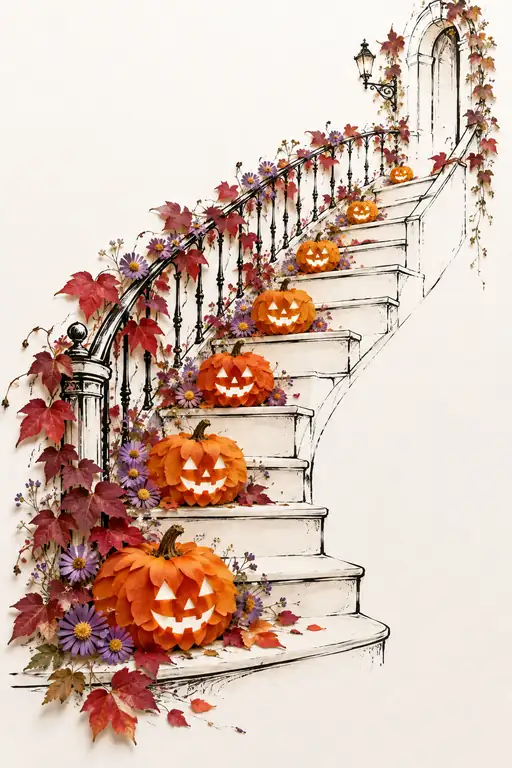 Smiling Steps Toward the Gate
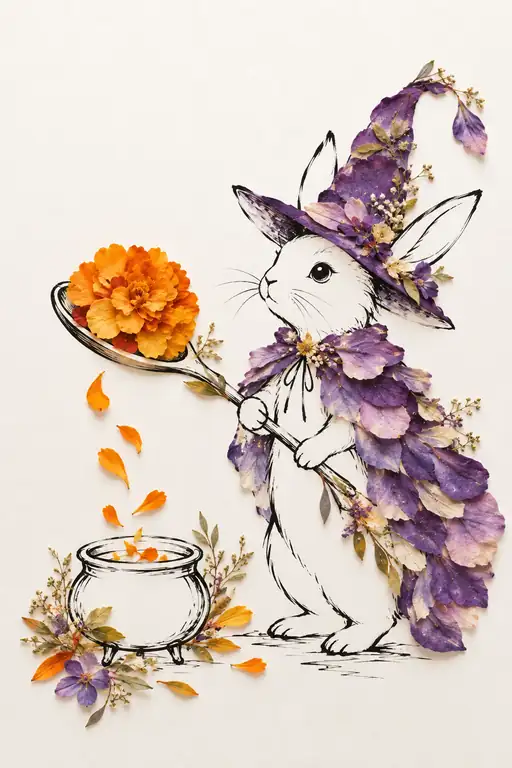 The Spell Is Almost Ready
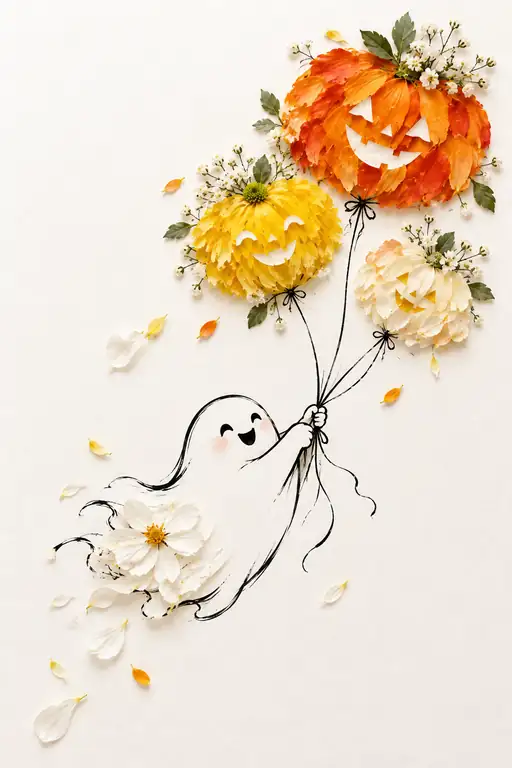 Floating with Gentle Lanterns
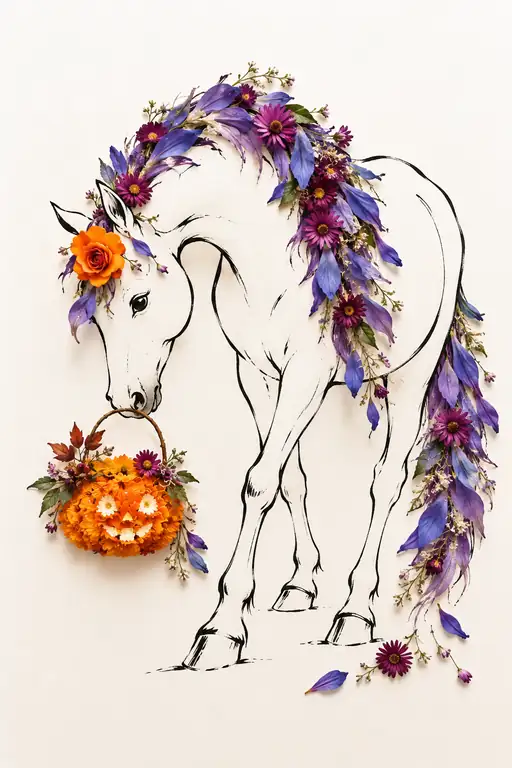 Quiet Touch of Gentle Curiosity
 Room for One More in the Circle of Light
 My Recipe for a Little Wonder
 Sovereign Grace upon the Pumpkin Throne
 Keep My Place Until I Return
 A Journey Wrapped in Petals