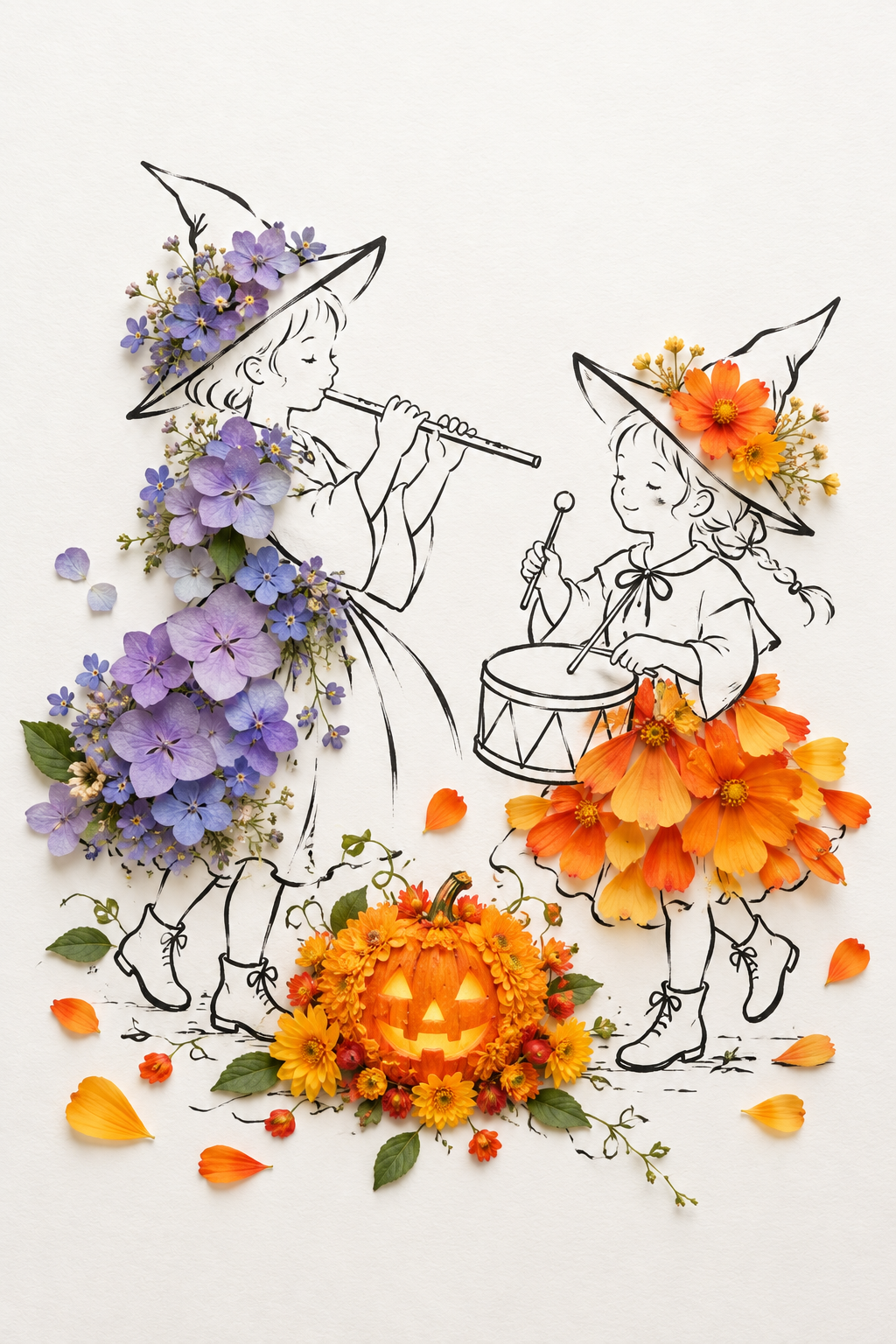
A Song for the Smiling Lantern
Critique
1. Introduction Two costumed children make music beside a glowing pumpkin. One plays a flute amid purple blossoms, the other drums among orange flowers. Differing colors and instruments animate the scene. 2. Description Both wear pointed hats and boots. The taller child at left closes the eyes and plays a flute. Blue and lilac flowers sweep down the dress. At right, a braided child smiles and raises drumsticks above a round drum. Orange flowers decorate hat and skirt. A glowing pumpkin rests between their feet amid yellow blooms. Petals and vines lie on the ground. 3. Analysis The figures form a loose triangle with the pumpkin at its lower center. Purple occupies the taller left side; orange fills the smaller right side and connects to the pumpkin below. The flute draws a level line toward the drummer, while raised sticks add short diagonals. Black ink outlines keep hands, instruments, and boots readable under the floral textures. Scattered petals broaden the base and imply movement around the musicians. The empty upper background gives their hats room to project. 4. Interpretation and Evaluation Closed eyes make the children appear absorbed in the sounds they produce. The flute and drum suggest different rhythms, yet their placement makes them a pair. The smiling pumpkin acts almost like a listener or a lantern for their performance. The image succeeds by distinguishing the children through color, scale, and instrument while binding them through shared pose and the central seasonal light. The scene feels festive without requiring an audience. 5. Conclusion Purple melody and orange rhythm meet around a glowing pumpkin. The floral costumes turn a simple duet into a vivid autumn celebration.
Same Subcategory
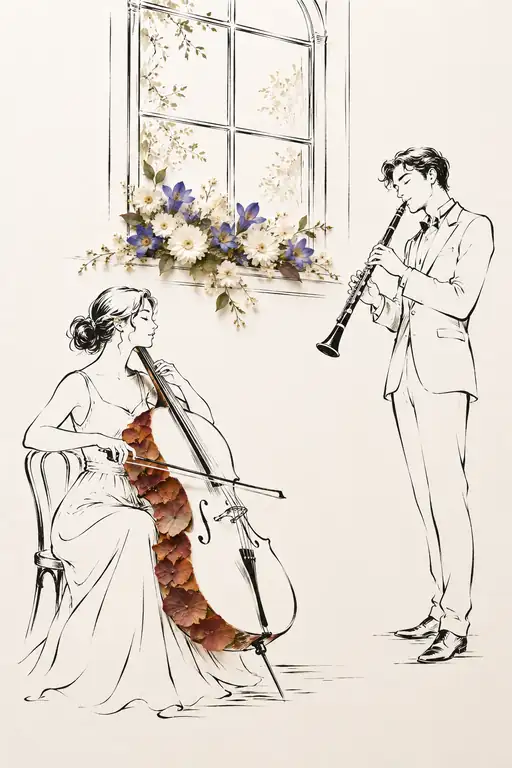 When Our Melodies Meet
Similar Artworks
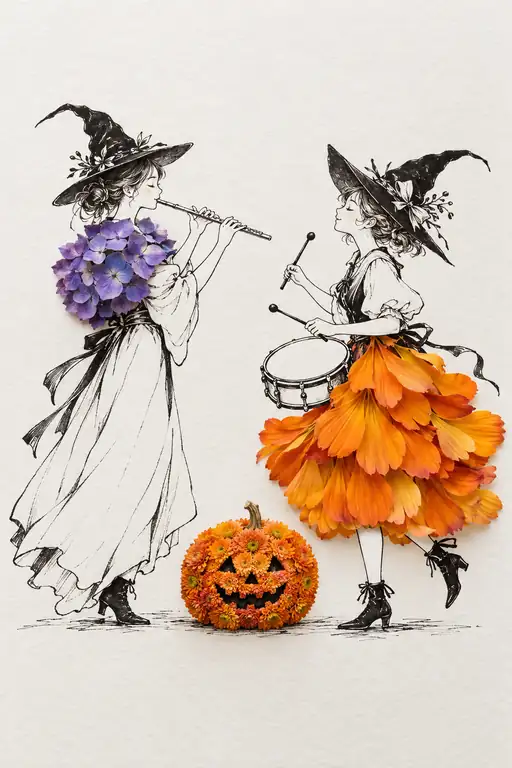 Your Melody Lifts My Feet
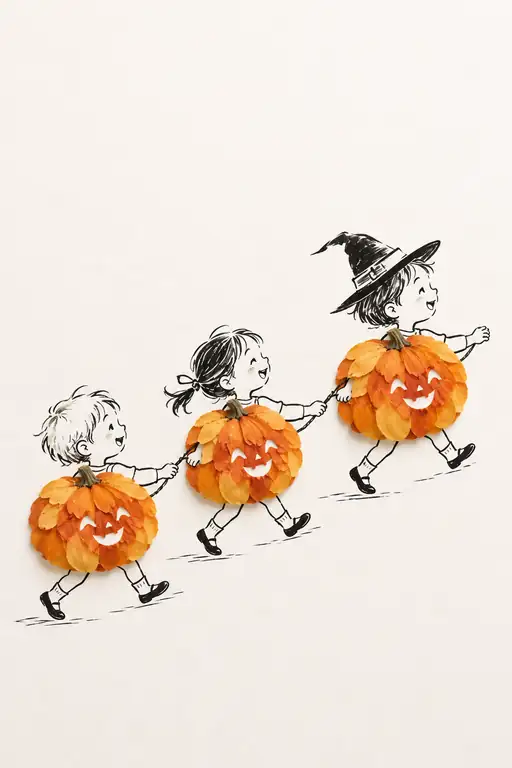 Together to the Next Adventure
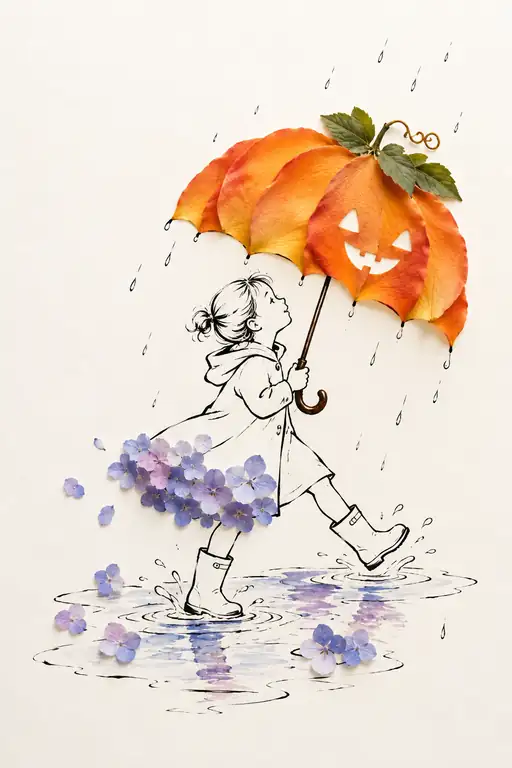 The Rain Came Out to Play
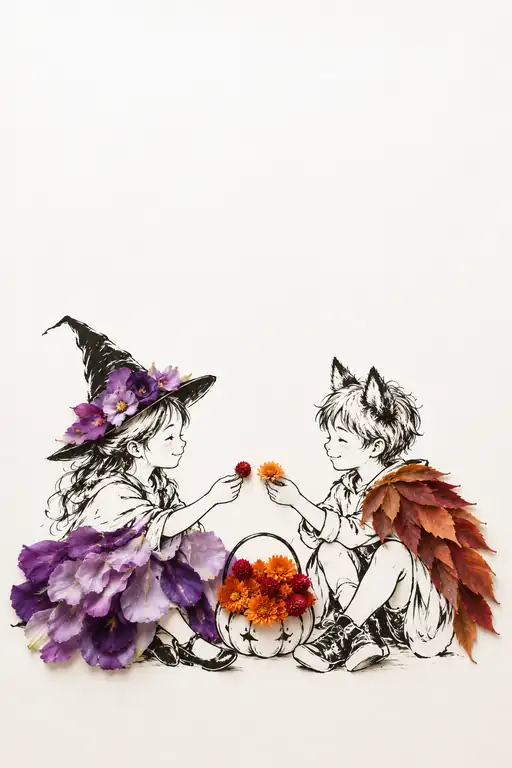 A Quiet Gift Between Fingertips
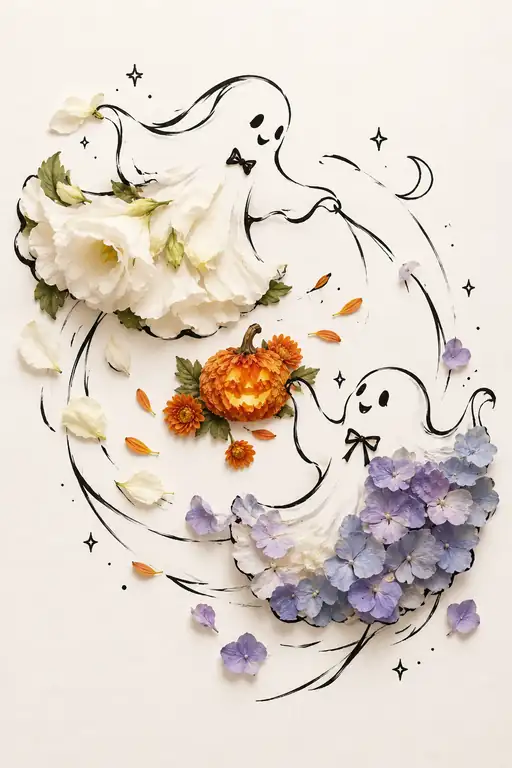 Around Our Little Light
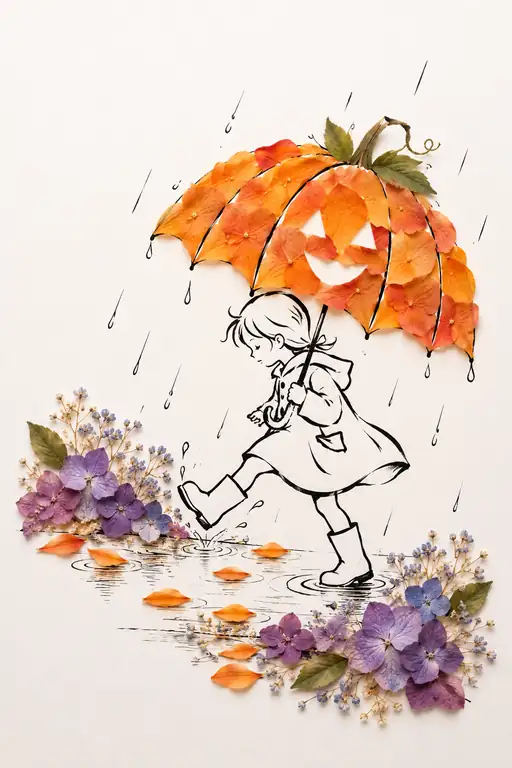 The Puddle Called My Name
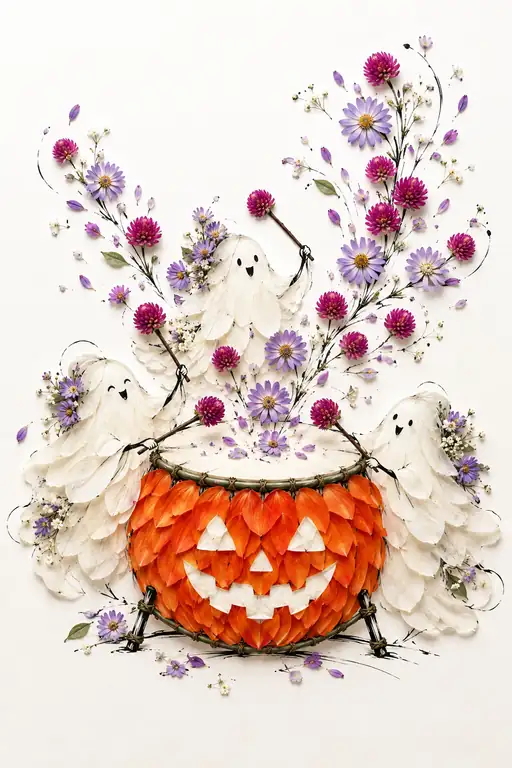 With Three of Us, the Night Has Rhythm
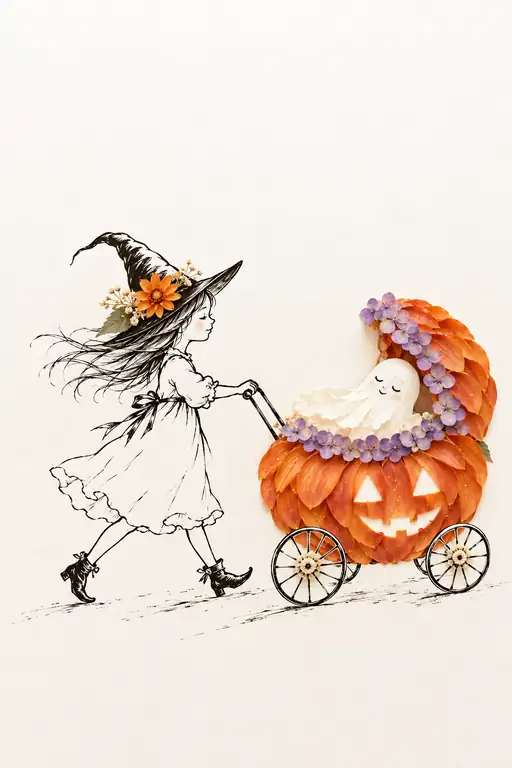 A Journey Wrapped in Petals
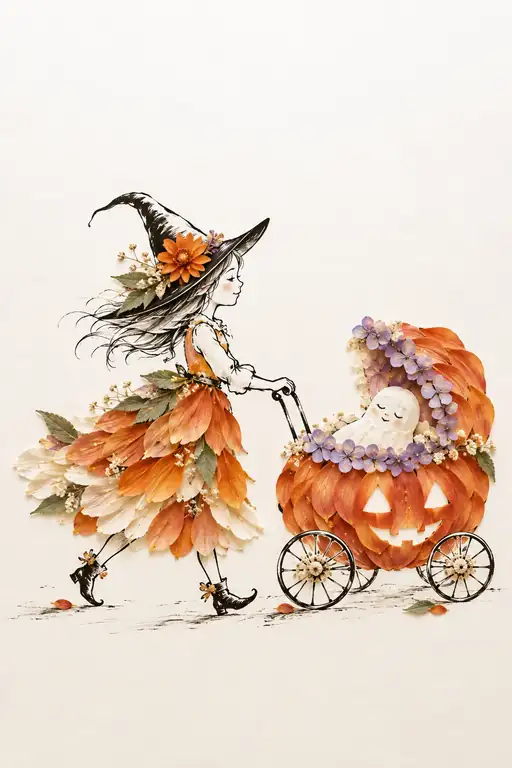 Guiding the Slumbering Stroll
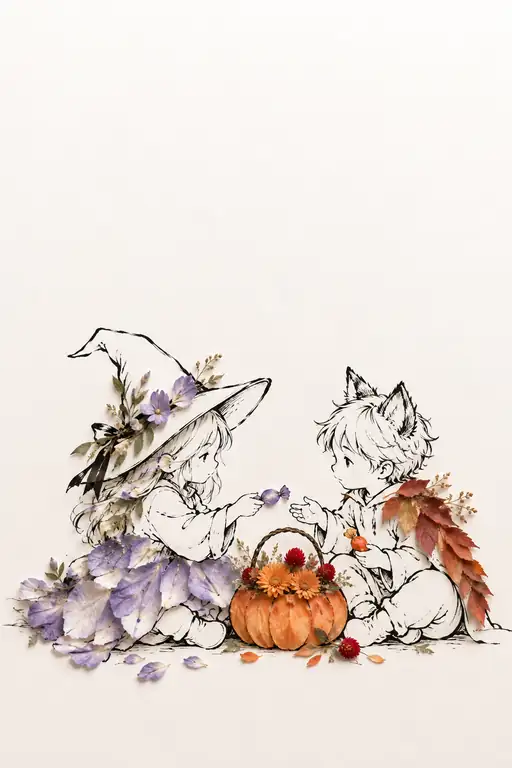 A Gentle Promise Offered from the Hand