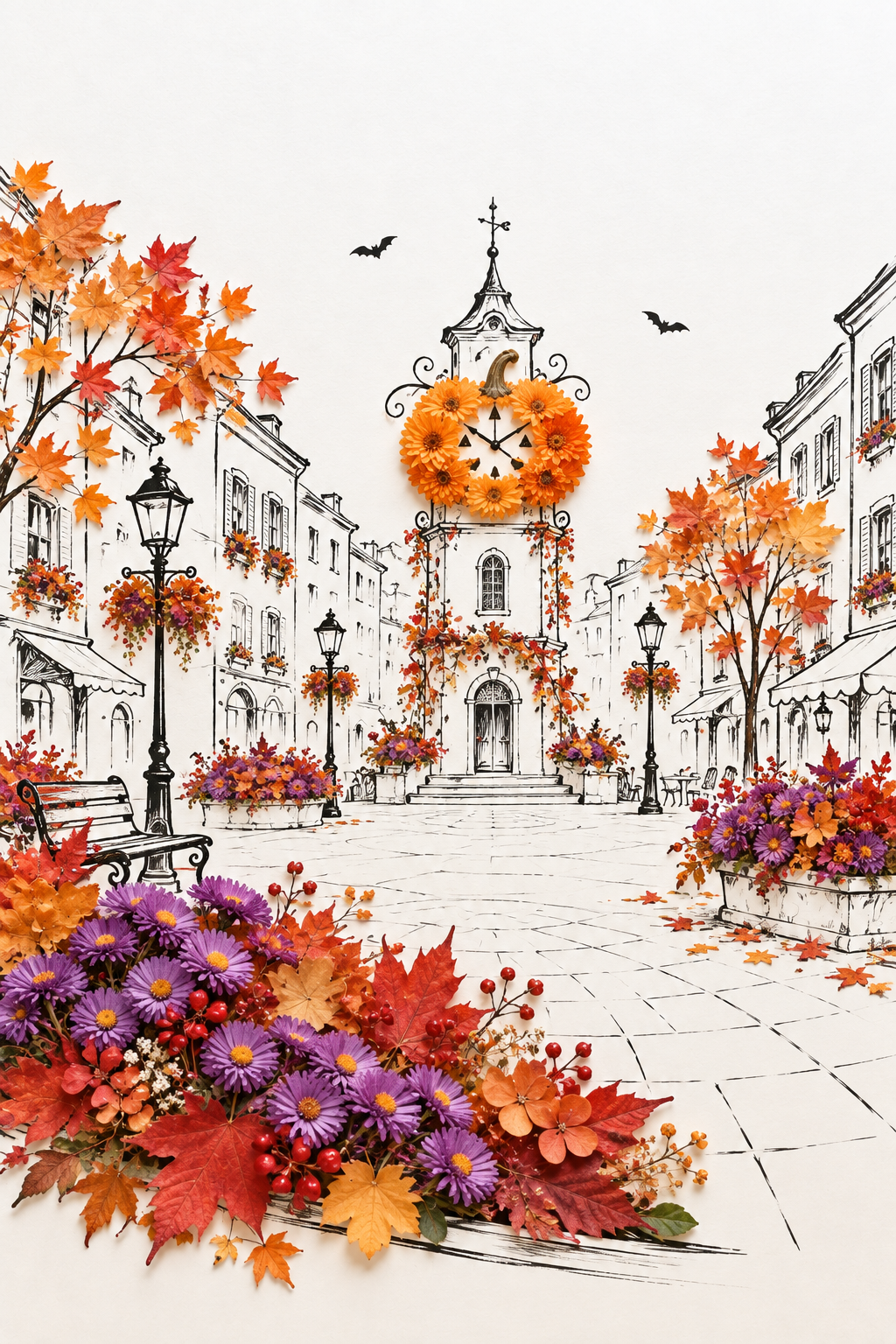
When the Town Clock Smiles
Critique
1. Introduction An autumn square opens toward a tower bearing a pumpkin faced clock. Orange trees, purple flowers, and two bats turn orderly public space playful. 2. Description The paved square recedes between buildings toward a narrow tower. Orange flowers form a clock face with triangular eyes, a smile, and black hands. Red vines and baskets decorate the façades. Streetlamps line the square; a bench stands left and a table right. Maple leaves fill trees and scatter across the pavement. A foreground bed holds purple daisies, red berries, and leaves. 3. Analysis Paving lines converge on the tower door, making the pumpkin clock the distant focal point above it. The foreground flowers provide a broad, saturated base, while smaller clusters repeat toward the center. Trees on either side frame the architecture without blocking the route through the square. Black ink lines keep buildings and lamps readable beneath the warm leaf color. The bats are tiny marks against open sky, extending the seasonal theme without changing the bright mood. 4. Interpretation and Evaluation The clock combines public timekeeping with a mischievous expression. Its hands imply a specific moment, though the scene is unpeopled. Empty seats invite imagined visitors. The perspective offers a place to enter; flowers follow a clear route. The foreground bouquet offers a close view before the eye travels to the tower. 5. Conclusion Architecture supplies depth and order, while leaves and flowers give the square seasonal energy. The pumpkin clock makes the town's center feel both useful and whimsical.
Same Subcategory
Similar Artworks
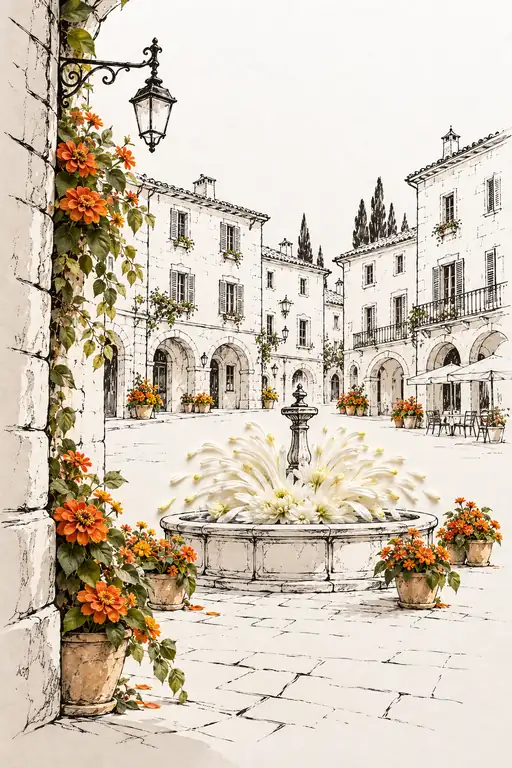 The Town Takes a Quiet Breath
 The Day Has Room for Joy
 Autumn Leaves Swirling Under the Lamplight
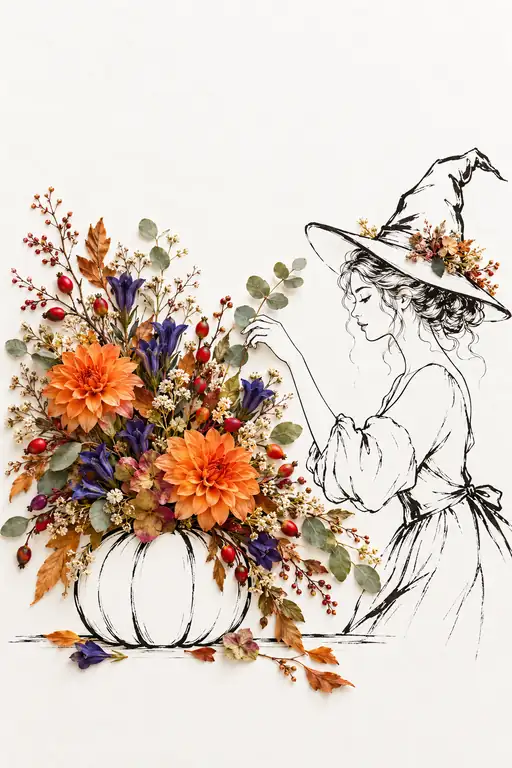 The Last Leaf Finds Its Place
 May Autumn Wait Beyond the Door
 Every Corner Welcomes You Home
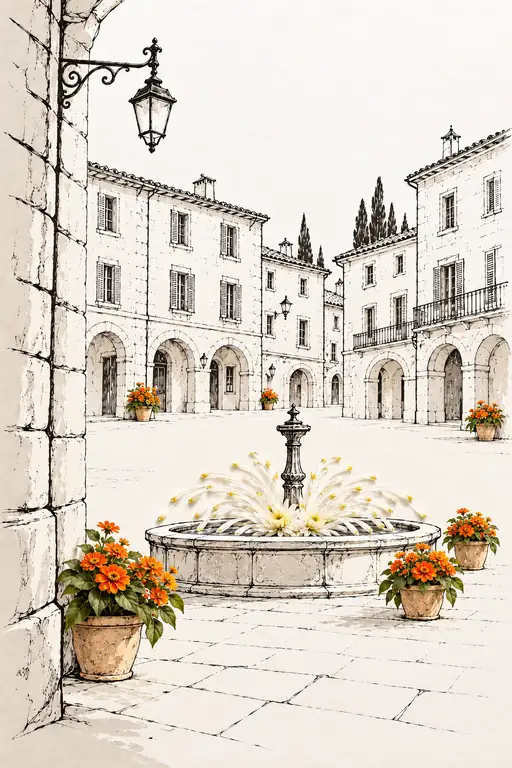 A Stillness at the Turning
 The Quiet Crossing of October
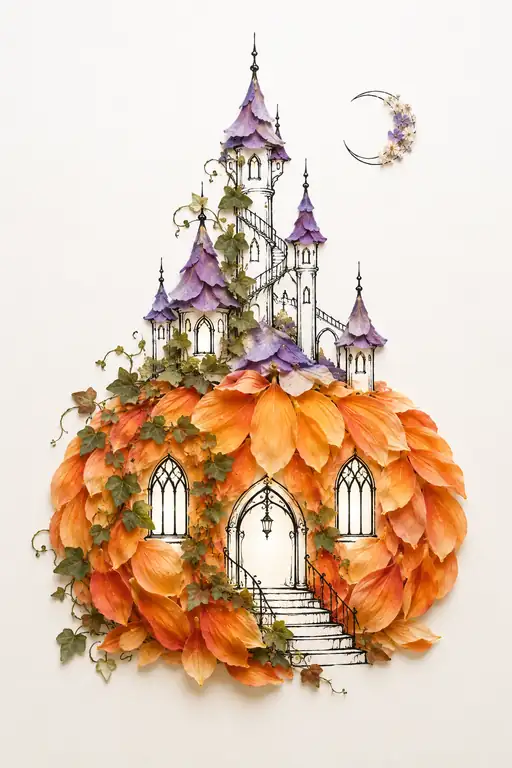 The Castle Where Autumn Keeps Its Dreams
 All Aboard for the Last Golden Day