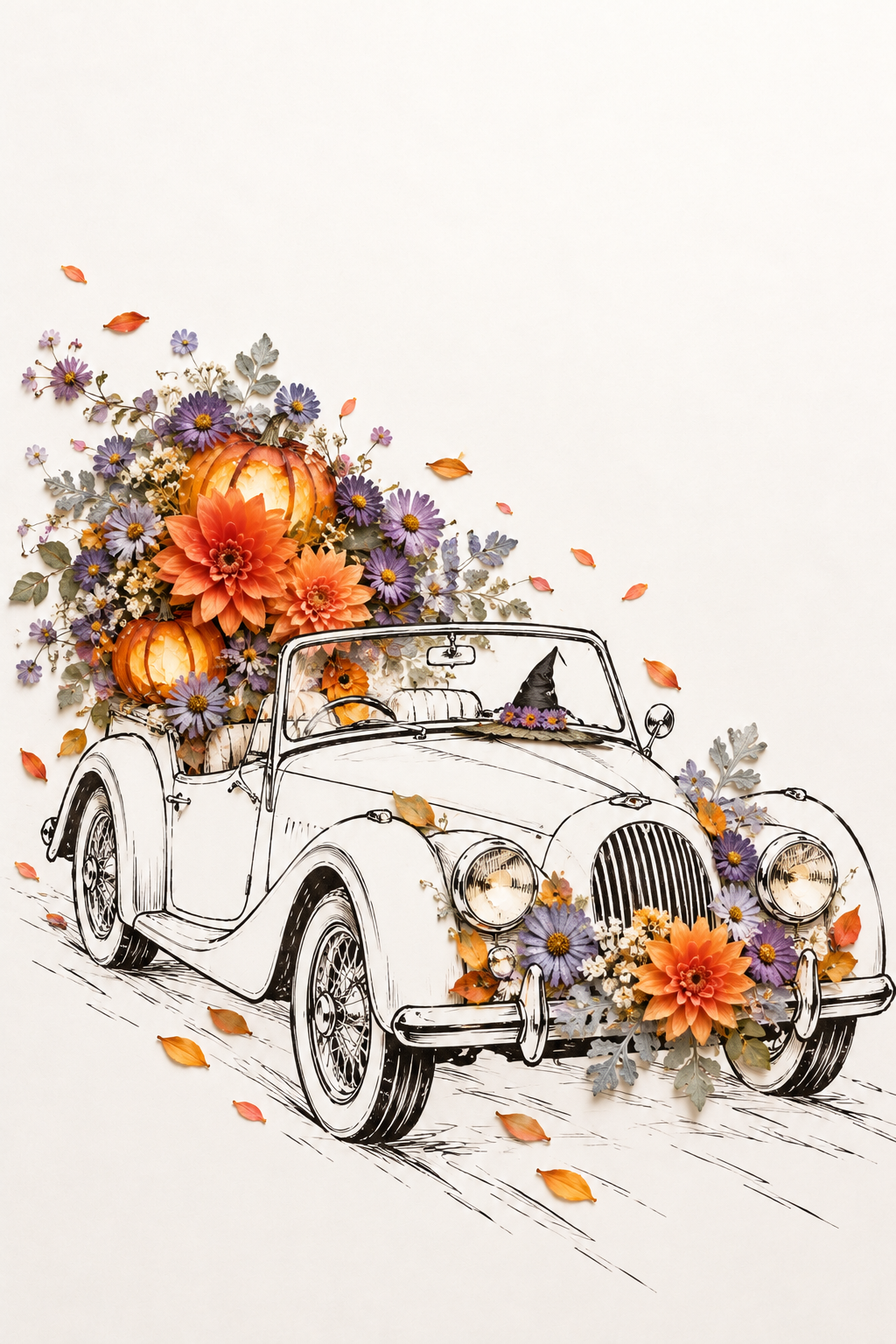
All Aboard for the Last Golden Day
Critique
1. Introduction A vintage convertible carries autumn flowers and glowing pumpkins. Its spare outline frames floral abundance. Scattered leaves suggest a procession of color. 2. Description The white car is seen from front and left, its fenders, wheels, grille, and headlights drawn in dark lines. Orange dahlias, purple daisies, grey leaves, and pale flowers fill the back and front bumper. Two lit pumpkins sit in back. A pointed hat rests near the windshield. Orange petals float around the car and onto the sketched road. The surrounding field is empty. 3. Analysis The car's perspective leads toward the lower right, while the tallest flowers rise behind it at left. This counter movement keeps the arrangement from becoming a single solid heap. Warm orange blossoms repeat from rear to bumper; purple flowers punctuate the route between them. Black mechanical lines contrast with soft petal surfaces, making each material easy to read. The falling leaves extend the sense of travel into the white space, although the wheels themselves remain still. 4. Interpretation and Evaluation The arrangement joins two kinds of spectacle: a vehicle associated with outings and a bouquet too large to stay contained. The glowing pumpkins make the journey feel festive rather than practical. The strength of the image is its controlled overflow. Flowers interrupt the car's familiar silhouette but do not erase its grille, lights, or wheels. Those recognizable details make the imagined procession convincing enough to enjoy. 5. Conclusion An outlined car becomes a frame for autumn color. Repeated flowers and drifting petals turn a static vehicle into the suggestion of a lively departure.
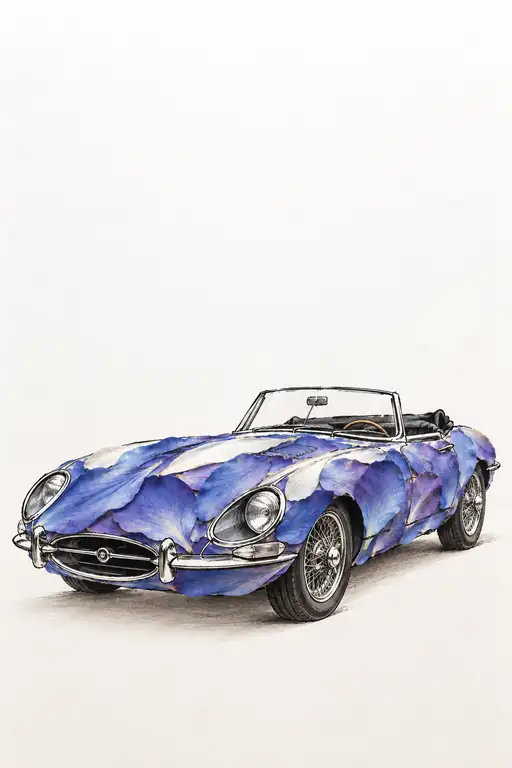 The Road Begins in Blue
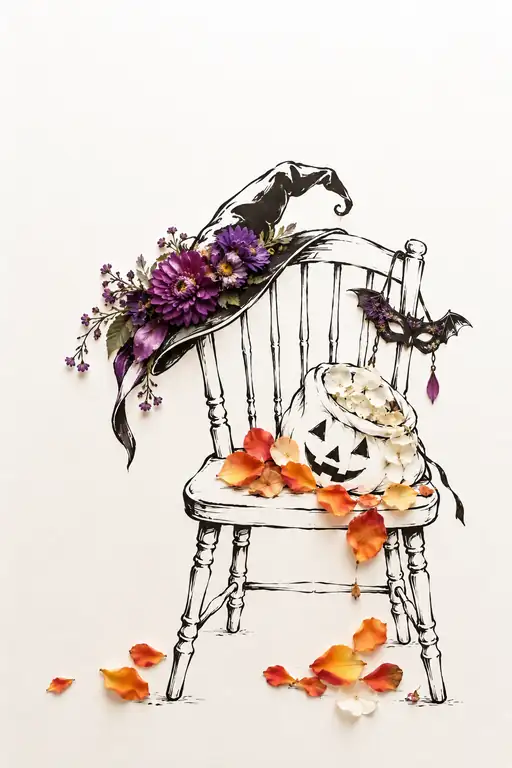 Keep My Place Until I Return
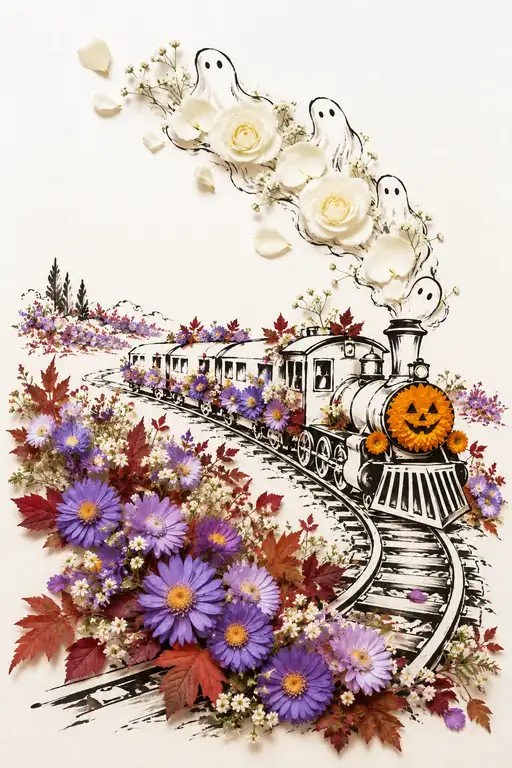 Through the Autumn Tracks
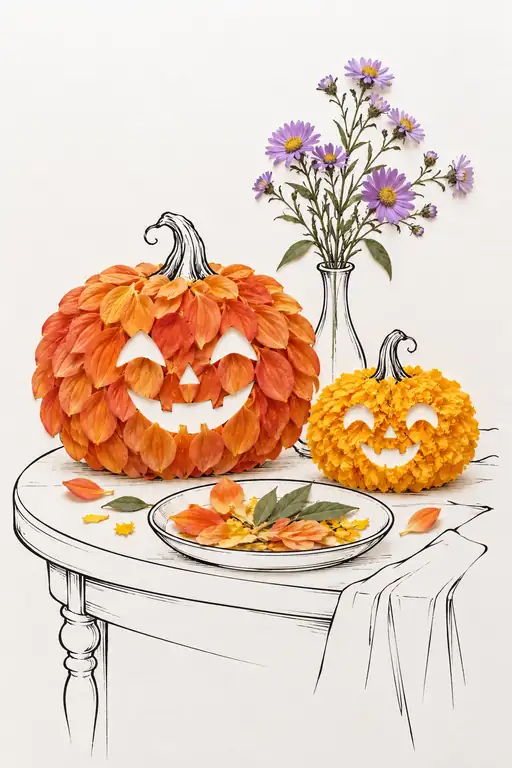 Two Smiles Waiting at the Table
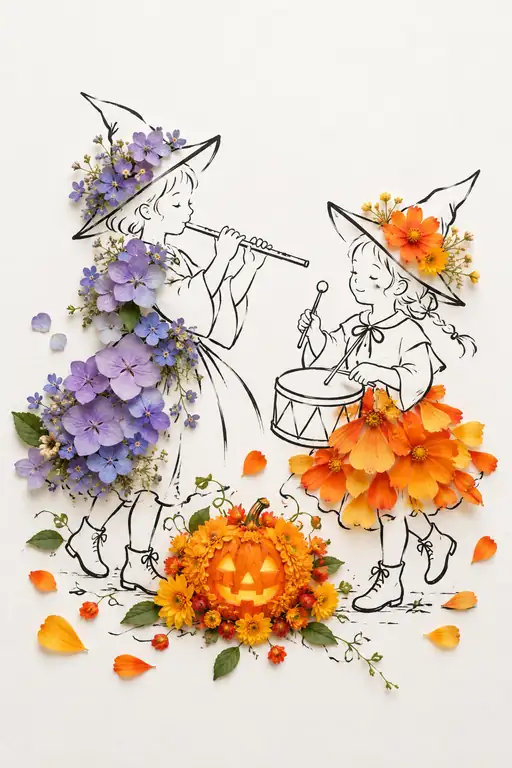 A Song for the Smiling Lantern
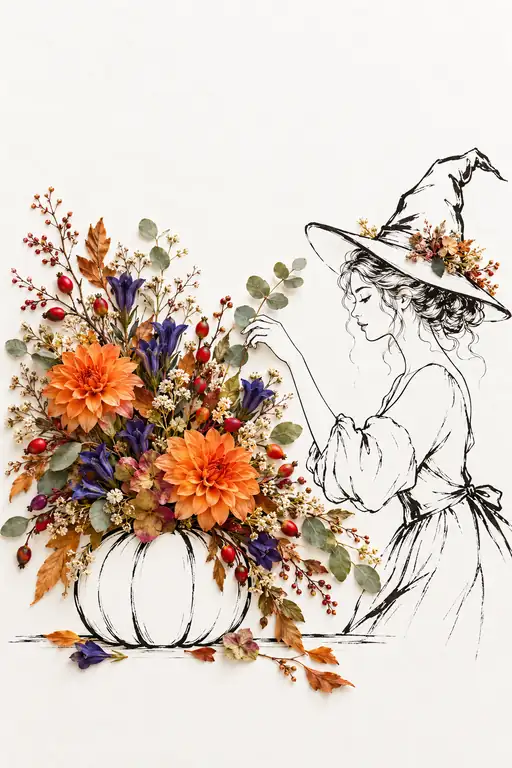 The Last Leaf Finds Its Place
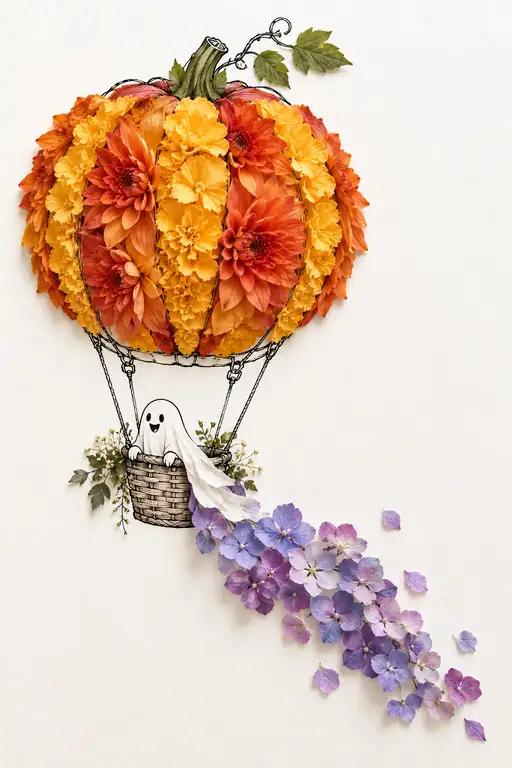 I Have the Whole Sky Ahead
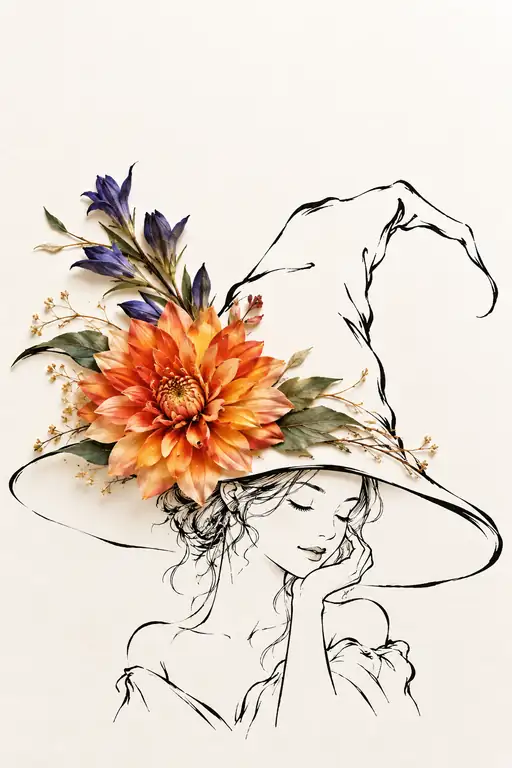 The Quiet Beneath My Brim
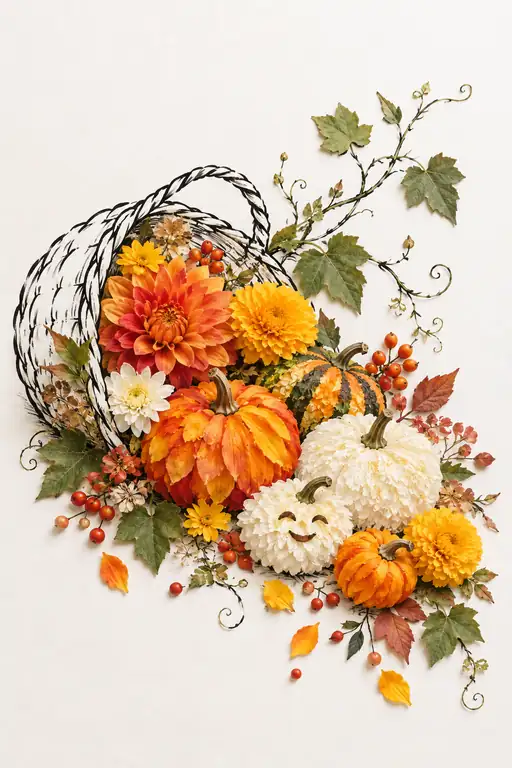 More Than Autumn Could Hold
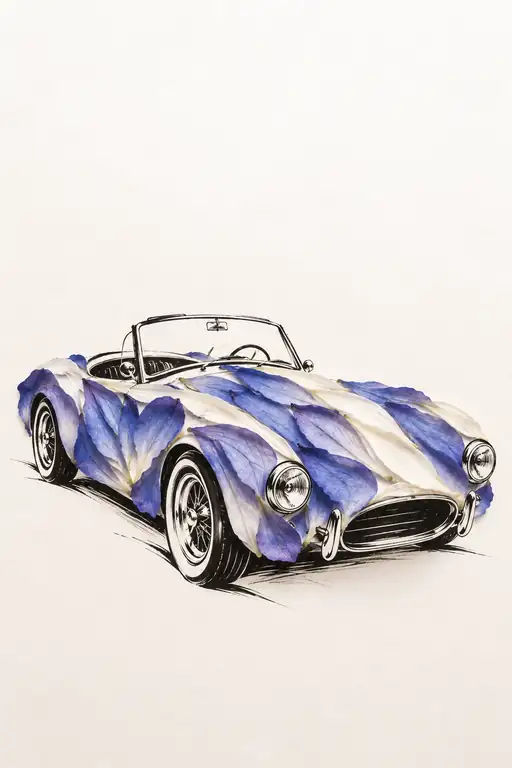 Blue Is My Reason to Leave
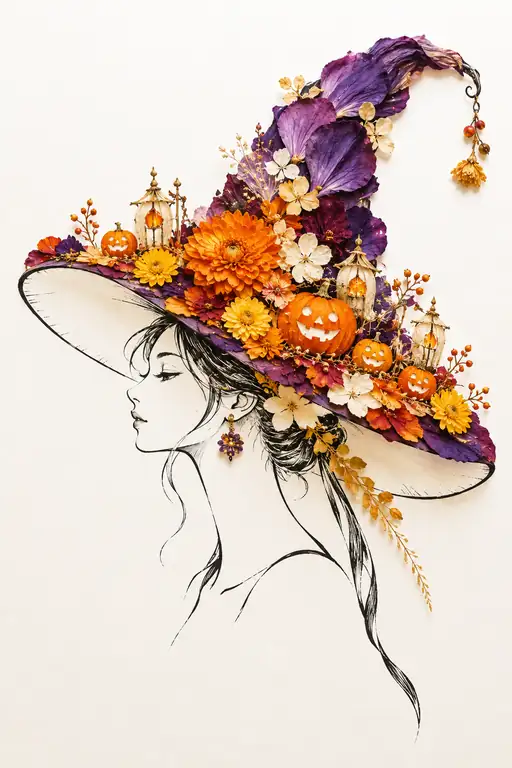 Wearing the Revelry of Night