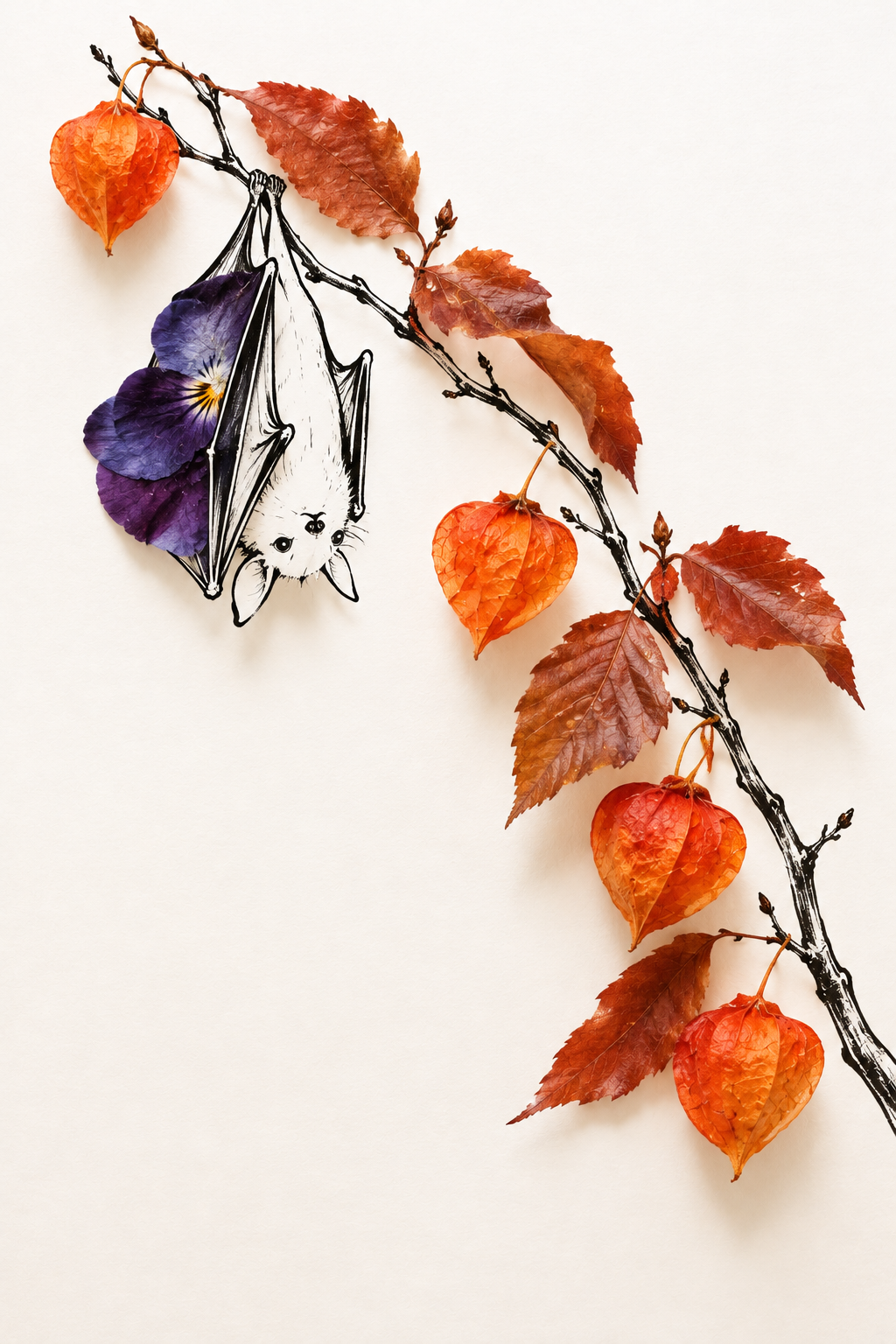
The World Looks Kinder Upside Down
Critique
1. Introduction A bat hangs upside down among orange lantern shaped fruits and a purple flower. Wide eyes and a pale face make it approachable. The diagonal branch guides the gaze. 2. Description The branch descends from upper left to lower right. Rust red leaves and inflated orange husks hang from dark twigs. A purple flower opens behind the bat. It grips the branch and folds black outlined wings around a white body. Long ears frame its round eyes. Warm white space surrounds the branch. 3. Analysis The descending branch organizes the scattered leaves and husks into a rhythmic sequence. Orange forms recur at intervals, while the purple flower provides a single cool counterweight near the bat. Ink like outlines make the animal crisp against the textured botanical elements. Its head sits below the branch, so the viewer meets its gaze while following the diagonal. Broad empty areas prevent the many leaf edges from becoming crowded. 4. Interpretation and Evaluation The pose is natural to a bat, yet the frontal, expressive face gives it the appeal of a small character. Autumn fruit and drying leaves suggest a moment of seasonal change rather than a threatening nocturnal setting. The picture succeeds by keeping the animal and branch in one visual system: the bat is suspended from the very line that carries the color across the page. The unexpected purple flower makes that color arrangement less predictable. 5. Conclusion The image combines a precise hanging pose with a warm autumn palette. A single diagonal and generous blank ground keep its playful encounter focused.
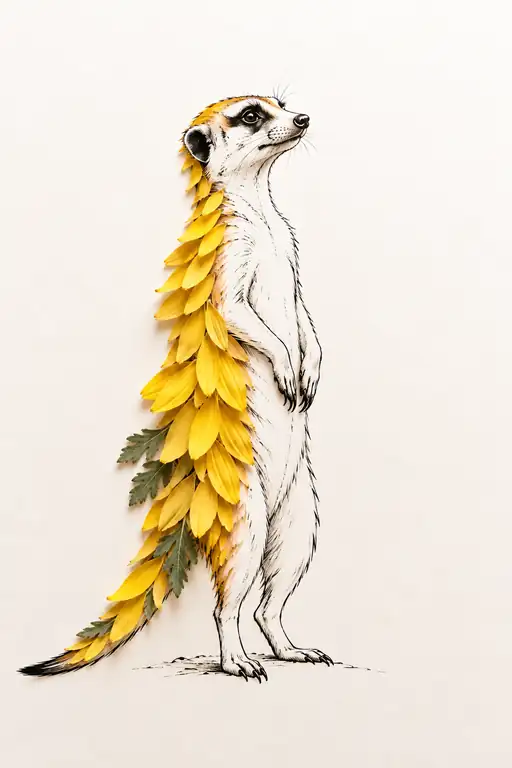 Keeping Watch with Sunshine on My Back
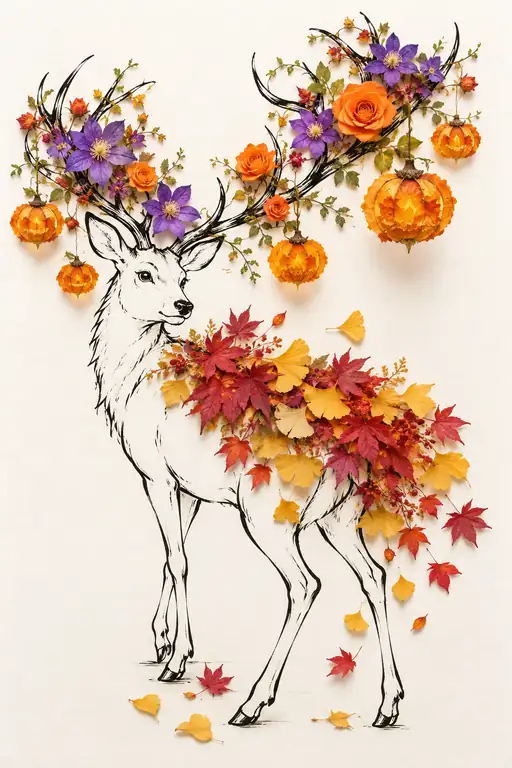 I Will Carry the Forest Lights
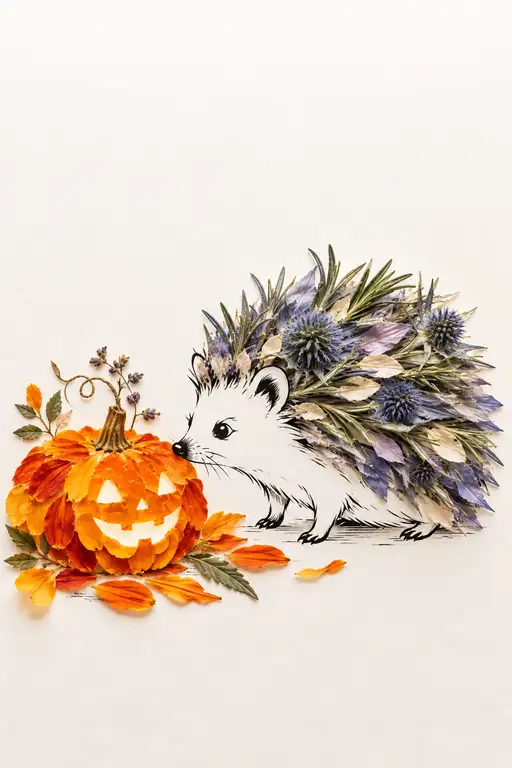 Hello, Little Glow
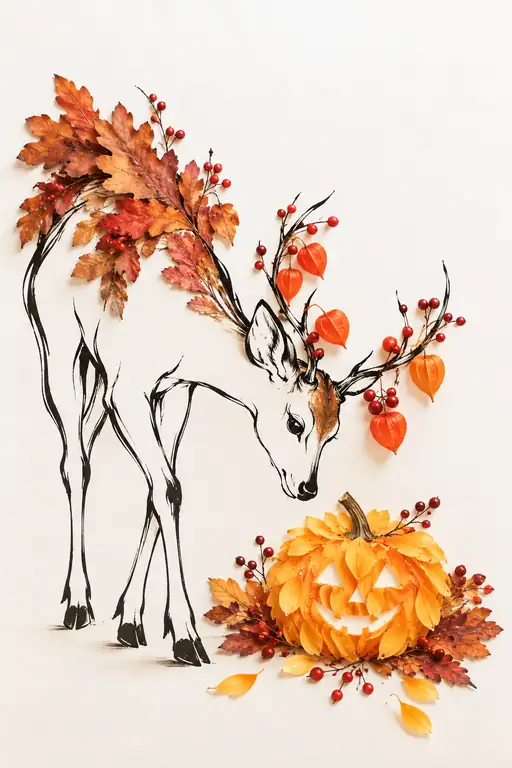 An Unexpected Friend Beneath the Antlers
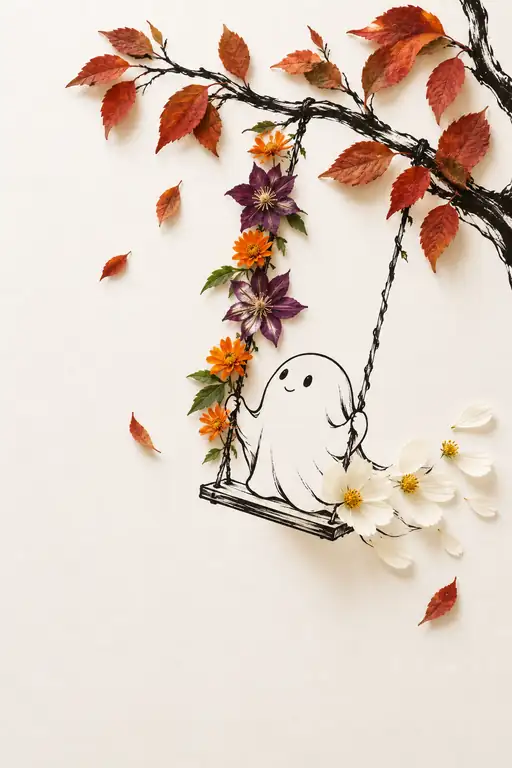 The Swing Knows My Secret
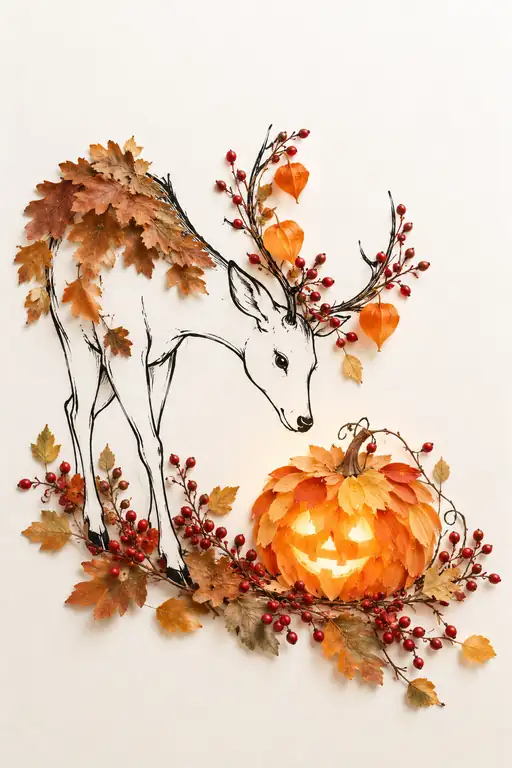 A Gentle Light in the Clearing
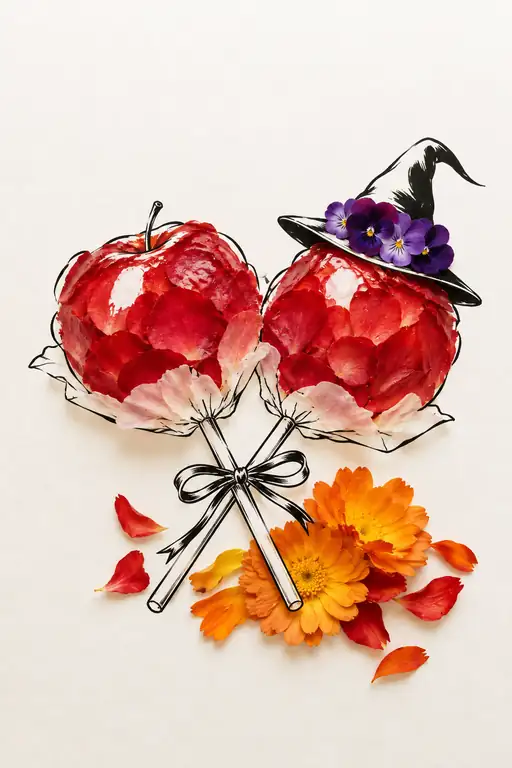 The Sweetest Pair at the Fair
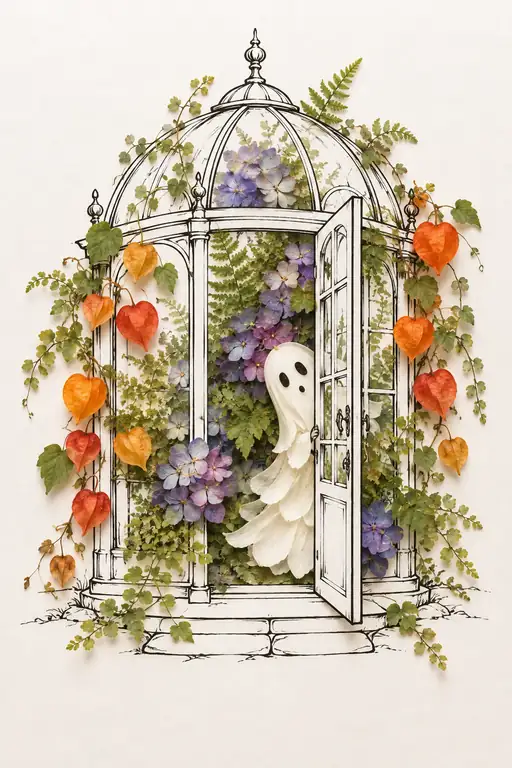 The Door Was Always Open
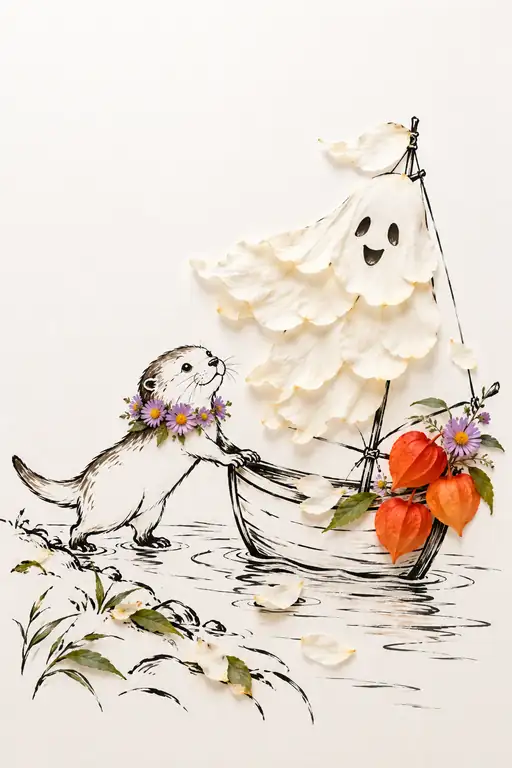 The Sail That Smiled Back
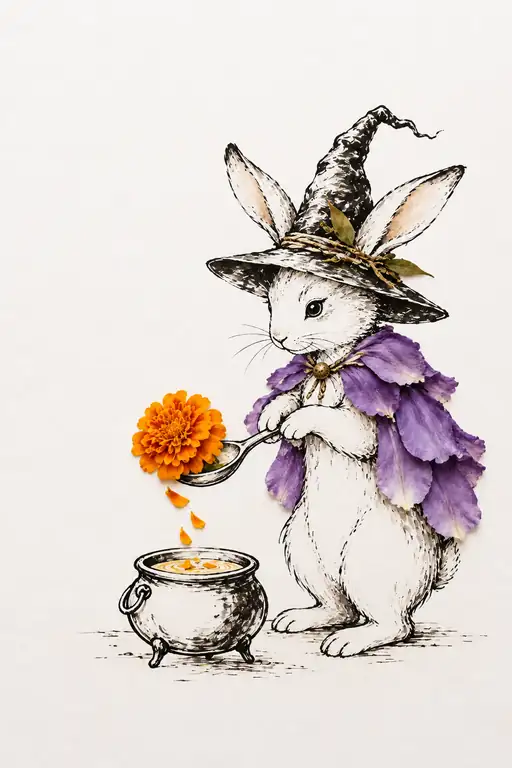 Just One More Petal of Magic
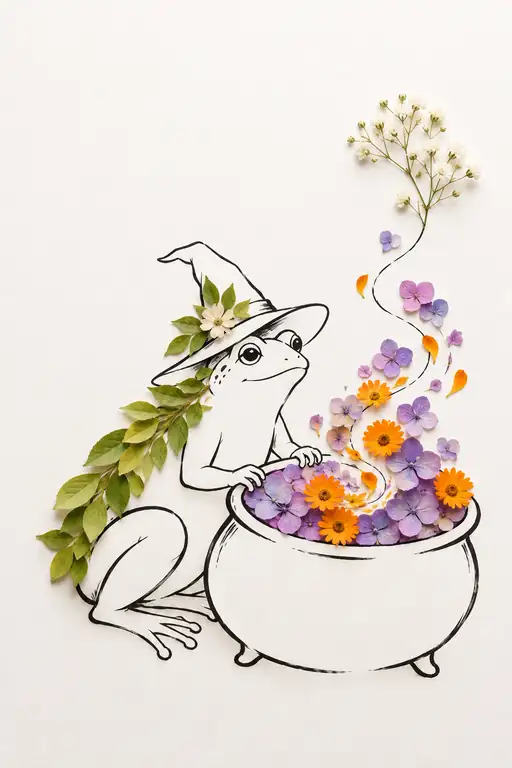 My Recipe for a Little Wonder
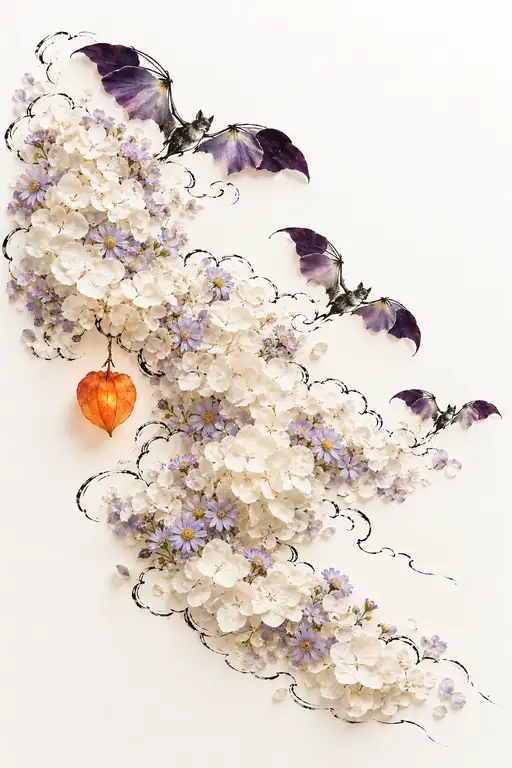 Following the Lantern Through Clouds