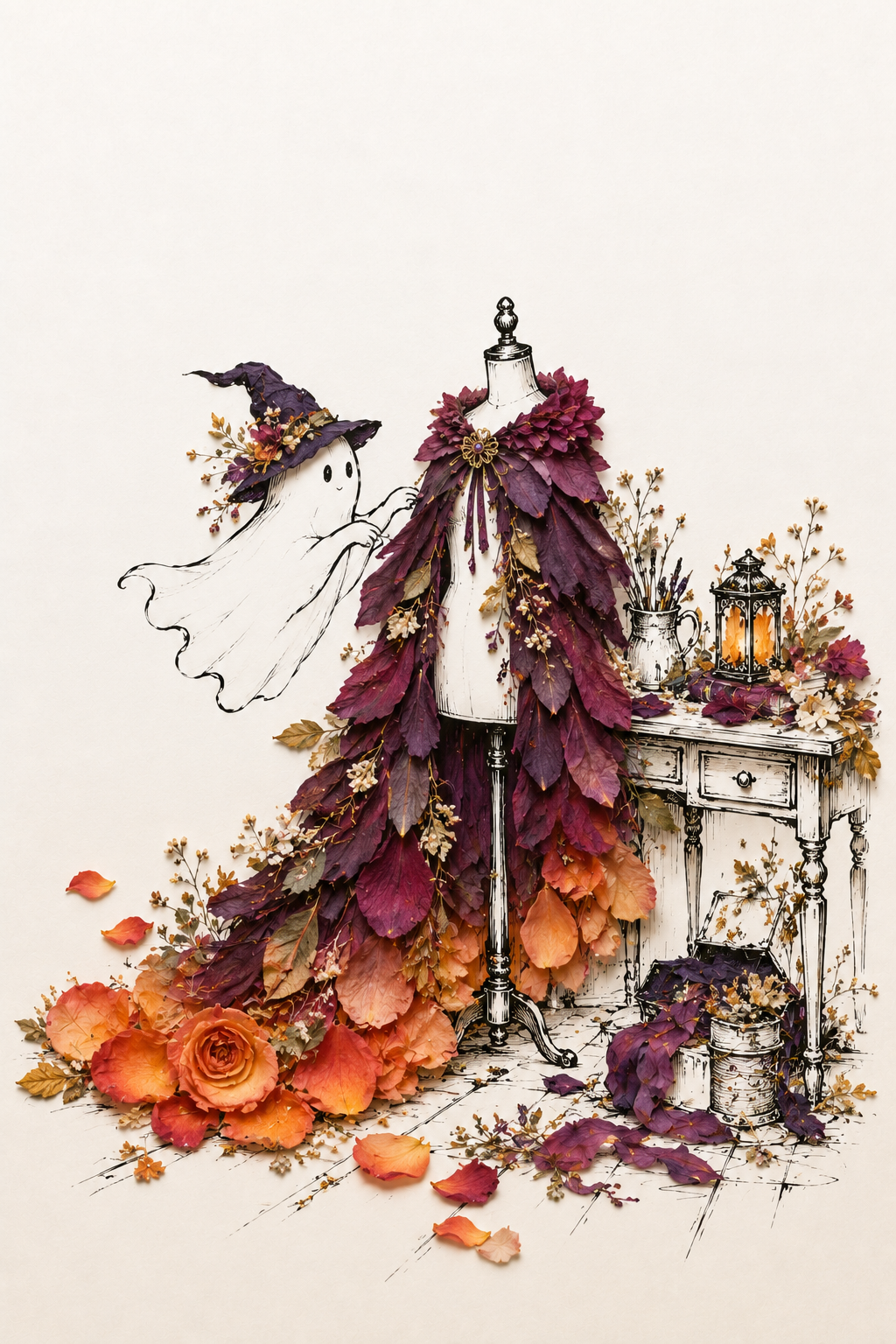
The Dress Is Almost a Dream
Critique
1. Introduction A small ghost in a pointed hat floats beside a dress form draped with deep purple and orange flower petals. A worktable with a glowing lantern stands nearby. The scene turns costume making into a quiet encounter between maker, garment, and seasonal light. 2. Description The dress form occupies the center, its pale neck rising above a wide petal gown. Burgundy leaves cluster at the shoulders and fall in long overlapping layers, changing to orange near the floor. The ghost hovers at left, one hand lifted toward the garment; its hat carries flowers and fine sprigs. At right, a narrow table holds brushes, small objects, and a warm lantern. Loose petals, a pail, and folded dark fabric lie near the table legs. 3. Analysis The upright form anchors the picture, while the gown spreads broadly left and downward. The ghost's reaching arm bridges the blank space to the shoulders. Burgundy dominates the dress, but orange petals create a luminous base echoed by the lantern. The table's straight edges and small tools contrast with the organic costume. Large white areas keep the numerous details legible. 4. Interpretation and Evaluation The hovering figure appears to inspect or adjust the unfinished garment. Tools and loose fabric support this reading through visible evidence. The composition separates central creation from the working area while connecting them by color and gesture. Its restrained warm light and rich purple textile effect are successful, and the transformation of petals into clothing is inventive. 5. Conclusion The gown first commands attention, but the ghost's hand and nearby tools reveal an act of making. The image gives decorative abundance a practical, attentive context.
 Cobbler's Workshop and Golden Marigold
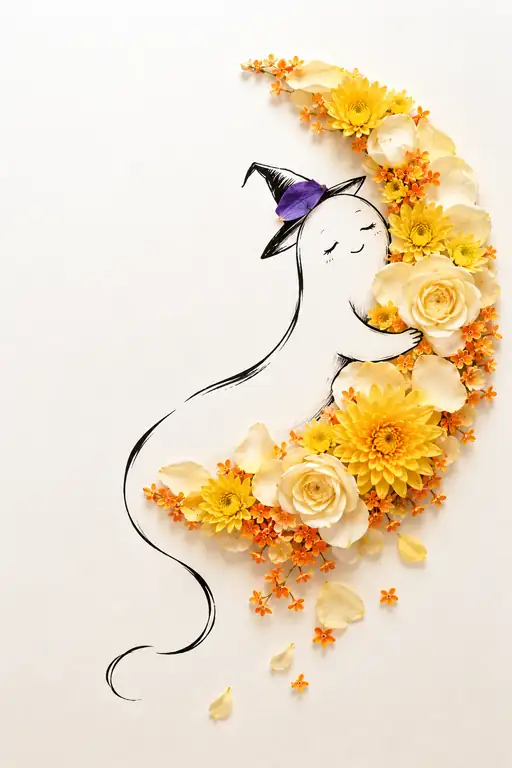 The Moon I Could Finally Hold
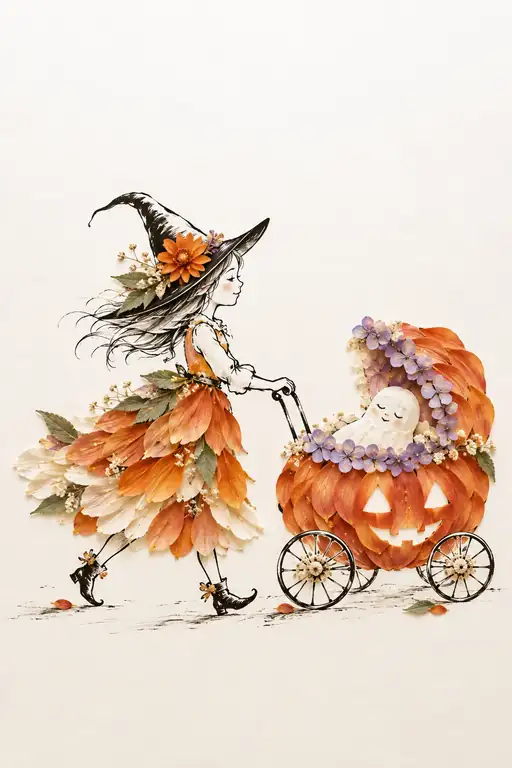 Guiding the Slumbering Stroll
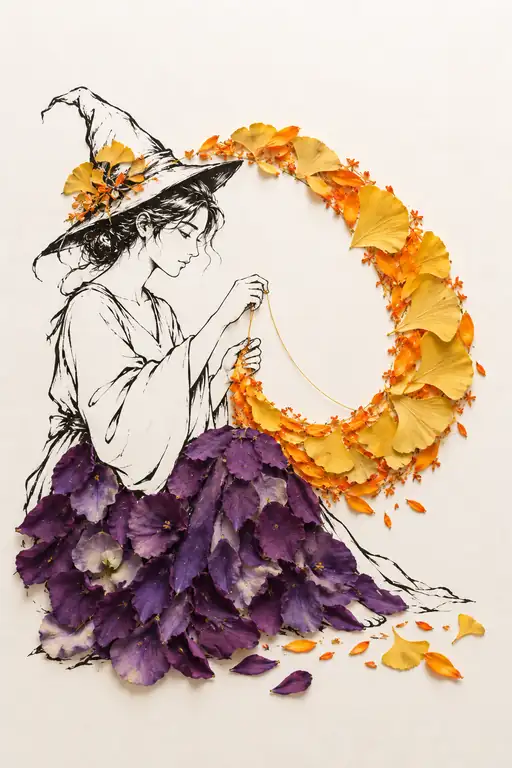 Stitching a Moon for October
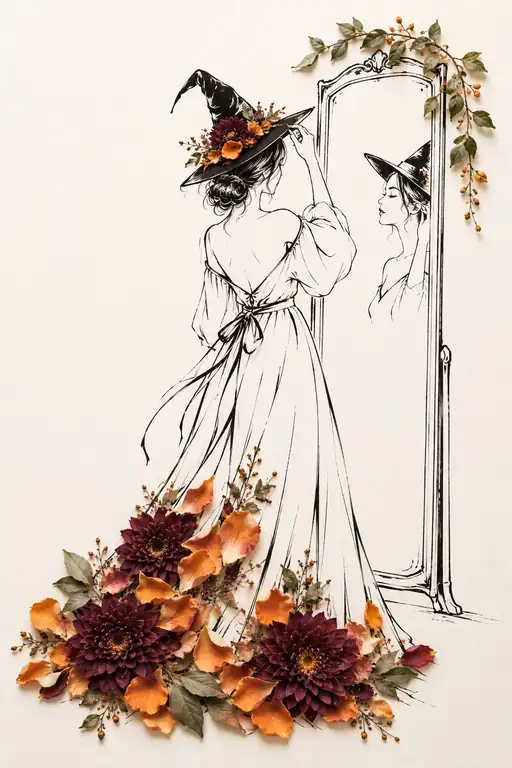 Before I Step Into the Evening
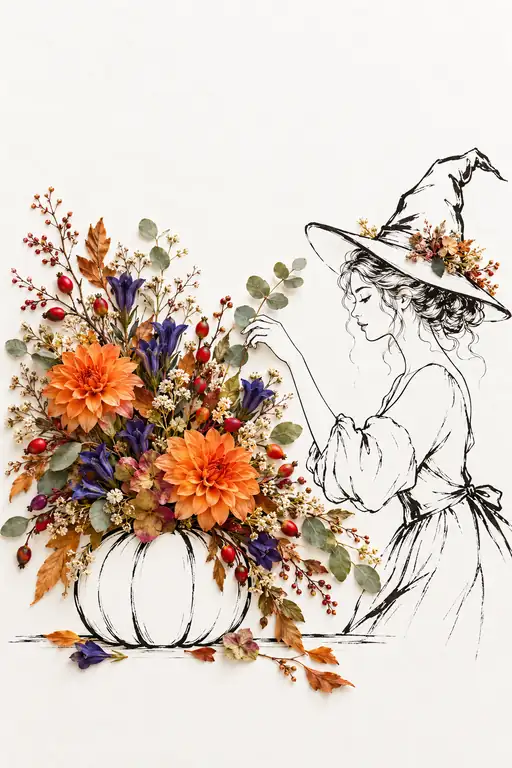 The Last Leaf Finds Its Place
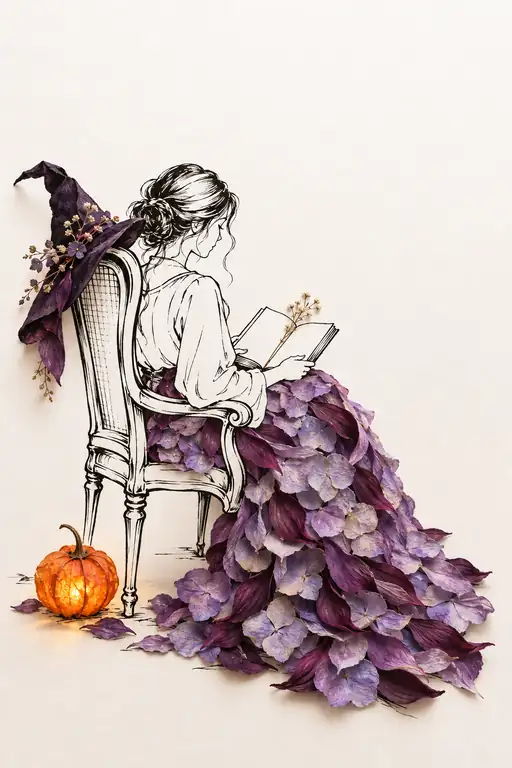 Just One More Page by Lanternlight
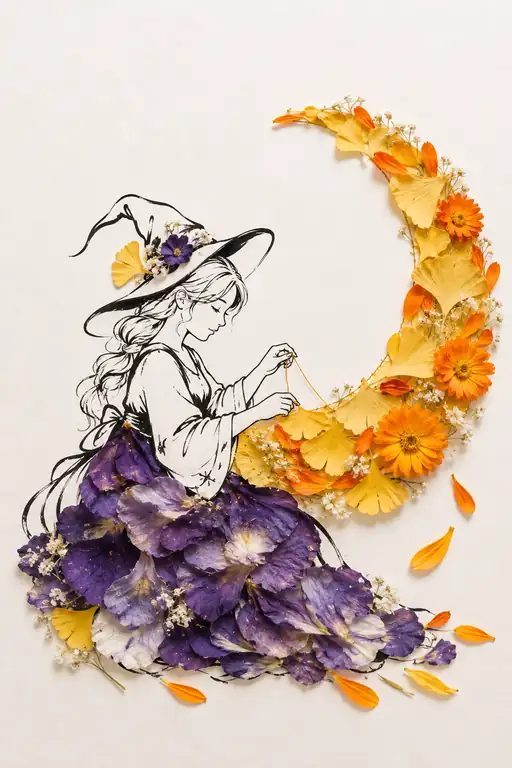 Stitching a Moon for Tonight
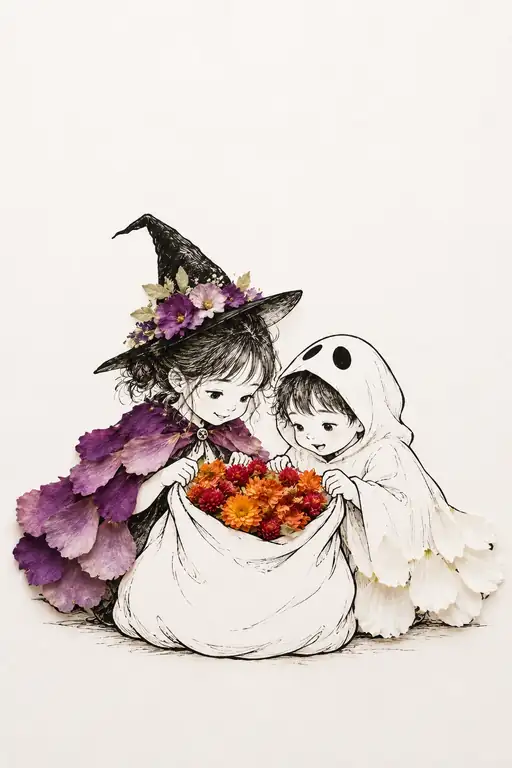 Our Secret Harvest
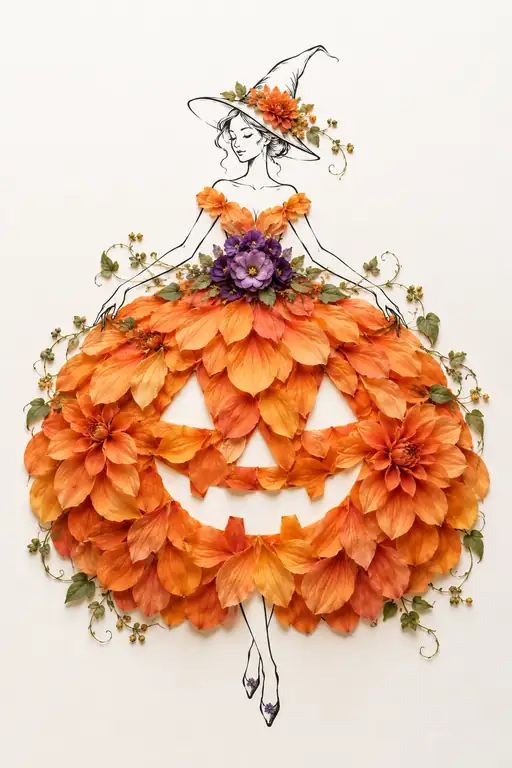 Let My Skirt Do the Smiling
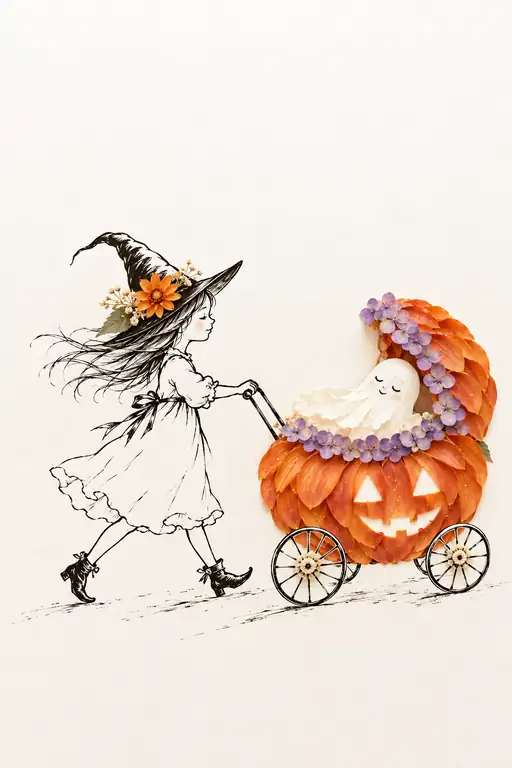 A Journey Wrapped in Petals