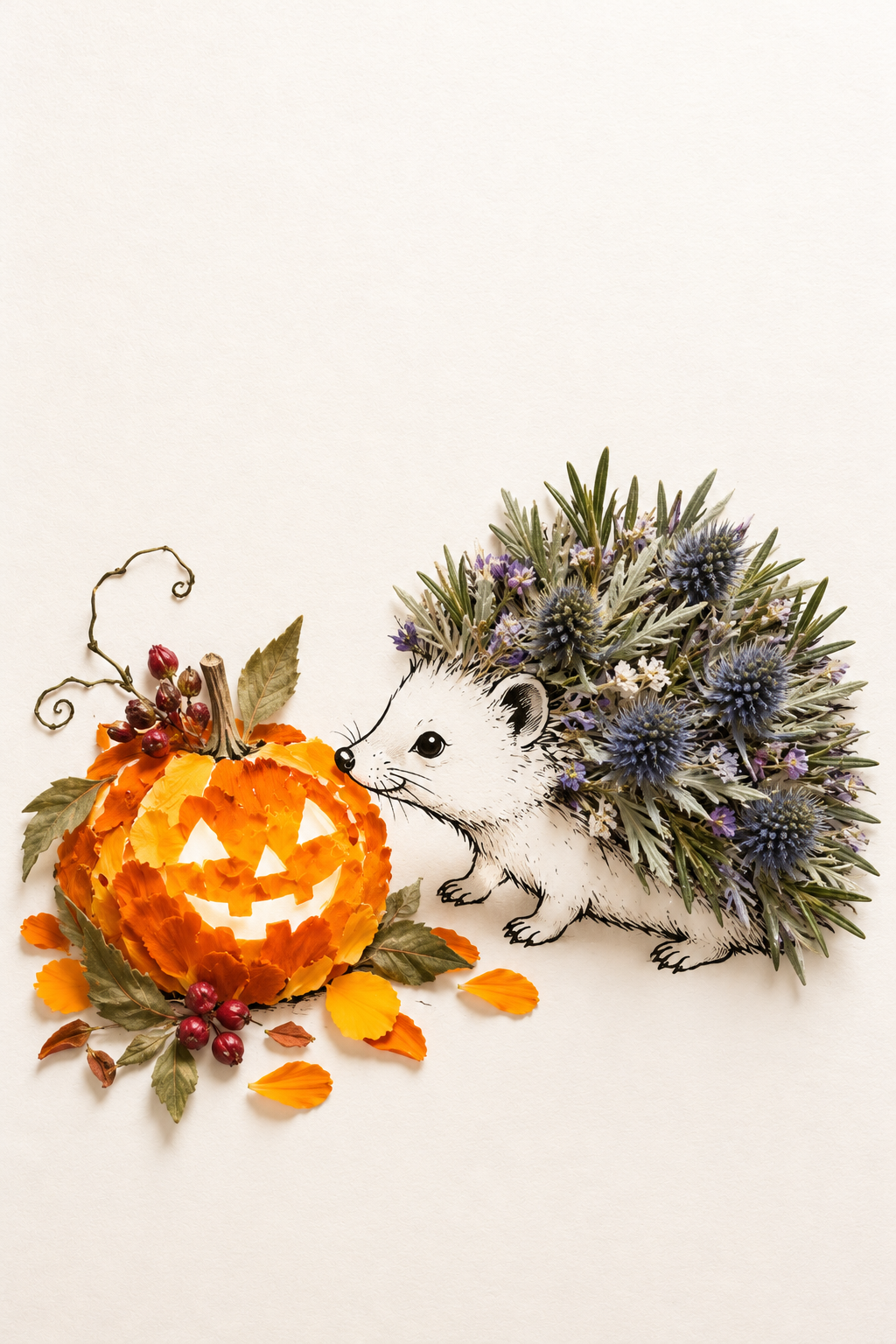
The Brightest Thing I Found
Critique
1. Introduction This image places a small hedgehog beside a glowing carved pumpkin on an open cream ground. The animal's body is assembled from spiky blue flowers and narrow gray green leaves, while its face and feet are defined by black drawing. The unusual combination gives a quiet encounter the character of a seasonal illustration. 2. Description The pumpkin sits left, its triangular eyes and smiling mouth glowing through orange petals. Red berries, curling stems, leaves, and scattered petals gather around its base. The hedgehog leans forward until its dark nose nearly touches the pumpkin. Blue thistle like heads protrude from dense foliage on its back, with tiny violet blooms between them. 3. Analysis The two main forms balance one another across a narrow gap at the nose. The pumpkin's rounded orange mass contrasts with the pointed, irregular silhouette of the hedgehog's back. Its white face emerges clearly from the darker botanical texture, and the bright openings in the lantern draw the eye leftward. Small falling petals extend the composition along the ground without filling the large upper margin. 4. Interpretation and Evaluation The closeness of the nose to the lantern suggests investigation rather than alarm. The image uses accurate attention to leaf and flower texture to make the imaginary animal convincing within its own terms. Orange and blue provide a lively color opposition, while the spare black outlines keep the hedgehog's expression gentle. The controlled spacing of the two subjects gives the scene a clear emotional focus. 5. Conclusion The pumpkin first commands attention, but the hedgehog's approach becomes the event. Detailed plants and a simple drawn face contribute to the same moment.
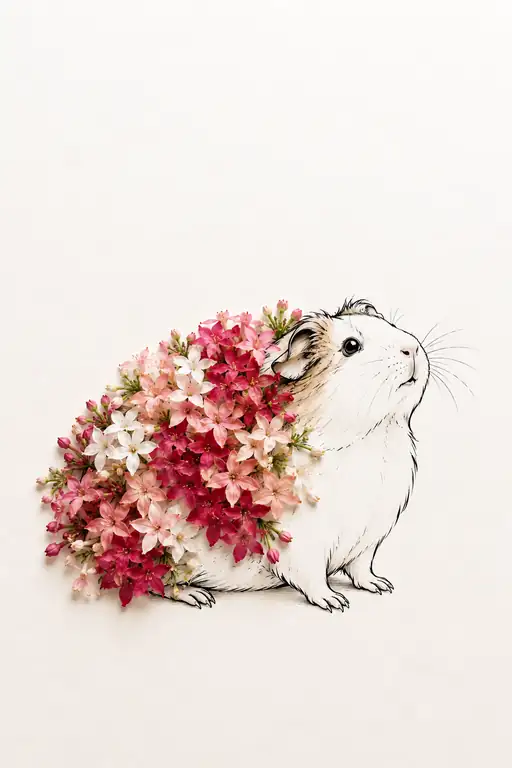 A Tender Weight of Pink
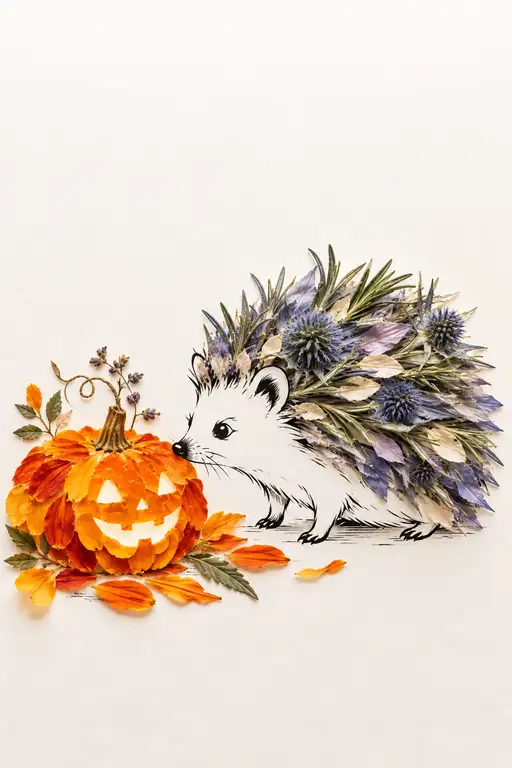 Hello, Little Glow
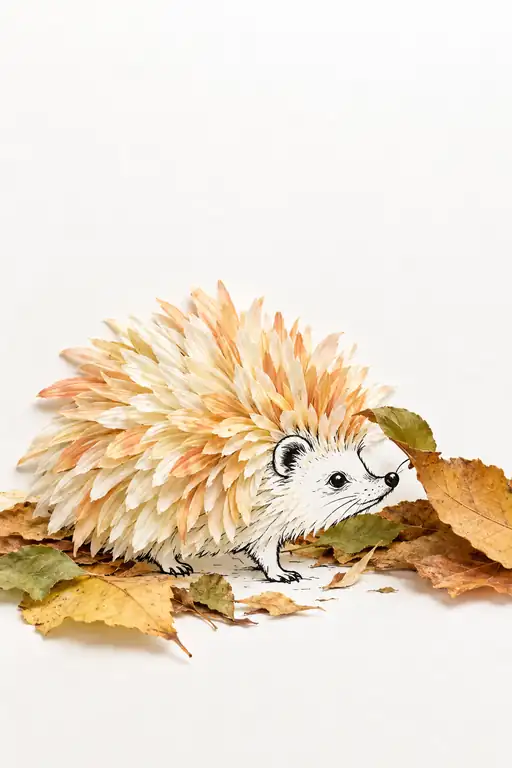 A Brave Nose in a Gentle World
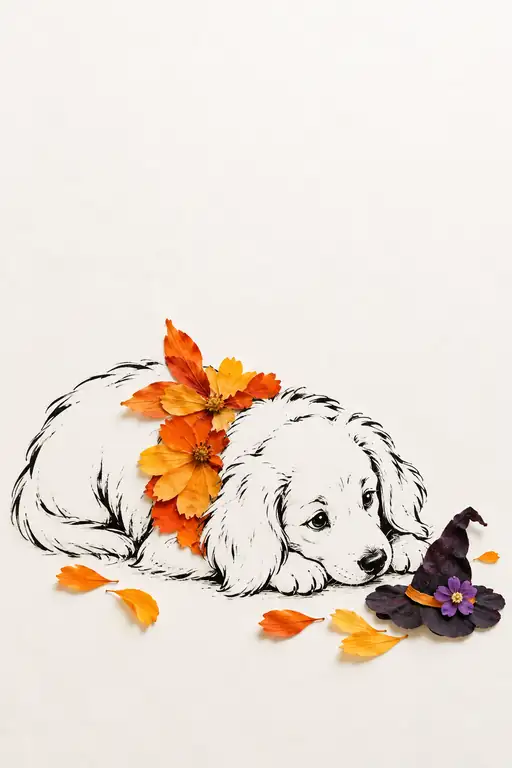 Before the Magic Begins
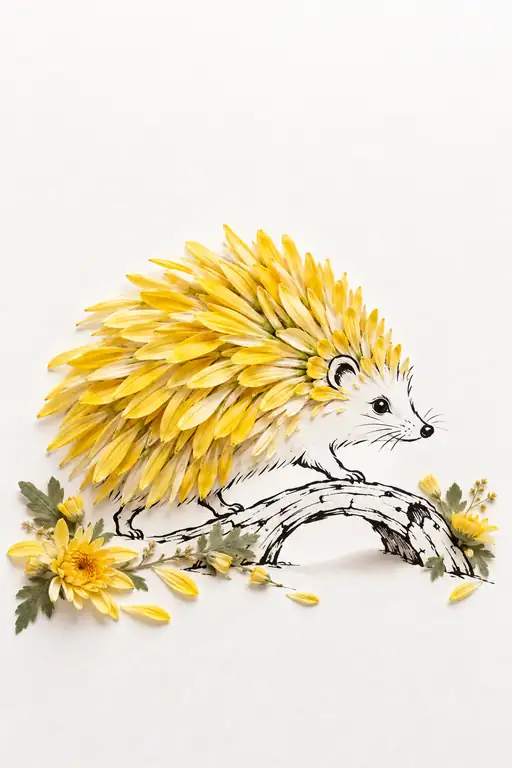 A Little Courage in Yellow
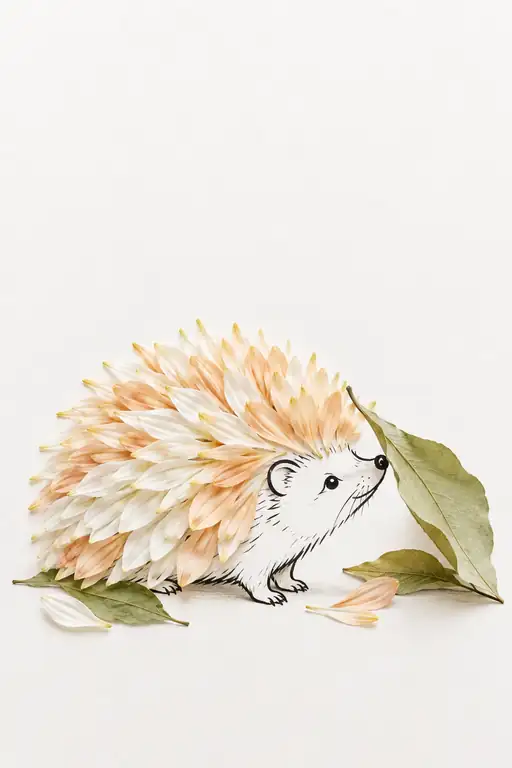 The World, a Nose Away
 The First Brave Leap
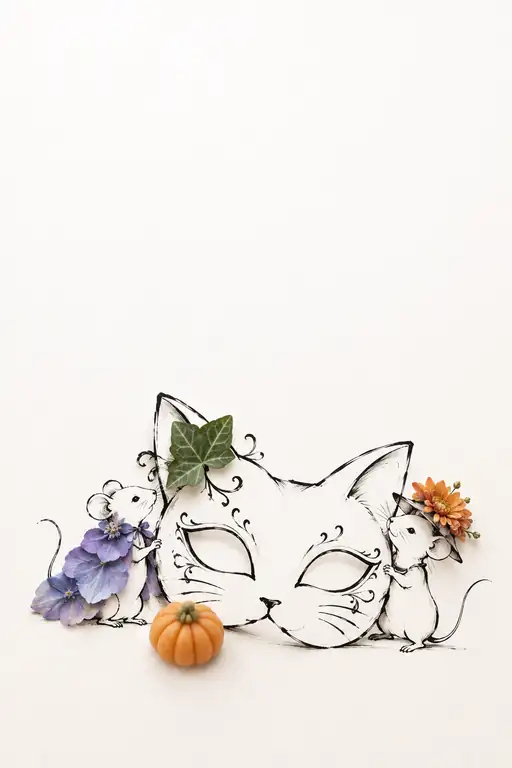 The Cat Who Could Not Catch Us
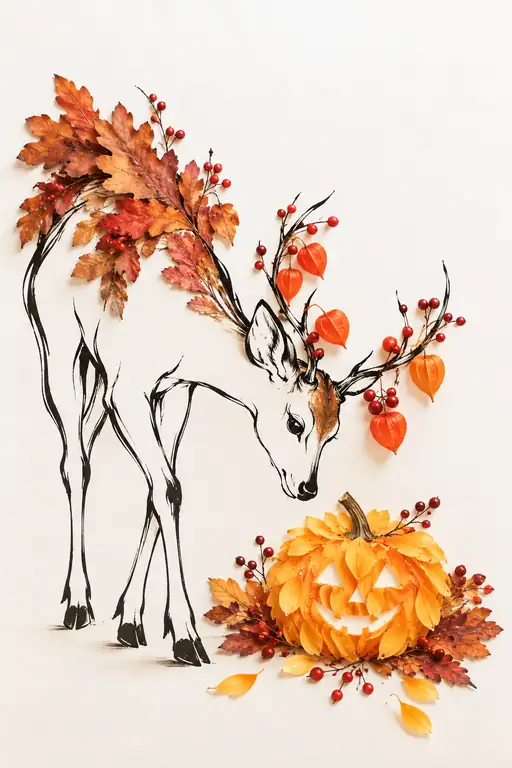 An Unexpected Friend Beneath the Antlers
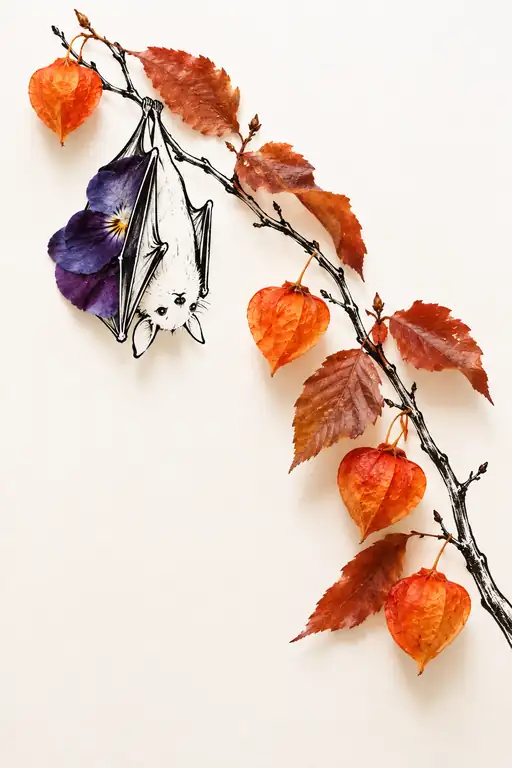 The World Looks Kinder Upside Down
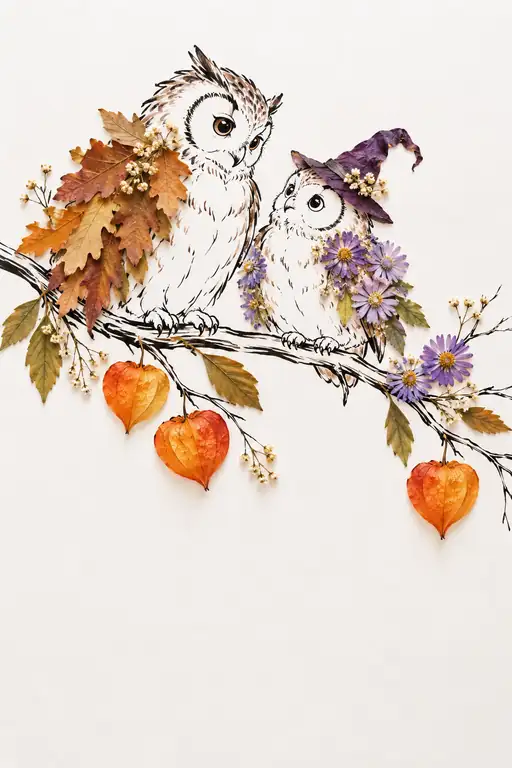 A Little Counsel on Magic