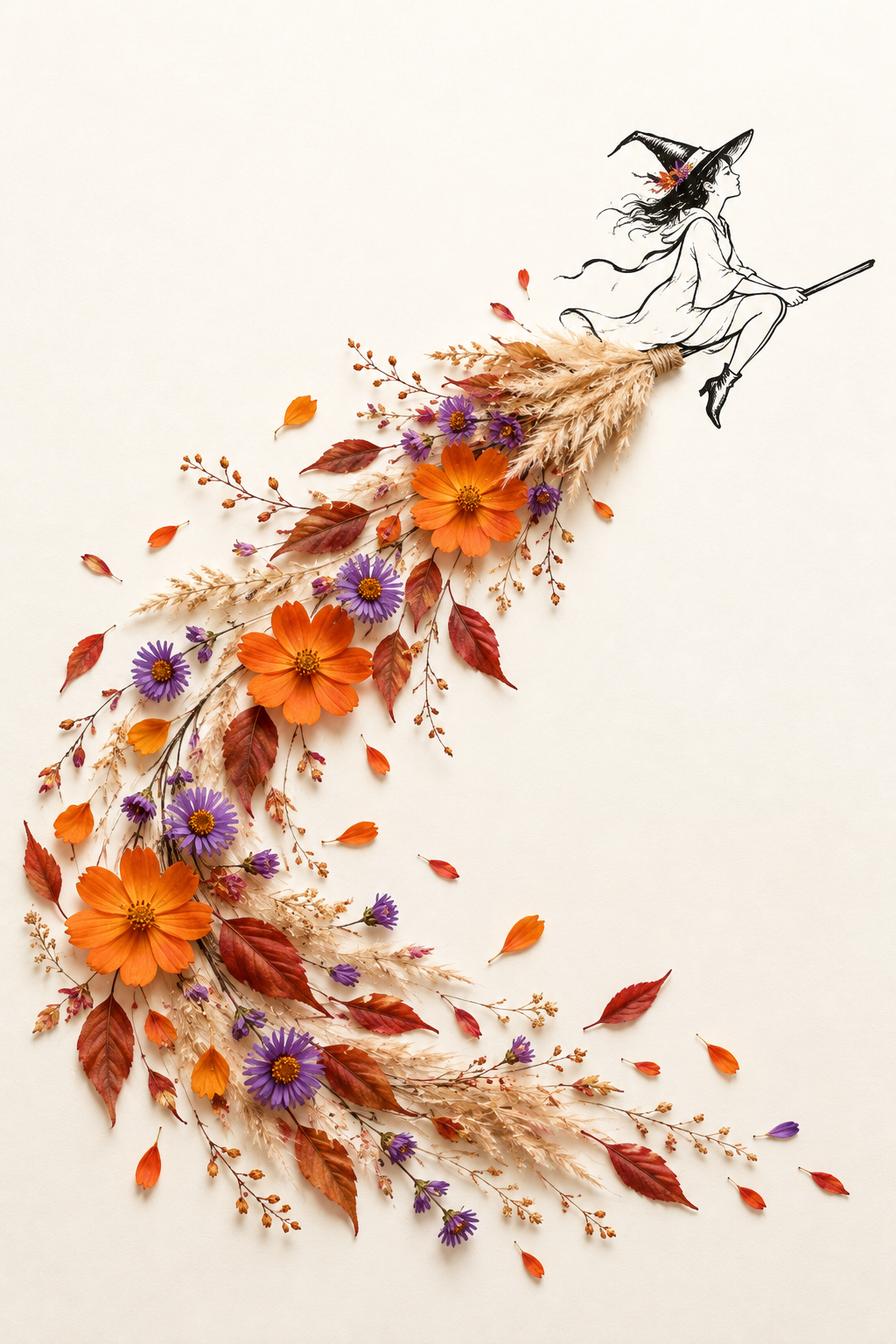
The Wake of an Autumn Spell
Critique
1. Introduction A witch riding a broom occupies the upper right above a long, curving trail of flowers and autumn leaves. The figure is rendered in black line, while dried grasses and colored petals form the expansive wake. The composition makes a small airborne body the origin of movement that occupies most of the page. 2. Description The rider faces right, holding the broom handle with bent knees and pointed dark shoes. Hair and ribbons stream behind the hat. Below the bound grasses, orange flowers, purple asters, reddish leaves, and fine branching stems sweep down toward the left before curving across the lower field, accompanied by detached petals. 3. Analysis The broom's compact horizontal direction opens into a broad crescent that redirects the eye through the entire vertical format. Large orange flowers punctuate the curve, while smaller purple heads provide intermediate beats. Light grasses connect these colored units without making a solid band, preserving open intervals that make the trail feel dispersive. 4. Interpretation and Evaluation The wake reads as a visible transformation of motion into plant material. Its scale exceeds the rider's, suggesting that the consequences of movement can become more prominent than its source. The figure's simple posture remains legible because the botanical density begins below the seat, leaving the hands, face, and leading direction unobstructed. 5. Conclusion The rider first provides a recognizable narrative cue, but following the trailing curve shifts attention to rhythm and density. Returning upward reveals the importance of the broom's tied base as a point of transition. The image effectively joins precise gesture to a freer material flourish, maintaining direction while allowing the wake to expand.
 Wings of Lavender and the Rising Vine
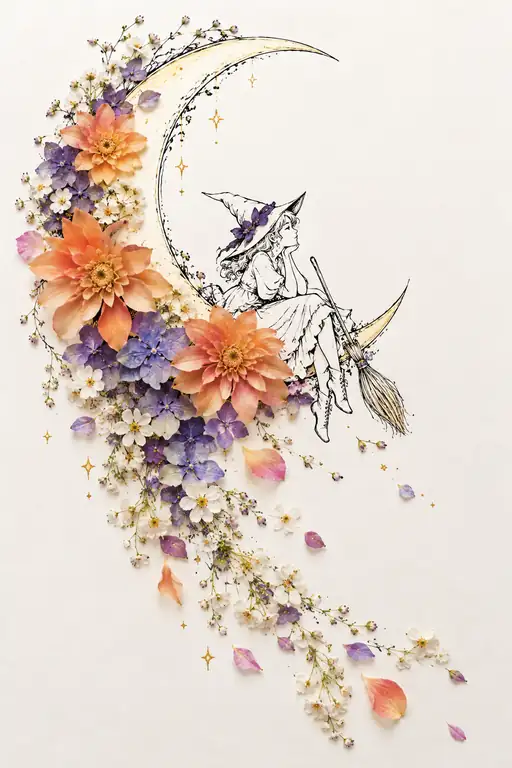 A Place to Rest Among Stars
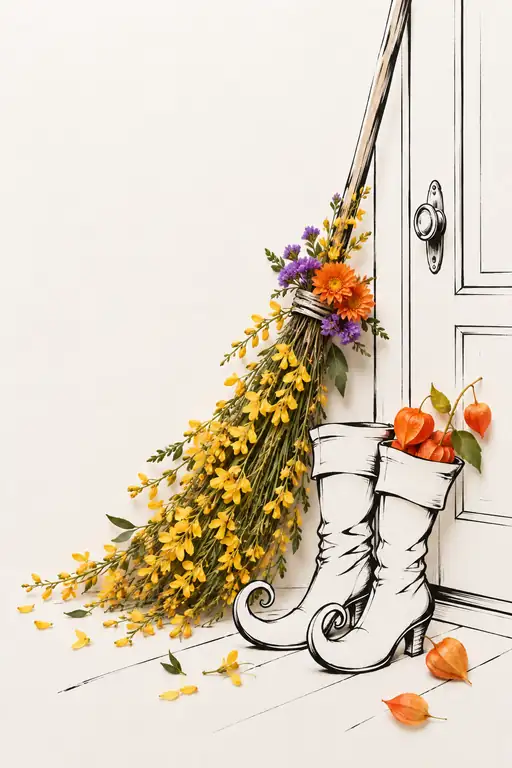 The Witch Will Be Back Soon
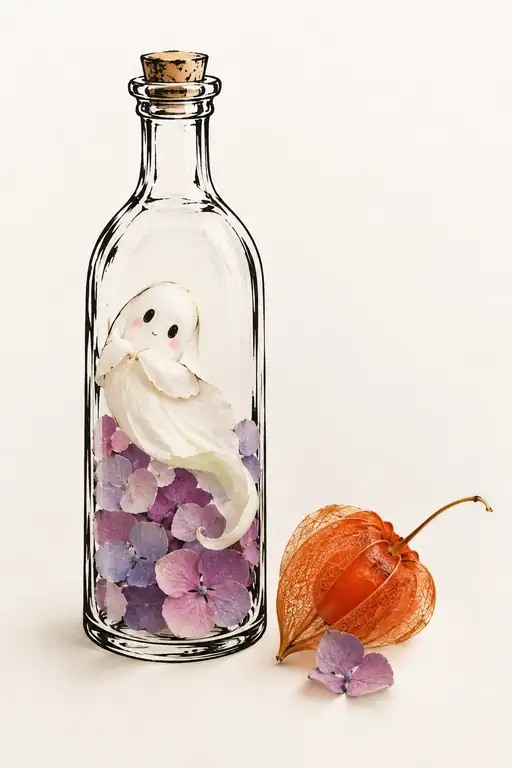 A Little World Under Cork
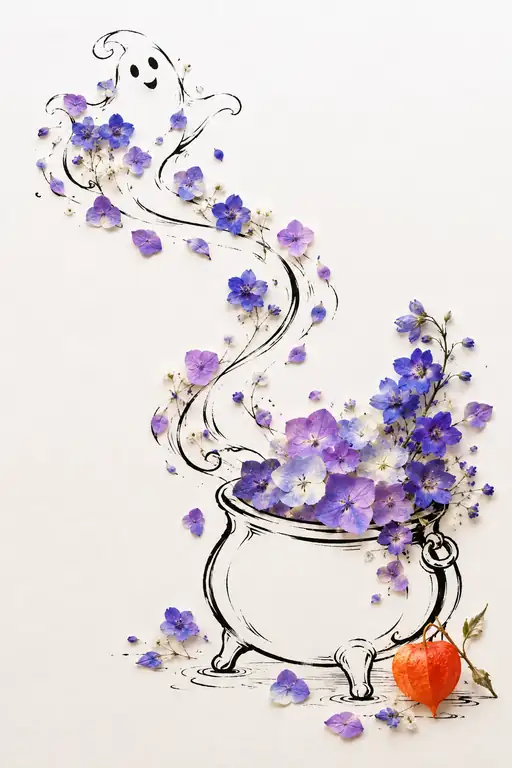 High Spirits Take the Air
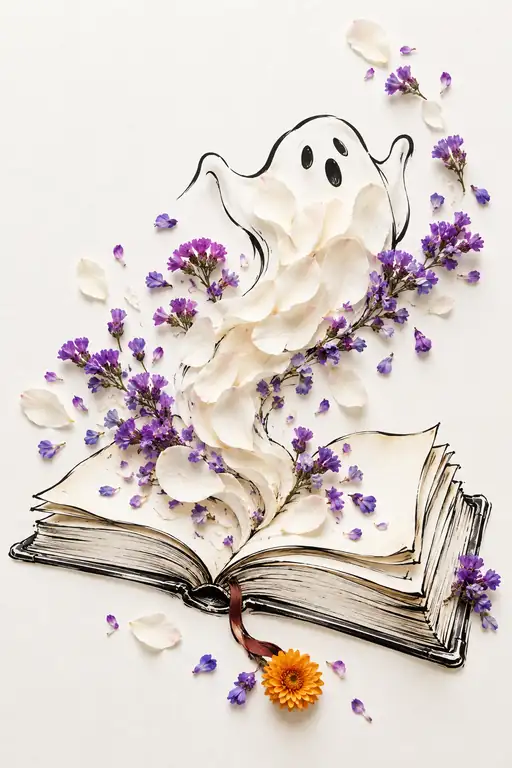 The Story Learned to Float
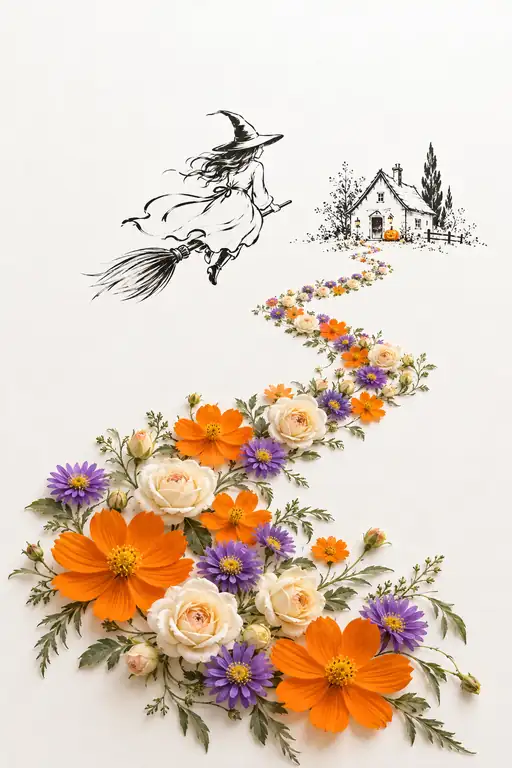 Blooming Path Homeward Bound
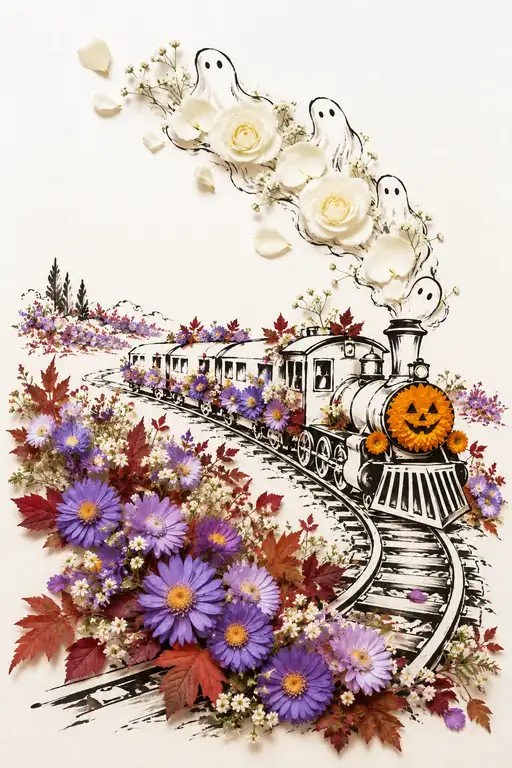 Through the Autumn Tracks
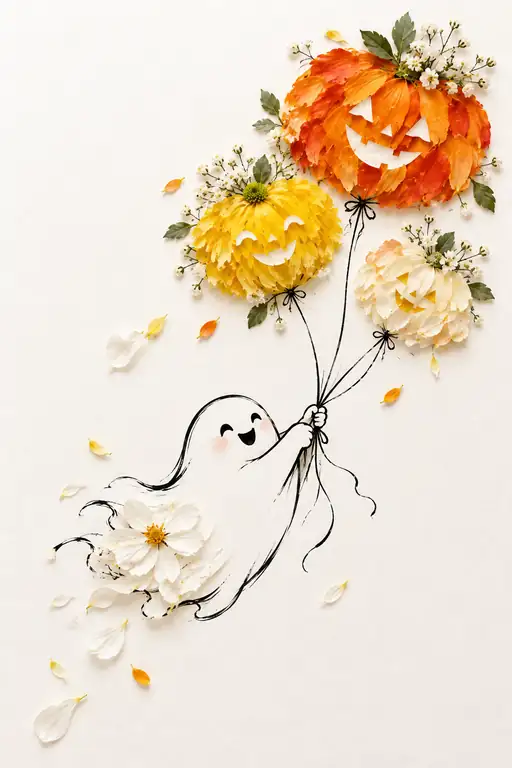 Floating with Gentle Lanterns
 An Invitation to Wonder
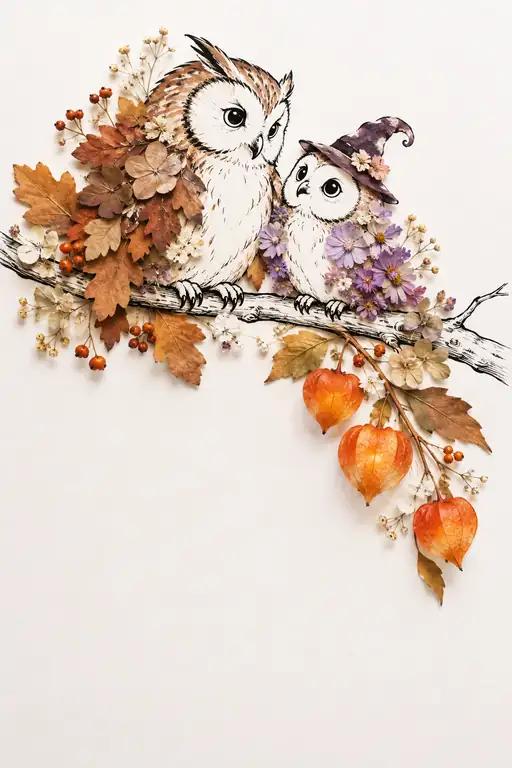 Tonight I Can Be Magic Too