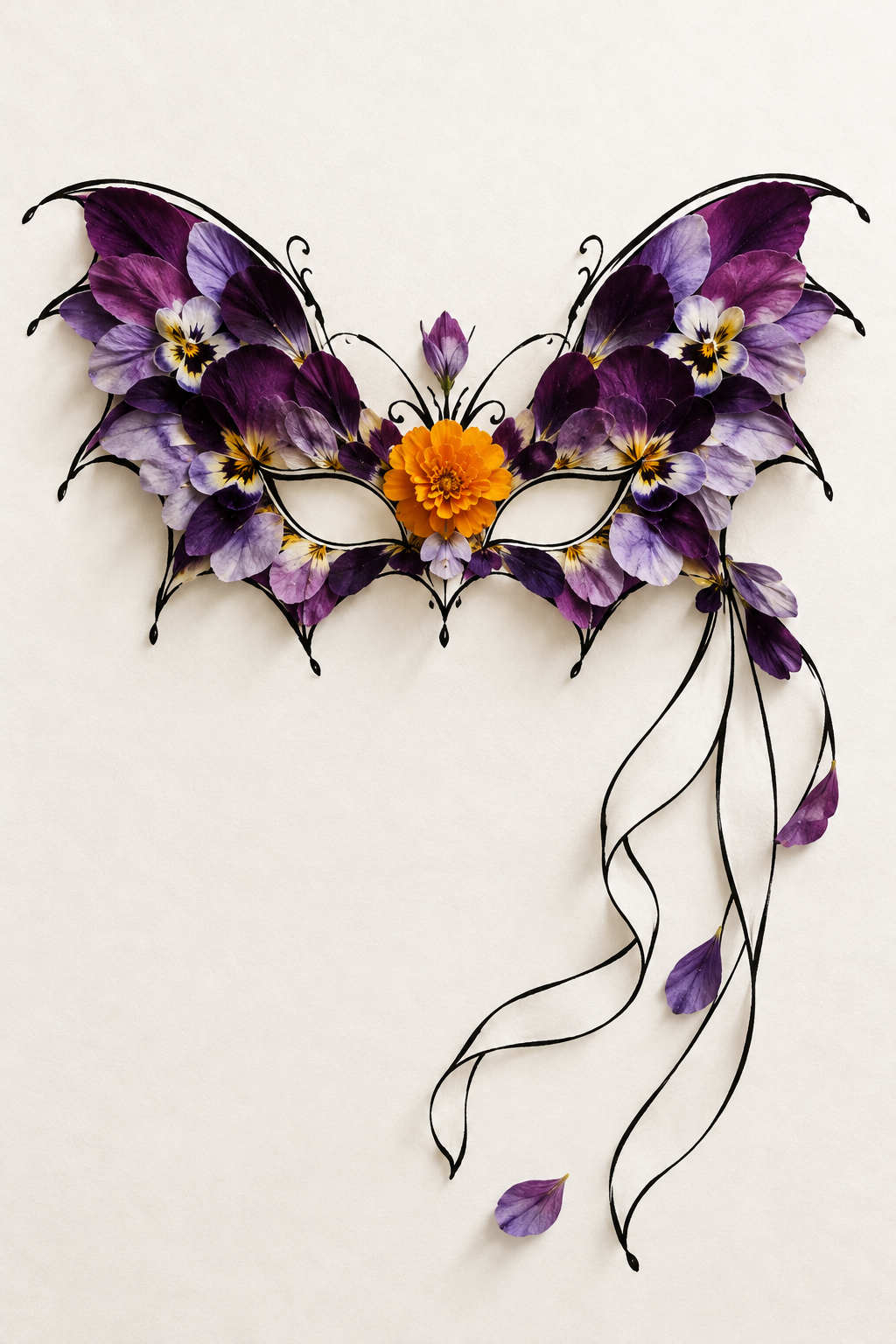
Between Two Empty Eyes
Critique
1. Introduction A broad winged mask made from overlapping purple petals spans the upper part of pale paper. A single orange flower marks its center, and black ribbons trail down the right. Its identity depends on the interaction of dense botanical surfaces, sharply pointed outlines, and empty eye openings. 2. Description Large dark pansylike flowers fill the outer wings, while smaller cream-centered blossoms cluster nearer the eyes. A closed purple bud rises above the central flower. Black curls extend from the upper border, and pointed tips articulate the lower edge; several purple fragments appear along the long, twisting ribbons below. 3. Analysis The bilateral silhouette creates stability, but variations in petal size prevent strict repetition. Pale eyeholes offer two calm shapes within an otherwise busy surface. The orange center acts as a warm hinge between cool wings, while the extended ribbons redistribute attention downward without matching the floral mask's substantial visual weight. 4. Interpretation and Evaluation The absent wearer is suggested through eye openings that reveal only background. Flower faces occupy the surrounding surface, producing an intriguing exchange between a vacant human role and abundant plant forms. The design's strongest quality is its ability to retain both readings, although the large blossoms deliberately take precedence over delicate decorative curls. 5. Conclusion The initial impression of a unified mask separates into numerous identifiable floral planes. Following the ribbons then restores the overall silhouette as part of a taller composition. Empty paper is essential to both readings, framing the object and entering through its eyes to keep the ornate surface from becoming closed or impenetrable.
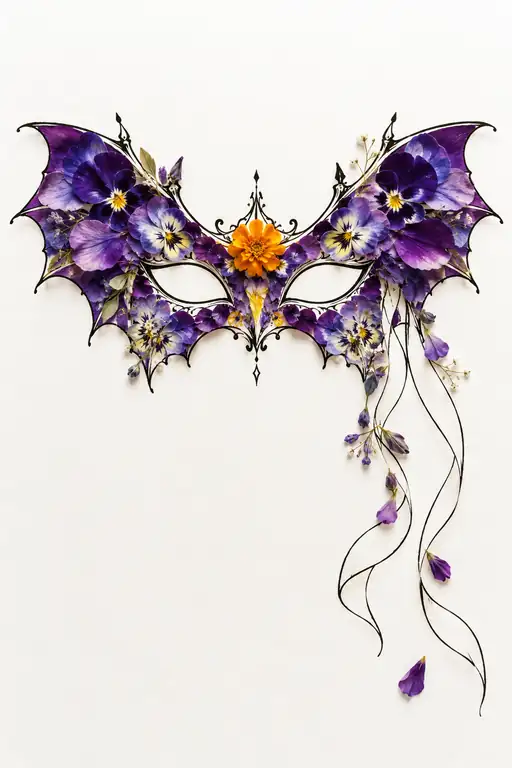 The Eyes I Leave Open
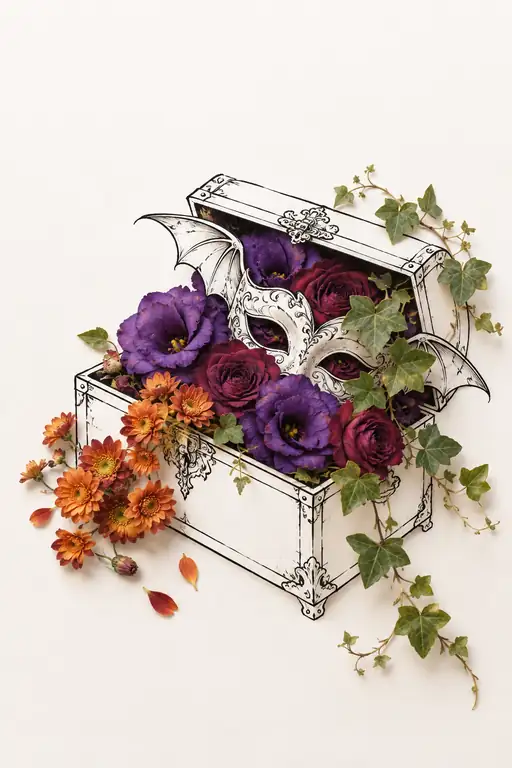 The Secret Was Waiting to Be Worn
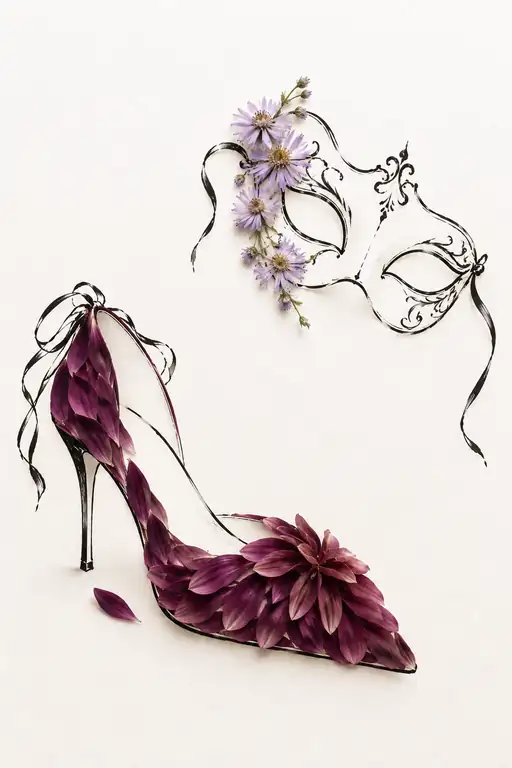 Who I Might Be Tonight
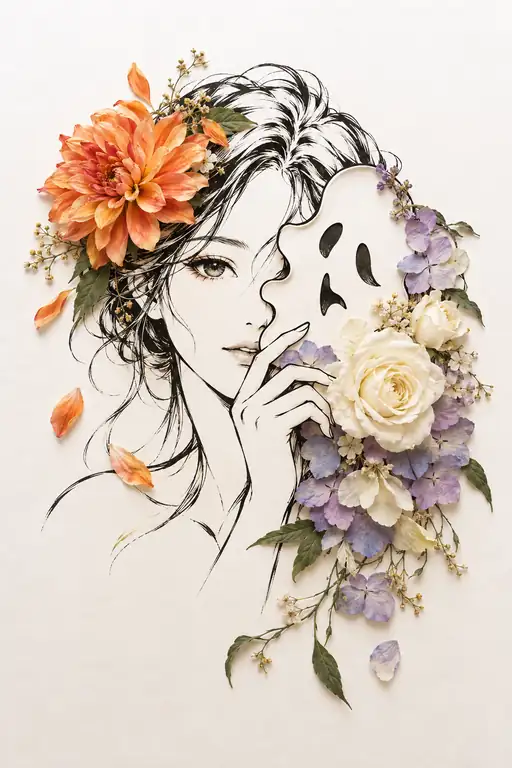 A Whispered Secret in the Twilight
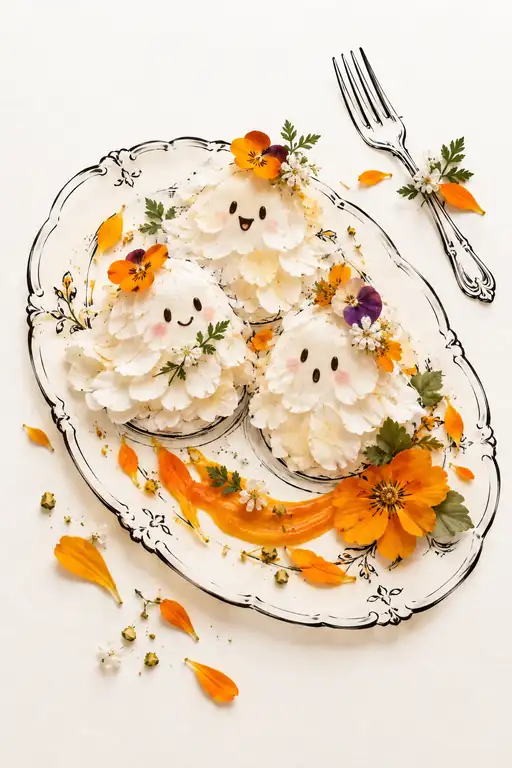 Dressed for the Sweetest Table
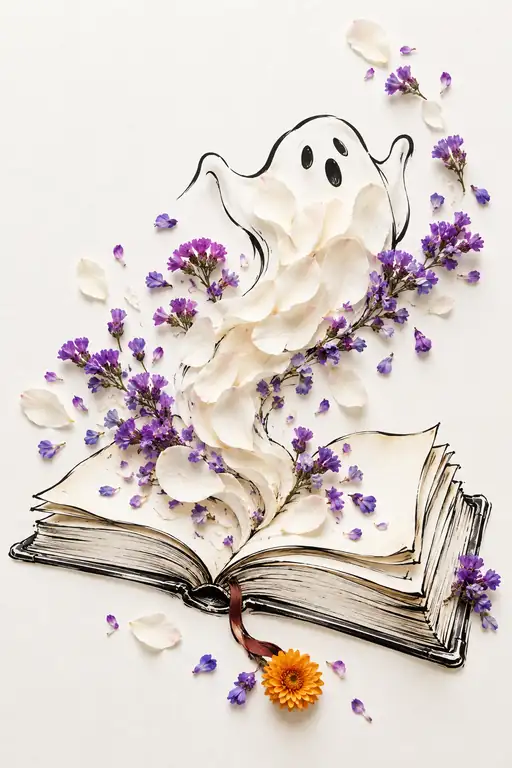 The Story Learned to Float
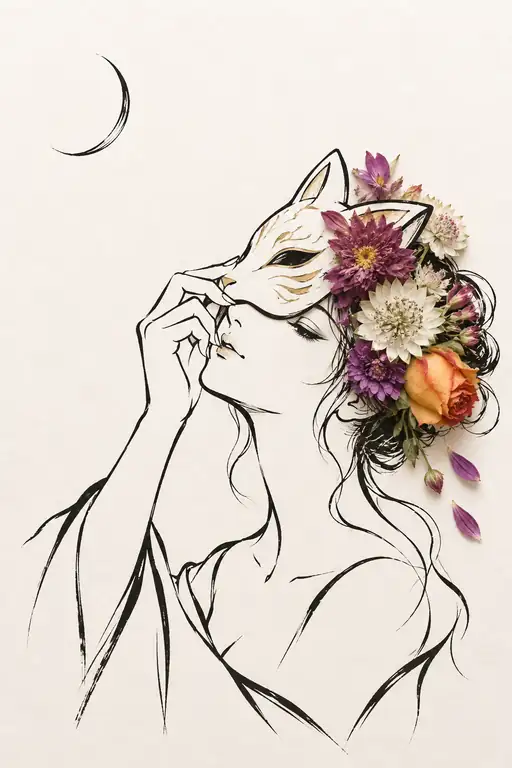 The Moment Before I Become
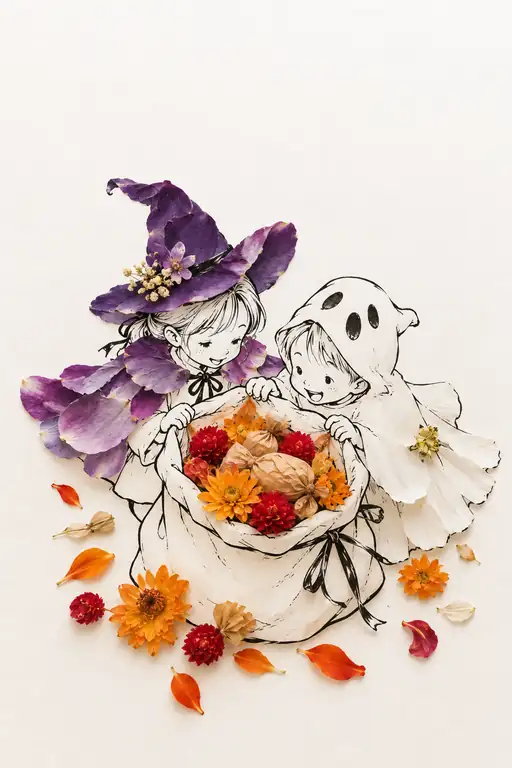 The Surprise We Unwrapped
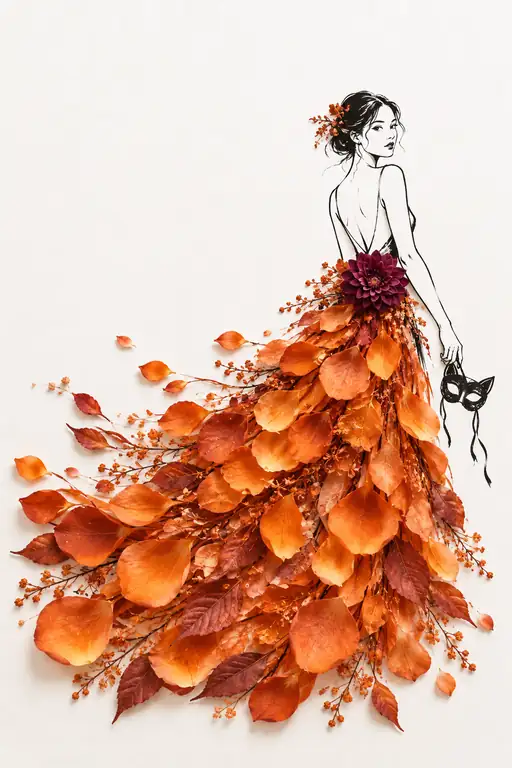 My Hem Turns a Moment Later
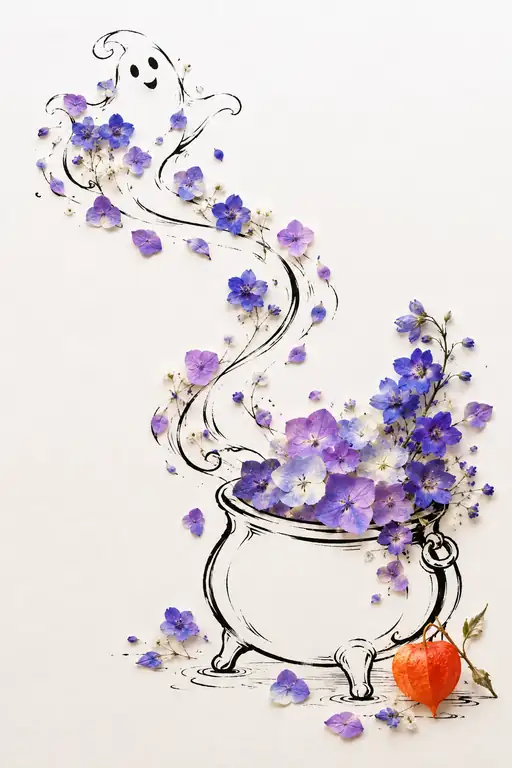 High Spirits Take the Air