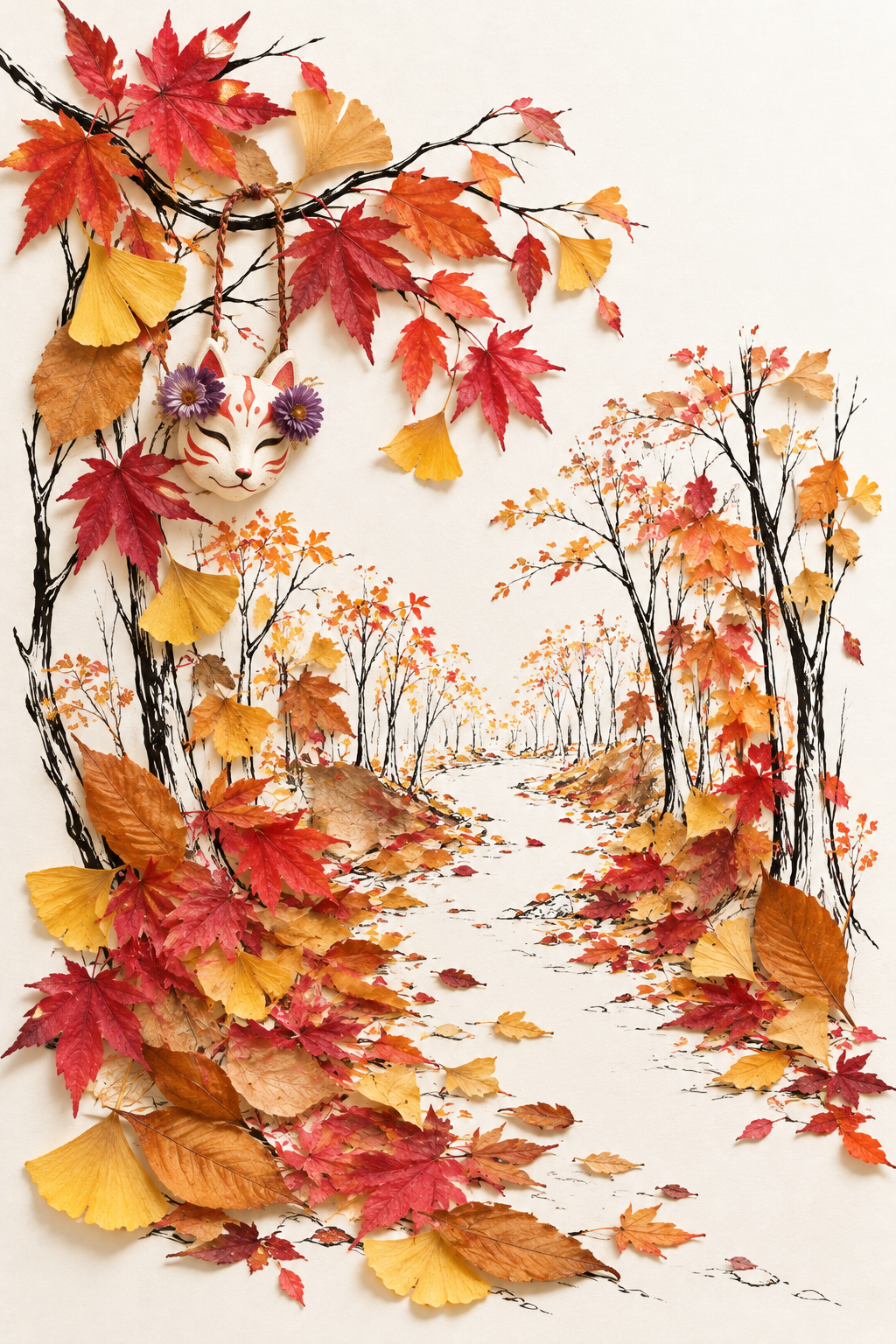
At the Threshold of Autumn
Critique
1. Introduction An autumn woodland path narrows toward a distant bend beneath a flower-adorned fox mask. Large layered leaves surround the foreground, and black trunks establish successive distances. The picture joins an object suspended close to the viewer with a landscape whose depth depends largely on changes of scale and density. 2. Description The mask hangs from a loop over a thick left-hand branch, with purple flowers near the ears and red painted markings around closed eyes. Yellow fan-shaped leaves and red maplelike leaves extend overhead. Below, dense foliage borders the white path, while smaller trunks and fine warm-colored marks recede toward the pale center. 3. Analysis A heavy near branch forms a canopy above the mask, separating its intimate space from the distant trees. The path's unbroken pale strip organizes the lower field despite abundant overlapping leaves. Botanical shadows establish proximity at the edges, whereas distant foliage loses thickness and becomes small patches, producing a clear transition from material surface to depicted space. 4. Interpretation and Evaluation The hanging face creates a moment of stillness before the eye follows the road onward. Its closed expression need not imply a specific story; its placement alone gives the entrance a ceremonial quality. The strongest feature is the integration of broad natural leaf shapes with economical drawn trees, allowing two descriptive systems to sustain one perspective. 5. Conclusion The foreground initially reads as a rich autumn arrangement. The central opening gradually turns it into the near edge of a walkable place. Returning to the mask after tracing the road makes its scale and suspended position more apparent, revealing a productive tension between a close emblem and an extensive landscape.
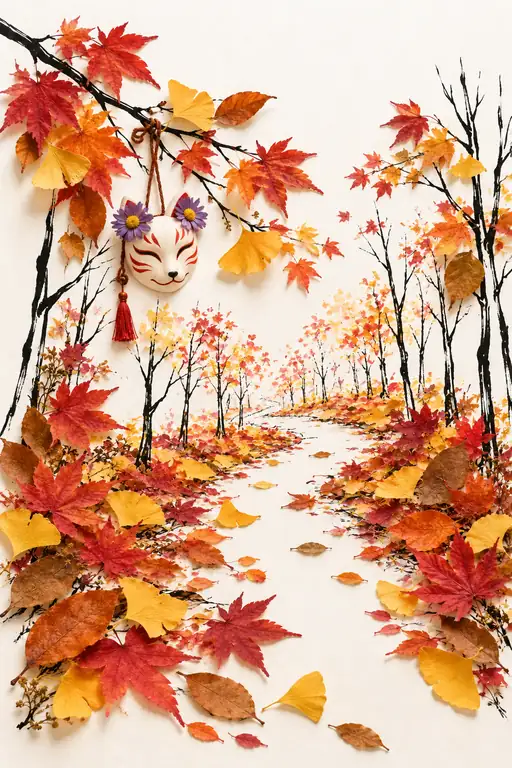 The Path Beneath Closed Eyes
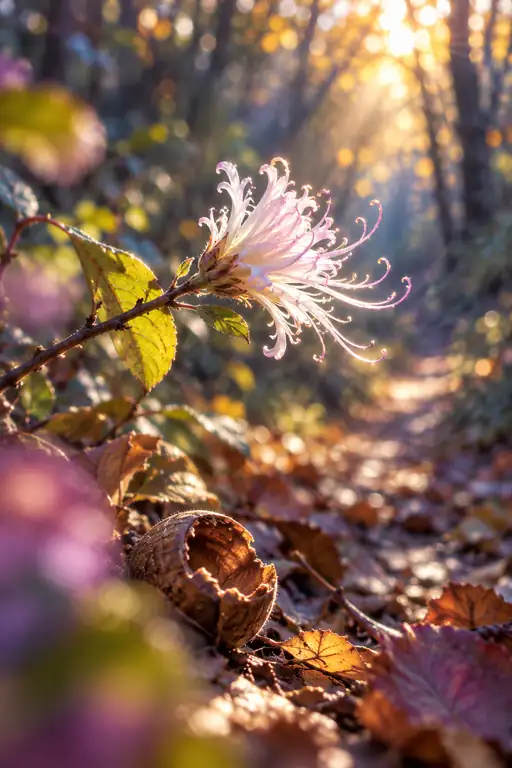 Spirals of Light on the Forest Floor
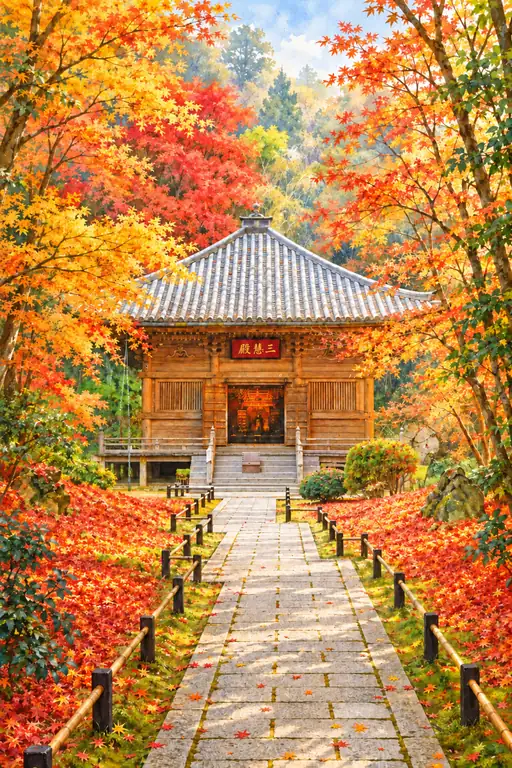 Every Step a Quiet Prayer
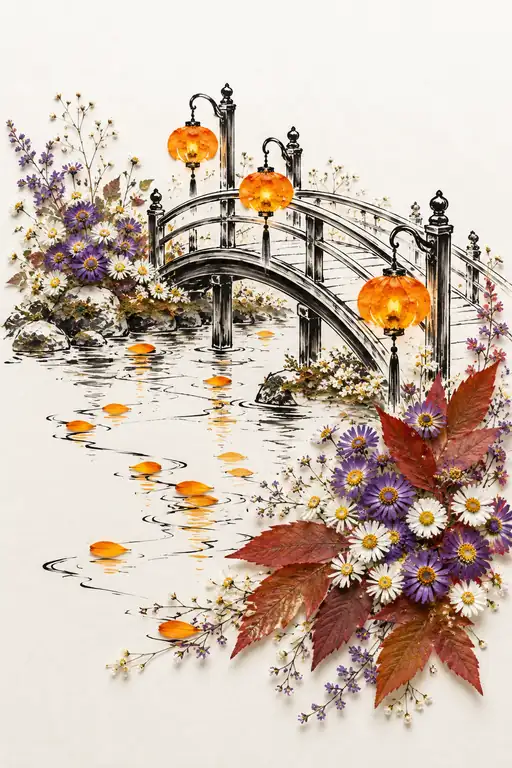 Following the Light Across
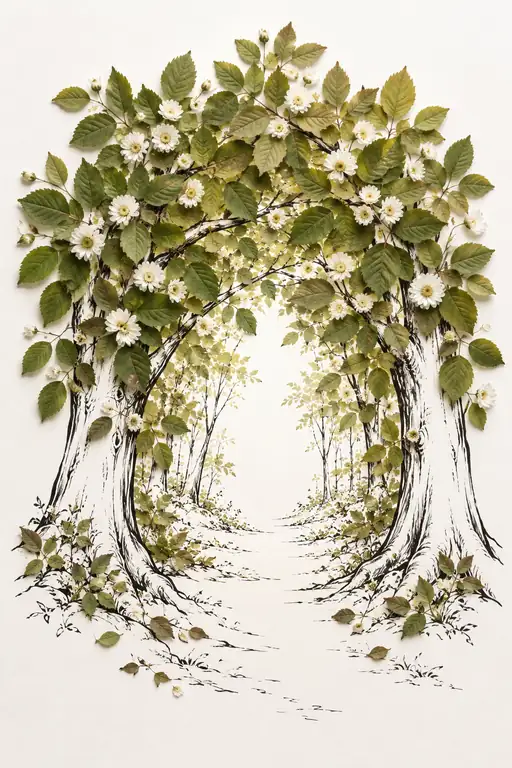 Here the Quiet Lets Me In
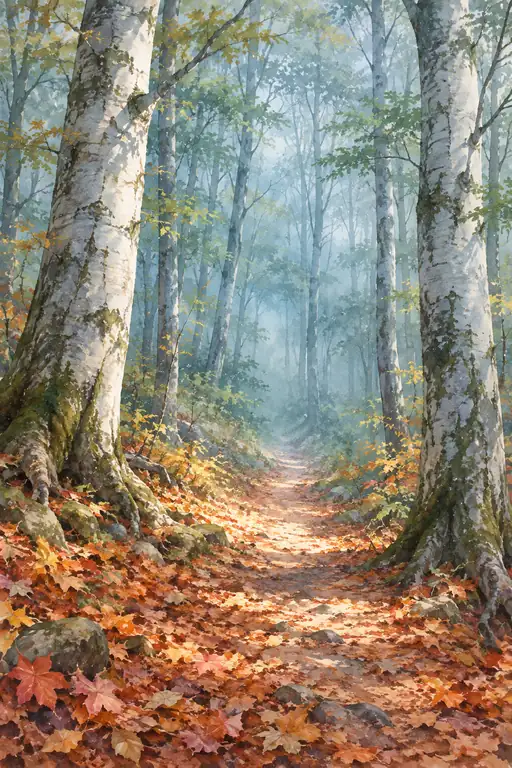 Golden Path into Mist
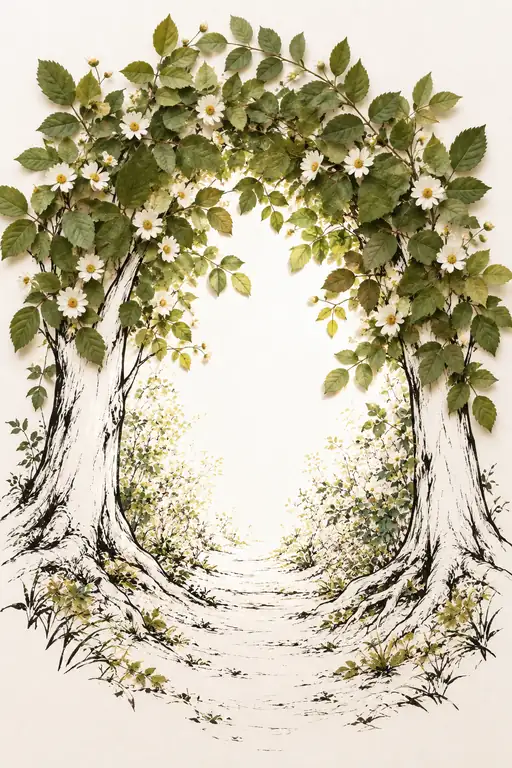 The Light That Lets Me Enter
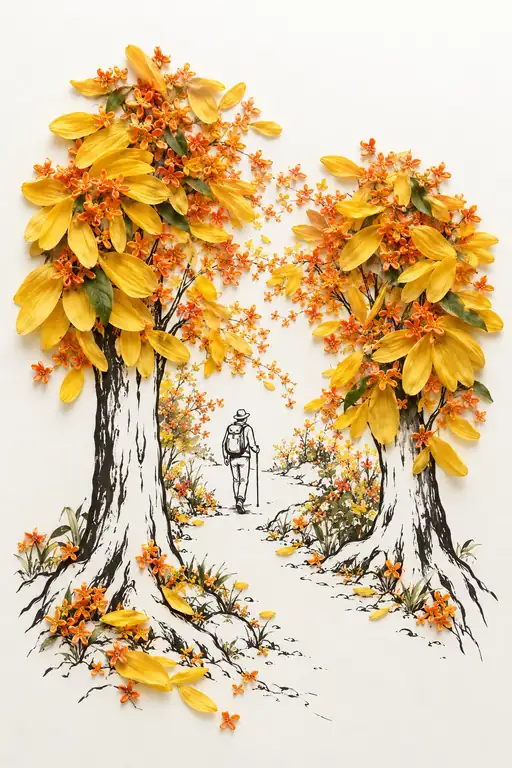 I Walk into the Warmth
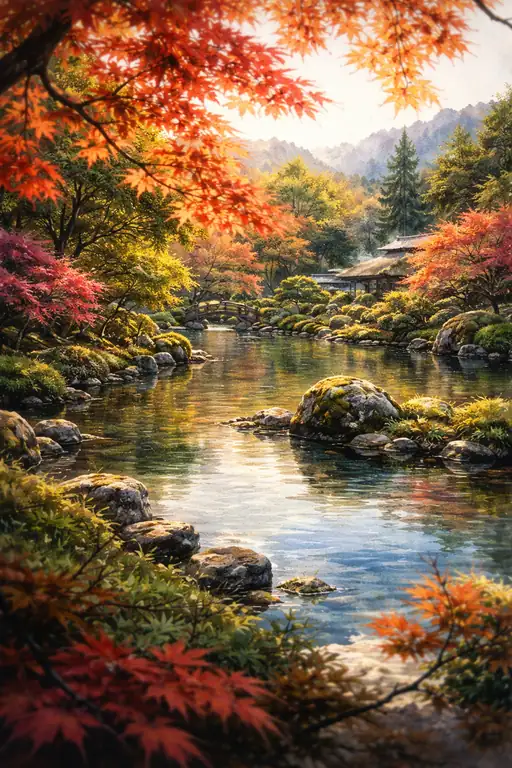 Autumn's Embrace at the Still Water
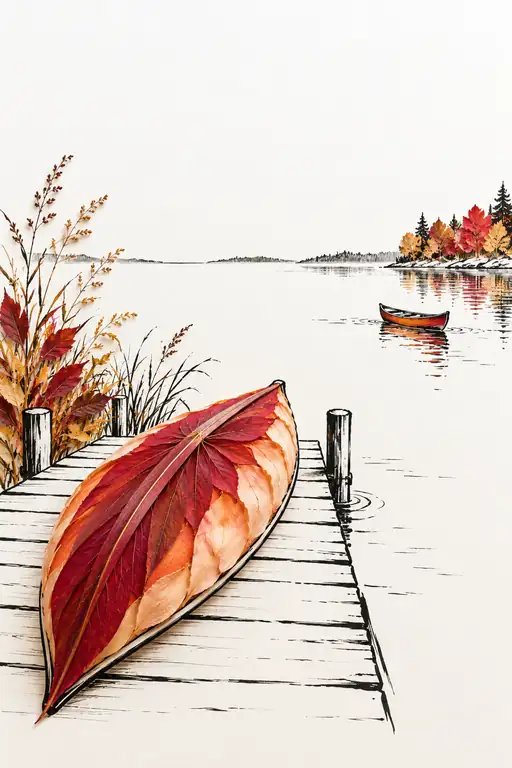 Autumn Waits to Leave the Shore
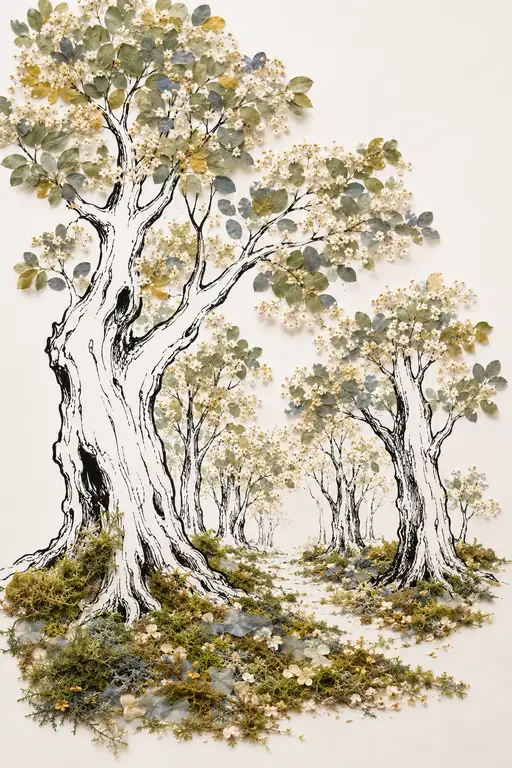 Gateway to the Ancient Grove