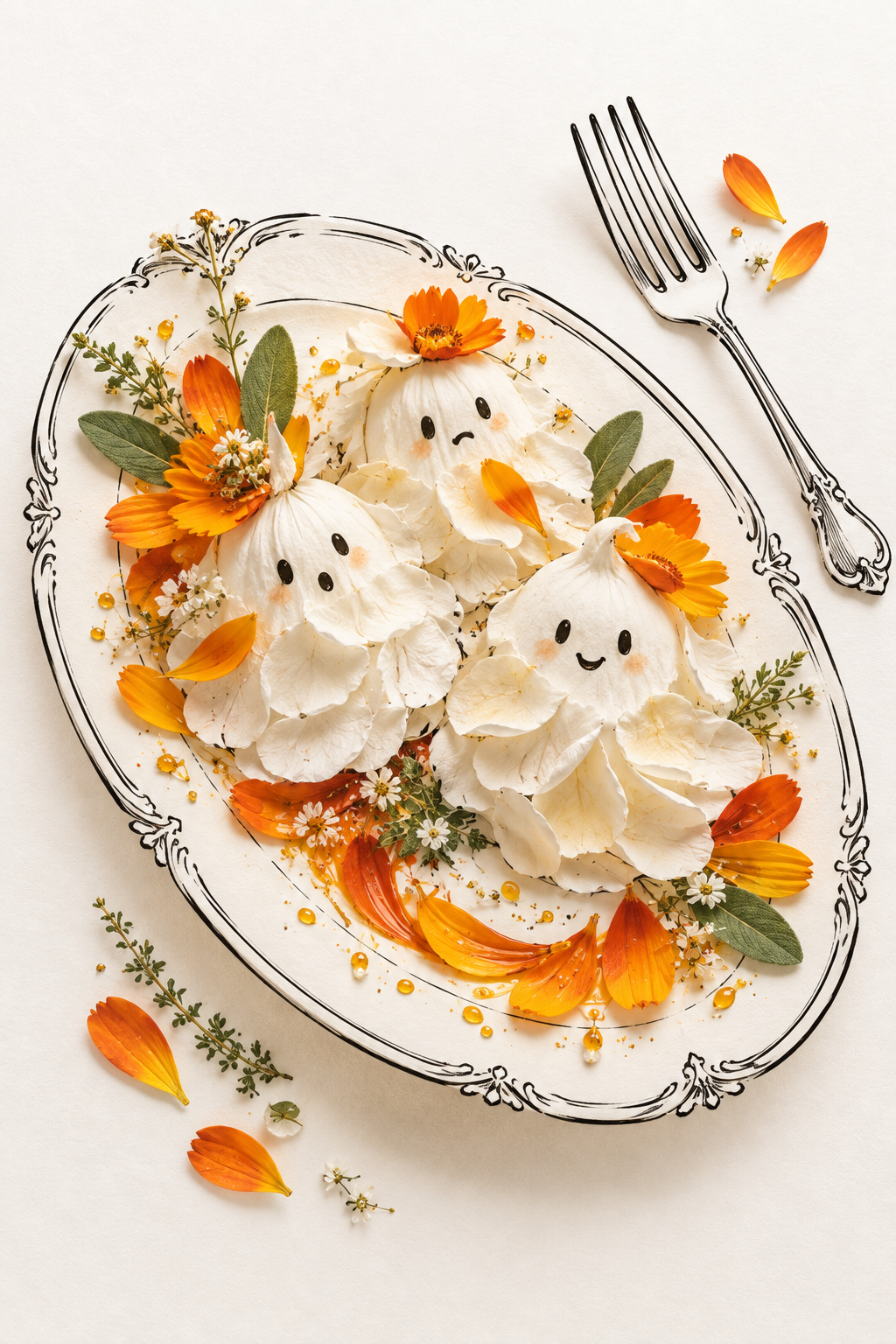
Sweetness Has More Than One Face
Critique
1. Introduction Three pale botanical ghosts are presented on an ornamentally outlined oval platter among orange petals, small flowers, and green leaves. A long fork lies outside the plate at upper right. The presentation borrows the visual order of a plated dessert, but its layered plant surfaces retain enough specificity to complicate that familiar reading. 2. Description A surprised face appears at left, a downturned mouth at the back, and a smiling figure occupies the front right. Each body narrows into a lifted petal tip and broadens through overlapping pale layers. Orange flowers sit behind their heads; amber droplets and tiny white blossoms scatter across the lower plate beside a sweeping crescent of long petals. 3. Analysis The varied faces establish a triangular circuit rather than a single dominant character. Broad white masses are separated by folds and shallow shadows, while orange creates clear intervals between them. Fine ornamental strokes around the rim answer the fork's detailed handle, containing the irregular plant forms within a more formal graphic boundary. 4. Interpretation and Evaluation The image makes emotional variety part of the serving arrangement: surprise, unease, and pleasure coexist without requiring a narrative sequence. Droplets strengthen the culinary association, whereas visible veins and green foliage keep the construction botanical. This sustained ambiguity is convincing, although the numerous peripheral accents distribute attention broadly rather than concentrating it on one expressive face. 5. Conclusion What first resembles a whimsical dessert becomes an exercise in organizing similar pale shapes. Differences in facial marks and placement carry weight within a restricted color range. Following the orange crescent around the plate reveals how the still life maintains unity while permitting three distinct personalities to remain legible.
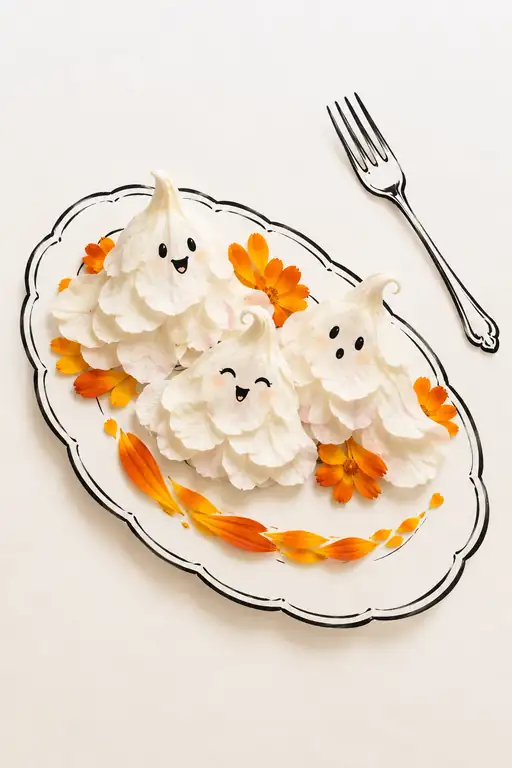 A Laugh Before the First Bite
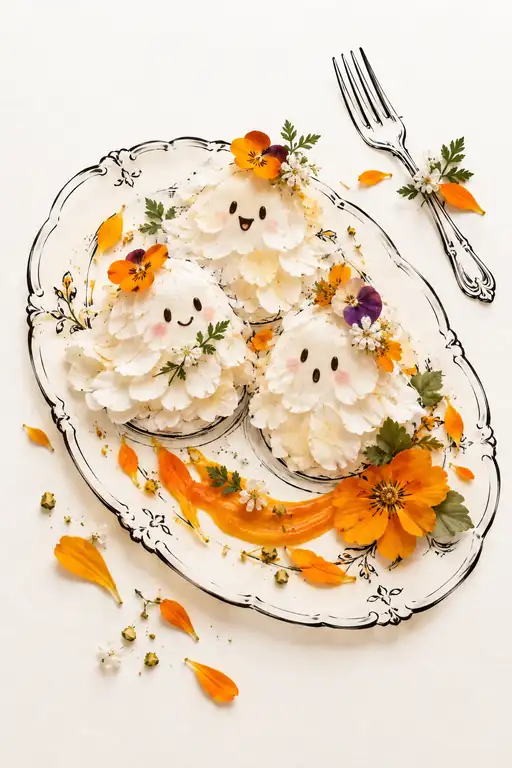 Dressed for the Sweetest Table
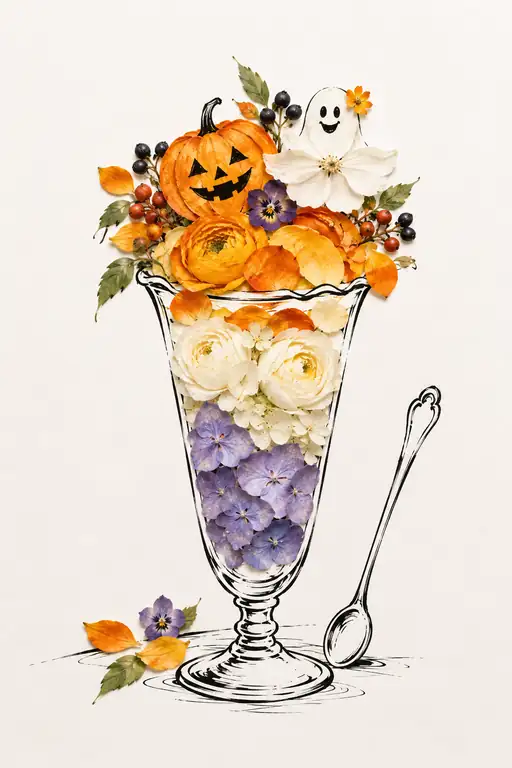 Sweet Banquet of Twilight
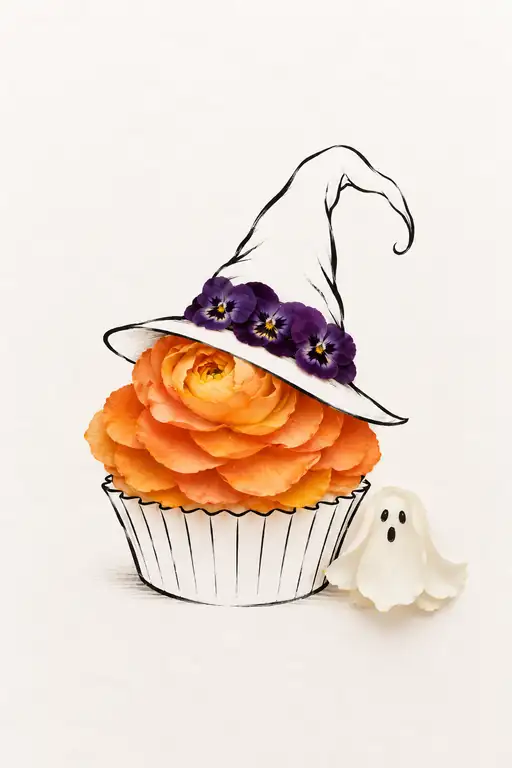 A Sweet Little Fright
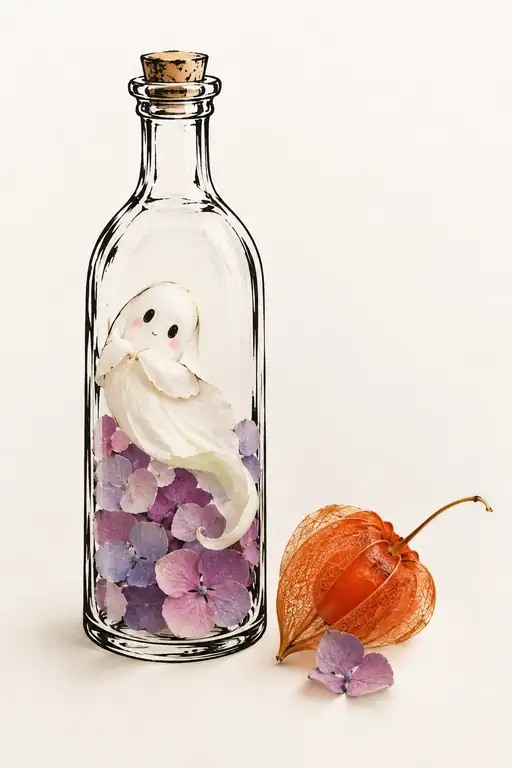 A Little World Under Cork
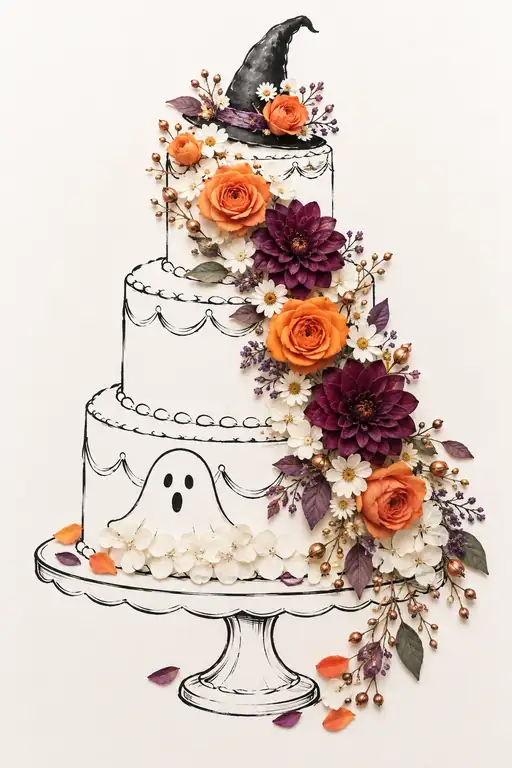 Luscious Spire of the Festive Night
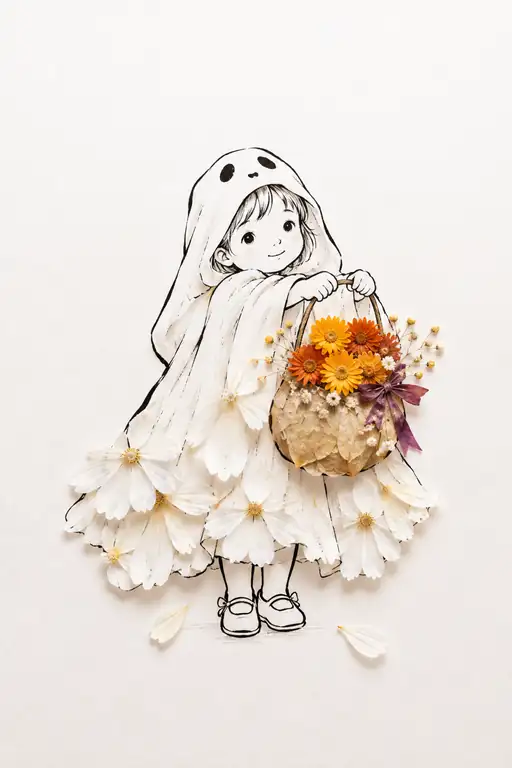 Too Gentle to Frighten Anyone
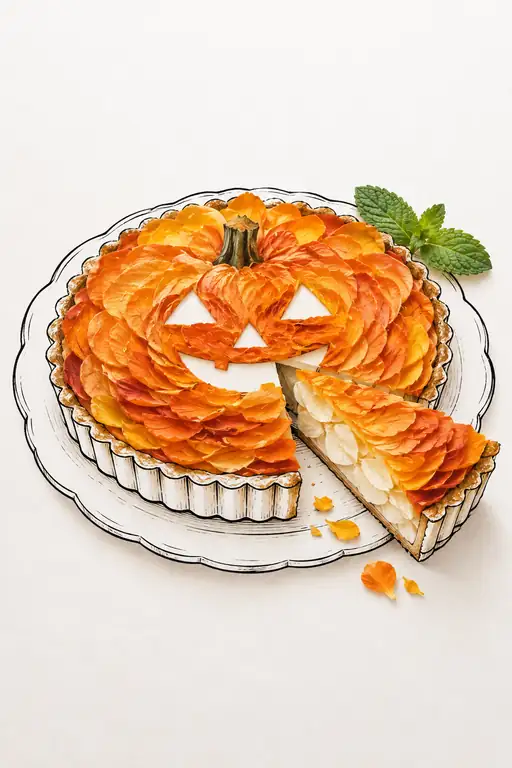 Share the Smile
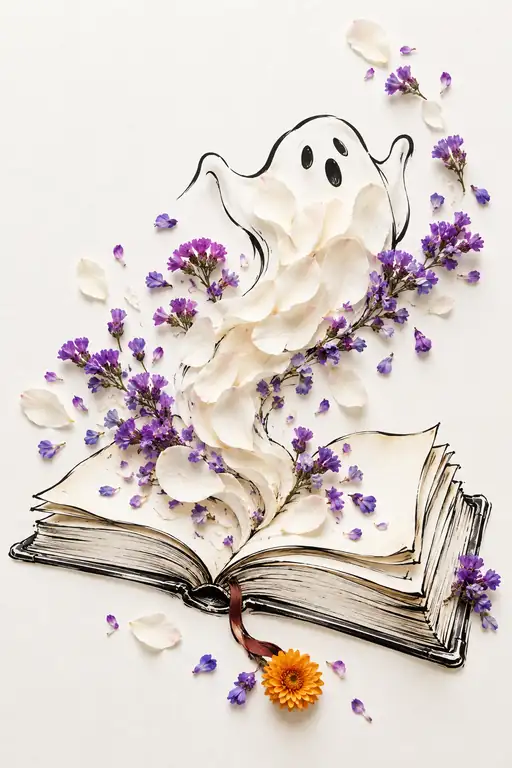 The Story Learned to Float
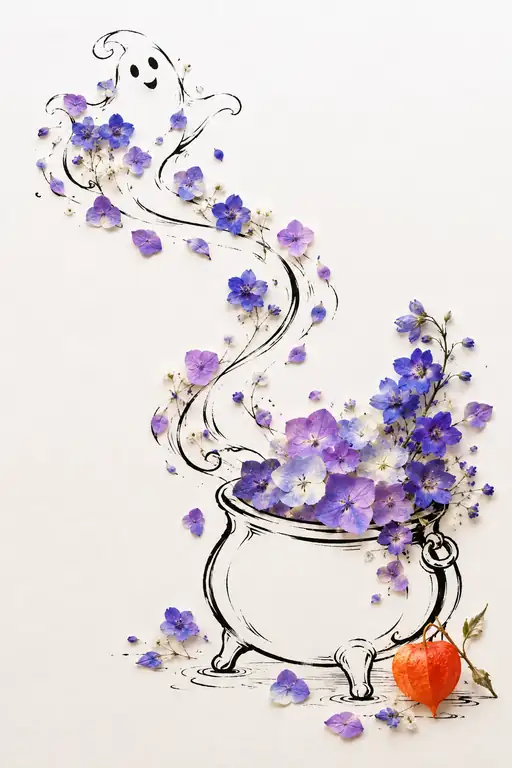 High Spirits Take the Air