Tonight I Can Be Magic Too
Critique
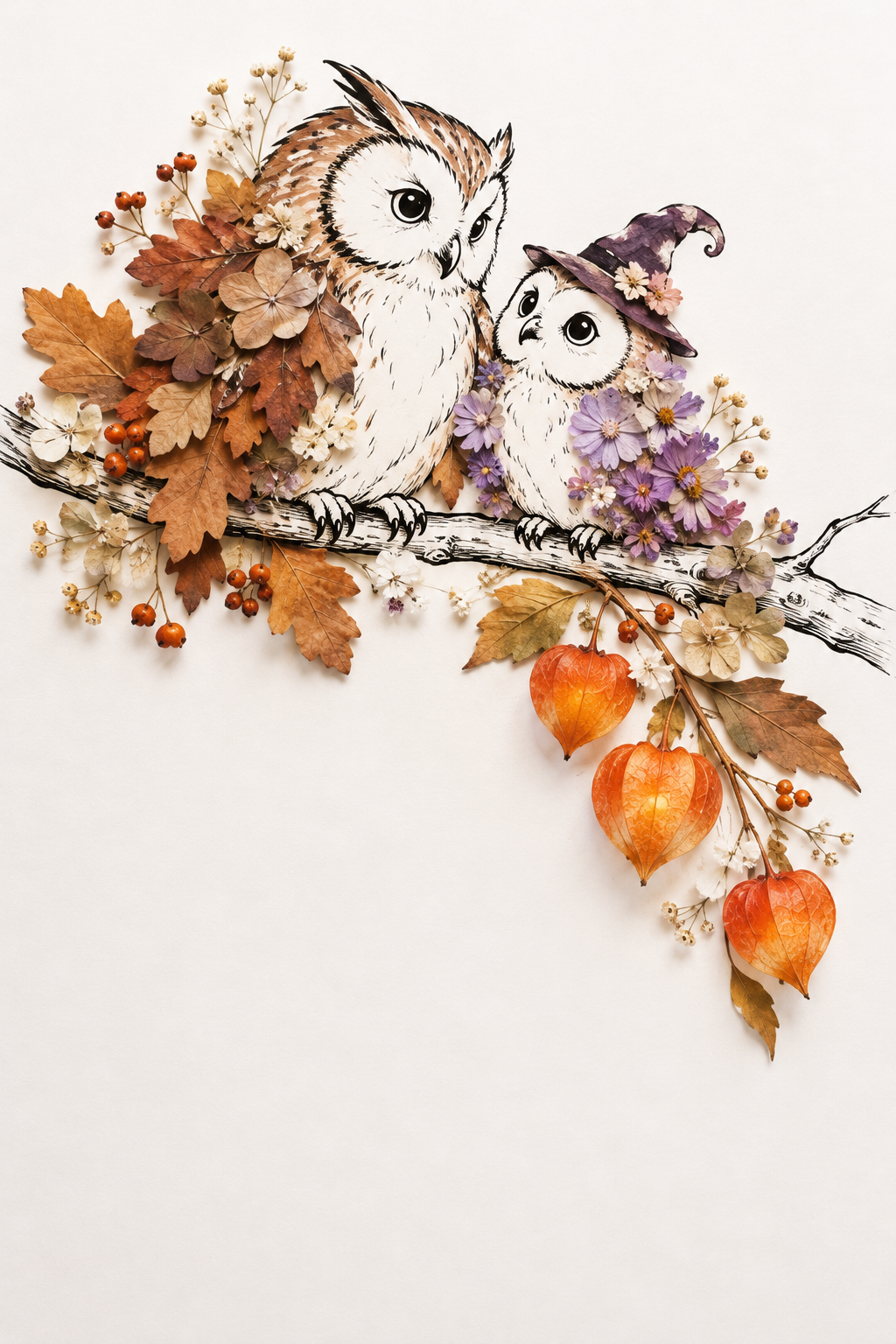
1. Introduction A large owl and a smaller, hat-wearing companion occupy a branch surrounded by autumn leaves and flowers. The composition concentrates the birds above a long descending spray of orange husks at right. Drawn feather marks and layered botanical surfaces remain visibly different, yet they collaborate in establishing the pair's contrasting scale and shared attention. 2. Description The large owl's left side is covered with brown and ochre leaves, pale flowers, and small orange berries. Its round eye turns toward the smaller bird, whose raised face sits beneath a purple hat decorated with flowers. Lavender blossoms cluster around the smaller body, and three lantern-shaped husks hang successively lower from a branch below. 3. Analysis The broad horizontal perch holds the figures together while the descending right-hand spray extends the scene asymmetrically. Black claws grip the pale branch, grounding bodies otherwise dominated by open paper. Dry leaf planes produce broad angular rhythms on the left; smaller rounded petals introduce a contrasting scale of detail on the right without dividing the composition into unrelated halves. 4. Interpretation and Evaluation The smaller owl's lifted beak and upward gaze give the encounter a questioning character. The larger bird's slight inclination makes an answering presence plausible without fixing a story. The arrangement is richly ornamented, but the clearest dark accents remain near eyes and feet, maintaining the birds' agency within the surrounding botanical abundance. 5. Conclusion The visible relationship survives a considerable amount of decoration because scale, direction, and support agree. Looking from the faces down the branch reveals a second rhythm of hanging fruits. The image moves between intimate encounter and seasonal still life, with neither reading completely absorbing the other.
 A Little Counsel on Magic
 The Keeper of Little Mysteries
 The Witch Will Be Back Soon
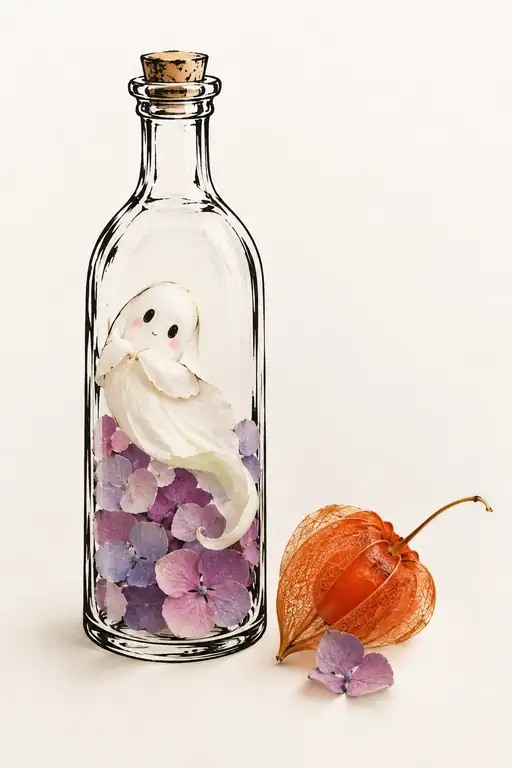 A Little World Under Cork
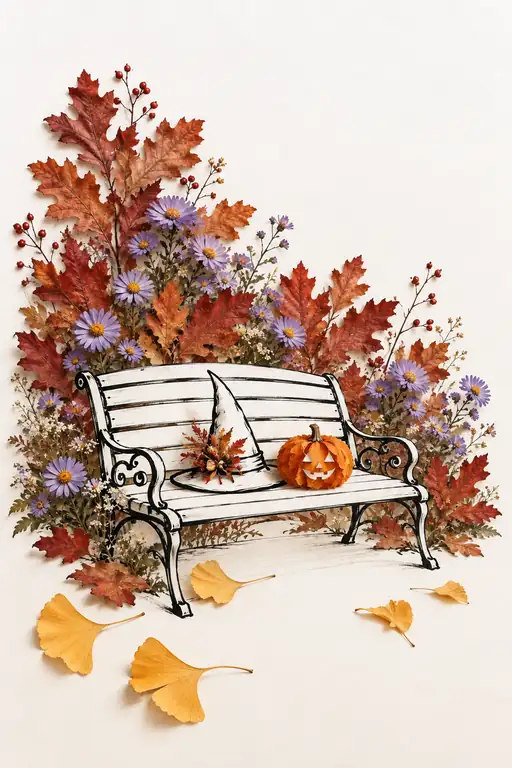 Autumn Is Keeping Our Place
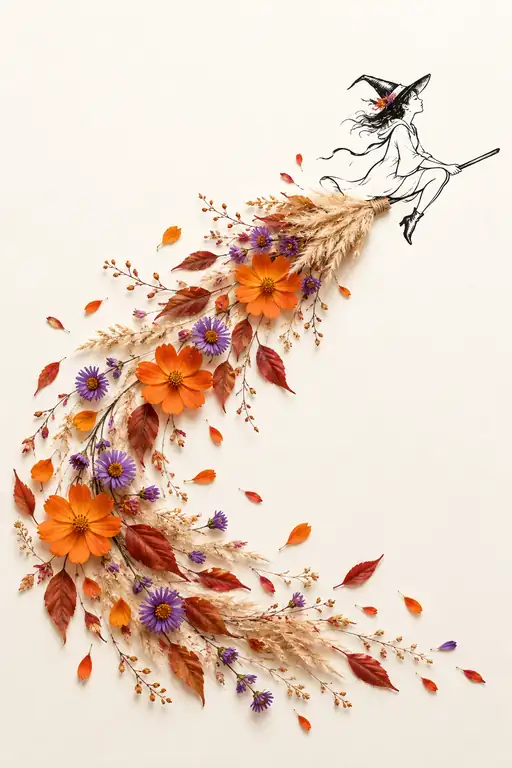 The Wake of an Autumn Spell
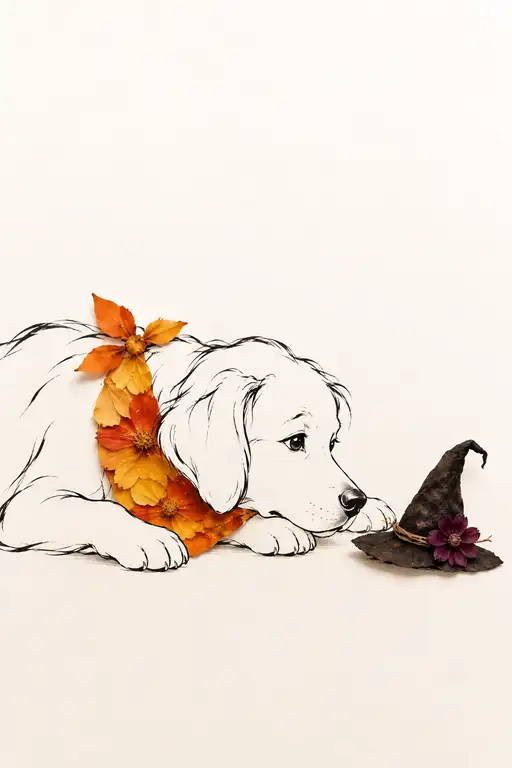 An Invitation to Wonder
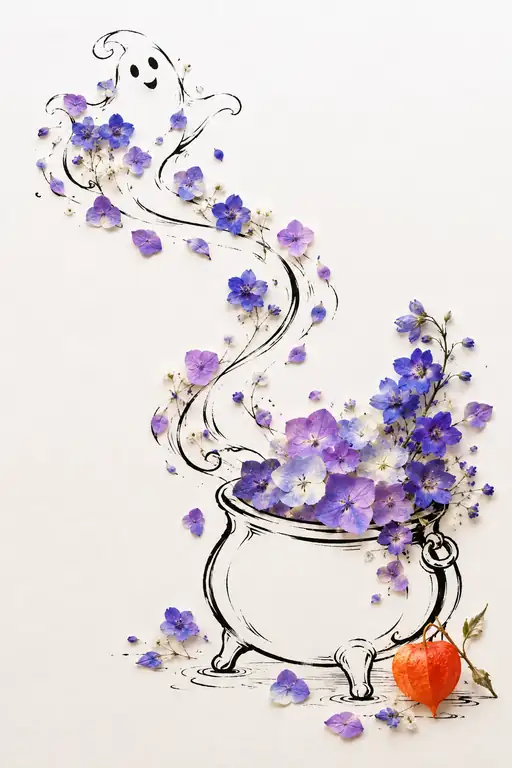 High Spirits Take the Air
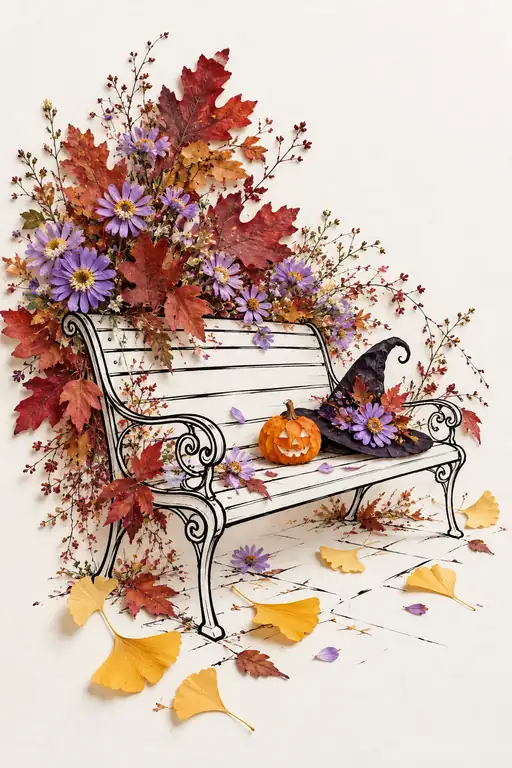 The Visitor Left a Smile
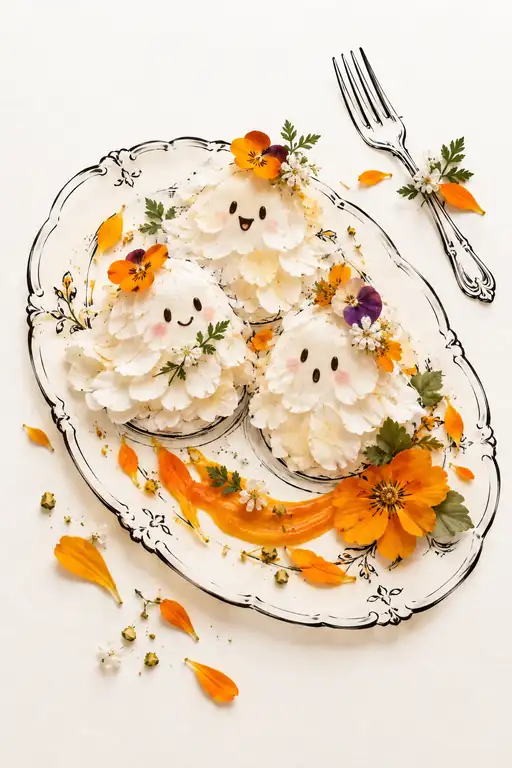 Dressed for the Sweetest Table