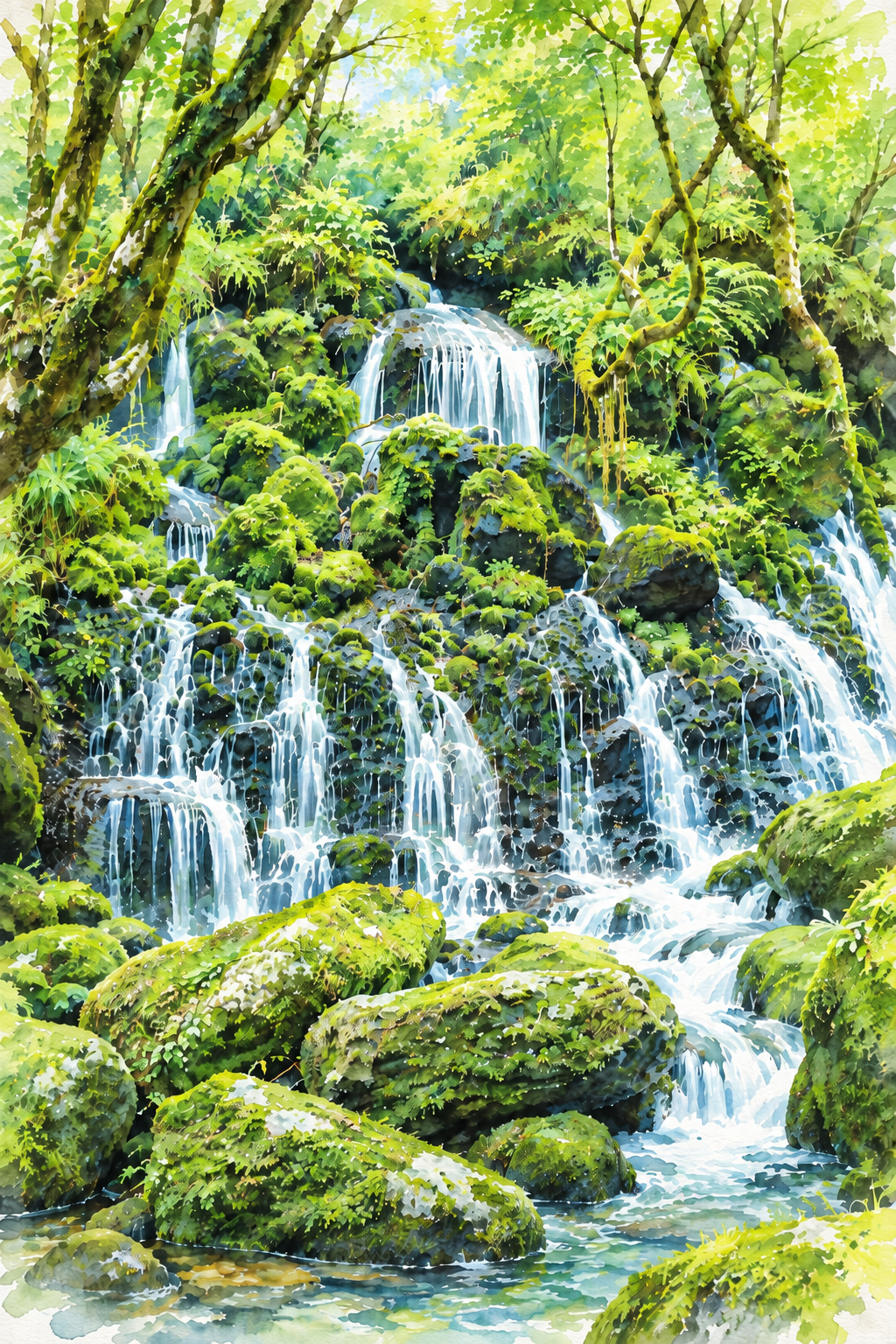
Even the Detour Runs Clear
Critique
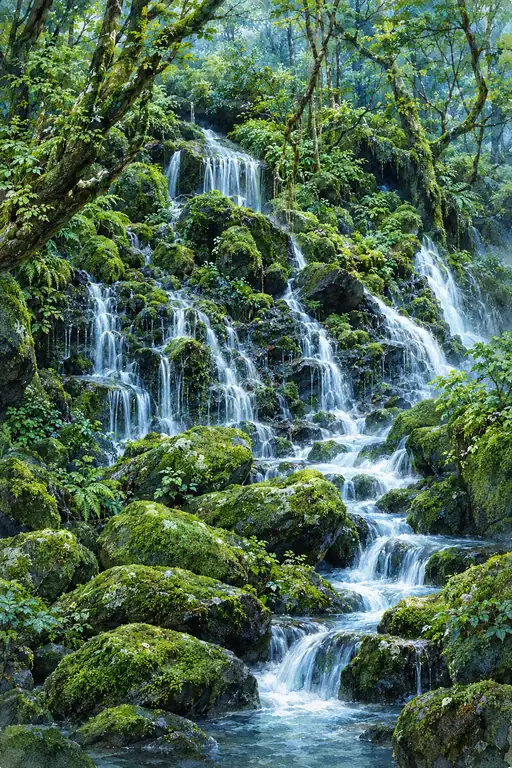
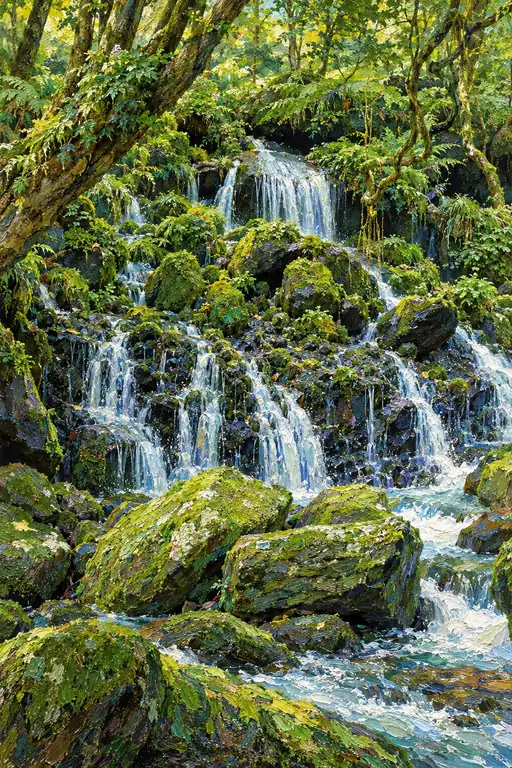
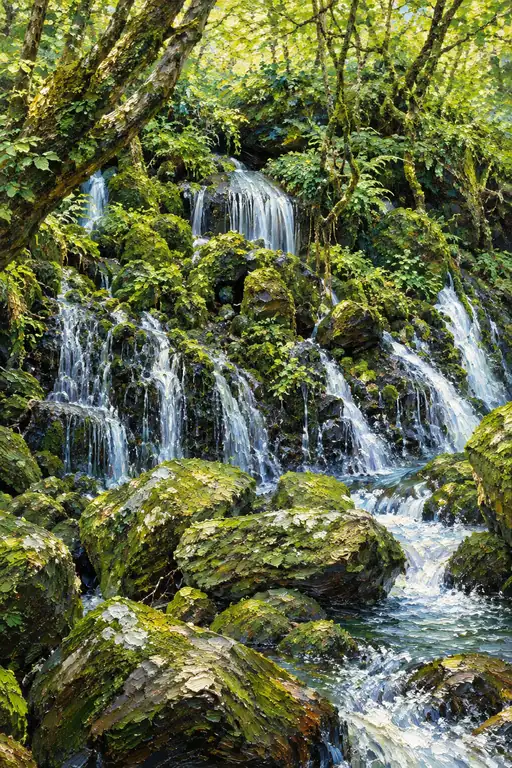
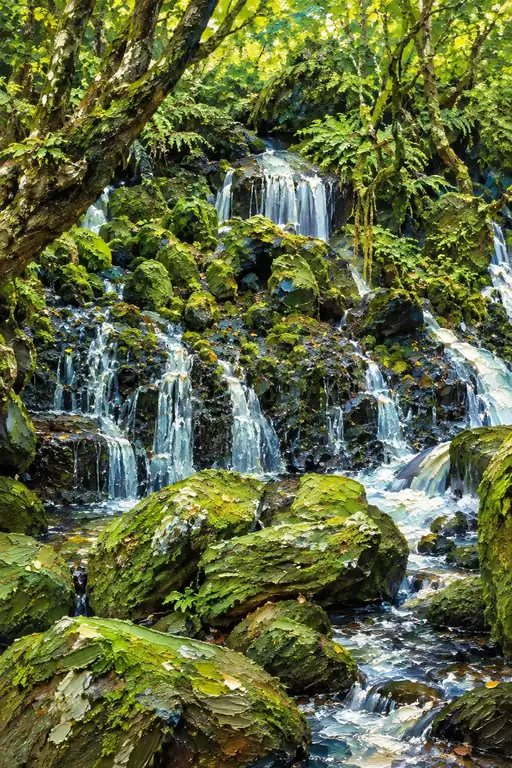
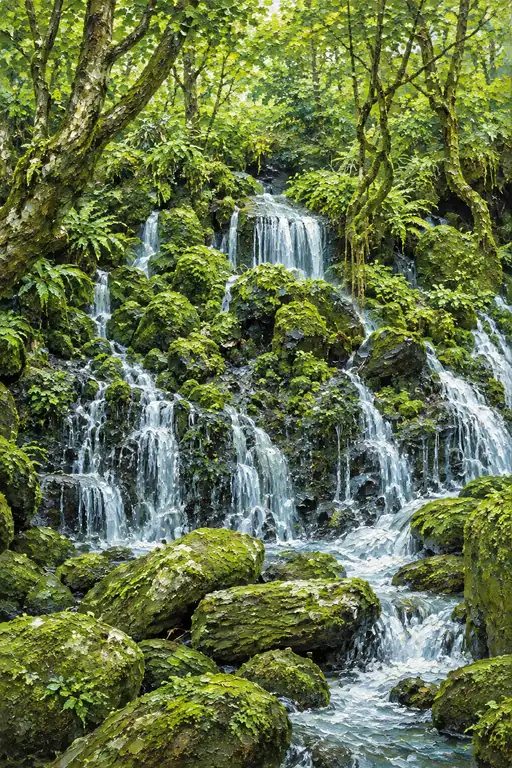
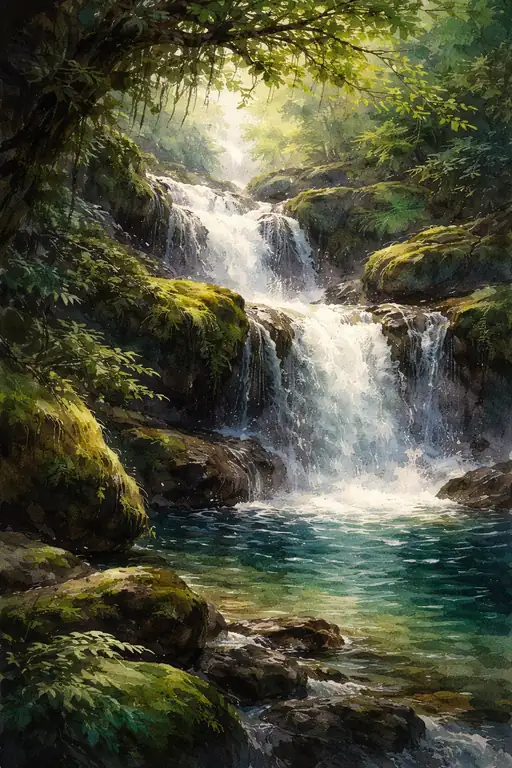
1. Introduction A bright forest canopy opens above a cascade divided by dark, vegetation-covered rock. The water travels from a central upper fall toward the lower right before spreading across the foreground. This asymmetrical route gives the vertical landscape an internal direction beyond the simple descent suggested by its tall format. 2. Description On the left, several substantial trunks converge and lean over the waterfall. A branching tree on the right extends toward the central opening, with thin strands of growth hanging beneath it. Near the bottom, a broad oval boulder projects above a smaller rounded stone; white water slips behind their right sides into a transparent green pool. 3. Analysis The lower right channel supplies the clearest continuous line through the composition. Its brightness contrasts with the dark underside of the projecting boulder, making the stone's weight legible. Above, dispersed yellow leaves lighten the space around the principal fall, while patches of cool blue-gray separate rock surfaces from the moss covering them. 4. Interpretation and Evaluation The waterfall becomes an encounter between resistance and accommodation: each obstacle changes the stream without ending it. The image's descriptive strength lies in these localized contacts, particularly the passage behind the large foreground rock. Some foliage remains uniformly bright, but the varying widths and directions of water prevent the scene from becoming an undifferentiated decorative field. 5. Conclusion What first reads as abundant greenery gradually resolves into a sequence of turns. The viewer follows the cascade around rather than through the largest stones. The final pool gathers that movement into a quieter plane, leaving the dense canopy above as a distinct, more distant zone of light.
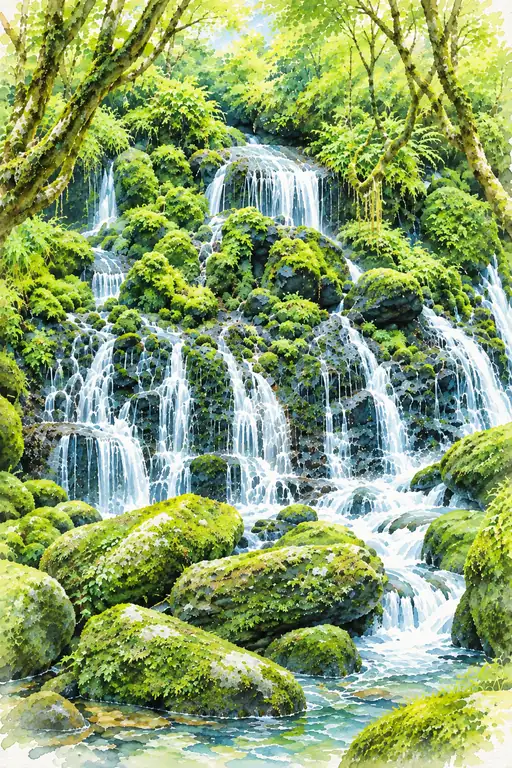 Catching Up with the Sound of Water
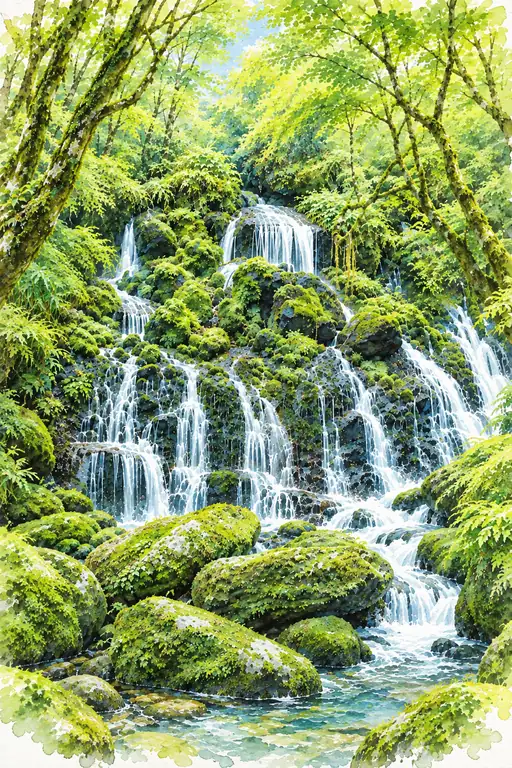 Stillness Has Many Streams
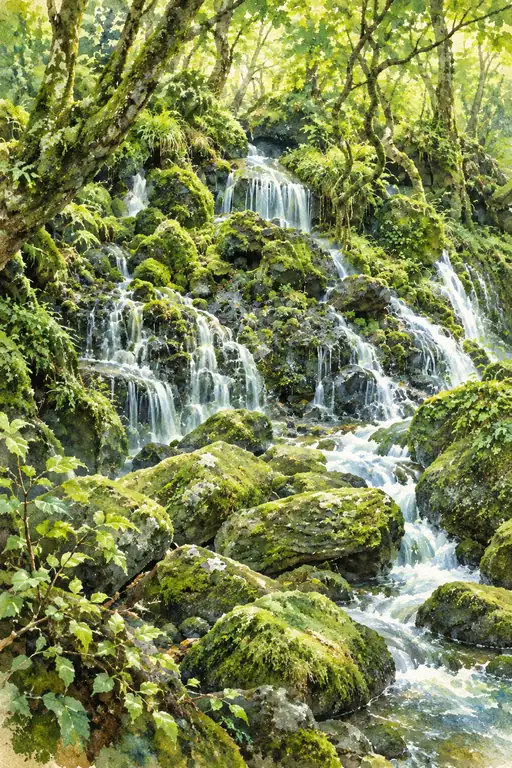 A Stillness Light Can Enter
 Unceasing from the Blue Beyond
 The Stones Remember the Current
 Divided, Yet Unbroken
 Held by What Stays Still
 The Forest Finds Its Voice
 Cascades of a Sunlit Sanctuary
 Whispers of the Golden Cascade