Stillness Has Many Streams
Critique
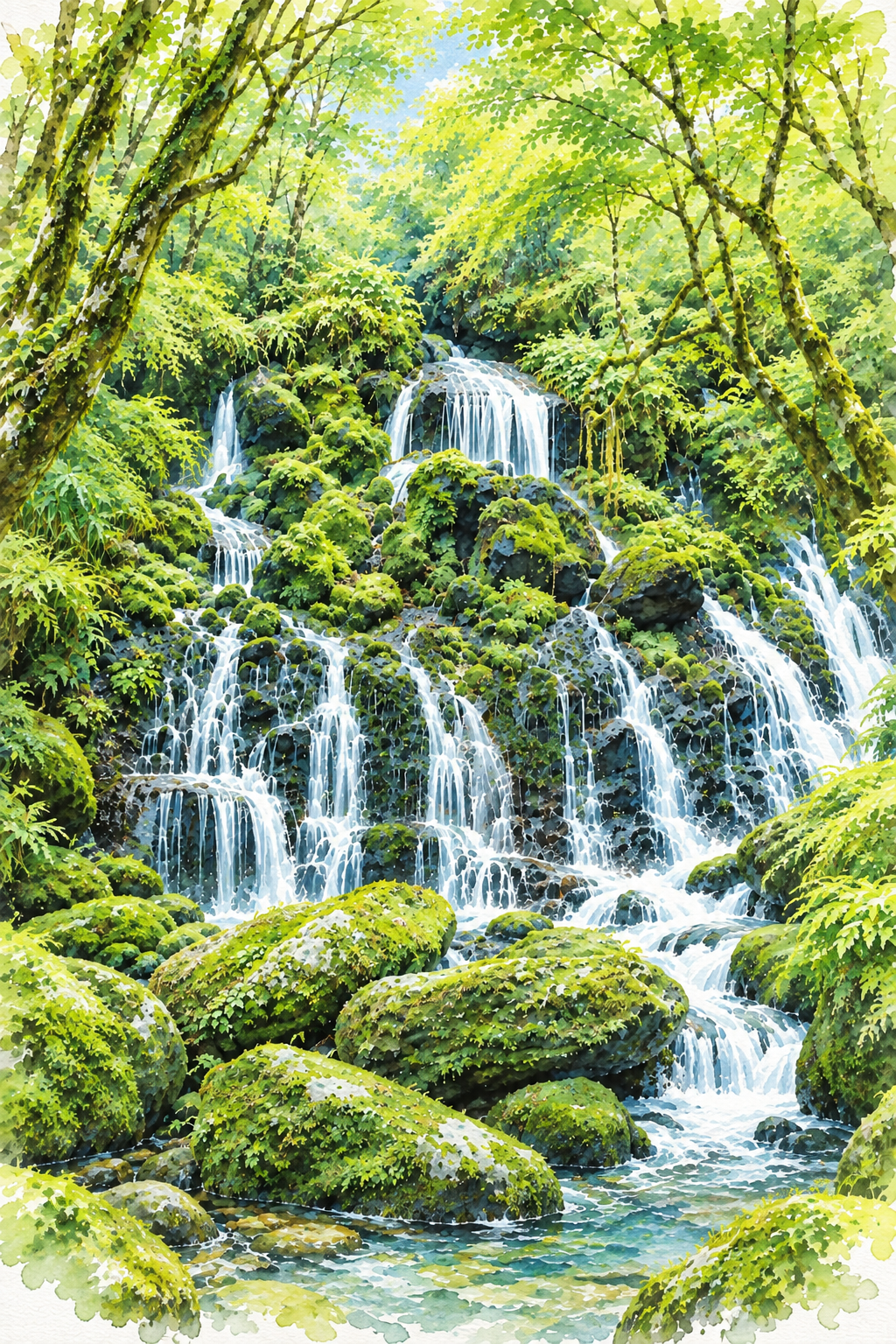
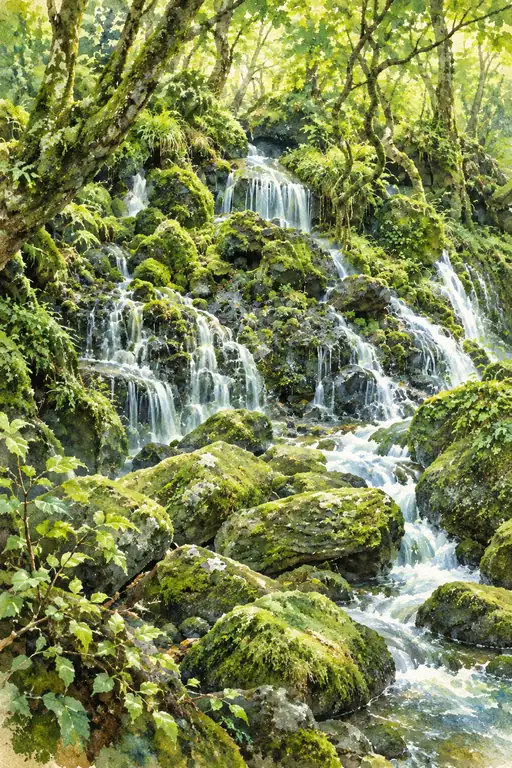
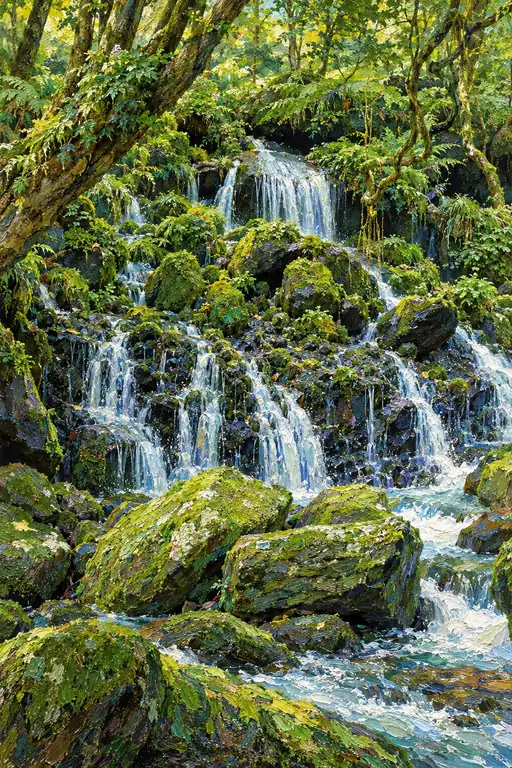
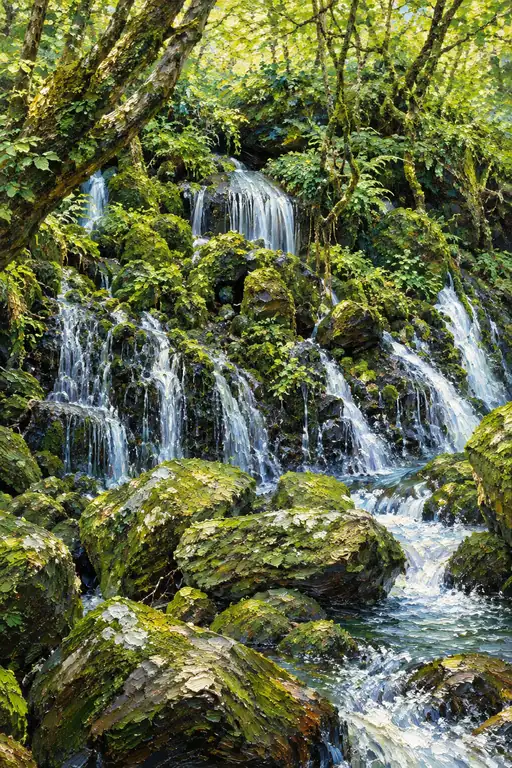
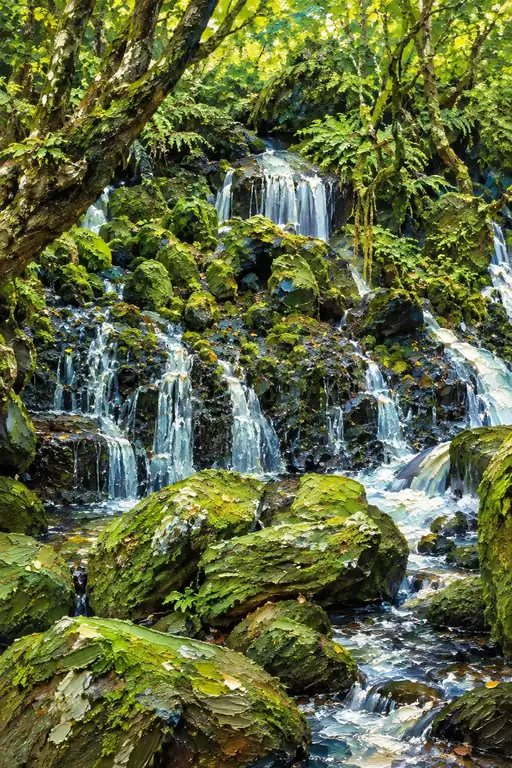
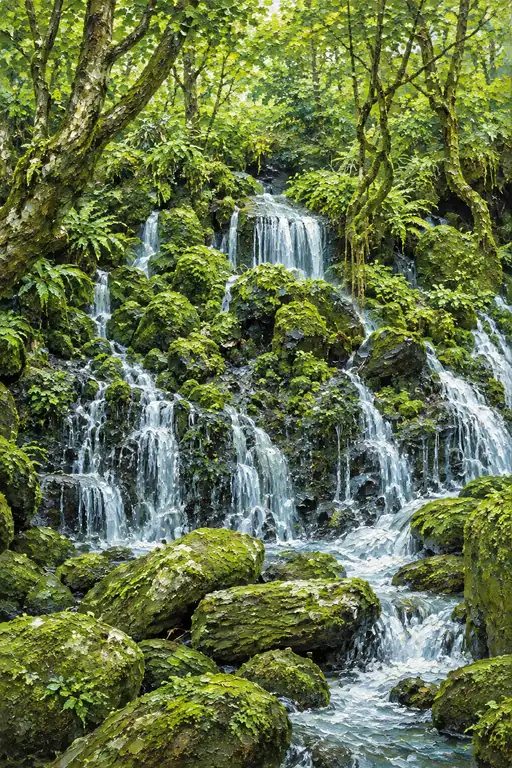
1. Introduction A woodland cascade spreads through a steep arrangement of mossy rocks beneath a bright green canopy. Numerous narrow falls replace the singular spectacle of one uninterrupted drop. The vertical composition presents water as a network, asking the eye to move among channels while remaining aware of the forest enclosing them. 2. Description Dark trunks lean inward from the sides, surrounding a pale opening high in the foliage. Near the center, a broad white fall separates around rocks and reappears in thinner descending threads. Large moss-covered boulders occupy the foreground; between them, blue-green water gathers in a shallow pool edged by broken white ripples. 3. Analysis The darkest rock faces give the white water its strongest contrasts, while yellow-green moss links the middle distance to the foreground. Repeated vertical strands establish downward movement, interrupted by the boulders' horizontal ledges. Small translucent leaf marks keep the canopy lighter and less solid than the densely modeled stones supporting the cascade below. 4. Interpretation and Evaluation The scene suggests continuity through division: water remains connected even when concealed behind rock. Its abundant detail creates an immersive environment, although the repeated bright accents reduce differences between some secondary channels. The foreground pool restores compositional rest, and the distinction between soft foliage, granular moss, and smooth falling water demonstrates controlled descriptive technique. 5. Conclusion An initial impression of lushness gives way to an awareness of routes and obstacles. The viewer can trace water downward, then return upward through the surrounding branches. This reciprocal movement makes the woodland appear both densely occupied and permeable, with the lower pool providing a temporary visual destination.
 Unceasing from the Blue Beyond
 Catching Up with the Sound of Water
 Even the Detour Runs Clear
 A Stillness Light Can Enter
 The Stones Remember the Current
 Divided, Yet Unbroken
 Held by What Stays Still
 The Forest Finds Its Voice
 Cascades of a Sunlit Sanctuary
 Whispers of the Golden Cascade