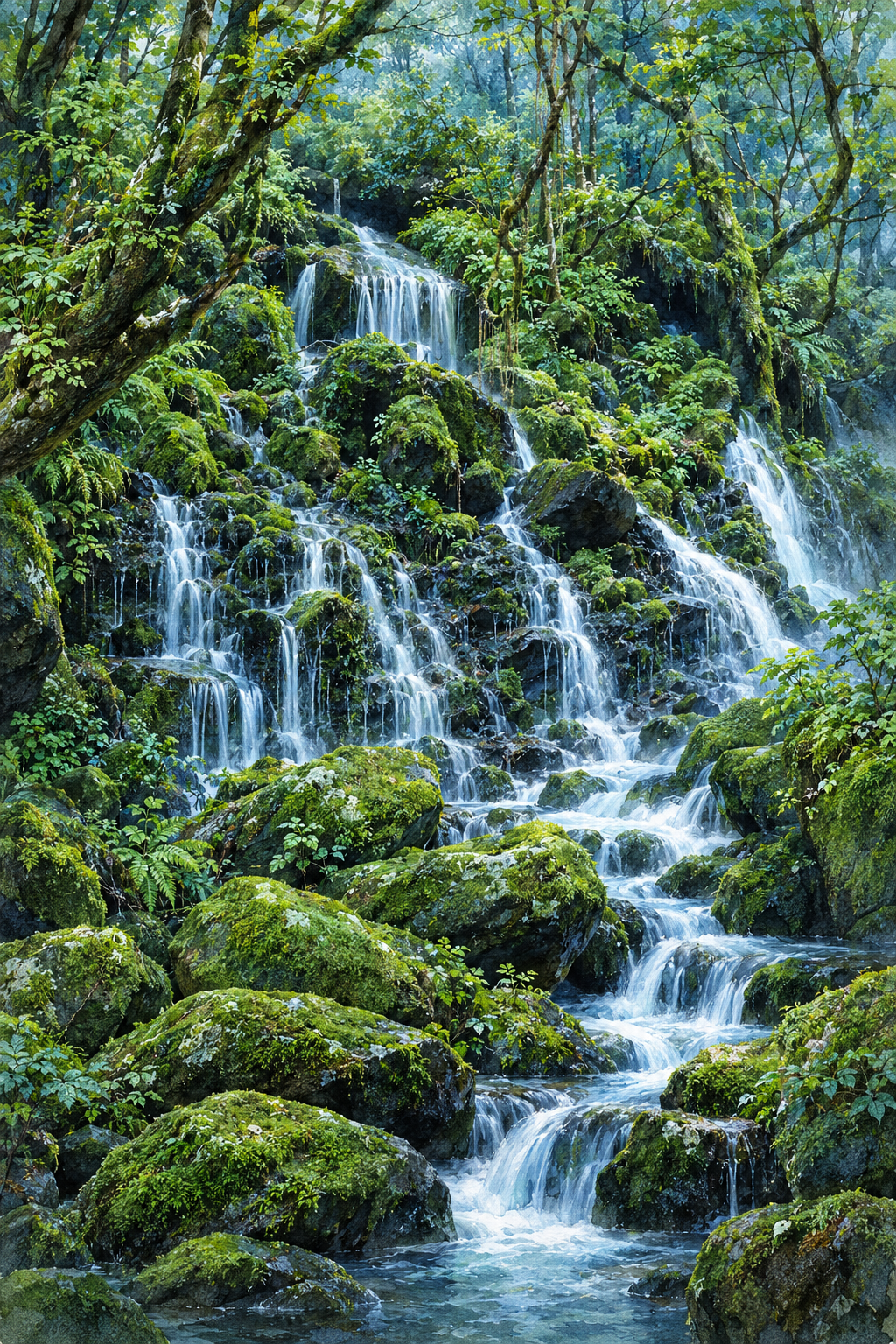
Unceasing from the Blue Beyond
Critique
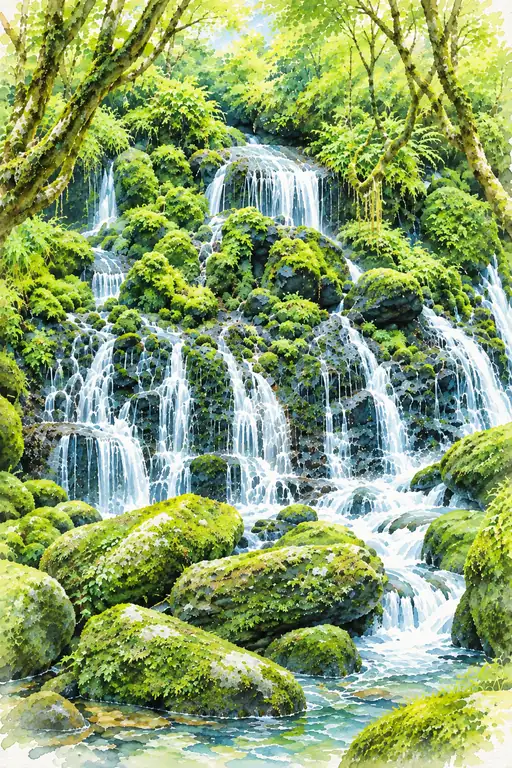
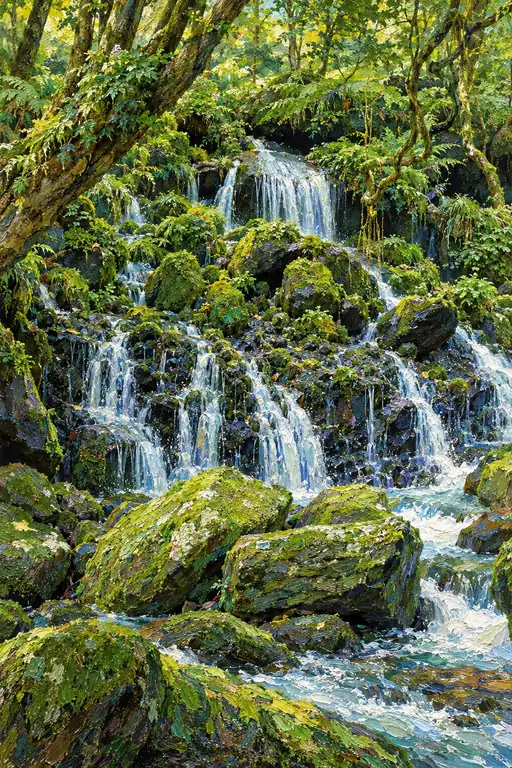
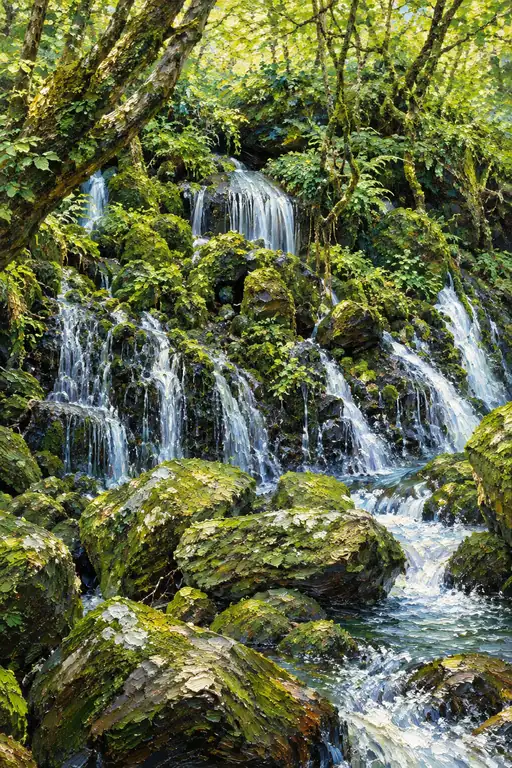
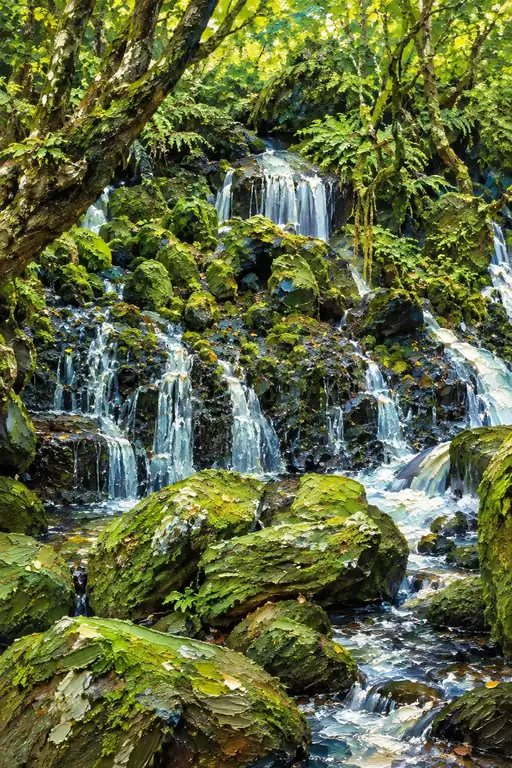
Introduction A forest cascade divides into narrow falls among moss-covered boulders. Dense green foliage encloses the water from both sides, while an angled trunk crosses the upper left. The vertically composed painted landscape offers no human figure or distant horizon, concentrating attention on the repeated negotiation between flowing water and resistant rock. Description Water enters near the upper center and spreads across several dark ledges before gathering toward the foreground pool. Moss blankets rounded stones in yellow-green patches. Ferns and small leaves crowd the banks, and slender branches hang above the upper falls. Blue-gray trunks recede into a cooler, hazier background behind the sharply articulated foreground growth. Analysis The branching white streams form a descending network rather than a single continuous ribbon. Dark rock faces interrupt that network, creating alternating passages of motion and mass. The diagonal trunk frames the upper flow, while large lower boulders slow the eye near the pool. Small broken marks describe foliage; longer pale strokes distinguish falling water from the surrounding vegetation. Interpretation and Evaluation The landscape suggests continuity sustained through countless local changes of direction. Its persuasive quality lies in the water's differing widths and drops, which prevent repetition from becoming mechanical. Dense detail risks dispersing attention, but strong value contrasts repeatedly return the eye to the cascade. The cooler depth keeps the enclosed scene from appearing entirely flat. Conclusion This is a landscape organized through accumulation rather than a singular scenic climax. Each rock divides the current and each pale channel reconnects it lower down. Differentiated marks and distributed light make that structure legible, allowing the forest's abundance to convey both persistent movement and the substantial resistance that gives movement its visible form.
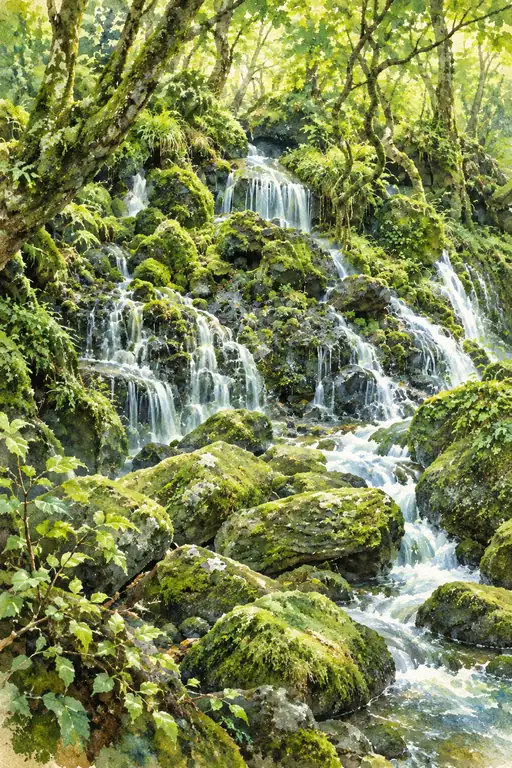 A Stillness Light Can Enter
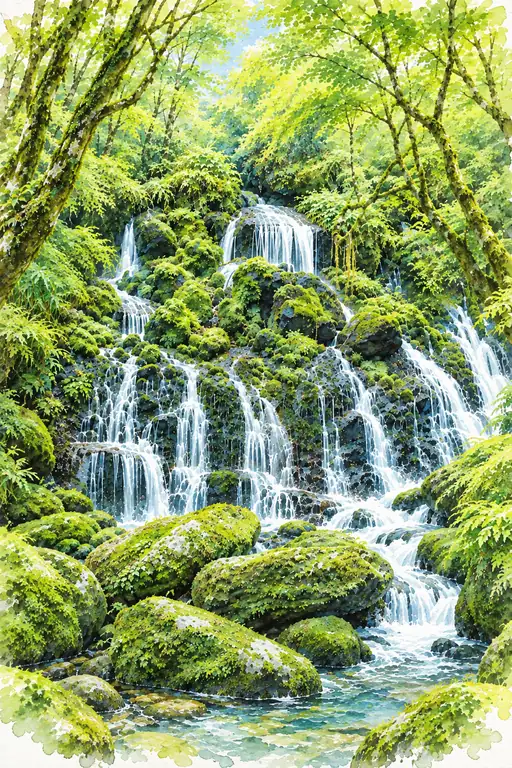 Stillness Has Many Streams
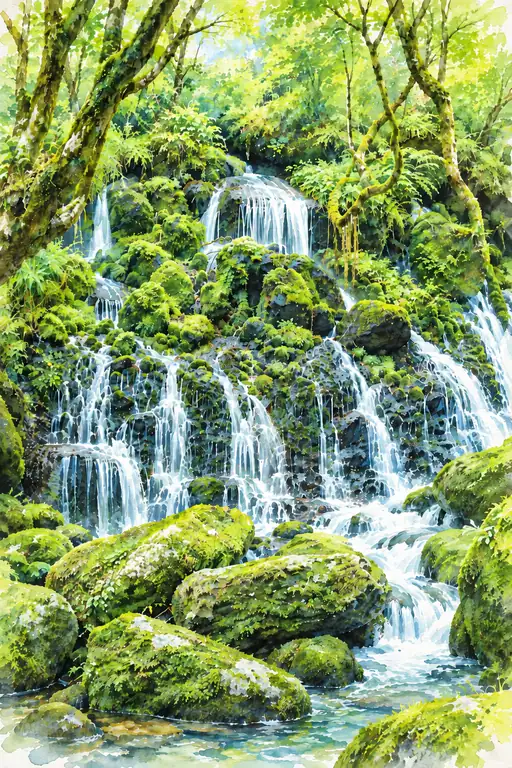 Even the Detour Runs Clear
 Catching Up with the Sound of Water
 The Stones Remember the Current
 Divided, Yet Unbroken
 Held by What Stays Still
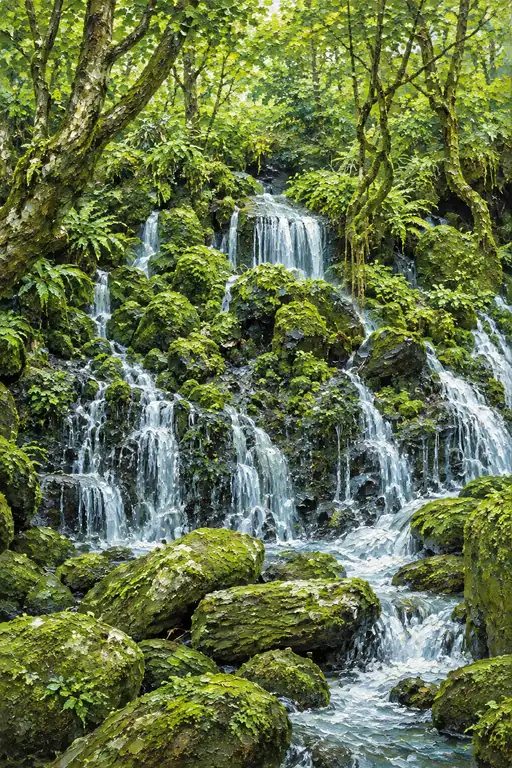 The Forest Finds Its Voice
 Whispers of the Golden Cascade
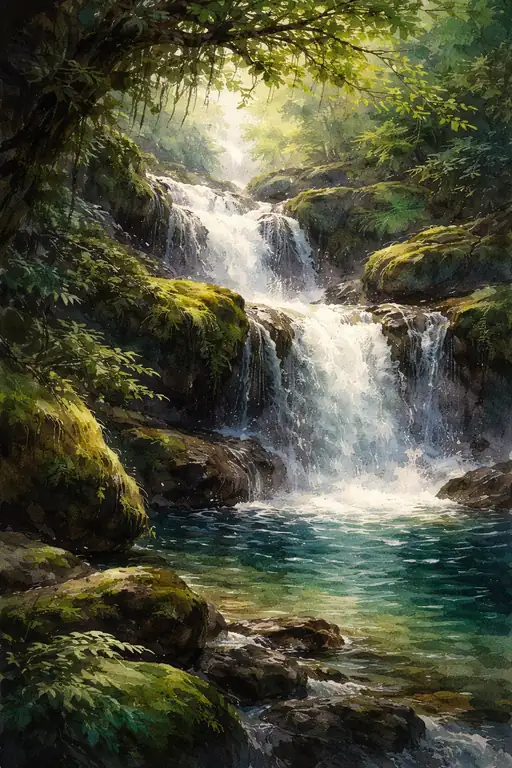 Cascades of a Sunlit Sanctuary