A Stillness Light Can Enter
Critique
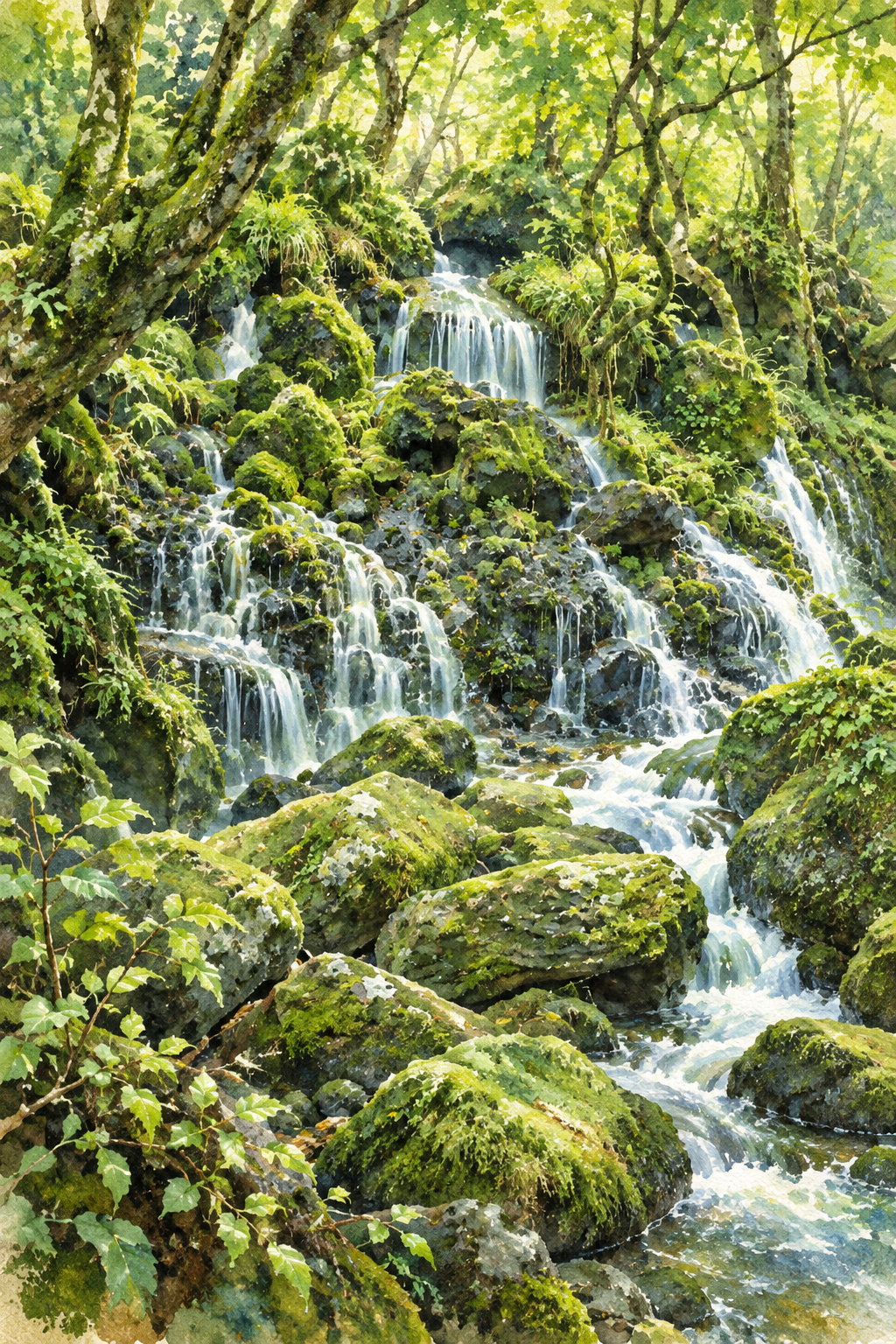
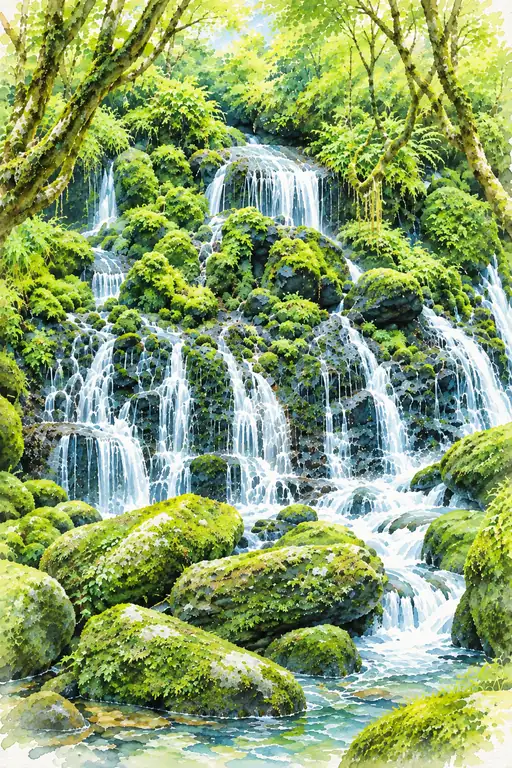
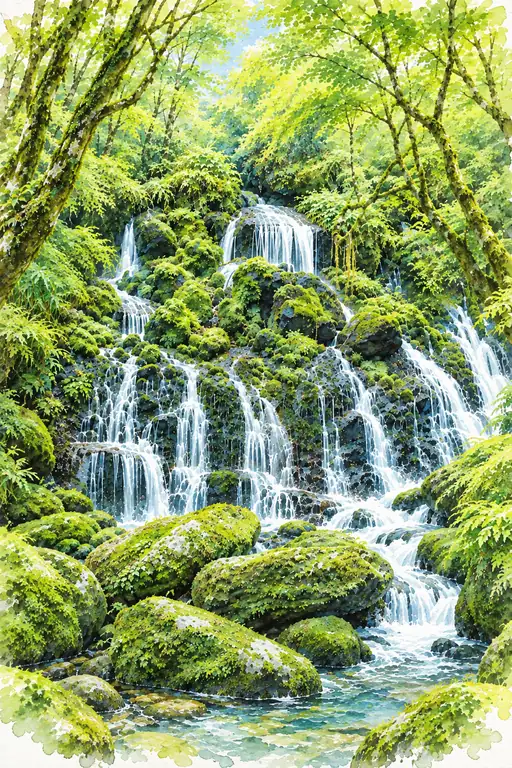
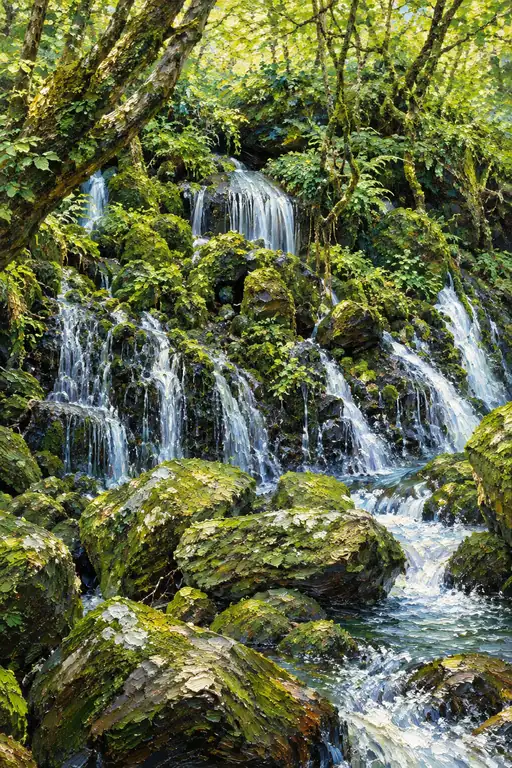
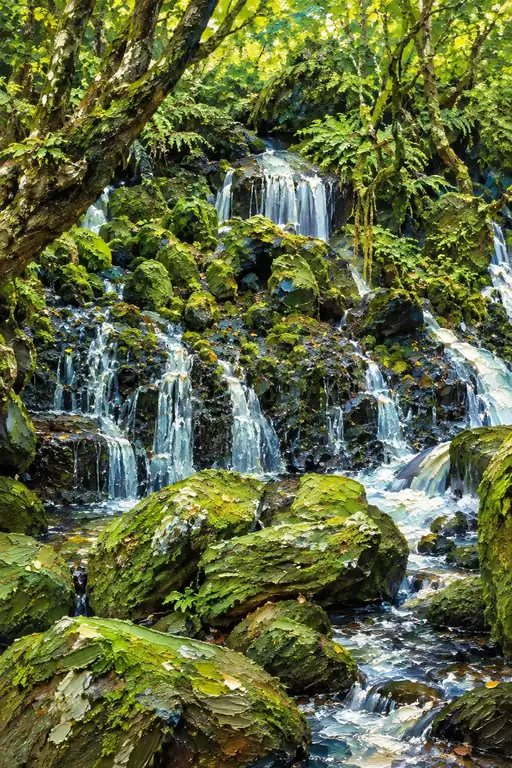
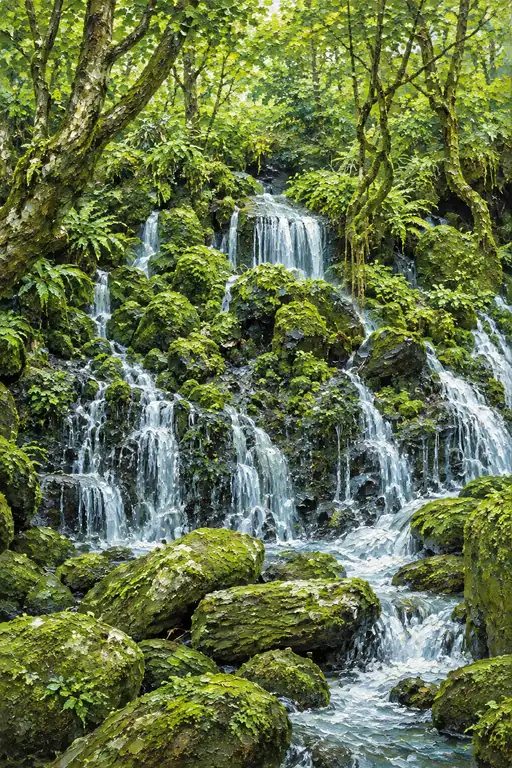
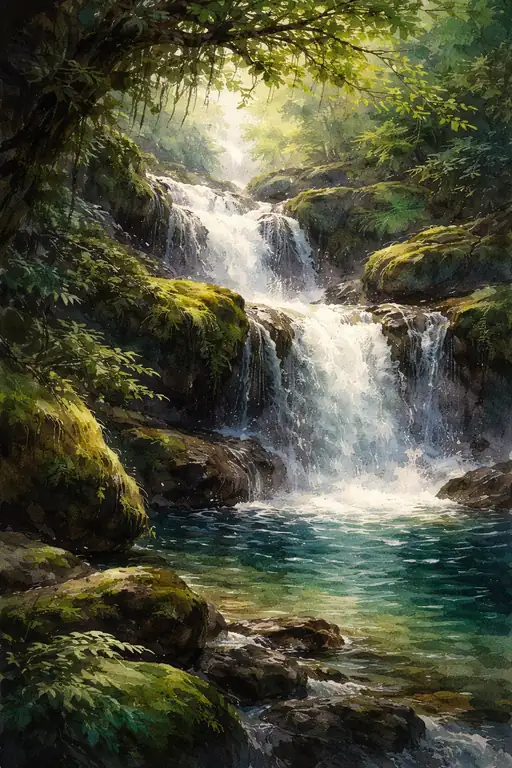
Introduction A woodland cascade descends over mossy stones beneath a pale green canopy. Soft washes and broken marks allow light through the foliage and across rock surfaces. A diagonal trunk and a leafy foreground twig frame the scene without enclosing its bright central opening. Description The upper waterfall emerges from a dark cleft and divides into numerous fine streams over irregular ledges. Green moss hangs from stone edges and coats the rounded foreground boulders. At the lower left, a thin branch carries sharply defined small leaves. The main current gathers along the right, descending in white ribbons into a pale blue-green channel. Analysis The soft canopy contrasts with the darker central rocks, making the falls visible without harsh outlines. Foreground stones overlap broadly, but their mottled surfaces remain relatively light. The lower-left twig establishes a close scale distinct from the distant leaf pattern. White water joins separated bright passages and leads attention from the upper opening toward the lower right. Interpretation and Evaluation The scene emphasizes diffuse light and pervasive moisture rather than the weight of a single rock mass. Its effectiveness lies in balancing clearly described near leaves with softened surrounding vegetation. The restrained tonal transitions preserve a sense of air between forms, while dark gaps retain enough structure to keep the many small cascades spatially intelligible. Conclusion The initial impression of fresh greenery develops into awareness of light distributed across connected surfaces. The foreground twig locates the viewer, and the water provides a continuous route through the rocks. Delicate texture and selective contrast give the image coherence, making luminosity a structural quality of the woodland rather than merely an atmospheric embellishment.
 The Stones Remember the Current
 Unceasing from the Blue Beyond
 Even the Detour Runs Clear
 Catching Up with the Sound of Water
 Stillness Has Many Streams
 Divided, Yet Unbroken
 Held by What Stays Still
 The Forest Finds Its Voice
 Cascades of a Sunlit Sanctuary
 Whispers of the Golden Cascade