Divided, Yet Unbroken
Critique
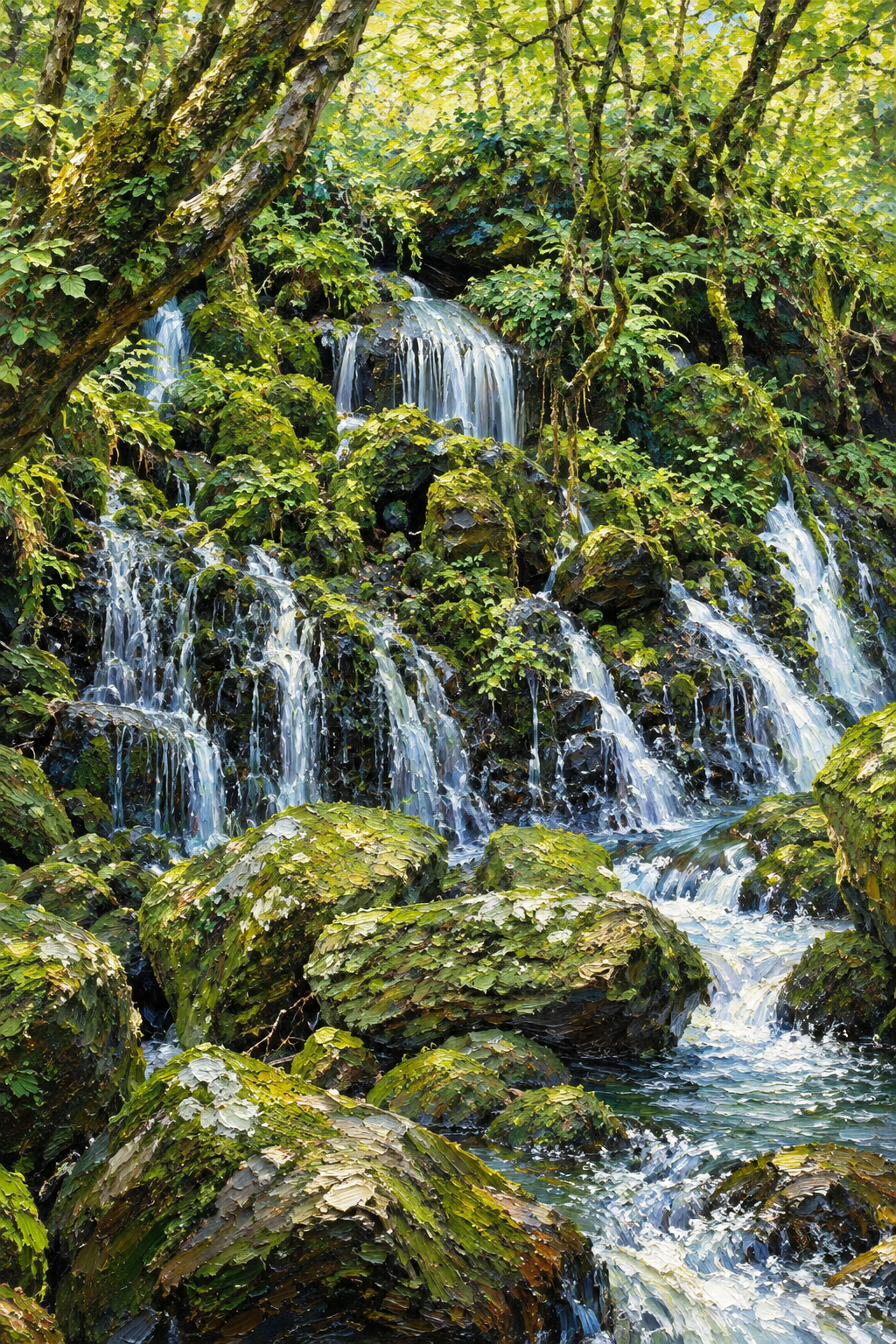
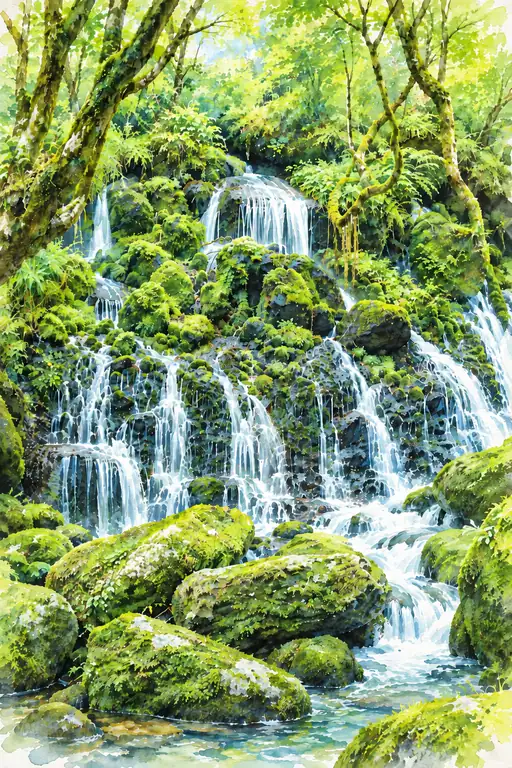
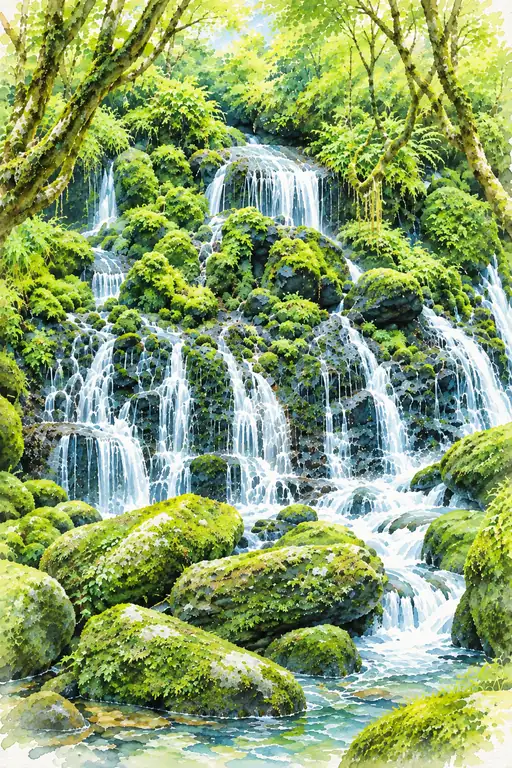
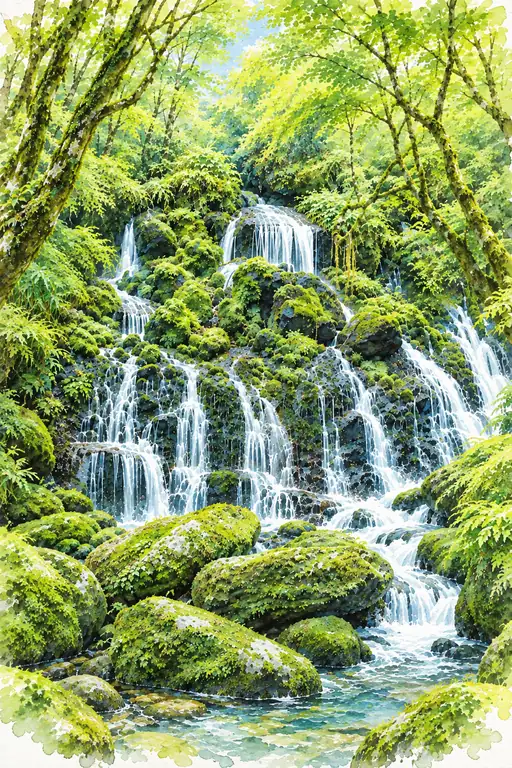
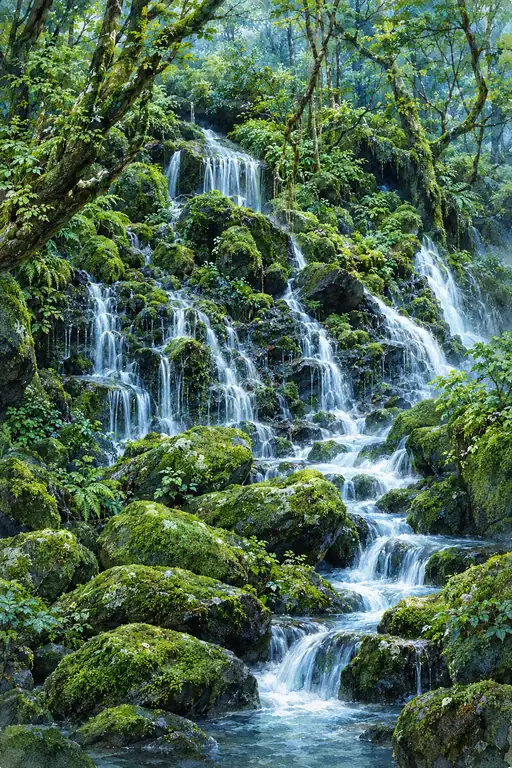
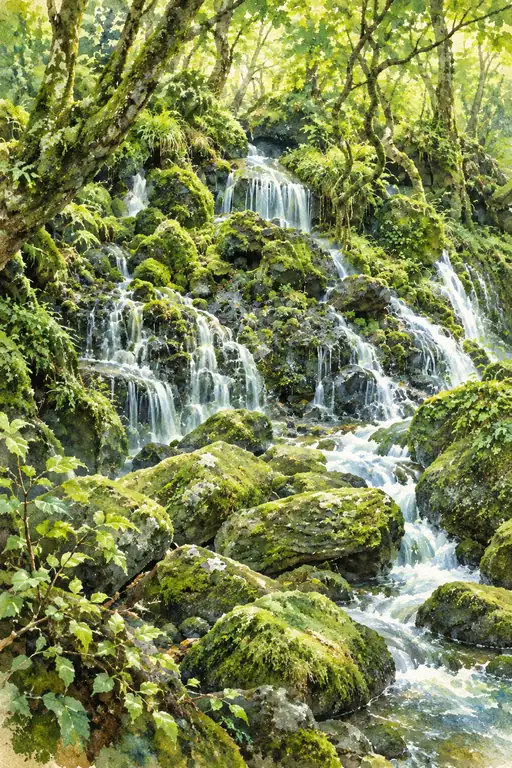
Introduction A layered cascade descends through moss-covered rocks beneath a dense woodland canopy. A thick trunk crosses the upper left, while trailing stems hang beside the main fall. The vigorously textured surface emphasizes rock weight and leaf density, but the many pale water channels preserve a clear descending movement through the scene. Description The upper waterfall drops from a shadowed cleft behind a central group of stones. Below, narrow streams pass over several dark ledges before gathering toward the right foreground. Broad near boulders carry green, yellow, and pale gray patches. Ferns spread from rock gaps, and thin roots or mossy strands extend vertically from the right-hand branches. Analysis The left trunk creates a strong diagonal above the central vertical fall. Large foreground stones introduce slower, broader forms against the smaller cascades behind them. White water marks repeatedly interrupt dark rock edges, making the downward route legible. Yellow-green upper surfaces contrast with blue-black recesses, separating illuminated moss from the wet shaded spaces between stones. Interpretation and Evaluation The image treats the forest as a connected system of surfaces and channels. Water appears to negotiate each rock rather than descend as a single uninterrupted curtain. The work is effective in differentiating hard facets, soft vegetation, and flowing ribbons through stroke direction. Its dense enclosure also encourages close observation instead of a search for a distant horizon. Conclusion The initial impression of abundant moss develops into recognition of the cascade's organized branching. Broad stones establish stability, while the pale streams repeatedly divide and reconnect around them. The coordination of vigorous texture with a clear water route gives the scene coherence, making material density and spatial movement mutually supportive rather than competing effects.
 Held by What Stays Still
 The Stones Remember the Current
 The Forest Finds Its Voice
 Even the Detour Runs Clear
 Catching Up with the Sound of Water
 Stillness Has Many Streams
 Unceasing from the Blue Beyond
 A Stillness Light Can Enter
 Whispers of the Golden Cascade
 Whispers of the Emerald Basin