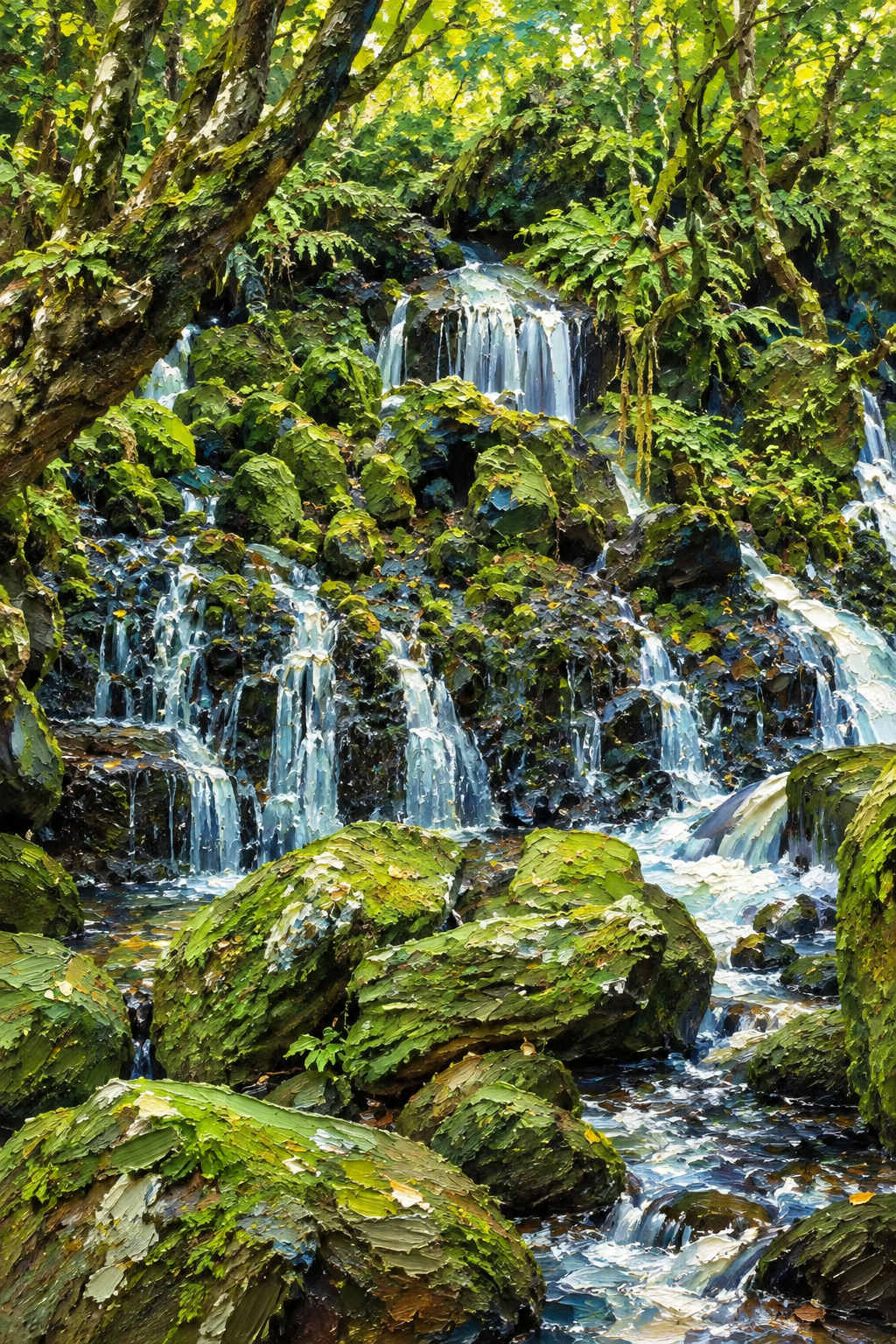
Held by What Stays Still
Critique
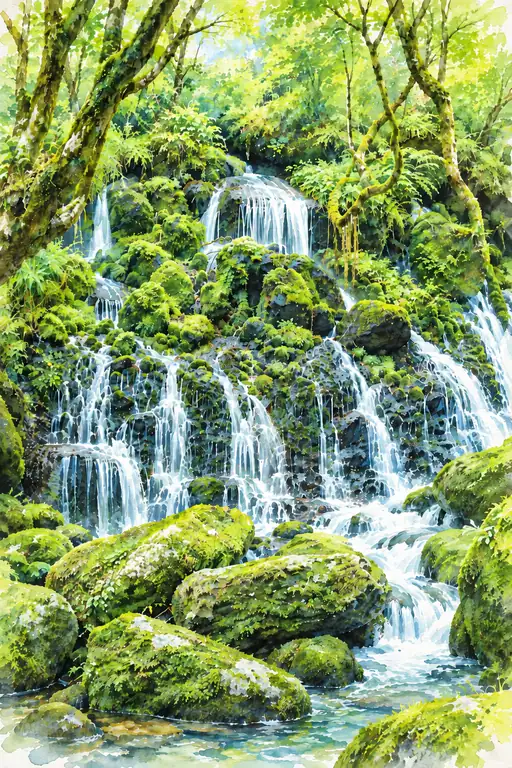
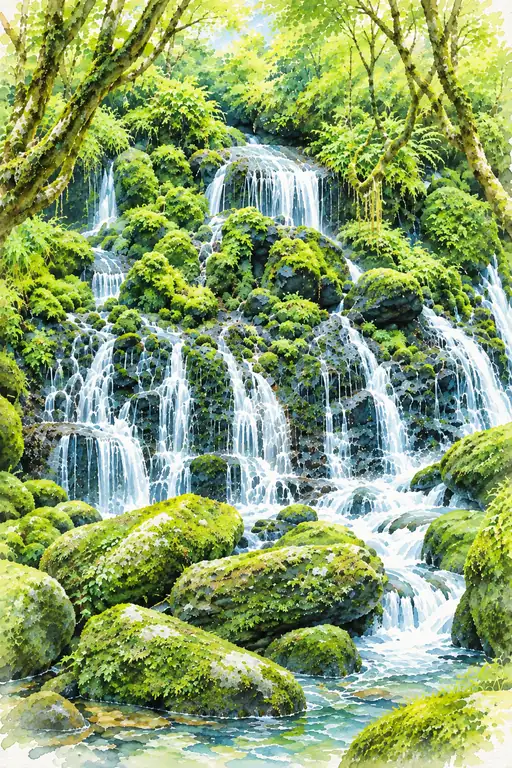
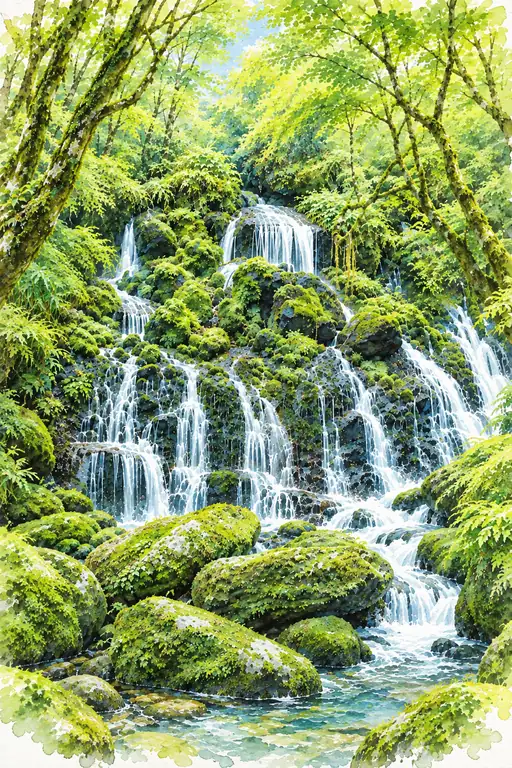
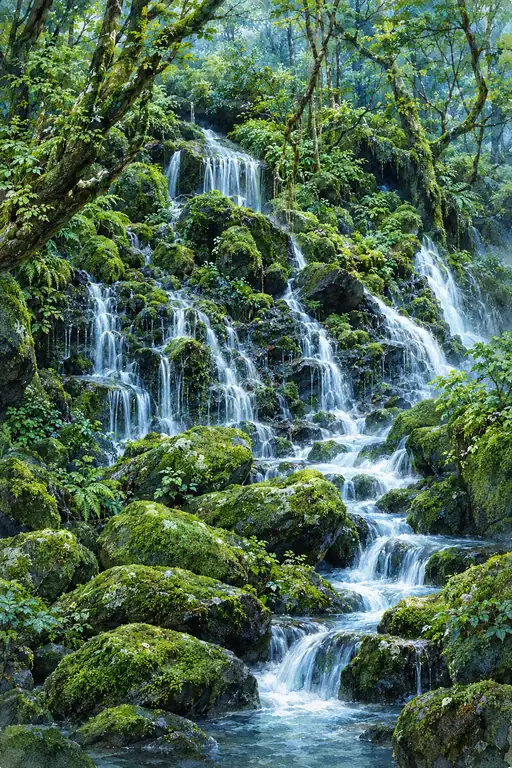
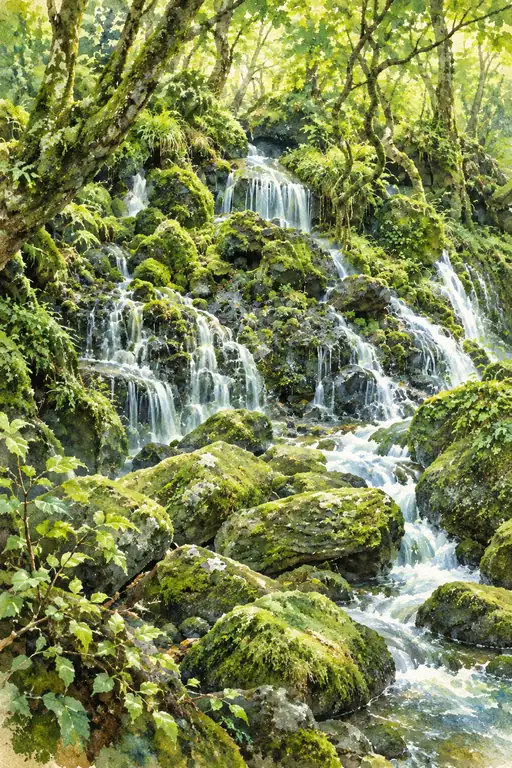
Introduction A woodland waterfall descends through dark stones covered in green moss. Thick paint-like ridges give the near rocks weight, while slender falls thread through the middle ground. An angled trunk and overhanging foliage enclose the cascade within a densely occupied, moist environment. Description The largest upper drop falls from a flat dark ledge near the center. Below it, water splits around irregular stones into narrow ribbons and short white cascades. A large sloping boulder fills the lower left, with smaller mossy rocks stacked behind it. At the right, the current gathers into a brighter descending channel beside a nearly vertical green-covered stone. Analysis The foreground boulder's diagonal plane contrasts with the upper fall's vertical curtain. Repeated small falls connect these opposed directions and carry attention across the rock field. Bright yellow-green moss catches light on upper surfaces, while deep blue and black passages describe wet recesses. Long water strokes stand apart from the broader, flattened marks used for moss and rock. Interpretation and Evaluation The scene gives visual importance to the surfaces water nourishes as well as to the water itself. Its strongest achievement is the differentiation of heavy stone, soft moss, and falling streams within a consistently textured treatment. The dense canopy limits distant visibility, but that enclosure supports the image's emphasis on close, materially specific observation rather than panoramic breadth. Conclusion The initial impression of vigorous falling water develops into appreciation of the rocks' controlling structure. Each stream follows a different edge or gap, making the cascade readable as an interaction with the terrain. Thick surface detail reinforces this relationship, allowing the image to convey both movement and the substantial stillness of a moss-covered forest floor.
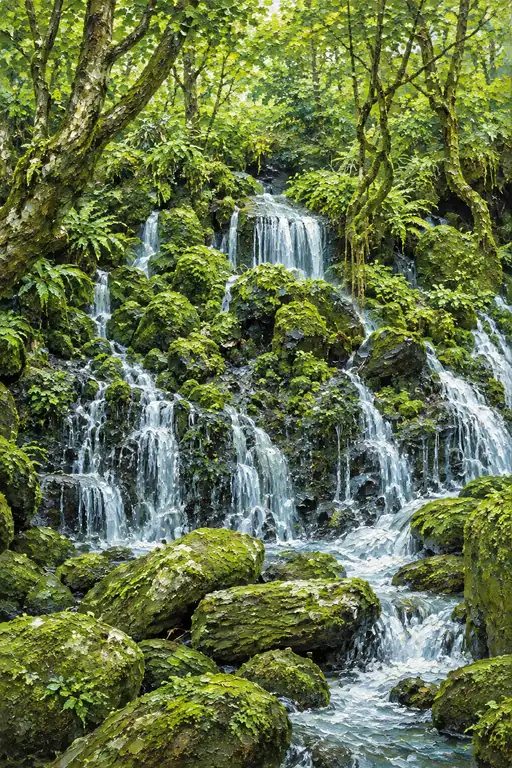 The Forest Finds Its Voice
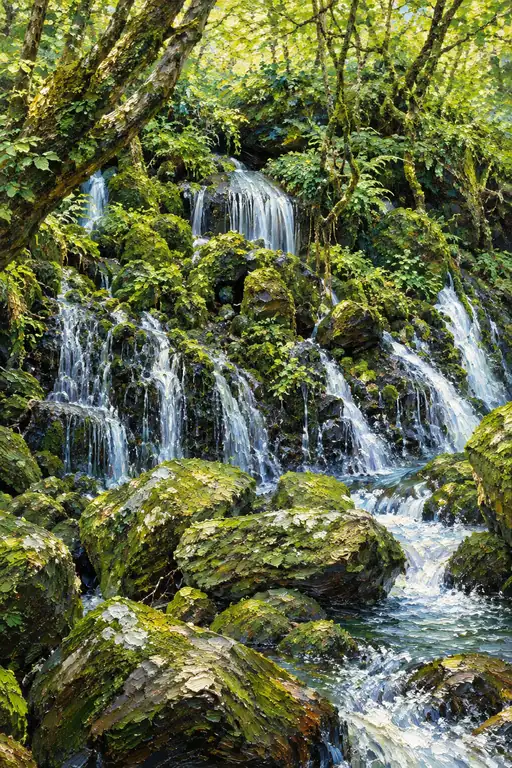 Divided, Yet Unbroken
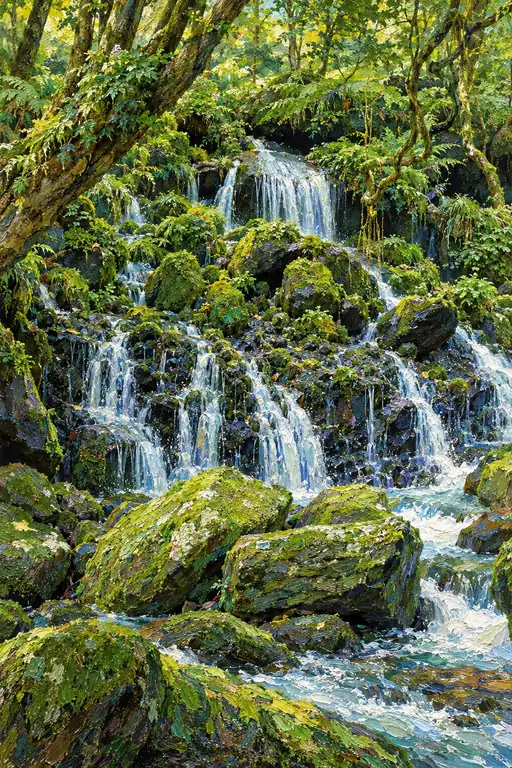 The Stones Remember the Current
 Even the Detour Runs Clear
 Catching Up with the Sound of Water
 Stillness Has Many Streams
 Unceasing from the Blue Beyond
 A Stillness Light Can Enter
 Whispers of the Golden Cascade
 Whispers of the Emerald Basin