The Forest Finds Its Voice
Critique
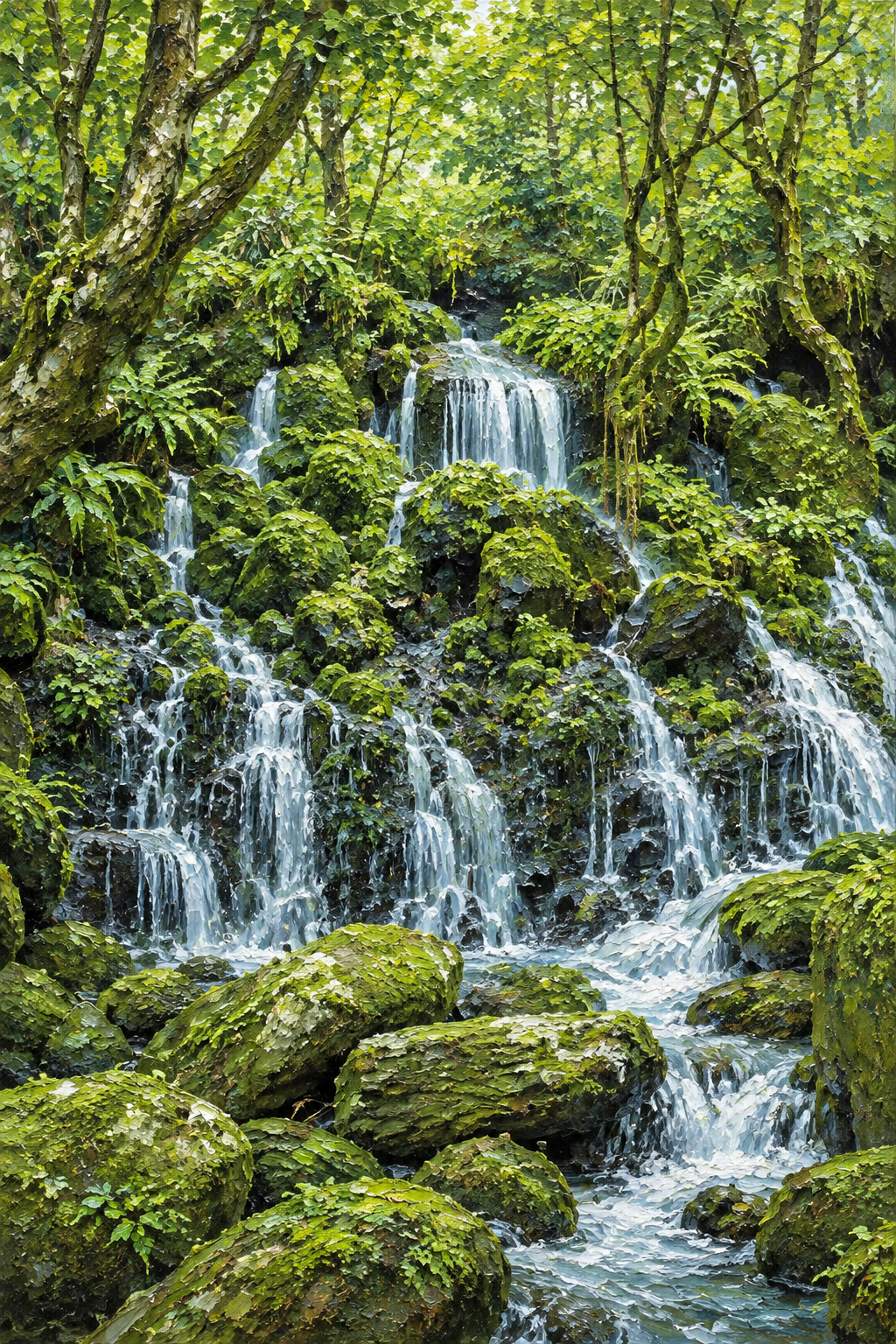
Introduction Small waterfalls descend through woodland over moss-covered stones. An upper cascade provides a focal point, but the water divides into many channels before reaching the foreground. The painting-like surface differentiates pale water from dark wet rock and layered leaves, creating an enclosed forest environment. Description A thick trunk leans across the upper left, while slender mossy stems hang at the right. Ferns and broad leaves cover ledges around the central fall. Lower down, thin streams pass between rounded stones, forming white foam in small pools. Large near rocks carry patchy green moss and tiny plants across their sloping upper surfaces. Analysis The main cascade begins a descending sequence that spreads laterally before gathering toward the lower right. Dark gaps between stones make each pale stream distinct. The broad foreground rocks slow the eye, contrasting with the many narrow falls behind them. Variations from yellow-green highlights to deep blue-green shadows keep the predominantly green palette structurally varied. Interpretation and Evaluation The image emphasizes an environment sustained by distributed water rather than a single spectacular drop. Moss and small plants visibly occupy almost every available surface, making moisture a shared condition across the scene. The work's strength lies in coordinating dense detail with readable channels, while differences in stroke size preserve both close texture and the larger arrangement of rock masses. Conclusion The initial impression of abundant greenery develops into recognition of a connected drainage system. The water's many paths are organized by stones rather than competing for attention. Looking from the upper fall to the near rocks reveals how texture, shadow, and selective white highlights cooperate to produce a coherent, materially rich woodland landscape.
 Celebration of Seven Hues Woven from Waterfall Mist
 Held by What Stays Still
 The Stones Remember the Current
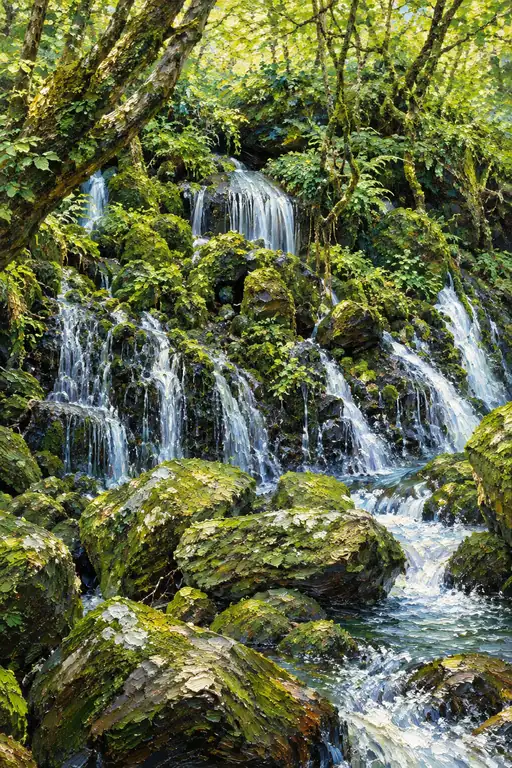 Divided, Yet Unbroken
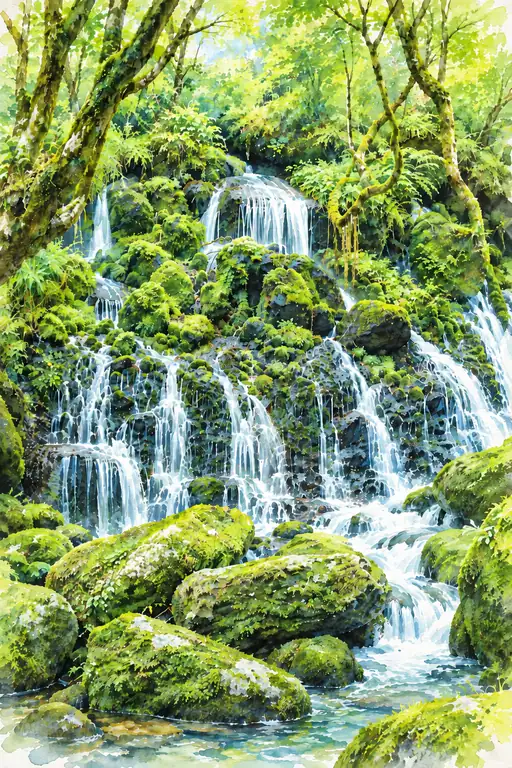 Even the Detour Runs Clear
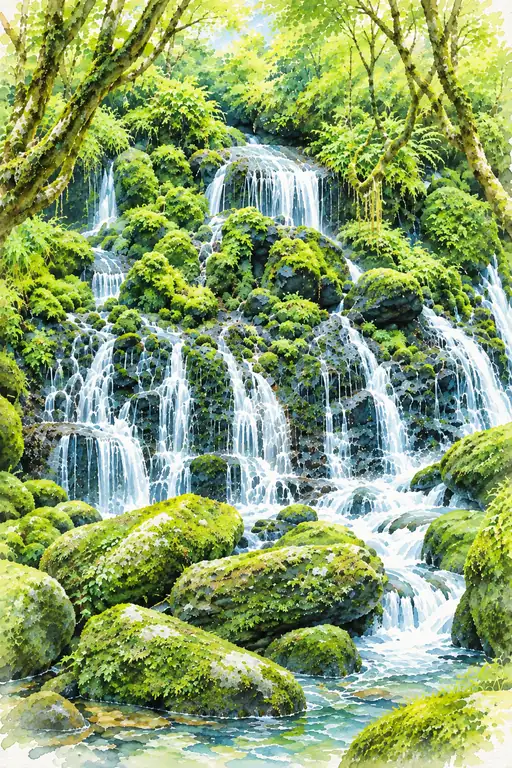 Catching Up with the Sound of Water
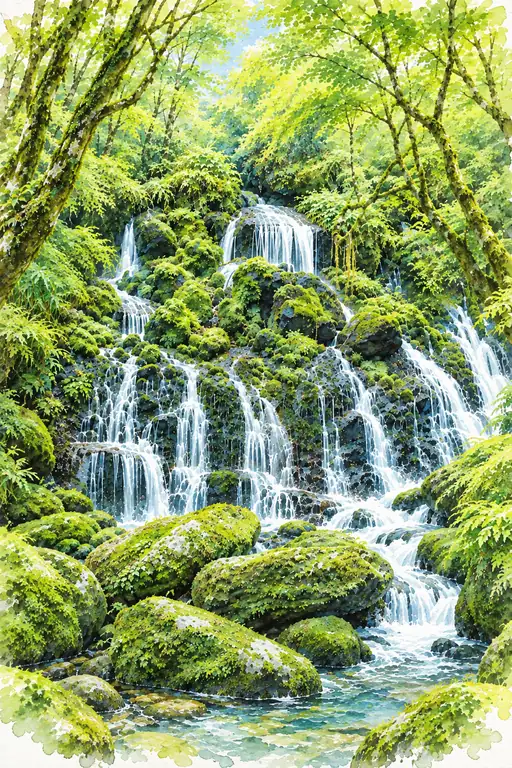 Stillness Has Many Streams
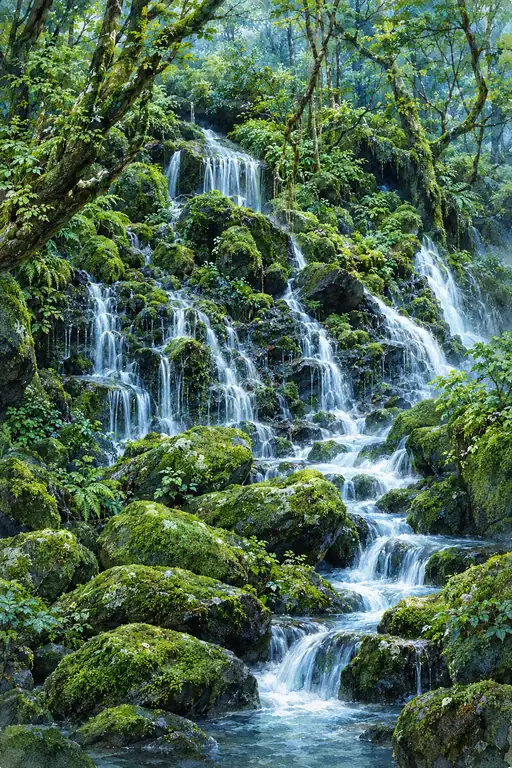 Unceasing from the Blue Beyond
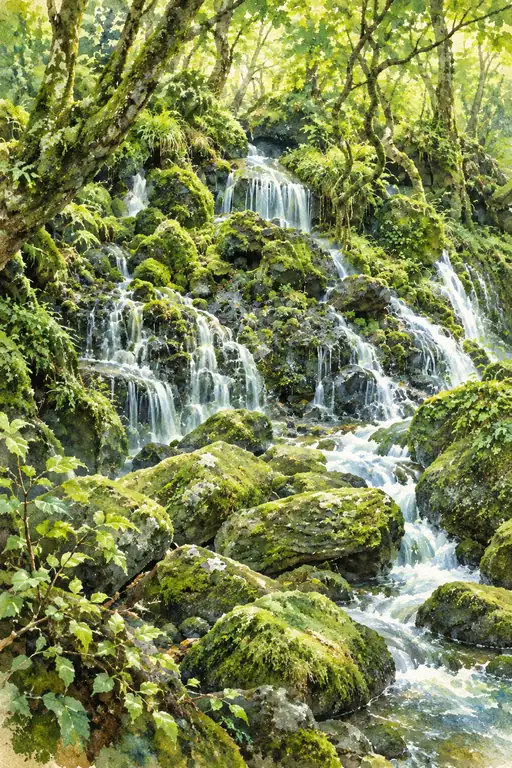 A Stillness Light Can Enter
 Whispers of the Golden Cascade
 Whispers of the Emerald Basin