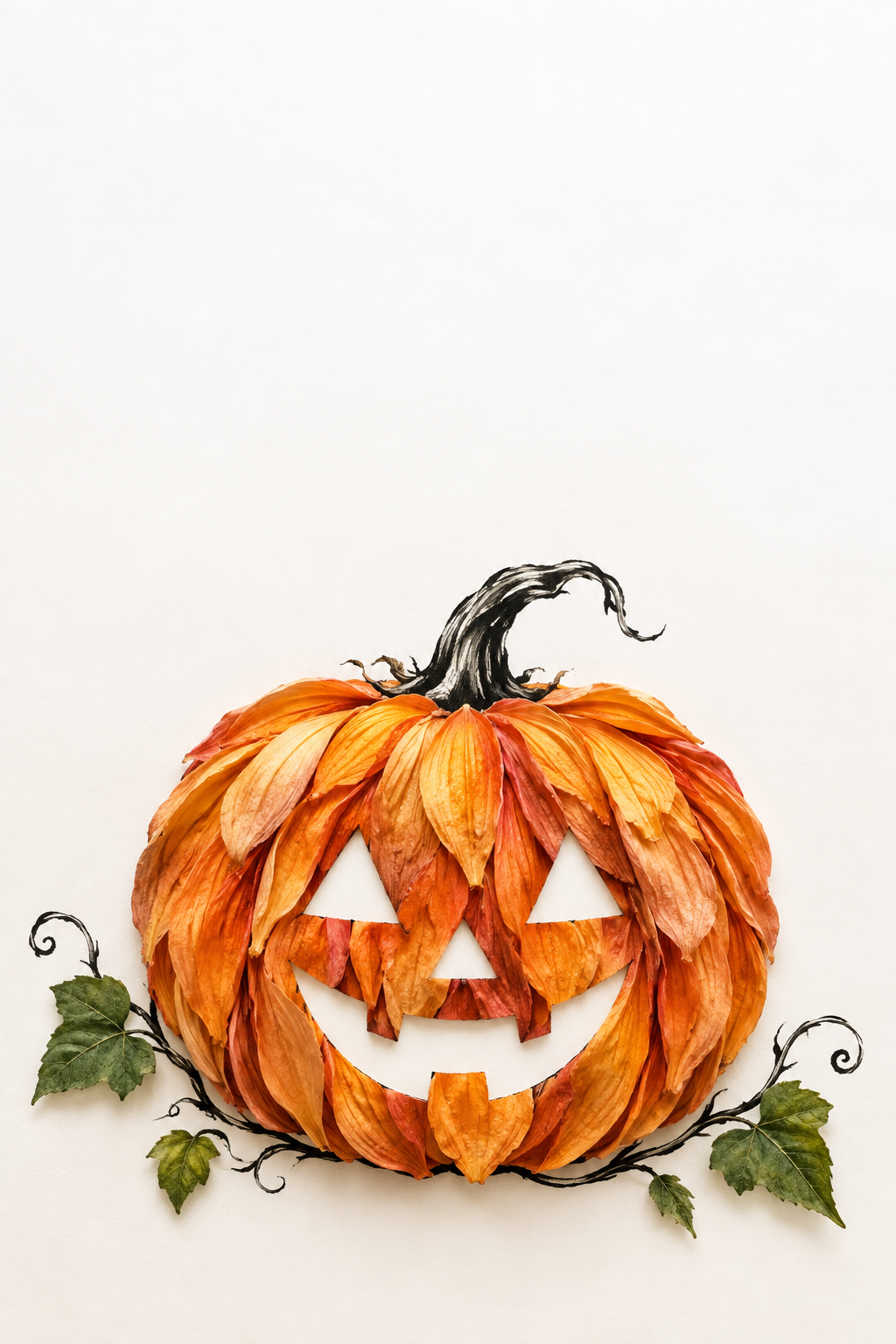
No Need to Wait for Night
Critique
1. Introduction An orange jack-o'-lantern occupies the lower portion of an otherwise open ivory field. Its rounded body consists of overlapping petals, while black drawn lines provide a crooked stalk and trailing vines. The image makes a familiar seasonal emblem depend on the differing behaviors of plant material, ink, and untouched paper. 2. Description Long petals descend from the crown in russet, amber, and bright orange layers. Triangular eyes and a broad toothed smile expose the pale ground beneath. A heavy stalk bends toward the right above the fruit, and green leaves flank its base on thin curling stems with small nearby shadows. 3. Analysis The large upper reserve emphasizes the low, broad silhouette rather than filling the format with ornament. Petal tips establish the pumpkin's ribs through overlapping directional rhythms. Against these dense surfaces, the smooth facial openings remain immediately legible; their brightness belongs to the paper rather than to a depicted internal lamp. 4. Interpretation and Evaluation Seasonal transformation emerges through the conversion of individual floral fragments into a coherent fruit. The stalk's irregular dry strokes echo the petals' creases without disguising their different textures. Although the face is conventional, the visible construction gives its cheerful expression material specificity and keeps the decoration from becoming visually flat. 5. Conclusion What first appears to be a simple pumpkin becomes a study of assembled volume and active absence. The lower vines stabilize the body while their curls extend its energy sideways. Sustained viewing shifts attention from the smile to the small edges that collectively produce it.
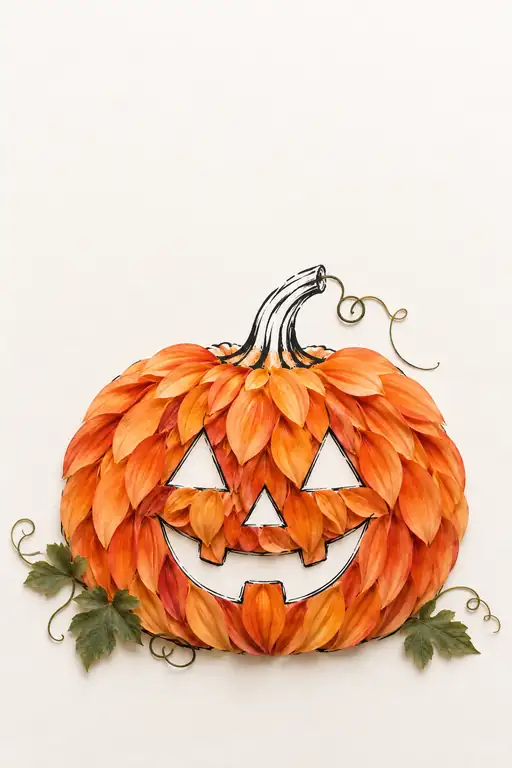 Tonight, My Smile Is Ready
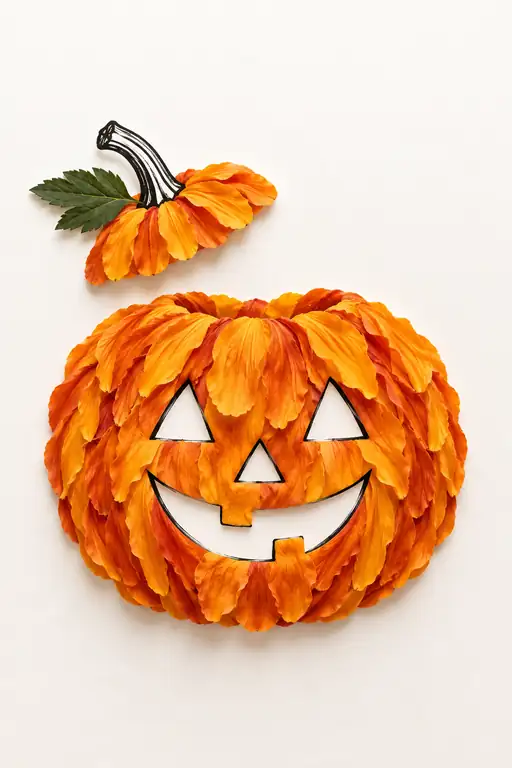 Even Mischief Wears a Warm Smile
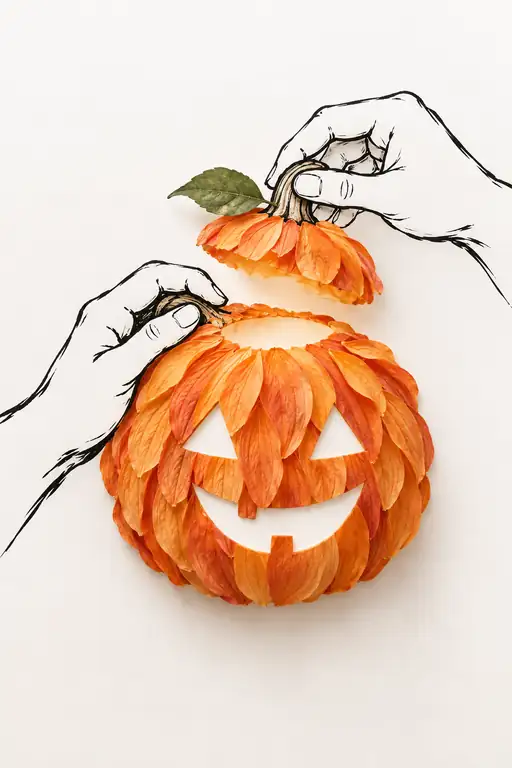 The Smile Has a Secret Inside
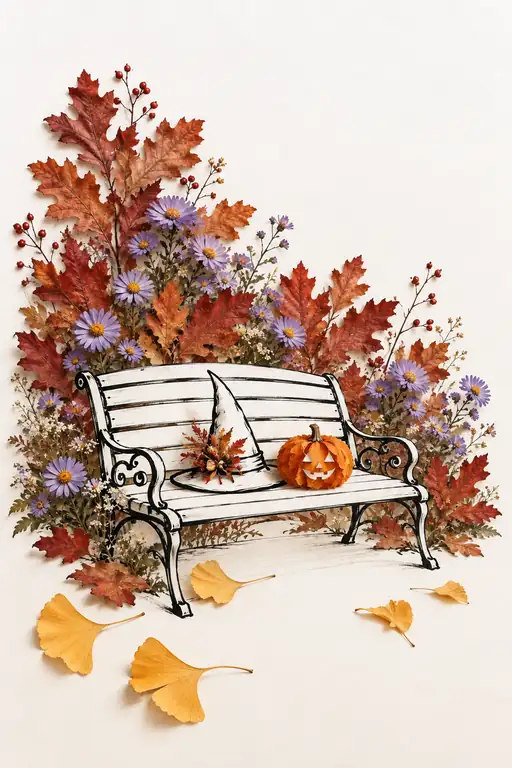 Autumn Is Keeping Our Place
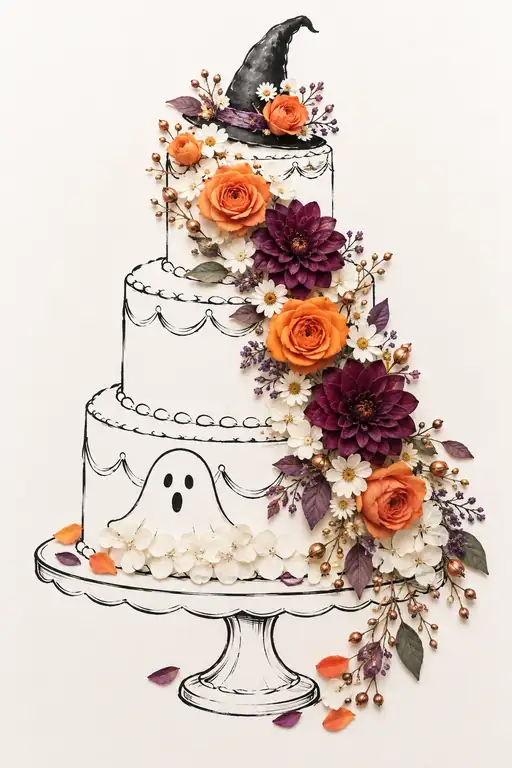 Luscious Spire of the Festive Night
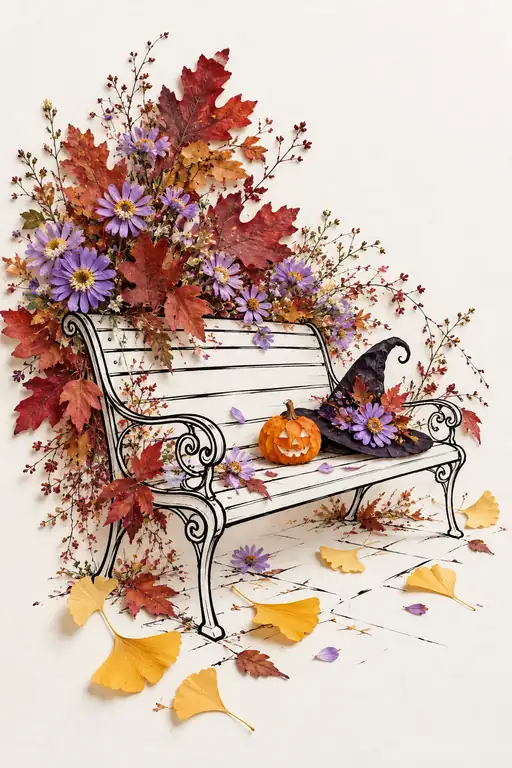 The Visitor Left a Smile
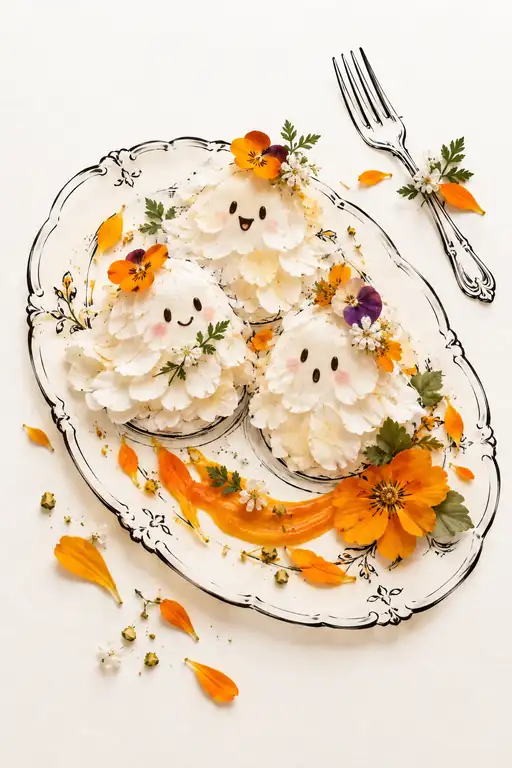 Dressed for the Sweetest Table
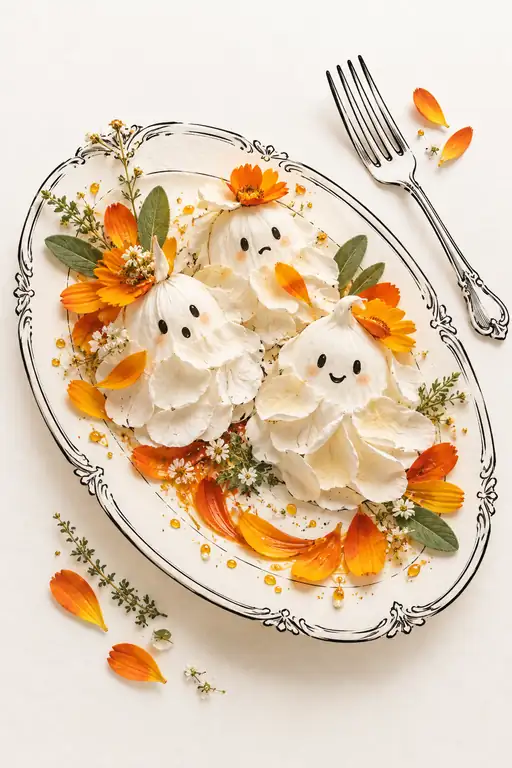 Sweetness Has More Than One Face
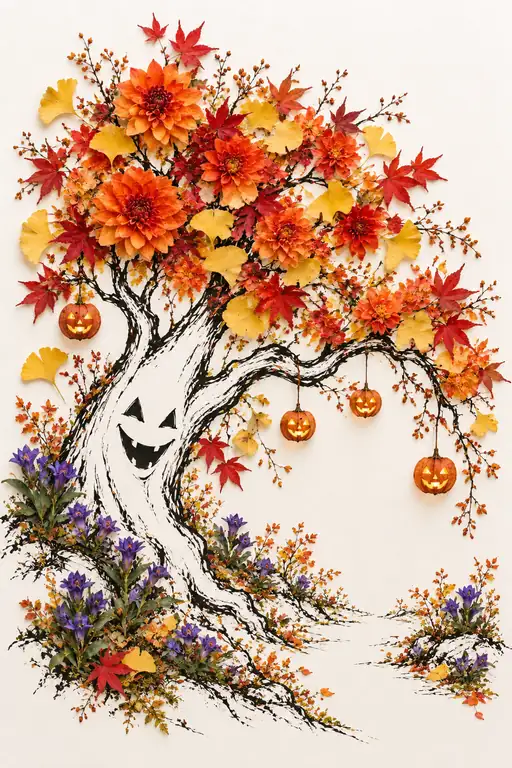 I Will Wait at the Bend
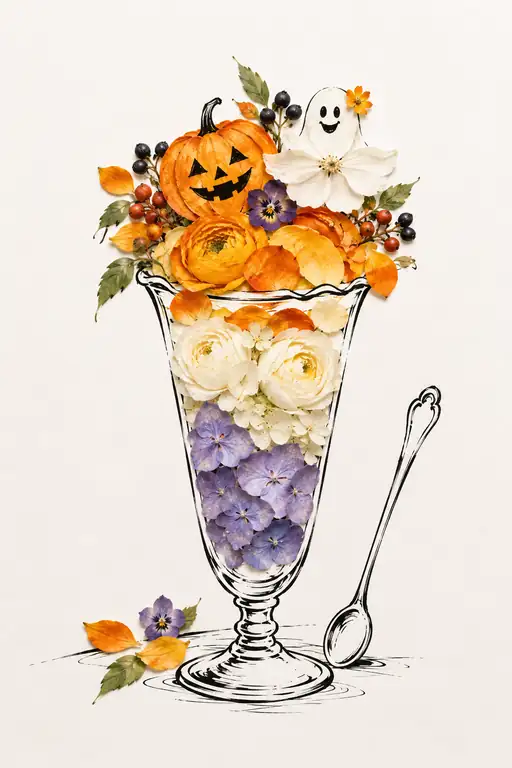 Sweet Banquet of Twilight