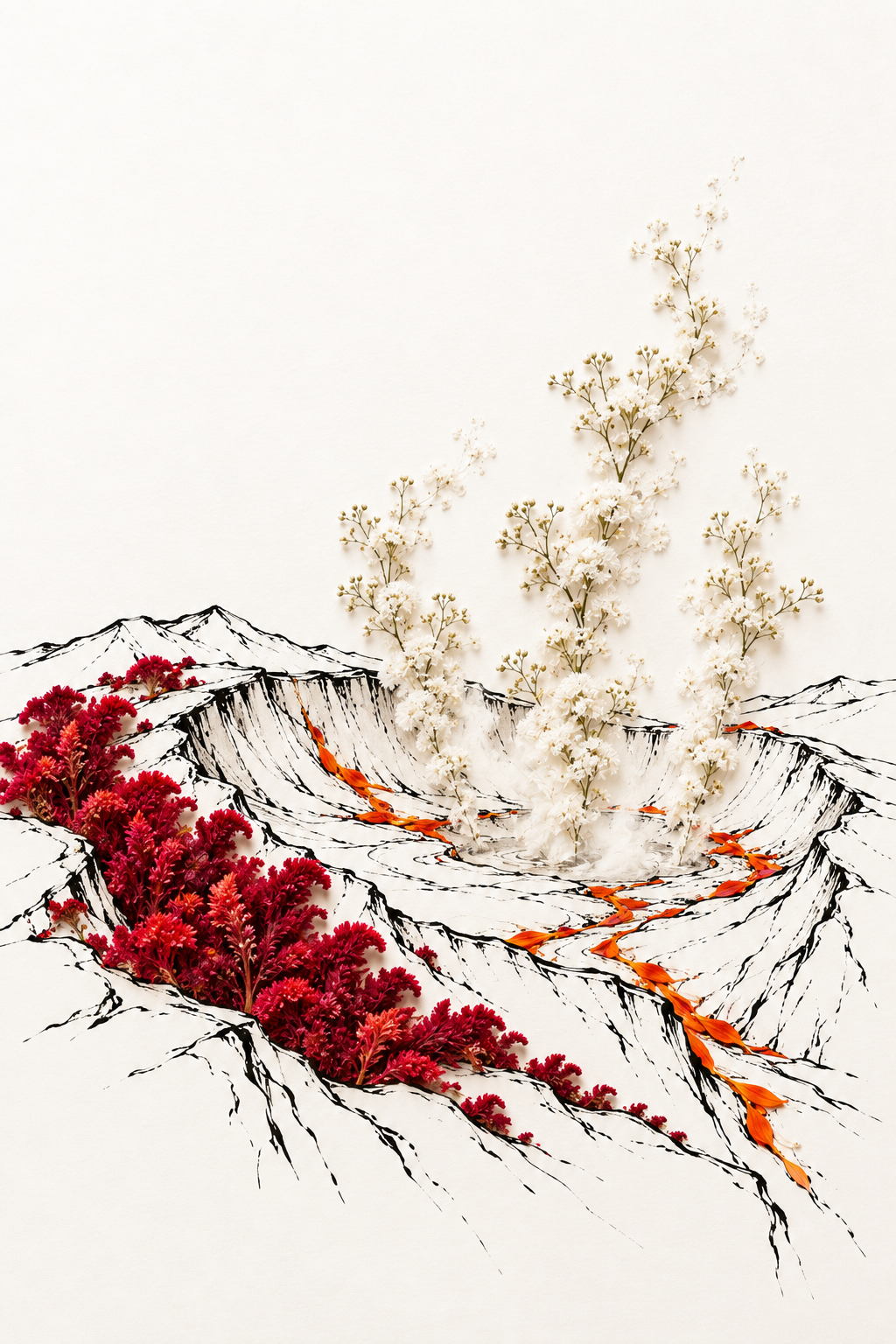
The Earth Holds Its Breath
Critique
Introduction A crater-like landscape is constructed from jagged black contours, narrow orange strips, and contrasting red and white botanical forms. The crater occupies the lower field, while tall pale branching clusters rise into a broad empty sky. The image translates geological movement into a sharply organized comparison of direction, density, and color. Description The central depression has steep walls marked by downward black strokes. Orange pieces follow branching channels from the far rim toward the lower right. Dense red clusters occupy a fissure along the near left ridge. Three principal white sprays rise from the basin at unequal heights, with small buds and delicate offshoots visible against the pale ground. Analysis The crater's elliptical rim establishes depth, while diagonal rock divisions lead toward its center. Orange channels connect distant and near surfaces, contrasting with the red mass's more stationary placement. Vertical white sprays oppose the terrain's downward lines. Their subtle shadows and fine branching create texture without requiring a darker sky to make them visible. Interpretation and Evaluation The work suggests contrasting processes of emergence, descent, and accumulation through visible form. Its originality lies in assigning different botanical scales to the landscape's separate movements. The clear black framework is effective because it prevents the colored materials from becoming unrelated decorative patches, while the large upper vacancy gives the pale ascending shapes sufficient room. Conclusion The initial impression of an unusual volcanic scene develops into recognition of coordinated directional systems. Rim, channels, fissure, and rising clusters each perform a distinct spatial task. Limited color and strongly differentiated textures sustain that organization, allowing the image's imaginative transformation to remain grounded in a legible landscape structure.
Same Subcategory
Similar Artworks
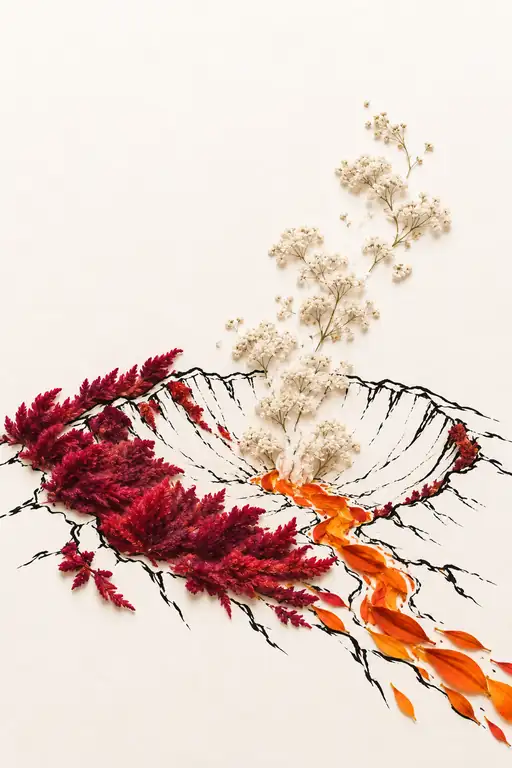 Where the Mountain Exhales
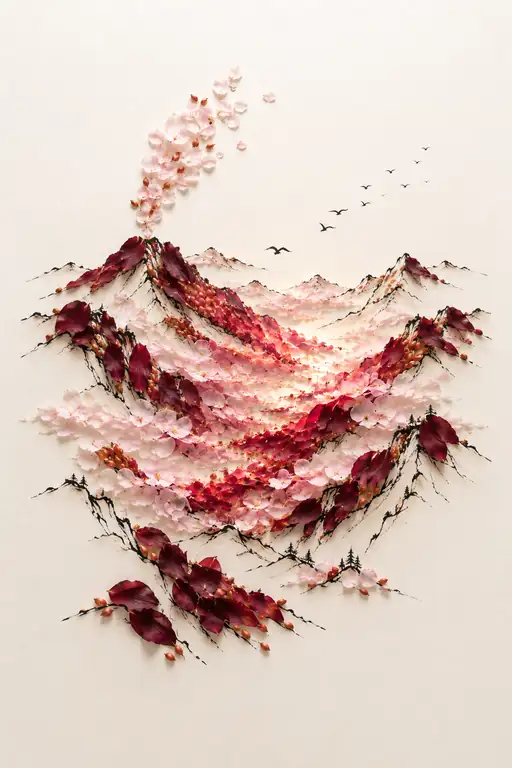 Blossom Volcano in the Morning Sky
 Eruption in Crimson and Pink Twilight
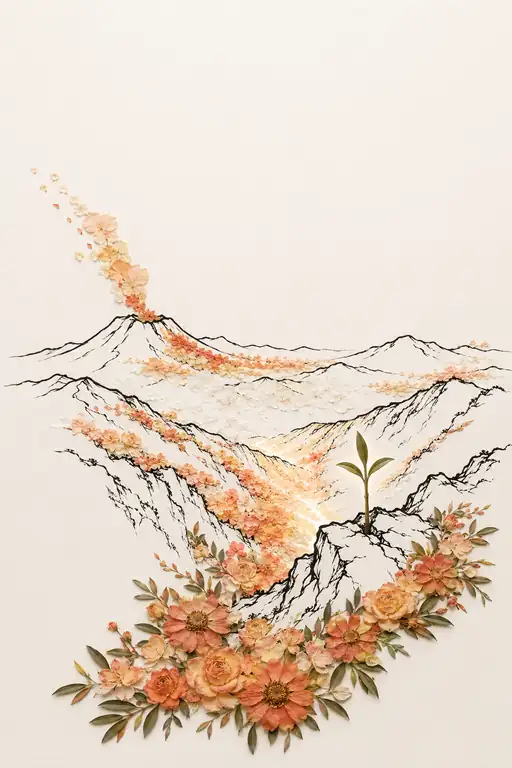 Sprout of Hope on the Volcanic Crest
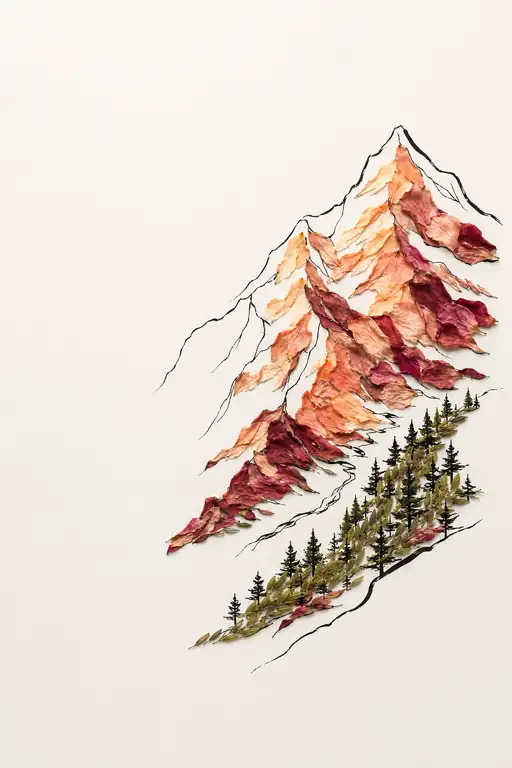 Alpenglow on the Jagged Peak
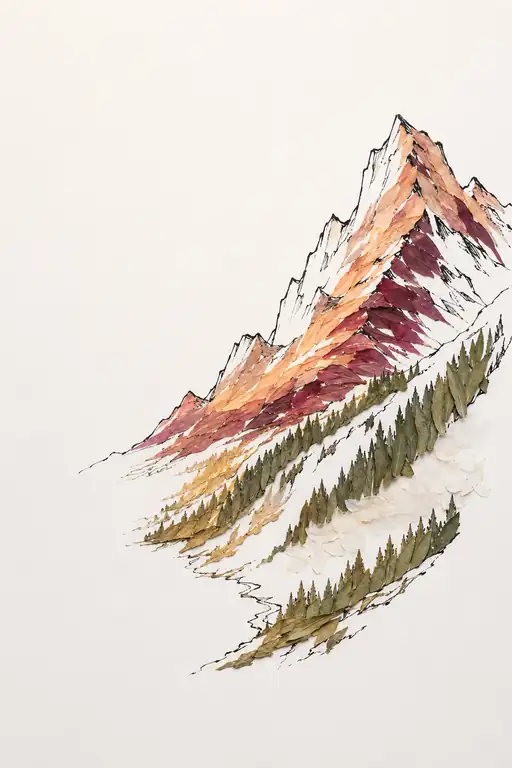 Ridge of Sunset and Evergreen Slopes
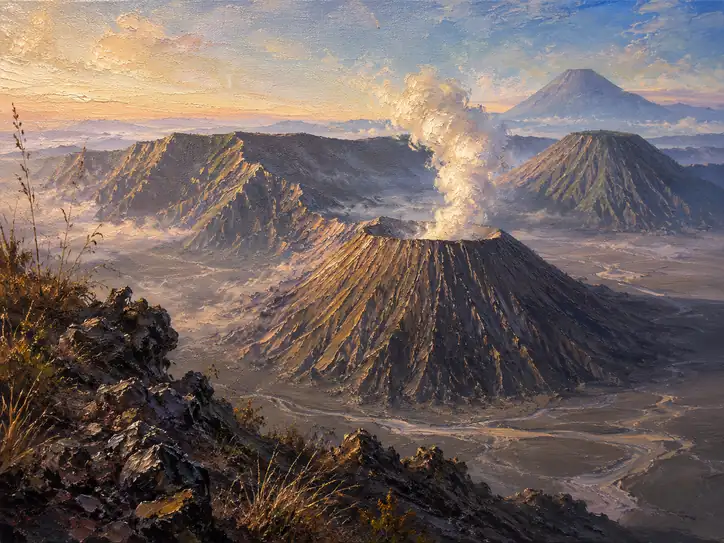 Eternity Encased in the Caldera
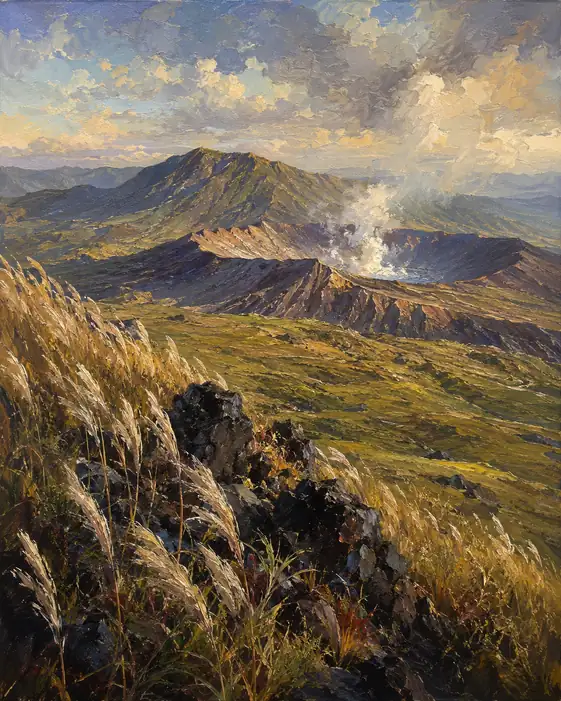 The Earth's Quiet Breath
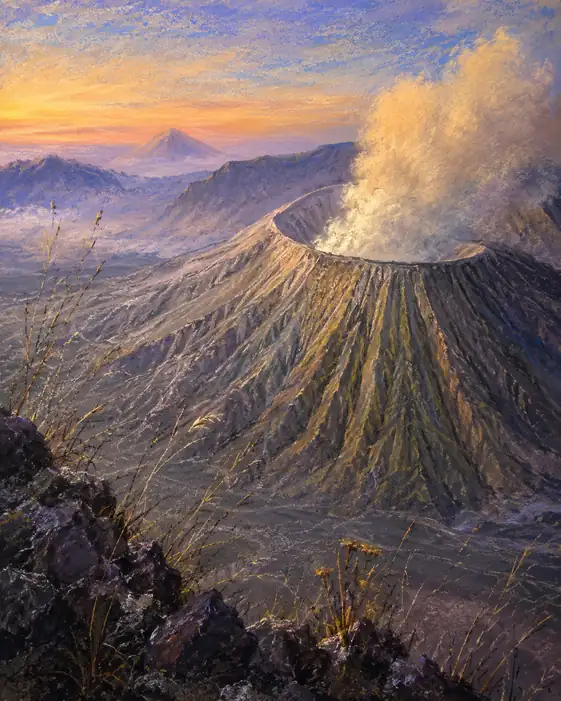 Where Dawn Embraces the Earth's Breath
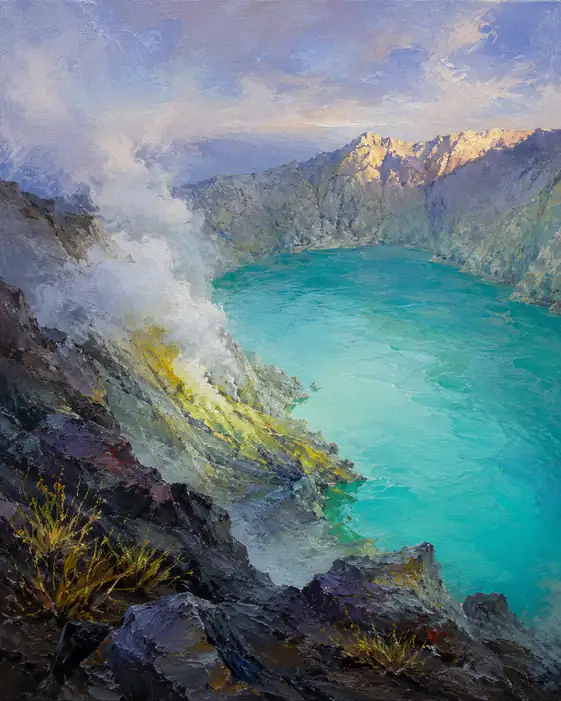 The Earth's Restless Dream