The Distance Filled with Light
Critique
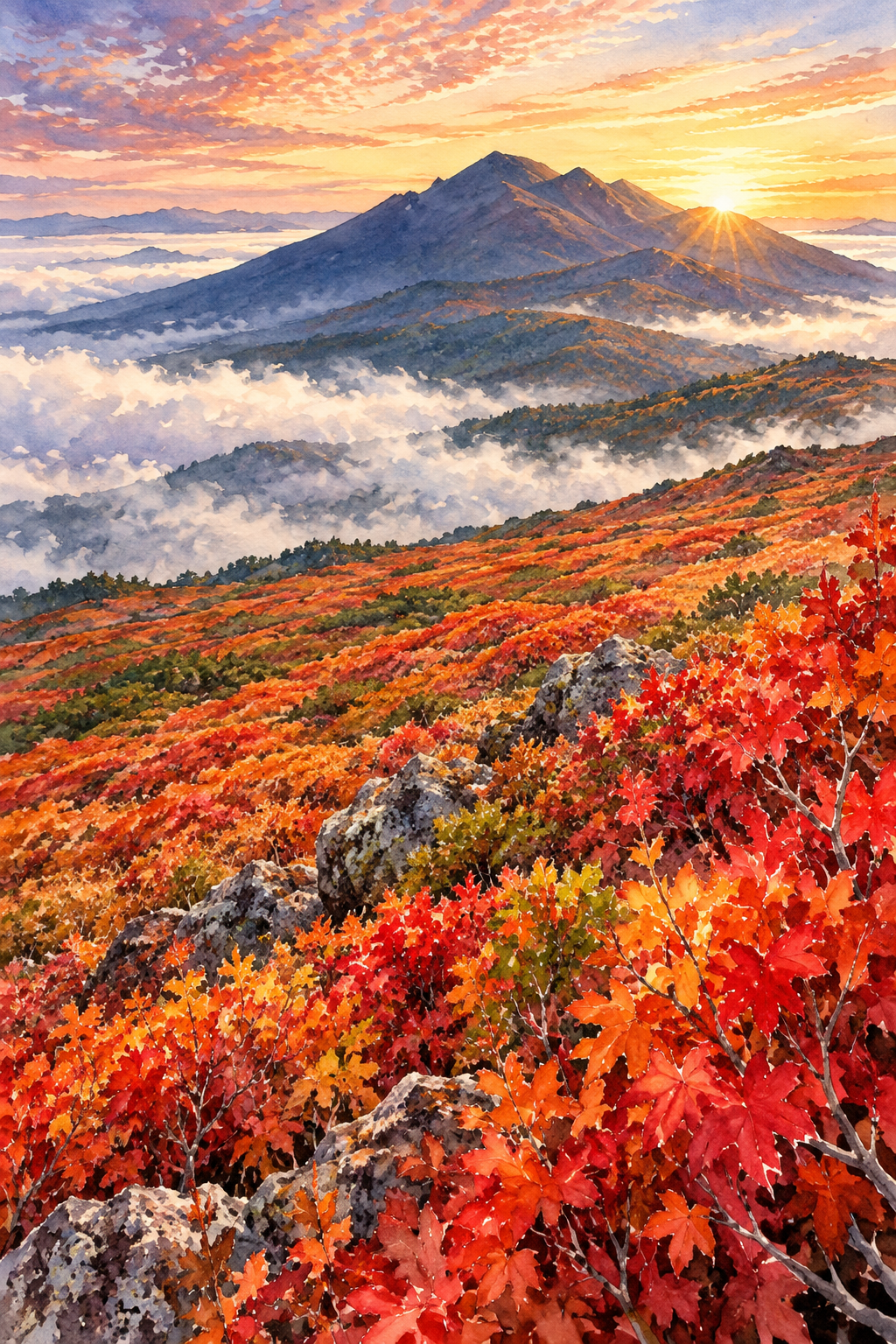
Introduction A broad cloud-filled valley separates brilliant foreground shrubs from a dark mountain ridge. The sun appears far to the right of the principal summit, giving the landscape an asymmetrical source of light. Red and orange leaves, gray rocks, and pale grasses provide a closely observed lower frame. Description Several peaks extend across the upper middle, with narrow golden highlights along their right-facing slopes. White clouds gather in deep bands between darker wooded ridges. The near hillside rises toward the right and carries alternating warm-colored shrubs and green patches. Large lobed leaves occupy the lower right, while angular stones form a broken diagonal through the foreground. Analysis The offset sun distributes attention across the ridge instead of fixing it on the highest peak. Horizontal cloud banks contrast with the hillside's rising bands, creating clear depth. Foreground leaf veins and stone markings establish proximity. The mountain's cooler tones provide a stable middle register between the warm sky and strongly colored vegetation. Interpretation and Evaluation The image emphasizes breadth and separation: the cloud-filled interval is as significant as either slope. Its spatial organization is effective because each ridge remains distinct without excessive contour emphasis. The foreground's varied rock sizes and leaf directions also prevent the red surface from becoming a single undifferentiated mass, giving the expansive light effect a material foundation. Conclusion The initial appeal of illuminated autumn foliage develops into awareness of layered terrain and a deliberately displaced focal light. The large right-hand leaves locate the viewer close to the slope, while clouds open distance beyond it. The coordinated warm and cool zones sustain a panoramic experience within the vertical composition, balancing detail with atmospheric scale.
 A Softness the Peaks Cannot Refuse
 Where Light Touches Stone
 Golden Threads Across the Mountain
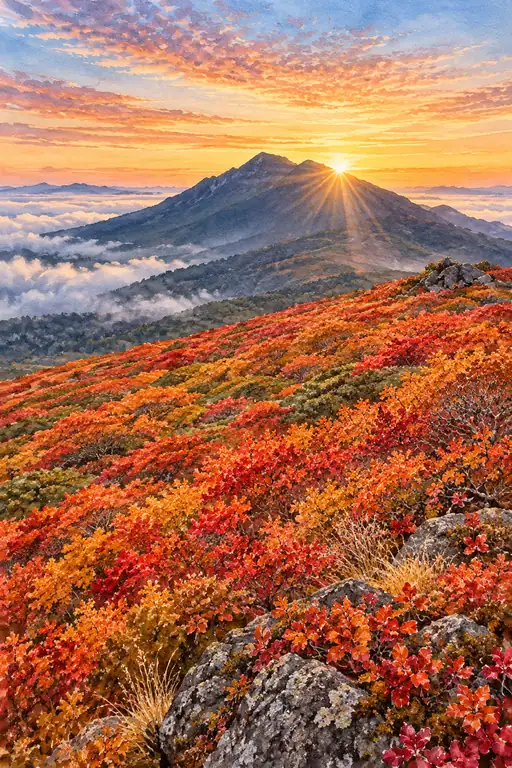 The Ridge Receives the Light
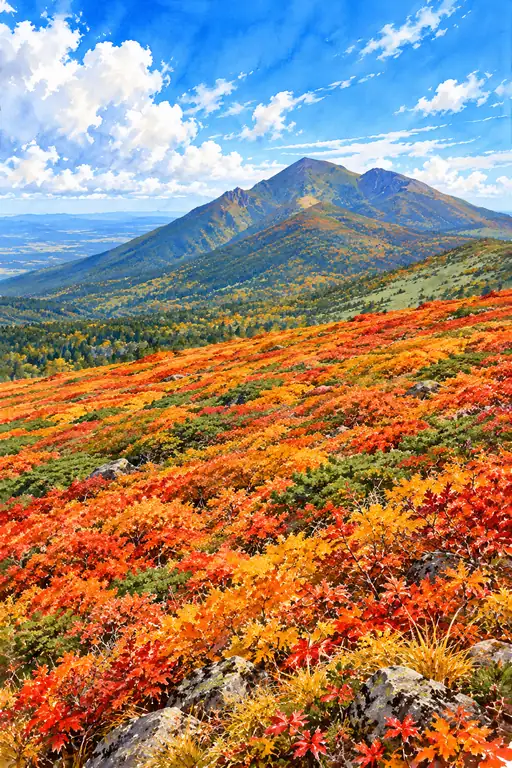 Autumn Opens to the Sky
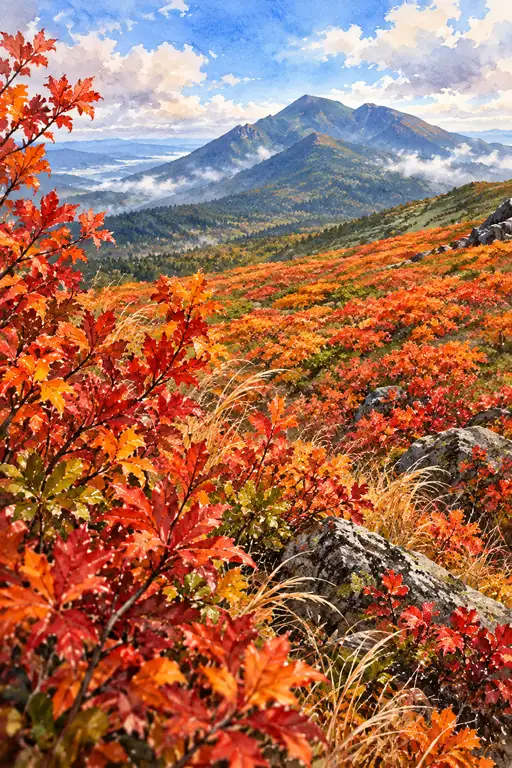 From This Red to the Far Peaks
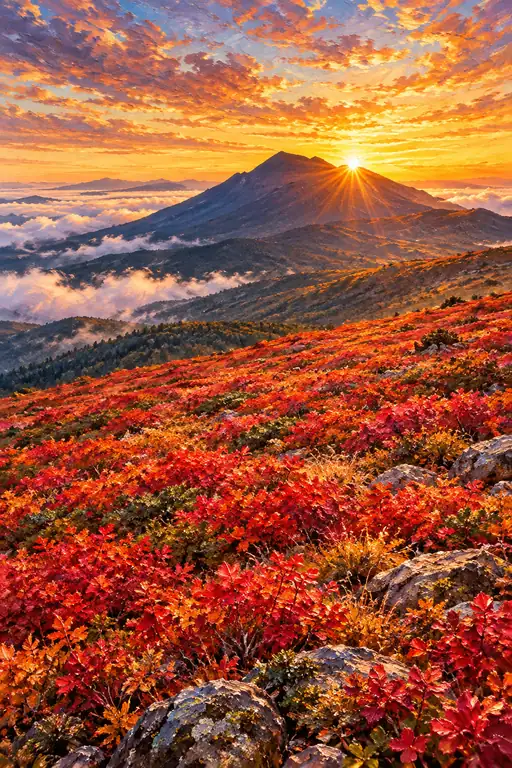 Radiance Beneath My Feet
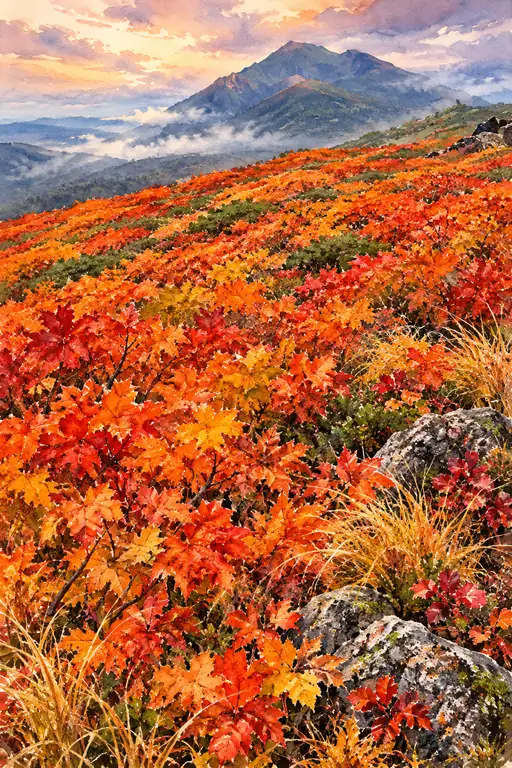 Autumn Beneath a Troubled Light
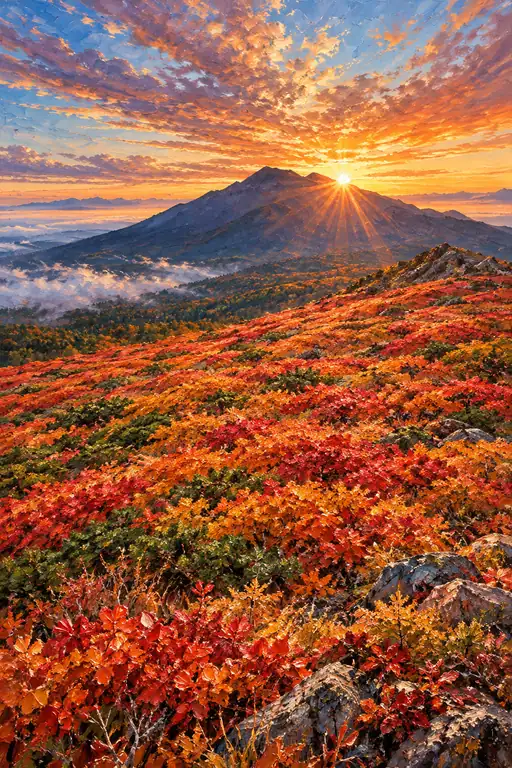 The Sky's Golden Crescendo
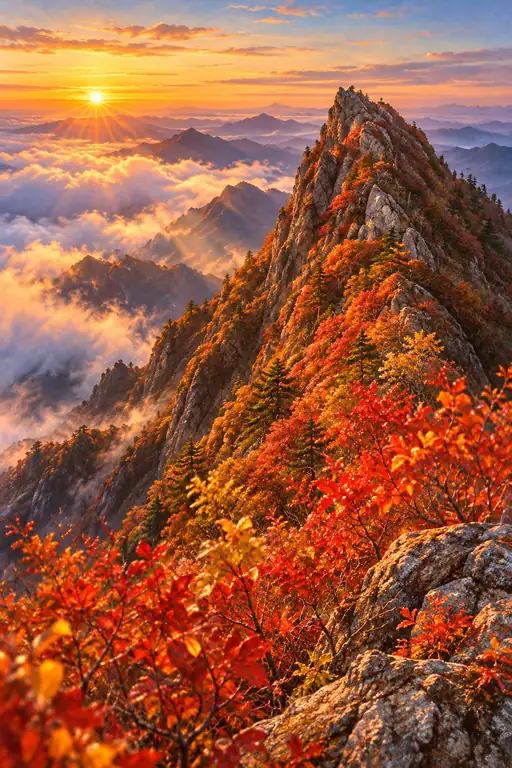 Crimson Breath on Sunlit Crags
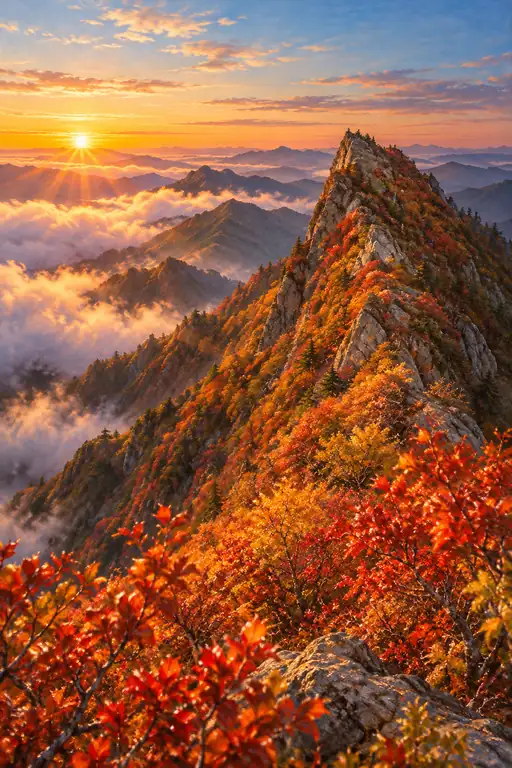 Golden Ridge Above the Sea of Clouds