Golden Threads Across the Mountain
Critique
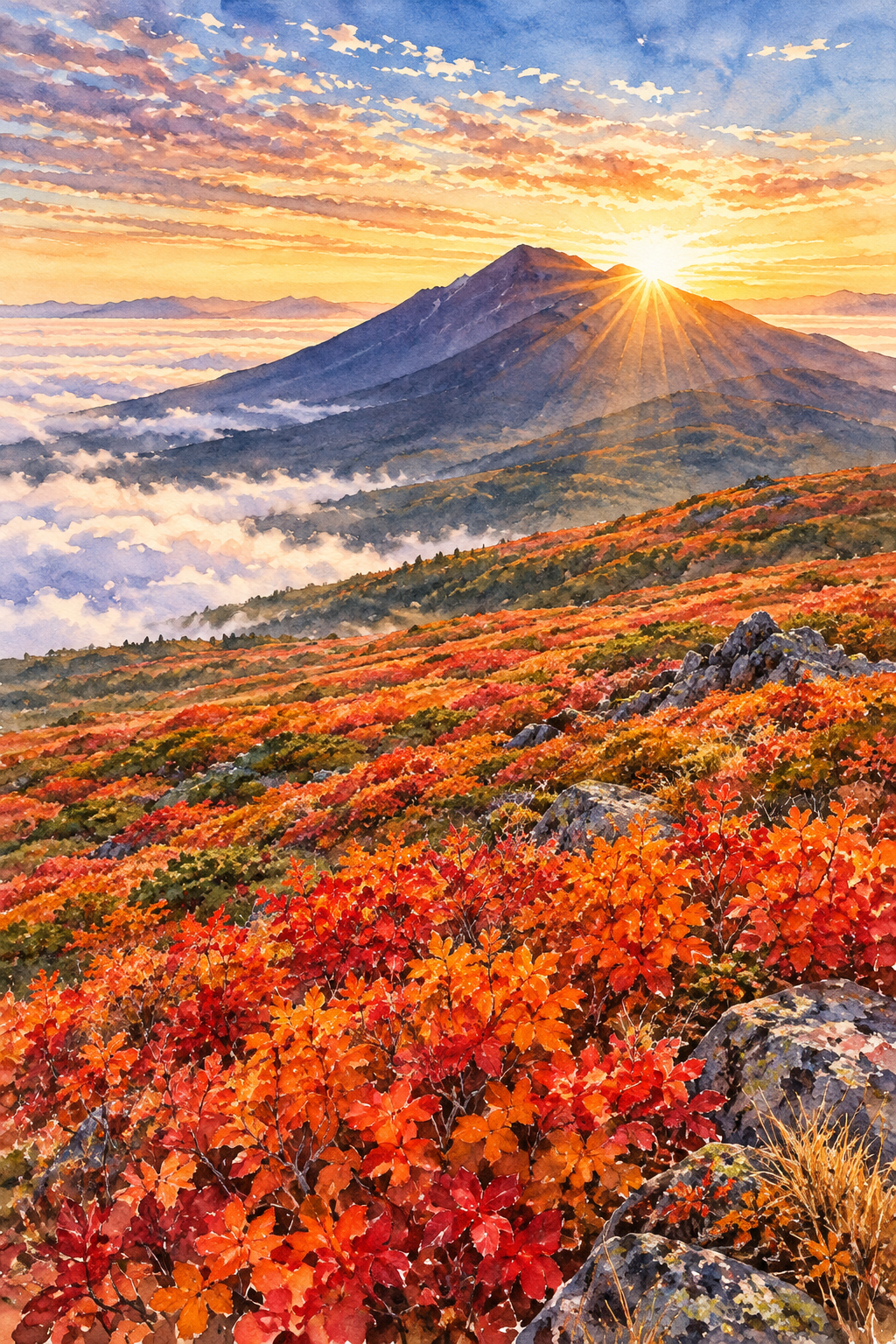
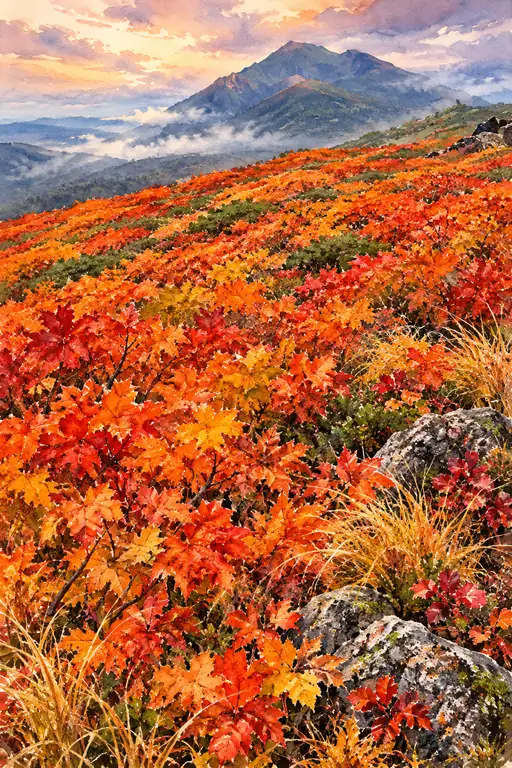
Introduction A sun emerges along a mountain ridge above clouds and an autumn hillside. Shrubs and gray stones fill the lower field, while the mountain's shadowed planes occupy the center. A dramatic light source and closely described ground maintain both spectacle and spatial specificity. Description The sun sits near the right side of the summit and sends long golden rays down the mountain. Pale peach clouds cross the sky in broken horizontal bands. Below, white mist fills valleys between dark ridges. The nearest slope carries broad orange leaves, smaller red shrubs, scattered green patches, and mottled rocks concentrated toward the right edge. Analysis The rays create a fan that intersects the mountain's diagonals, directing attention toward several lower planes. The hillside rises rightward, echoing the sun's offset position. Strong reds and oranges are moderated by green vegetation and cool gray stones. Mist separates the middle ridges, while larger foreground leaves and rock markings establish a distinct, tangible viewing position. Interpretation and Evaluation The light is presented as an event that reorganizes the terrain rather than simply decorating the sky. Its effectiveness depends on leaving much of the mountain dark enough to retain volume. The vivid foreground remains structurally credible through specific rock and branch details, and the water-like washes of the distant atmosphere provide an effective contrast to those sharper surfaces. Conclusion The initial impact of the sunburst develops into recognition of how near and distant textures cooperate. Cloud banks create separation, rays create connection, and rocks establish stability. This coordinated use of different visual devices gives the expansive view coherence, allowing dramatic illumination and rich autumn color to support rather than obscure the mountain's spatial structure.
 The Ridge Receives the Light
 Where Light Touches Stone
 Radiance Beneath My Feet
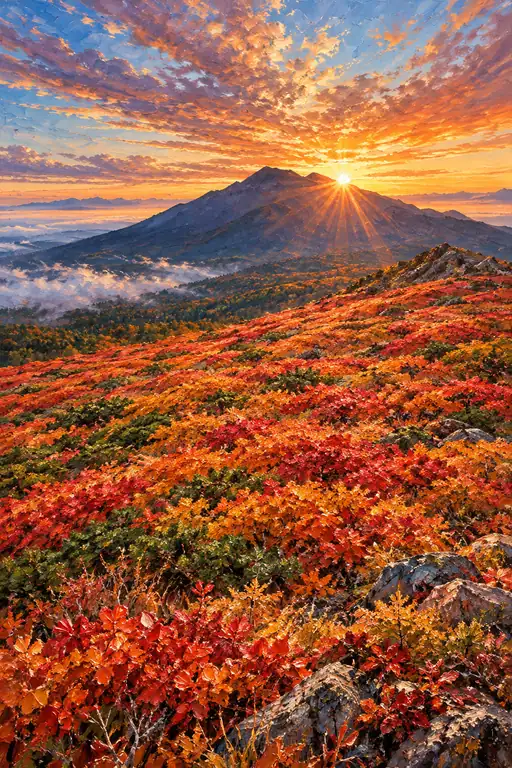 The Sky's Golden Crescendo
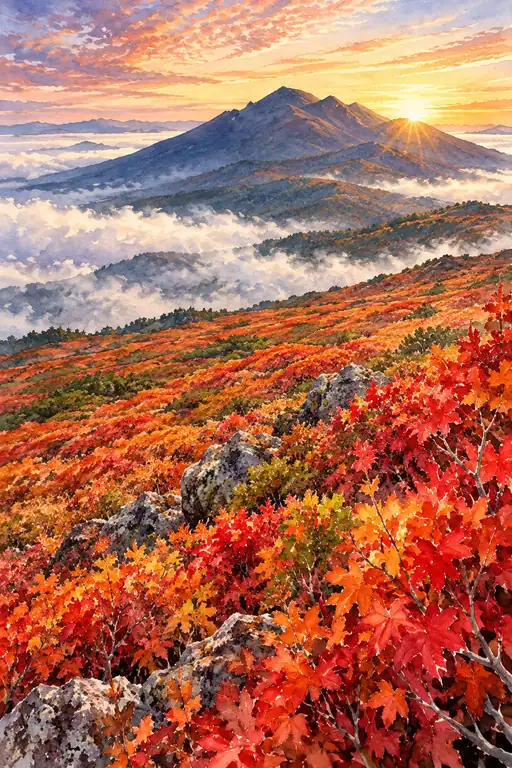 The Distance Filled with Light
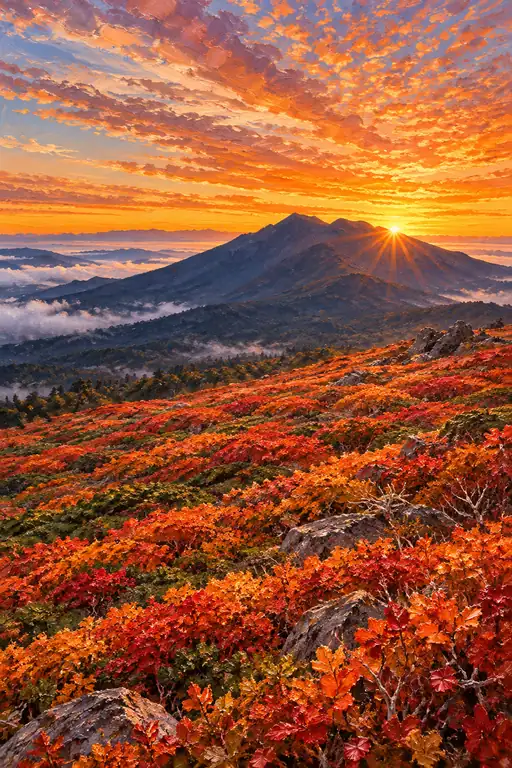 A Last Warmth Held by Stone
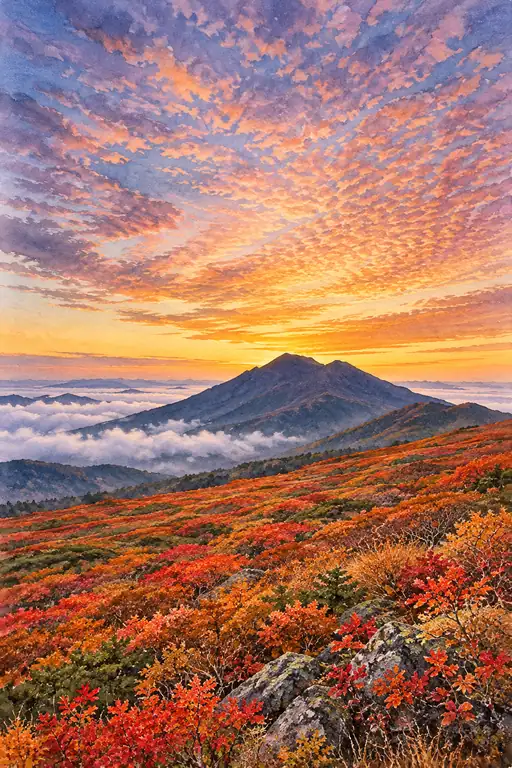 A Thousand Quiet Afterglows
 Autumn Opens to the Sky
 From This Red to the Far Peaks
 Autumn Beneath a Troubled Light