A Thousand Quiet Afterglows
Critique
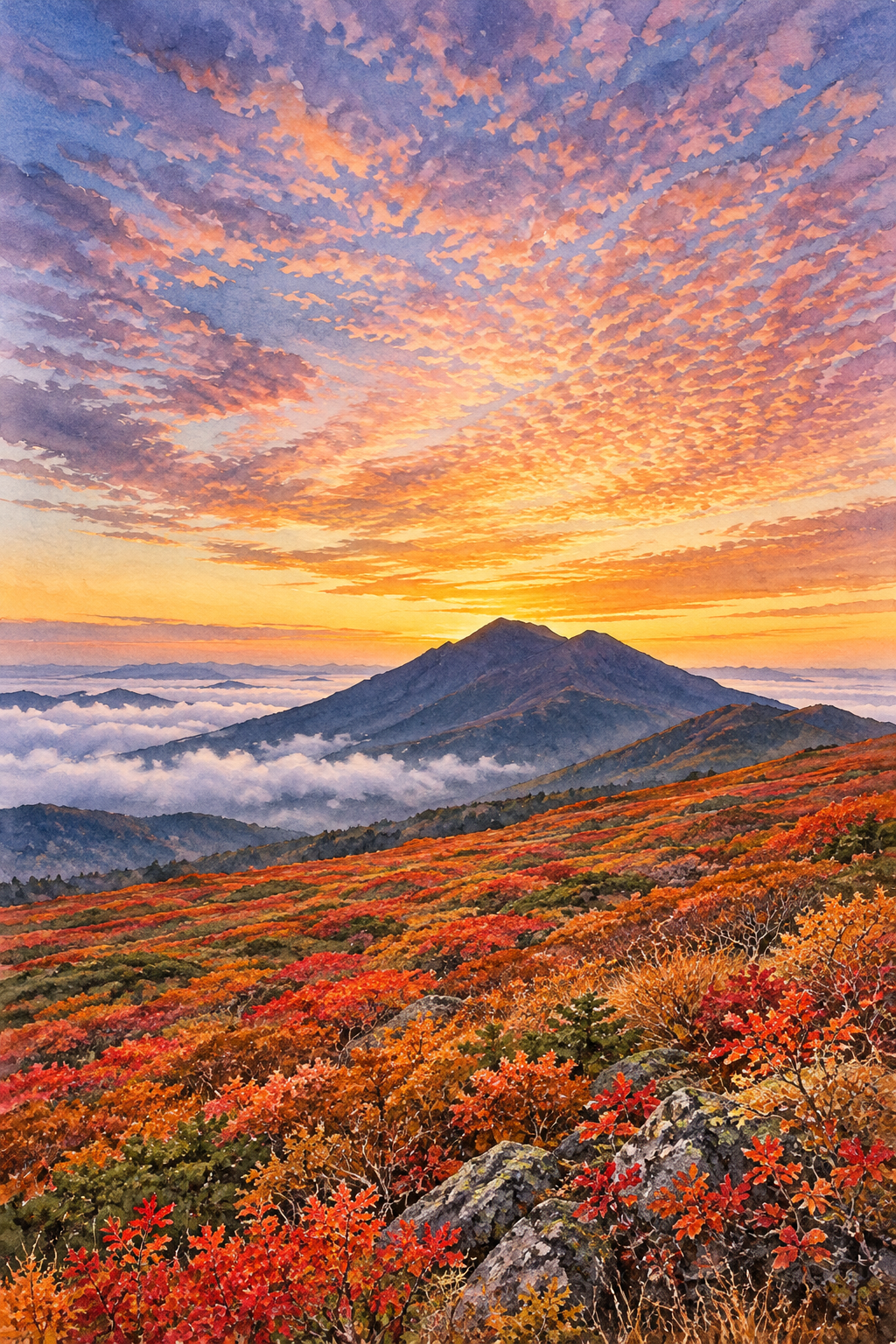
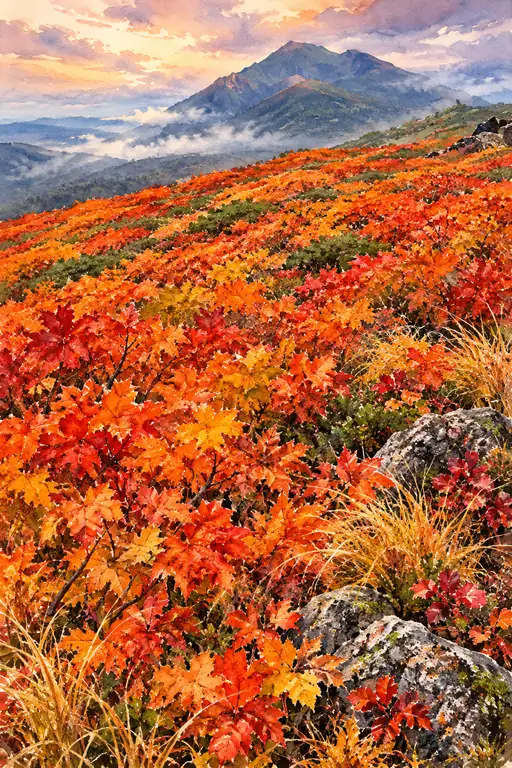
Introduction A mountain and autumn slope lie beneath peach and violet cloud fragments. A golden horizon illuminates the cloud layers without a visible sun. The composition gives the sky prominence, making atmospheric pattern as important as the red vegetation and rocks below. Description The mountain's uneven summit sits below the middle of the picture, with white cloud banks gathered around its lower slopes. A nearer ridge projects from the right. Across the foreground, orange and red shrubs alternate with green patches. Gray rocks cluster at the lower right among fine grasses and leafless twigs, supplying close detail beneath the broad sky. Analysis Cloud marks become smaller and more tightly spaced toward the golden horizon, creating atmospheric recession above the land. The hillside rises to the right, counterbalancing the mountain's central mass. Warm vegetation echoes the horizon, while violet clouds repeat the mountain's cooler tones. Rock textures and thin stems provide a different scale of mark from the large sky washes. Interpretation and Evaluation The scene emphasizes the interval around changing light rather than a visible solar event. Its originality is compositional: the mountain is subordinated to a patterned atmosphere without losing its structural role. The limited tonal separation between distant ridges is offset by intervening clouds, which maintain depth while preserving the restrained mood of the lower landscape. Conclusion The initial impression of an autumn panorama shifts toward an understanding of the sky as an active spatial field. Foreground rocks establish proximity, while the clouds describe distance in both land and atmosphere. The balanced exchange of warm and cool colors allows this expansive arrangement to remain coherent without relying on a single sharply lit focal point.
 Autumn Bows Beneath Two Rainbows
 A Last Warmth Held by Stone
 The Ridge Receives the Light
 Where Light Touches Stone
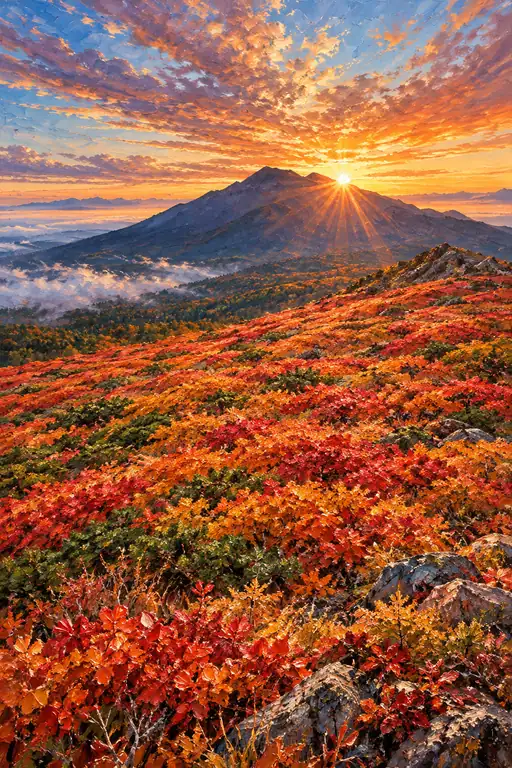 The Sky's Golden Crescendo
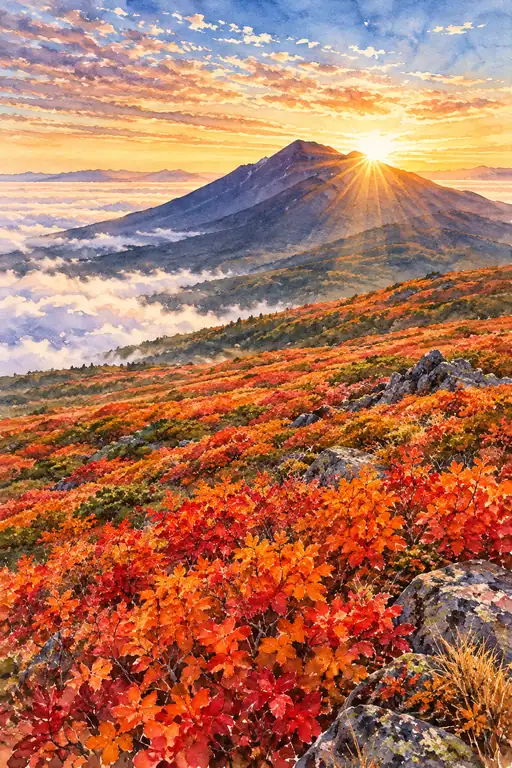 Golden Threads Across the Mountain
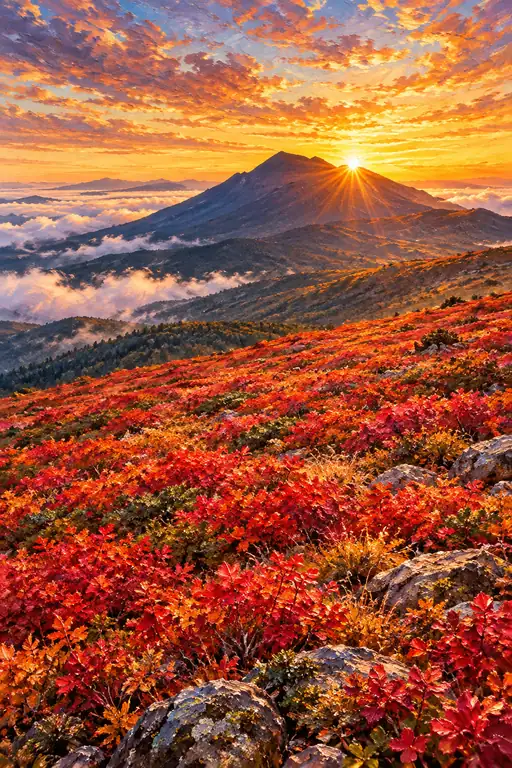 Radiance Beneath My Feet
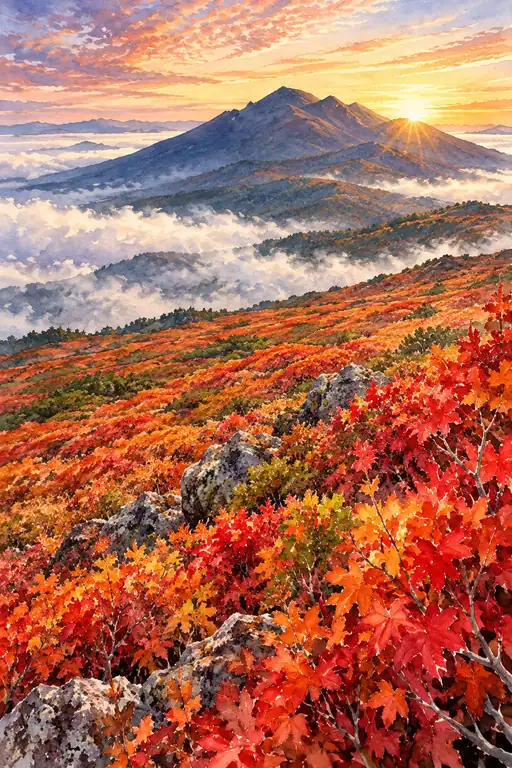 The Distance Filled with Light
 From This Red to the Far Peaks
 Autumn Opens to the Sky
 Autumn Beneath a Troubled Light