The Stairway of Expectation
Critique
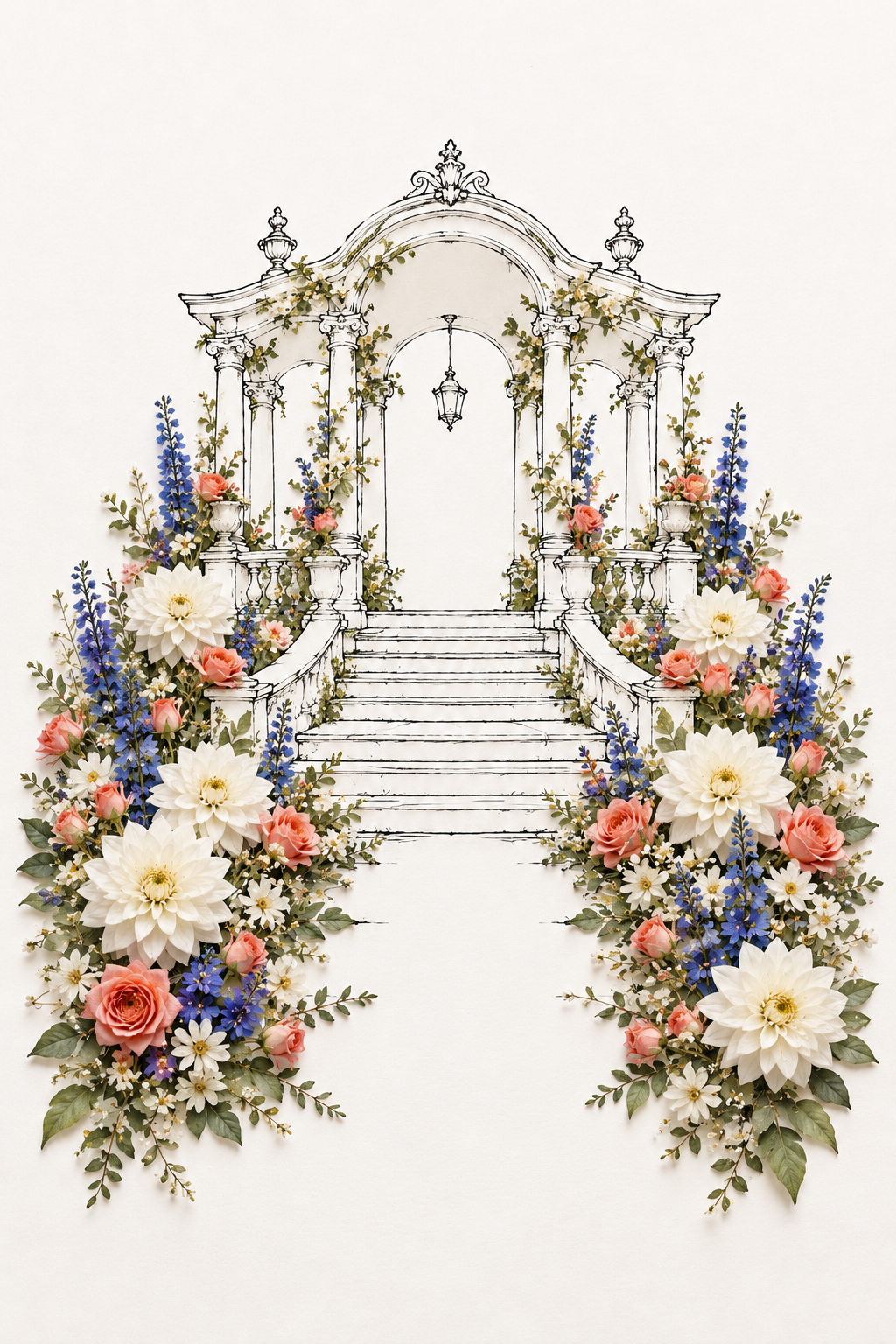
Introduction A flower-bordered stair rises toward an open pavilion with a curved pediment and slender columns. Large white blooms, peach roses, and blue spikes occupy both sides, while the central route remains pale. The image combines elaborate but economical architectural drawing with botanical surfaces that bring substantial texture into the foreground. Description The columns support curled capitals and a shaped upper crest. A hanging lantern occupies the central opening, whose background is left unmarked. Curved balustrades flank the steps, ending near small planted urns. Vines climb around the columns, and larger blossoms gather low along the stair, with green leaves extending into the surrounding pale field. Analysis The staircase's repeated horizontals direct attention upward toward the lantern. The floral borders narrow with distance, reinforcing the central perspective. White flowers contrast with the building through their layered shadows rather than strong color. Blue vertical spikes interrupt rounded peach and cream masses, while the columns maintain a measured rhythm behind the irregular vegetation. Interpretation and Evaluation The empty pavilion presents arrival as a possibility rather than a completed event. Its effectiveness lies in preserving a visible route through highly decorated margins. Botanical growth follows and crosses architectural supports, creating an exchange between order and expansion. The clear stair geometry and selective contour detail keep the imaginative mixture spatially coherent despite the flowers' prominent scale. Conclusion The initial impression of ceremonial ornament develops into recognition of an open destination. Steps, balustrades, columns, and lantern establish successive points of orientation. Concentrated foreground texture and a deliberately unfilled center allow the image to suggest approach without dictating what lies beyond, balancing material abundance with a legible, quietly anticipatory space.
 Through Splendor to the Quiet
 Every Step Has a Smile
 Each Step, a Promise of Light
 Each Turn Brings Me Higher
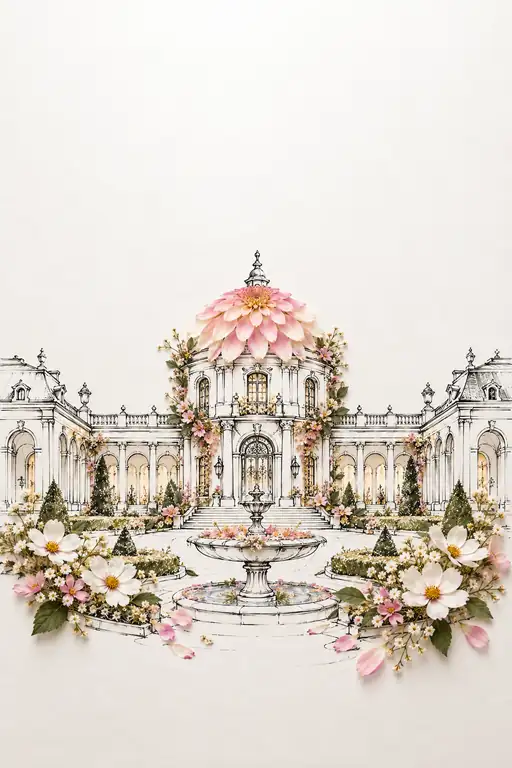 Grandeur Learns to Be Gentle
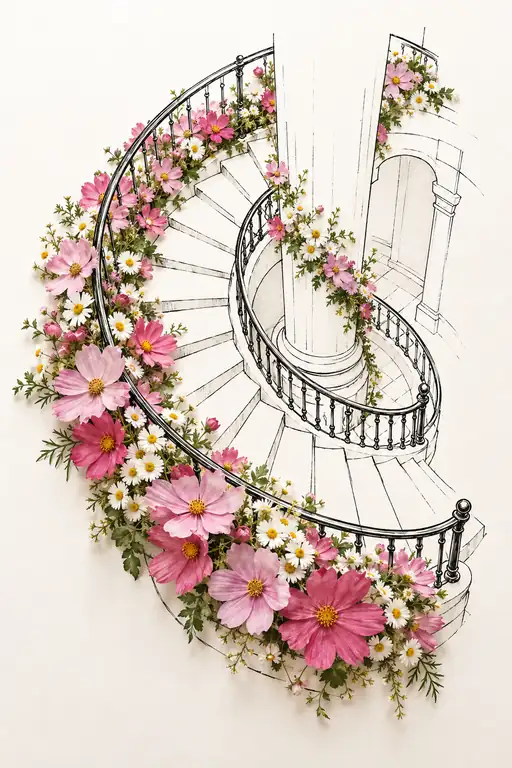 Every Turn, a New Delight
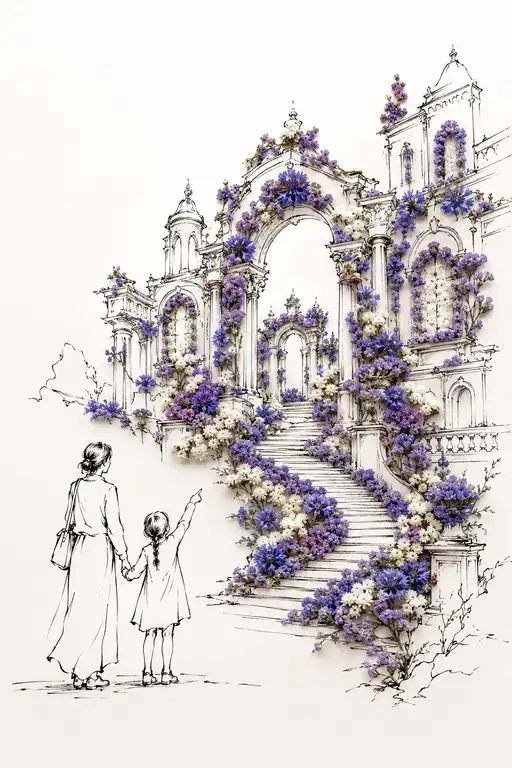 Ascent to the Crowned Arch
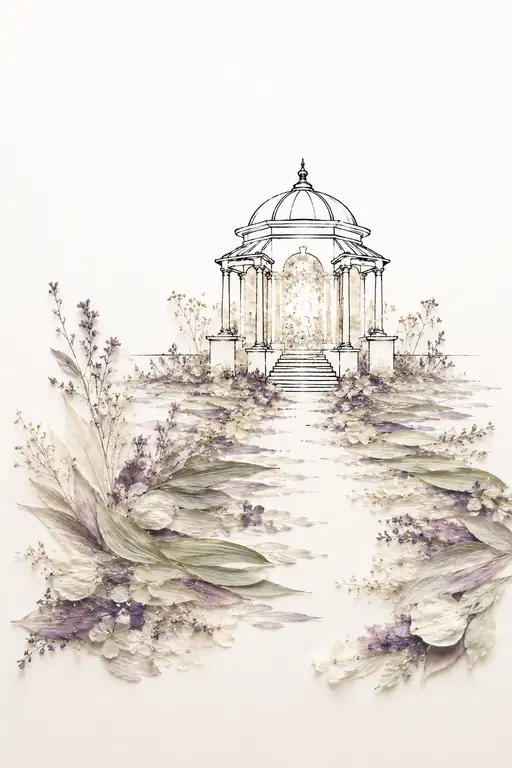 Pathway to the Sunlit Gazebo
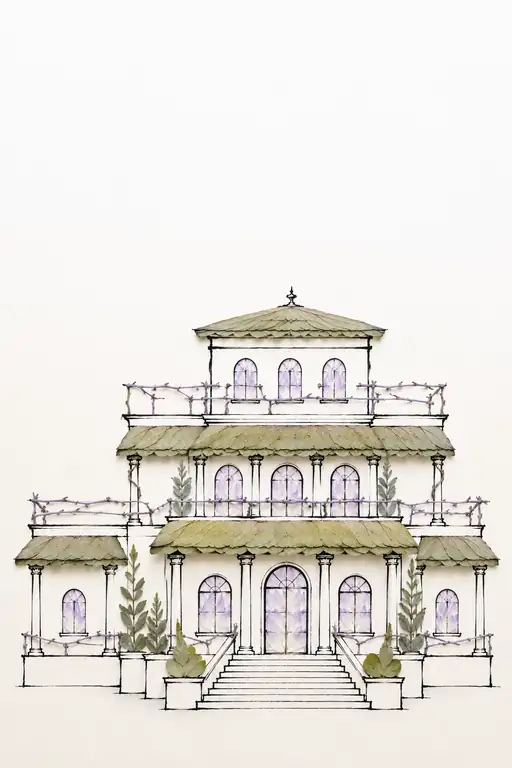 Pavilion of Petal and Tier
 Baroque Sunsets over the Estate
 Ascending Rhythms of Joy