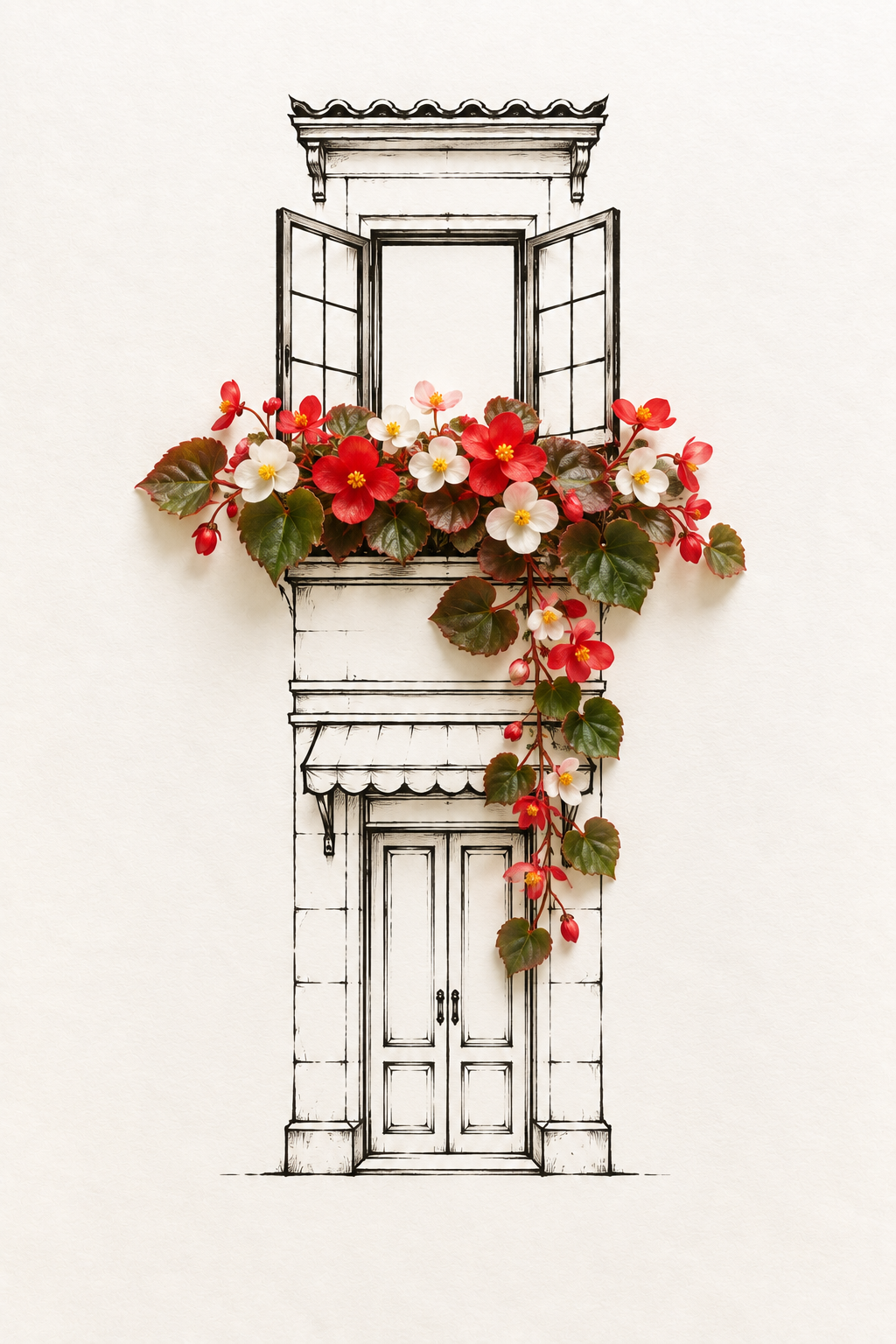
The House That Reaches Down
Critique
Introduction A narrow building facade pairs an open upper window with a closed double door below. Red and white flowers overflow the sill and descend along the right side. Black architectural drawing supplies a framework, while botanical materials create a central band of color and an irregular extension across the orderly frontage. Description The upper window has two outward-opening glazed panels beneath a small tiled cornice. Glossy rounded leaves and bright flowers spread across its base. A long red stem carries alternating leaves, buds, and open blooms downward beside a scalloped awning. Below it, paneled doors with small paired handles stand between lightly marked masonry strips. Analysis The facade's vertical symmetry is interrupted by the trailing plant on the right. Its downward movement connects the flower-filled sill to the doorway without hiding the latter's structure. Red blooms establish strong accents among pale flowers and bronze-green leaves. The dark window frame and door panels provide measured repetitions against which the botanical irregularities become more apparent. Interpretation and Evaluation The image makes the building feel inhabited through cultivation rather than through a visible resident. The open window and closed door offer contrasting forms of access, while the plant crosses their architectural separation. The material integration is effective because foliage concentrates where a sill could support it, then extends imaginatively beyond the expected scale of a window box. Conclusion The initial impression of a decorated facade develops into a study of order altered by growth. The descending stem is crucial, transforming a compact flower display into a relationship between floors. Careful contour work preserves the architecture's clarity, allowing vivid color and glossy leaves to animate its symmetry without dissolving the building's coherent form.
Same Subcategory
 1792703849372
Similar Artworks
 A Greeting from the Window Above
 Something in Me Stays Open
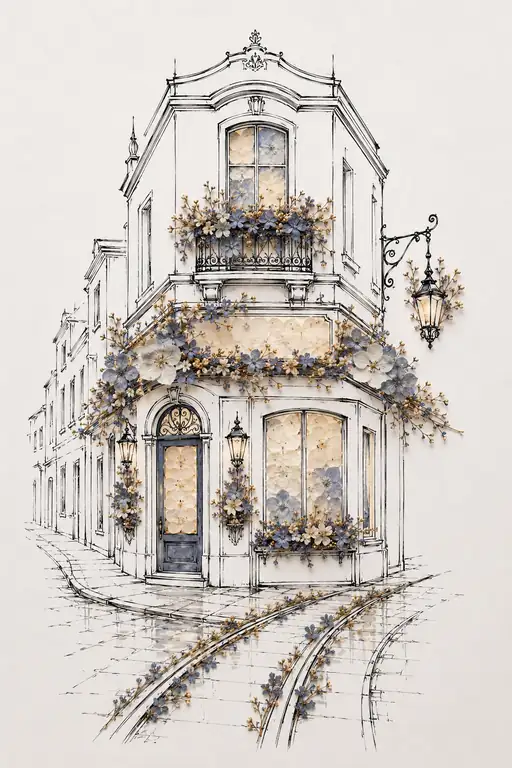 Festoon of the Corner Salon
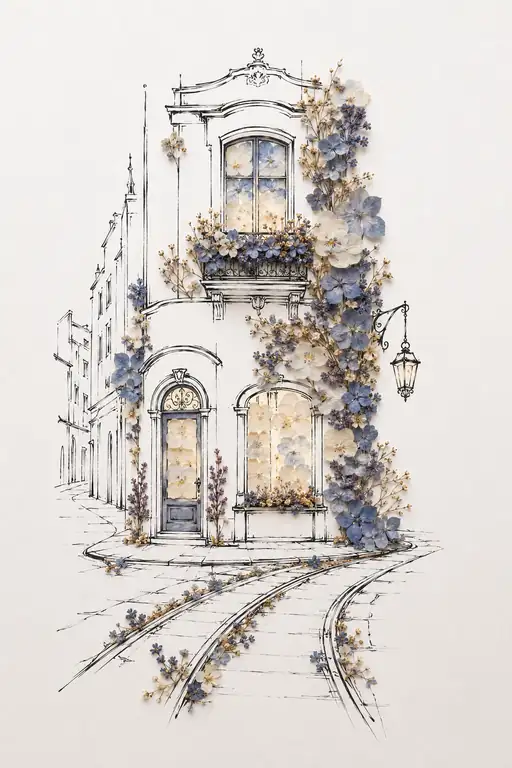 Azure Hydrangea at the Street Corner
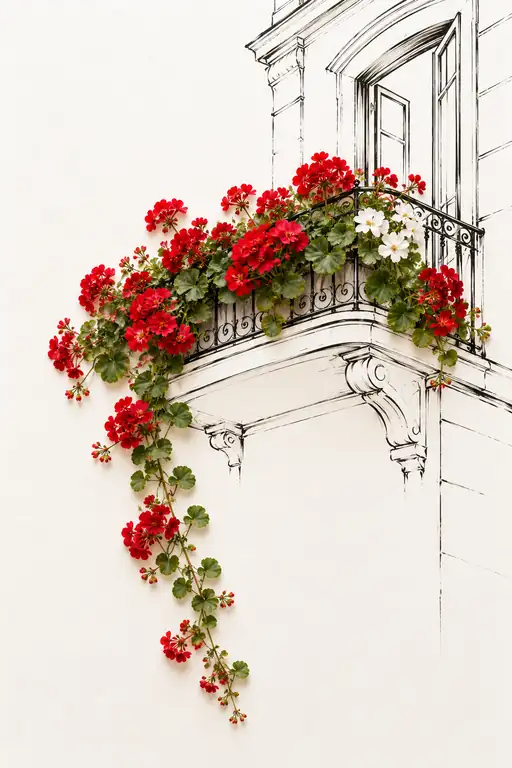 My Joy Reaches the Street
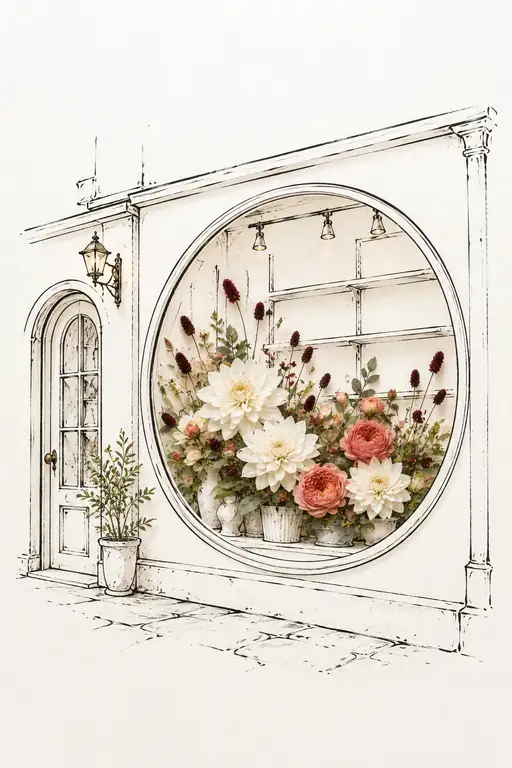 An Ordinary Day Worth Pausing For
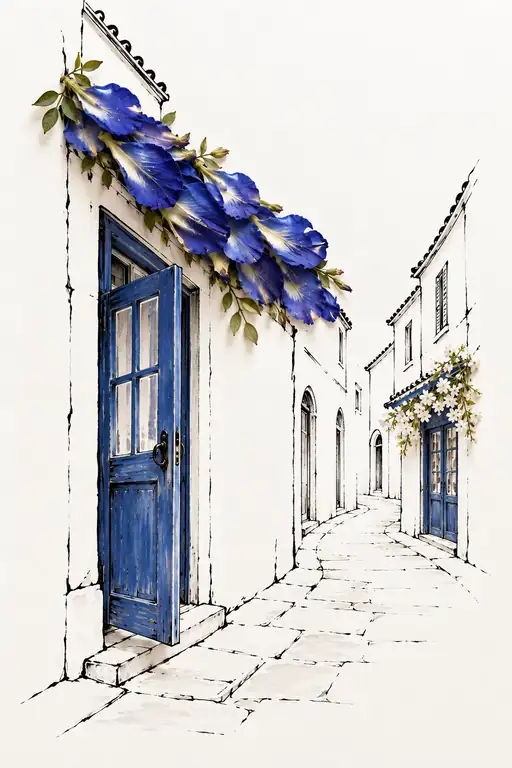 An Invitation Beyond the Bend
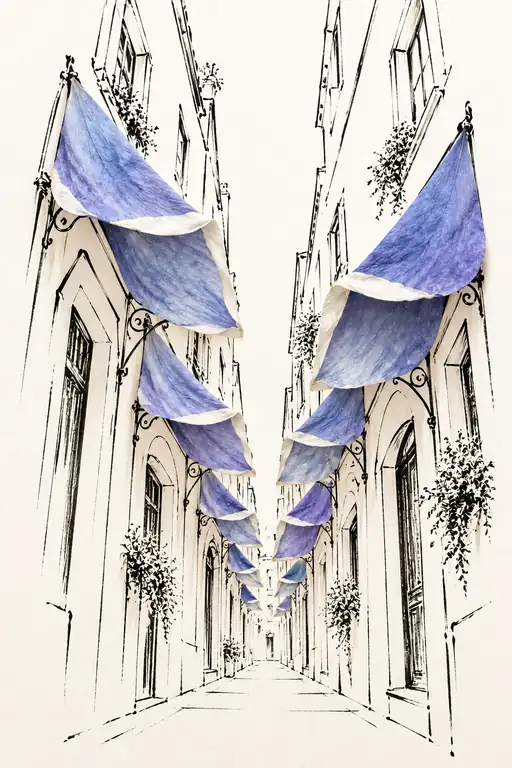 Follow the Blue a Little Further
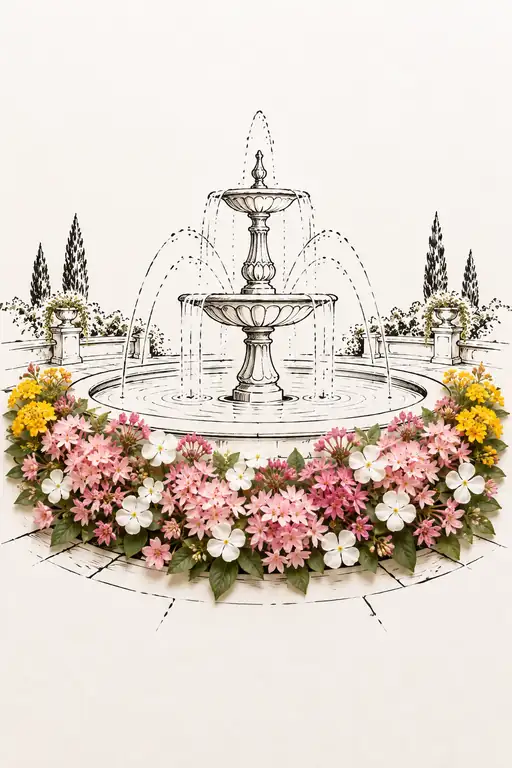 An Afternoon in Widening Circles
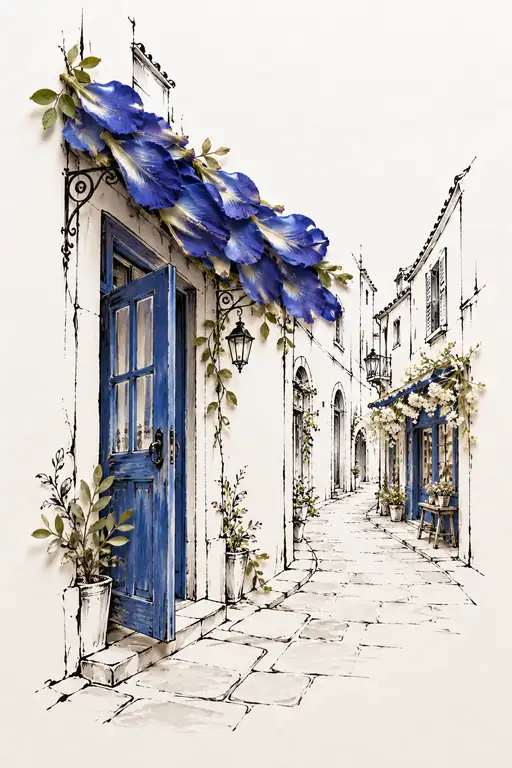 Blue at Every Turning